
Abi Daré
Author of The Girl with the Louding Voice
About the Author
Series
Works by Abi Daré
Un grido di luce (Italian Edition) 2 copies
Девојката со силен глас 1 copy
La ladrona de palabras 1 copy
Associated Works
Of This Our Country: Acclaimed Nigerian Writers on the Home, Identity, and Culture They Know (2021) — Contributor — 21 copies
Tagged
Common Knowledge
- Canonical name
- Abi Daré
- Birthdate
- 1981
- Gender
- female
- Education
- University of Wolverhampton
Glasgow Caledonian University
Birkbeck University of London - Nationality
- Nigeria
- Birthplace
- Lagos, Nigeria
- Places of residence
- UK
- Associated Place (for map)
- Lagos, Nigeria
Members
Reviews

Fourteen-year-old Adunni is stunned when her father marries her off to an older man with two wives, for he had promised her dying mother that Adunni would be allowed to pursue an education. But her father needs the dowry money, and the prospective groom needs a boy heir. From a child bride in a remote village to a domestic servant in Lagos, Adunni struggles to find her louding voice and break free of those who would silence her.
This debut novel by Nigerian-born Abi Daré is an interesting show more addition to feminist coming-of-age stories from the region. It is written in a nonstandard English that the author chose as Adunni's voice. Although awkward at first, it becomes a sign of her growing facility with English and an indicator of her relationship with the person to whom she is speaking. Another interesting element is the dichotomy between the wealthy business owners in Lagos (Nigeria has the highest GDP in Africa) and the domestic help who work for them. The author's own family employed such help, and it influenced her decision to write about the disparity. Finally, I liked how the author excerpted facts from a compendium that Adunni discovers and uses them as chapter epigraphs. I am tempted to look for another book featuring Adunni that Daré has since written called [And So I Roar].
Trigger warning: child rape show less
This debut novel by Nigerian-born Abi Daré is an interesting show more addition to feminist coming-of-age stories from the region. It is written in a nonstandard English that the author chose as Adunni's voice. Although awkward at first, it becomes a sign of her growing facility with English and an indicator of her relationship with the person to whom she is speaking. Another interesting element is the dichotomy between the wealthy business owners in Lagos (Nigeria has the highest GDP in Africa) and the domestic help who work for them. The author's own family employed such help, and it influenced her decision to write about the disparity. Finally, I liked how the author excerpted facts from a compendium that Adunni discovers and uses them as chapter epigraphs. I am tempted to look for another book featuring Adunni that Daré has since written called [And So I Roar].
Trigger warning: child rape show less
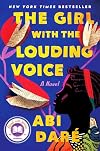
Set in Nigeria, this book is the story of Adunni, a fourteen-year-old girl whose dream is to become a teacher and find her “louding voice.” Her family lives in poverty. After her mother dies, her father arranges for her to marry an older man, who already has two wives, in order to receive the “bride-price.” One of the wives is abusive, but the other befriends her. When her circumstances change, she is hired into domestic service, but her wages are stolen by the man who found her the show more “job.” Again, she finds friends. Though she suffers sexual and other physical abuse, she is tenacious and perseveres in her goal to obtain an education.
This book provides social commentary on women’s issues in Nigeria – child marriage, domestic slavery, and the lack of educational opportunities. The story is told in first person by Adunni, which is extremely effective in drawing an emotional response from the reader. I was aghast at what she had to go through, living in an oppressive environment where women are not valued except for their ability to produce children (and preferably boys).
I liked that it included both the positives and negatives in Adunni’s life. Often times these types of books dwell on the negatives to the exclusion of even small glimmers of hope, but this story is more balanced. I liked the descriptions of Adunni’s friendships, her determination, and memories of her mother’s strength. Adunni speaks in dialect, which was the least appealing aspect for me. I listened to the audio book, narrated by Adjoa Andoh, and she does a nice job in giving Adunni a distinct “voice.”
“My mama say education will give me a voice. I want more than just a voice…. I want a louding voice,” I say. “I want to enter a room and people will hear me even before I open my mouth to be speaking. I want to live in this life and help many people so that when I grow old and die, I will still be living through the people I am helping.” show less
This book provides social commentary on women’s issues in Nigeria – child marriage, domestic slavery, and the lack of educational opportunities. The story is told in first person by Adunni, which is extremely effective in drawing an emotional response from the reader. I was aghast at what she had to go through, living in an oppressive environment where women are not valued except for their ability to produce children (and preferably boys).
I liked that it included both the positives and negatives in Adunni’s life. Often times these types of books dwell on the negatives to the exclusion of even small glimmers of hope, but this story is more balanced. I liked the descriptions of Adunni’s friendships, her determination, and memories of her mother’s strength. Adunni speaks in dialect, which was the least appealing aspect for me. I listened to the audio book, narrated by Adjoa Andoh, and she does a nice job in giving Adunni a distinct “voice.”
“My mama say education will give me a voice. I want more than just a voice…. I want a louding voice,” I say. “I want to enter a room and people will hear me even before I open my mouth to be speaking. I want to live in this life and help many people so that when I grow old and die, I will still be living through the people I am helping.” show less
A captivating story of hope and courage!
It took me a while to fall into the rhythms of Adunni's patois Nigerian Anglo voice. I wondered about that at first but the reality is that Adunni's voice enabled me to enter into her head space and culture more quickly than I otherwise would have.
A fifteen year old girl, against her wishes and dreams, is sold off to be the third wife of an old man who wants sons. No pity or consideration here. Adunni's future is a transaction between her father and show more her husband. Her father benefits from the bride dowry. Adunni suffers the consequences.
When she fearfully flees her husband and circumstances surrounding wife number two, Adunni little knows that she will enter another hellish world. She is essentially trafficked. Once again she is an unpaid servant with no rights who is beaten by her mistress and has to keep dodging the attentions of the master.
But she finds friends in unlikely places who help her to find her "Louding Voice."
I loved that Adunni uses the facts of Nigeria book and Collins English Dictionary to try to improve her language skills.
I was appalled by the conditions of the everyday people and repelled by the custom to help cleanse Adunni's friend Ms. Tia from demons to enable her to conceive. Adunni was of the same mind.
The gap between the rich and powerful and the poor is incredible as are the living conditions.
That Adunni remains a girl with her glass half full is just amazing. She is determined, gutsy and completely believable
A terse and eye opening read. The dedication and prologue becomes so much more meaningful after having read Adunni's journey.
A Penguin / Dutton ARC via NetGalley show less
It took me a while to fall into the rhythms of Adunni's patois Nigerian Anglo voice. I wondered about that at first but the reality is that Adunni's voice enabled me to enter into her head space and culture more quickly than I otherwise would have.
A fifteen year old girl, against her wishes and dreams, is sold off to be the third wife of an old man who wants sons. No pity or consideration here. Adunni's future is a transaction between her father and show more her husband. Her father benefits from the bride dowry. Adunni suffers the consequences.
When she fearfully flees her husband and circumstances surrounding wife number two, Adunni little knows that she will enter another hellish world. She is essentially trafficked. Once again she is an unpaid servant with no rights who is beaten by her mistress and has to keep dodging the attentions of the master.
But she finds friends in unlikely places who help her to find her "Louding Voice."
I loved that Adunni uses the facts of Nigeria book and Collins English Dictionary to try to improve her language skills.
I was appalled by the conditions of the everyday people and repelled by the custom to help cleanse Adunni's friend Ms. Tia from demons to enable her to conceive. Adunni was of the same mind.
The gap between the rich and powerful and the poor is incredible as are the living conditions.
That Adunni remains a girl with her glass half full is just amazing. She is determined, gutsy and completely believable
A terse and eye opening read. The dedication and prologue becomes so much more meaningful after having read Adunni's journey.
A Penguin / Dutton ARC via NetGalley show less

When Adunni is fourteen, her father sells her into marriage to an older man. She'll be his third wife. When her mother was still alive, she'd managed to pay for a few years of schooling for Adunni, but with her marriage, the hope of returning is gone. Her new circumstances are difficult, and as the book progresses, Adunni deals with or witnesses a laundry list of hardships, always dreaming of a better life if only she could go to school, dreaming of having a "louding voice," a voice that show more people will listen to.
This novel is set in Nigeria, first in a small village, later in Lagos. The novel is narrated by Adunni and author Abi Daré allows Adunni's voice to be an uncertain English, guessing at the words she doesn't know, and very much that of a naïve teenager. And as Adunni improves her English and learns more about the world, her language changes. Choosing to put the novel entirely into Adunni's voice is a courageous choice for a debut novelist and one that pays off. Adunni comes across as likable and resilient.
In the end, though, I was uncomfortable with this novel. Adunni faces an endless stream of abuse and injustice and all she can do is endure. That the solution lies in the largesse of a wealthy woman raised in Britain, while the abuse all came from Nigerians was unsettling. This is also the second novel in which a western woman's fertility worries are given out-sized space in a novel about greater issues affecting Africans that I have read recently and I'm not a fan. The Girl with the Louding Voice would provide book clubs with plenty to discuss, but I hope that the discussions at least touch on the problematic aspects of this book. show less
This novel is set in Nigeria, first in a small village, later in Lagos. The novel is narrated by Adunni and author Abi Daré allows Adunni's voice to be an uncertain English, guessing at the words she doesn't know, and very much that of a naïve teenager. And as Adunni improves her English and learns more about the world, her language changes. Choosing to put the novel entirely into Adunni's voice is a courageous choice for a debut novelist and one that pays off. Adunni comes across as likable and resilient.
In the end, though, I was uncomfortable with this novel. Adunni faces an endless stream of abuse and injustice and all she can do is endure. That the solution lies in the largesse of a wealthy woman raised in Britain, while the abuse all came from Nigerians was unsettling. This is also the second novel in which a western woman's fertility worries are given out-sized space in a novel about greater issues affecting Africans that I have read recently and I'm not a fan. The Girl with the Louding Voice would provide book clubs with plenty to discuss, but I hope that the discussions at least touch on the problematic aspects of this book. show less
Lists
Awards


You May Also Like


Associated Authors
Statistics
- Works
- 6
- Also by
- 1
- Members
- 2,261
- Popularity
- #11,346
- Rating
- 4.2
- Reviews
- 75
- ISBNs
- 39
- Languages
- 6