
Louise Fein
Author of Daughter of the Reich: A Novel
Works by Louise Fein
Tagged
Common Knowledge
- Canonical name
- Fein, Louise
Members
Reviews
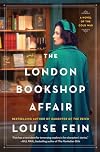
The London Bookshop Affair is a delightful dual timeline story set in 1962, during the Cold War, and 1942, during World War II. In 1962 London, Celia works in an antiquarian bookshop. She enjoys her work but there's a part of her that longs for more. Her parents are quite strict and her life sometimes feels rather small. When circumstances at the bookshop change, combined with a charming stranger entering her life, maybe she's about to get the excitement she's been looking for. The 1940s show more story is not as prominent but it's very important. It follows Anya who has been sent to France as part of the resistance and who is betrayed. How the two timelines are linked isn't immediately clear but I thought they came together really well.
I don't know a lot about the Cold War and so this was an interesting read for me. Louise Fein doesn't overload the reader with information about espionage and the very real threat at the time of nuclear war, but she does give just enough to facilitate Celia's story and to add a bit of an exciting element overall.. I liked Celia, who has quite a steely core underneath what seems like a quite naïve personality at times. I really enjoyed her work at the bookshop and her quest to improve herself. I also found Anya's story fascinating and heartbreaking.
The London Bookshop Affair is such an engaging book. It took me to post-Second World War London when the memories of that war were still fresh in people's minds, and the prospect of another devastating war was unthinkable. It covers many absorbing subjects, with some really well-drawn characters, from Celia's downtrodden parents, to the mysterious Mrs Denton at the bookshop, and our two feisty heroines of course. Fein always writes emotive and enthralling historical fiction and this is no exception. I enjoyed it very much. show less
I don't know a lot about the Cold War and so this was an interesting read for me. Louise Fein doesn't overload the reader with information about espionage and the very real threat at the time of nuclear war, but she does give just enough to facilitate Celia's story and to add a bit of an exciting element overall.. I liked Celia, who has quite a steely core underneath what seems like a quite naïve personality at times. I really enjoyed her work at the bookshop and her quest to improve herself. I also found Anya's story fascinating and heartbreaking.
The London Bookshop Affair is such an engaging book. It took me to post-Second World War London when the memories of that war were still fresh in people's minds, and the prospect of another devastating war was unthinkable. It covers many absorbing subjects, with some really well-drawn characters, from Celia's downtrodden parents, to the mysterious Mrs Denton at the bookshop, and our two feisty heroines of course. Fein always writes emotive and enthralling historical fiction and this is no exception. I enjoyed it very much. show less
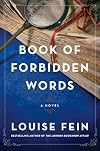
Exceptional novel about European and American history, from the printing press, to Communism, to women's rights, to the promulgation of misinformation for the sole purpose of the church, as well as powerful, usually wealthy white men keeping power. They feel threatened by those who with different religions, viewpoints, objectives, and values and priorities. To these men, violence, war is preferable to sharing, listening, and peace.
Not only does Book of Forbidden Words focus on the show more differences between religions, but also compellingly concentrates on the huge gap between men and women. As though we really do come from different planets. Good to read about women's communes and matrilineal societies as one way of dealing with men's egregious and misogynistic behavior.
I would have thought the US in the 1950's could not possibly be as bad as the middle-ages; I was wrong. Hate, racism, misogyny, anti-Semitism, and xenophobia were unfortunately STILL alive and fomenting prejudice. Seems it true we don't learn from history, or more accurately we choose not to.
Milly is magnificent; is naturally smart, kind and caring. Living in Levittown with her very naive husband George, and their children, she is grateful for a good life. But it is unfulfilling. So she takes up decrypting an historic manuscript and writing stories under a pseudonym. The stories are about women having rights to total free agency over their lives.
When faced with McCarthyism and neighbors encouraged to spy on neighbors, she reacts as any thoughtful human being should. She goes about doing what she wants and avoids the nosy bodies, headed by hateful Doris of her neighborhood.
Fein's writing ability to make readers concerned, upset and angry about real events that happened to people, having books banned, being questioned and arrested by police on suspicion of being a communist, or at least that's the excuse the authorities give. You just need to be a foreigner, a woman, black, gay, particularly men, educated to be suspect of holding evil agendas.
I definitely got fired up over this book. Clearly our rights can NEVER be taken for granted.
Well-done. show less
Not only does Book of Forbidden Words focus on the show more differences between religions, but also compellingly concentrates on the huge gap between men and women. As though we really do come from different planets. Good to read about women's communes and matrilineal societies as one way of dealing with men's egregious and misogynistic behavior.
I would have thought the US in the 1950's could not possibly be as bad as the middle-ages; I was wrong. Hate, racism, misogyny, anti-Semitism, and xenophobia were unfortunately STILL alive and fomenting prejudice. Seems it true we don't learn from history, or more accurately we choose not to.
Milly is magnificent; is naturally smart, kind and caring. Living in Levittown with her very naive husband George, and their children, she is grateful for a good life. But it is unfulfilling. So she takes up decrypting an historic manuscript and writing stories under a pseudonym. The stories are about women having rights to total free agency over their lives.
When faced with McCarthyism and neighbors encouraged to spy on neighbors, she reacts as any thoughtful human being should. She goes about doing what she wants and avoids the nosy bodies, headed by hateful Doris of her neighborhood.
Fein's writing ability to make readers concerned, upset and angry about real events that happened to people, having books banned, being questioned and arrested by police on suspicion of being a communist, or at least that's the excuse the authorities give. You just need to be a foreigner, a woman, black, gay, particularly men, educated to be suspect of holding evil agendas.
I definitely got fired up over this book. Clearly our rights can NEVER be taken for granted.
Well-done. show less
This is a work of historical fiction centered on women’s voices, resistance, and the preservation of ideas under threat. Set across timelines and anchored by its three principal characters, it weaves together past and present through the mystery of decoding a lost manuscript. While the premise holds promise, its execution is uneven because it sacrifices narrative subtlety for thematic insistence.
The novel’s most distinctive feature is its almost exclusively female cast. Milly, Charlotte, show more and Lysbette occupy the narrative foreground, while male characters drift in the periphery, largely undeveloped and functionally incidental. This structural choice clearly aligns with the book’s feminist intentions, yet even the female characterizations often lack depth. Each of the central figures feels more like a vehicle for ideas than a fully realized person. Their motivations, emotional contradictions, and interpersonal tensions are sketched in broad strokes, which diminishes our ability to engage with them on a more personal level.
Fein’s feminist framework is unmistakable throughout and often heavy-handed. She seems less interested in ambiguity than in asserting an ideological position. This can feel didactic. Her approach ultimately detracts from what might otherwise have been a compelling literary mystery. The novel’s broader thematic messaging overshadows its promise of decoding a lost manuscript—arguably its most intriguing thread.
That said, there are moments when Fein finds her footing. Her research is evident, particularly in the historical sections, which are rendered with convincing detail and atmosphere. When the narrative leans into suspense—especially in scenes involving the risks associated with preserving forbidden ideas—it becomes far more engaging. These glimpses suggest a more balanced novel lurks beneath the surface, one that might have more effectively integrated its themes with its storytelling.
The most resonant aspect of the book lies in its exploration of intellectual repression. This theme is where Fein’s work achieves its greatest relevance. It draws a clear line from the past to the present, emphasizing the enduring dangers of authoritarian systems that seek to control thought and silence dissent. The suppression of ideas, the policing of language, and the fear-driven rise of reactionary movements are not confined to history; they echo in the contemporary world. The book explicitly explores the post-war climate in the United States, where fear of communism fueled ideological rigidity. But it also gestures toward the resurgence of ultra-right movements in various countries today—most notably in America.
Ultimately, “Book of Forbidden Words” is a novel of admirable intentions but mixed results. Its thematic urgency and historical grounding are compelling, yet its lack of character nuance and its overemphasis on a feminist message limit its impact. Readers seeking a richly textured historical narrative or a gripping literary mystery may come away somewhat unsatisfied. show less
The novel’s most distinctive feature is its almost exclusively female cast. Milly, Charlotte, show more and Lysbette occupy the narrative foreground, while male characters drift in the periphery, largely undeveloped and functionally incidental. This structural choice clearly aligns with the book’s feminist intentions, yet even the female characterizations often lack depth. Each of the central figures feels more like a vehicle for ideas than a fully realized person. Their motivations, emotional contradictions, and interpersonal tensions are sketched in broad strokes, which diminishes our ability to engage with them on a more personal level.
Fein’s feminist framework is unmistakable throughout and often heavy-handed. She seems less interested in ambiguity than in asserting an ideological position. This can feel didactic. Her approach ultimately detracts from what might otherwise have been a compelling literary mystery. The novel’s broader thematic messaging overshadows its promise of decoding a lost manuscript—arguably its most intriguing thread.
That said, there are moments when Fein finds her footing. Her research is evident, particularly in the historical sections, which are rendered with convincing detail and atmosphere. When the narrative leans into suspense—especially in scenes involving the risks associated with preserving forbidden ideas—it becomes far more engaging. These glimpses suggest a more balanced novel lurks beneath the surface, one that might have more effectively integrated its themes with its storytelling.
The most resonant aspect of the book lies in its exploration of intellectual repression. This theme is where Fein’s work achieves its greatest relevance. It draws a clear line from the past to the present, emphasizing the enduring dangers of authoritarian systems that seek to control thought and silence dissent. The suppression of ideas, the policing of language, and the fear-driven rise of reactionary movements are not confined to history; they echo in the contemporary world. The book explicitly explores the post-war climate in the United States, where fear of communism fueled ideological rigidity. But it also gestures toward the resurgence of ultra-right movements in various countries today—most notably in America.
Ultimately, “Book of Forbidden Words” is a novel of admirable intentions but mixed results. Its thematic urgency and historical grounding are compelling, yet its lack of character nuance and its overemphasis on a feminist message limit its impact. Readers seeking a richly textured historical narrative or a gripping literary mystery may come away somewhat unsatisfied. show less

Wow, just wow. This book is something very, very special indeed.
It's the story of the perfect German girl, Hetty Heinrich, and her Jewish friend from childhood, Walter Keller. When Hetty was only 7 Walter, then the good friend of her brother, Karl, rescued her from drowning. From then it was as though there was an invisible thread joining them together. It's only when they are teenagers and the threat of war is on the horizon that they become much closer, but it's so dangerous. Hetty's show more father is rising in the ranks of the SS and Hetty is devoted to Hitler and all he stands for, whereas everything Walter and his family have ever known is being taken from them.
The book is set in those years running up to the onset of the Second World War and although I obviously knew of the persecution of the Jews at that time, this story shows it from a different angle: that of a patriotic German beginning to realise the path the country is taking is the wrong one.
"I remember what Vati said about all the Jews who still live in Gohlis. How they persist, like vermin. Anger stirs inside me. These are people, like us, not rats."
I just can't do justice to this book in my review and how I felt about it and how deeply it affected me. I cried several times and knew it would break me, and the ending had me in floods of tears. It's incredibly beautifully written and it's one of the best books about this period and the plight of the Jews that I have ever read. Louise Fein skilfully portrays the dilemmas Hetty faces and my heart was regularly in my mouth. At times I was so disappointed by her behaviour and yet I understood it too. I also found her incredibly courageous in the face of dictatorship.
Fein has used her own family's story as inspiration and combined it with extensive research to create something that is emotive, heart-rending, truly shocking and yet also an exquisite depiction of love, pain and loss.
There is absolutely no way on earth this book won't be on my top reads of the year list. It is truly spectacular. show less
It's the story of the perfect German girl, Hetty Heinrich, and her Jewish friend from childhood, Walter Keller. When Hetty was only 7 Walter, then the good friend of her brother, Karl, rescued her from drowning. From then it was as though there was an invisible thread joining them together. It's only when they are teenagers and the threat of war is on the horizon that they become much closer, but it's so dangerous. Hetty's show more father is rising in the ranks of the SS and Hetty is devoted to Hitler and all he stands for, whereas everything Walter and his family have ever known is being taken from them.
The book is set in those years running up to the onset of the Second World War and although I obviously knew of the persecution of the Jews at that time, this story shows it from a different angle: that of a patriotic German beginning to realise the path the country is taking is the wrong one.
"I remember what Vati said about all the Jews who still live in Gohlis. How they persist, like vermin. Anger stirs inside me. These are people, like us, not rats."
I just can't do justice to this book in my review and how I felt about it and how deeply it affected me. I cried several times and knew it would break me, and the ending had me in floods of tears. It's incredibly beautifully written and it's one of the best books about this period and the plight of the Jews that I have ever read. Louise Fein skilfully portrays the dilemmas Hetty faces and my heart was regularly in my mouth. At times I was so disappointed by her behaviour and yet I understood it too. I also found her incredibly courageous in the face of dictatorship.
Fein has used her own family's story as inspiration and combined it with extensive research to create something that is emotive, heart-rending, truly shocking and yet also an exquisite depiction of love, pain and loss.
There is absolutely no way on earth this book won't be on my top reads of the year list. It is truly spectacular. show less
Awards


You May Also Like


Statistics
- Works
- 4
- Members
- 800
- Popularity
- #31,871
- Rating
- 4.0
- Reviews
- 47
- ISBNs
- 65
- Languages
- 6
- Favorited
- 1
