
James Barron (1)
Author of Piano: The Making of a Steinway Concert Grand
For other authors named James Barron, see the disambiguation page.
Works by James Barron
The One-Cent Magenta: Inside the Quest to Own the Most Valuable Stamp in the World (2016) 132 copies, 31 reviews
Tagged
Common Knowledge
Members
Reviews
I have always thought postage stamps were neat. I admit I'm the ass in the post office line asking if I can see all the current stamps when I get to the counter, so I can pick out the coolest ones. (This, by the way, is unheard of in Australia; I've only found one post office where the lady is nice enough to let me pick my own stamps.)
But I have never collected stamps. The hobby holds no appeal for me and never has. What I am hooked on, is rarity. The idea that there are only x number of show more something in the world sucks me in, no matter what x is. I understand the collectors that want to own what no one else owns; I don't have the ego for it, but the idea of owning something that is completely unique is a seductive one.
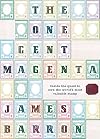
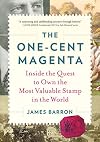
That's why I bought this book on a whim. That and the cover. James Barron is a New York Times journalist, who stumbled on the story of the one-cent magenta stamp at a cocktail party; the article he wrote about it led to this book, where he chronicles the path this odd-looking stamp took on it's way to becoming the world's most valuable stamp, selling at auction in 2014 for 9.5 million USD, to Stuart Weitzman, he of the red-soled shoe empire.
This is where journalists who write books shine, especially for someone like me, who knows almost nothing about stamps or philately. Let's face it, stamps do not lend themselves to page-turning drama, and philately needs all the help it can get if it's to appeal to those outside the bubble. Barron succeeded beyond my expectations. I completely enjoyed this book and spent all day reading it. His journalistic style brought the stamp's history to life, and even though he has a bit of fun with the eccentricities of "Stamp World" as he calls it, I thought he did a brilliant job describing the passion and dedication of the hobby in a sympathetic way.
I'm thoroughly surprised and delighted at how much I enjoyed this book. show less
But I have never collected stamps. The hobby holds no appeal for me and never has. What I am hooked on, is rarity. The idea that there are only x number of show more something in the world sucks me in, no matter what x is. I understand the collectors that want to own what no one else owns; I don't have the ego for it, but the idea of owning something that is completely unique is a seductive one.
That's why I bought this book on a whim. That and the cover. James Barron is a New York Times journalist, who stumbled on the story of the one-cent magenta stamp at a cocktail party; the article he wrote about it led to this book, where he chronicles the path this odd-looking stamp took on it's way to becoming the world's most valuable stamp, selling at auction in 2014 for 9.5 million USD, to Stuart Weitzman, he of the red-soled shoe empire.
This is where journalists who write books shine, especially for someone like me, who knows almost nothing about stamps or philately. Let's face it, stamps do not lend themselves to page-turning drama, and philately needs all the help it can get if it's to appeal to those outside the bubble. Barron succeeded beyond my expectations. I completely enjoyed this book and spent all day reading it. His journalistic style brought the stamp's history to life, and even though he has a bit of fun with the eccentricities of "Stamp World" as he calls it, I thought he did a brilliant job describing the passion and dedication of the hobby in a sympathetic way.
I'm thoroughly surprised and delighted at how much I enjoyed this book. show less
I began this book with a fair bit of anticipation. Like many people I collected stamps when I was younger, and like many people you never quite get over those early loves of life. Stamps interest me. This book, unfortunately came with a rough start; The author's style of telling the story in his imaginary "Stamp World" put me off from the first page - perseverance will reward the reader with some interesting history if you don't get too bothered by the odd writing quirks which mostly recede show more after the start. The story at times really isn't so much about the stamp but more about the history of postal systems, stamps in general and about stamp collectors - although we get some interesting looks into the Royals as well as how stamps are expertised - it is also about the world of the very rich and/or odd who must have something no one else has, as well as the auctioneer who promotes these things. In this case it is a stamp - it could be the rarest book, painting, diamond, comic book or even Pokemon I suppose.
I learned a lot of interesting history and trivia reading this and overall was glad to have read this. However I was baffled by the complete lack of photographs or illustrations in the book. To me as a reader this was a rather glaring omission. I read an advance review copy, but noted no placeholders. Perhaps photos will be included in the published edition.
I received this book as part of the LibraryThing early reviewers program in exchange for a review. 2 1/2 - 3 stars show less
I learned a lot of interesting history and trivia reading this and overall was glad to have read this. However I was baffled by the complete lack of photographs or illustrations in the book. To me as a reader this was a rather glaring omission. I read an advance review copy, but noted no placeholders. Perhaps photos will be included in the published edition.
I received this book as part of the LibraryThing early reviewers program in exchange for a review. 2 1/2 - 3 stars show less
 This review was written for LibraryThing Early Reviewers.
I was one of those many kids who started collecting stamps, and while I have not pursued collecting any further, it still fascinates me. I actually had not heard of the one cent magenta (although I knew about the inverted jenny), but the book cover indicated that this stamp is the most valuable one in the world, so I had to read about it. I thoroughly enjoyed this book. I had no idea that the world of high dollar stamp collecting was so involved. While I enjoyed reading about the one cent show more magenta, I like the way the author provided more information about stamp collecting in general and gave information on other rare, valuable stamps. I like a book that inspires me to learn more, and this book did just that, giving me a glimpse of a world ("Stamp World") that I didn't know existed. The only thing I struggled with was the chronology. I felt that there was a good bit of jumping around, time-wise, with the narrative. I thought I would be at one point in the narrative only to find that I had actually gone back several decades in my reading. The book is interesting and informative. show less
This review was written for LibraryThing Early Reviewers.This delightful little book focuses on the British Guiana stamp that provides the title, the rarest stamp in the world. The handful of owners of the stamp are profiled, up to the current owner. Their motives (or eccentricities) provide the meat of the book. What does motivate men to covet what is, admittedly, a homely scrap of paper, to the extent that millions of dollars change hands? There's a bit of megalomania in some, a desire for profit in others, and in one case (John Du Pont, later show more convicted of murder), madness. All in all a good read for non-collectors, a great one for stamp lovers. show less
This review was written for LibraryThing Early Reviewers.You May Also Like


Associated Authors
Statistics
- Works
- 4
- Members
- 390
- Popularity
- #62,075
- Rating
- 3.9
- Reviews
- 36
- ISBNs
- 17
- Languages
- 1
