
Ric Burns
Author of The Civil War: An Illustrated History
About the Author
Image credit: Ric Burns
Series
Works by Ric Burns
Ken Burns' America Collection (Brooklyn Bridge / The Statue of Liberty / Empire of the Air / The Congress / Thomas Hart Benton / Huey Long / The Shakers) (1996) — Director — 17 copies
American Experience: Into the Deep: American Whaling and the World [2010 TV episode] (2010) — Director/Screenwriter — 6 copies
The Way West, Episode 1: Westward, the Course of Empire Takes Its Way (1845-1864) [1995 TV episode] (1995) 2 copies
The Way West, Episode 2: The Approach of Civilization 1865-1869 [1995 TV episode] (1995) — Director — 1 copy
The Way West, Episode 3: The War for the Black Hills 1870-1876 [1995 TV episode] — Director — 1 copy
Tagged
Common Knowledge
- Canonical name
- Burns, Ric
- Legal name
- Burns, Eric D.
- Birthdate
- 1955
- Gender
- male
- Education
- Columbia University
University of Cambridge - Occupations
- filmmaker
author
film director - Organizations
- PBS
- Awards and honors
- Emmy Award 1991
Emmy Award 2007 - Relationships
- Burns, Ken (brother)
- Nationality
- USA
- Birthplace
- Baltimore, Maryland, USA
- Places of residence
- Ann Arbor, Michigan, USA
- Associated Place (for map)
- USA
Members
Reviews

Goosebump-inducing. Absolutely stunning. If I could give it 6 stars, I would.
This is the companion book to what was possibly the best documentary ever made, Ken Burns 11.5 hour epic “The Civil War”. Burns spent five years researching and producing it – one year longer than the war itself took – pouring through thousands of photographs, interviewing prominent Civil War historians such as Shelby Foote and James McPherson, and paying attention to the both the larger historical context show more for the War and at the same time poignant personal stories. Among other things, he invented what came to be known as the “Ken Burns effect”, the slow zooming and panning across photos, which has since been adopted by many other filmmakers.
The book does the documentary justice. It contains over 500 photographs and illustrations and is truly beautiful. There are of course all the “big” things you’d expect: the genius of Lincoln as politician, preserver of the Union, commander-in-chief, and orator. The pompous and overly cautious General McClellan, who after being replaced would run against Lincoln in the election of 1864. (As an aside, the picture of their last meeting that Burns includes says everything about the personalities and relationship Lincoln and McClellan had.) The public turning out to watch the First Battle of Bull Run from a nearby hill, as if it were theater. The horrors of slavery and the blatant racism of the 19th century, set against the gentility of the Southern way of life. The horrors of battlefield carnage, set against the incredible bravery and valor of soldiers who sometimes found themselves fighting on the opposite side of relatives or friends from before the war. The genius of the Southern Generals like Robert E. Lee of course, but also Stonewall Jackson and Nathan Bedford Forrest, who despite having a two to one disadvantage in armed forces had the South within a battle or two of improbably winning the war.
American men of letters are here: Herman Melville recognizing the significance of Jackson’s death in his poems, one ending, “By the edge of those wilds Stonewall had charged – but the year and the Man were gone.” Walt Whitman, after having worked in the appalling Union hospitals, saying “Future years will never know the seething hell and the black infernal background, the countless minor scenes and interiors of the secession war; and it is best that they should not. The real war will never get in the books.”
If that’s true, Burns must surely come close. There is no way to do his work justice in a review, but I’ll close with two scenes that have stuck to me all these years after having seen the documentary and read the book. They are indelible and unforgettable.
The first, after the battle of Fredericksburg on December 11, 1862, former college professor Joshua Lawrence Chamberlain (and then commander of the 20th Maine), hearing the wounded at night on the freezing battlefield:
“But out of that silence…rose new sounds more appalling still…a strange ventriloquism, of which you could not locate the source, a smothered moan…as if a thousand discords were flowing together into a key-note weird, unearthly, terrible to hear and bear, yet startling with its nearness; the writhing concord broken by cries for help…some begging for a drop of water, some calling on God for pity; and some on friendly hands to finish what the enemy had so horribly begun; some with delirious, dreamy voices murmuring loved ones names, as if the dearest were bending over them; and underneath, all the time, the deep bass note from closed lips too hopeless, or too heroic to articulate their agony.”
…and then after scraping out shallow graves for the dead, and looking up to see the Northern Lights dancing in the winter sky. “Who would not pass on as they did,” he asked, “dead for their country’s life, and lighted to burial by the meteor splendors of their native sky?”
And the second moment, this letter, written by Major Sullivan Ballou to his wife a week before the first battle of Bull Run:
“July the 14th, 1861
Camp Clark, Washington
My very dear Sarah:
The indications are very strong that we shall move in a few days—perhaps tomorrow. Lest I should not be able to write you again, I feel impelled to write lines that may fall under your eye when I shall be no more...
I have no misgivings about, or lack of confidence in, the cause in which I am engaged, and my courage does not halt or falter. I know how strongly American Civilization now leans upon the triumph of the Government, and how great a debt we owe to those who went before us through the blood and suffering of the Revolution. And I am willing—perfectly willing—to lay down all my joys in this life, to help maintain this Government, and to pay that debt…
Sarah, my love for you is deathless, it seems to bind me to you with mighty cables that nothing but Omnipotence could break; and yet my love of Country comes over me like a strong wind and bears me unresistibly on with all these chains to the battle field.
The memories of the blissful moments I have spent with you come creeping over me, and I feel most gratified to God and to you that I have enjoyed them so long. And hard it is for me to give them up and burn to ashes the hopes of future years, when God willing, we might still have lived and loved together and seen our sons grow up to honorable manhood around us. I have, I know, but few and small claims upon Divine Providence, but something whispers to me—perhaps it is the wafted prayer of my little Edgar—that I shall return to my loved ones unharmed. If I do not, my dear Sarah, never forget how much I love you, and when my last breath escapes me on the battlefield, it will whisper your name. Forgive my many faults, and the many pains I have caused you. How thoughtless and foolish I have often been! How gladly would I wash out with my tears every little spot upon your happiness…
But, O Sarah! If the dead can come back to this earth and flit unseen around those they loved, I shall always be near you; in the brightest day and in the darkest night… always, always, and if there be a soft breeze upon your cheek, it shall be my breath; or the cool air fans your throbbing temple, it shall be my spirit passing by. Sarah, do not mourn me dead; think I am gone and wait for thee, for we shall meet again…”
Burns then notes that Sullivan Ballou was killed at the first battle of Bull Run. show less
This is the companion book to what was possibly the best documentary ever made, Ken Burns 11.5 hour epic “The Civil War”. Burns spent five years researching and producing it – one year longer than the war itself took – pouring through thousands of photographs, interviewing prominent Civil War historians such as Shelby Foote and James McPherson, and paying attention to the both the larger historical context show more for the War and at the same time poignant personal stories. Among other things, he invented what came to be known as the “Ken Burns effect”, the slow zooming and panning across photos, which has since been adopted by many other filmmakers.
The book does the documentary justice. It contains over 500 photographs and illustrations and is truly beautiful. There are of course all the “big” things you’d expect: the genius of Lincoln as politician, preserver of the Union, commander-in-chief, and orator. The pompous and overly cautious General McClellan, who after being replaced would run against Lincoln in the election of 1864. (As an aside, the picture of their last meeting that Burns includes says everything about the personalities and relationship Lincoln and McClellan had.) The public turning out to watch the First Battle of Bull Run from a nearby hill, as if it were theater. The horrors of slavery and the blatant racism of the 19th century, set against the gentility of the Southern way of life. The horrors of battlefield carnage, set against the incredible bravery and valor of soldiers who sometimes found themselves fighting on the opposite side of relatives or friends from before the war. The genius of the Southern Generals like Robert E. Lee of course, but also Stonewall Jackson and Nathan Bedford Forrest, who despite having a two to one disadvantage in armed forces had the South within a battle or two of improbably winning the war.
American men of letters are here: Herman Melville recognizing the significance of Jackson’s death in his poems, one ending, “By the edge of those wilds Stonewall had charged – but the year and the Man were gone.” Walt Whitman, after having worked in the appalling Union hospitals, saying “Future years will never know the seething hell and the black infernal background, the countless minor scenes and interiors of the secession war; and it is best that they should not. The real war will never get in the books.”
If that’s true, Burns must surely come close. There is no way to do his work justice in a review, but I’ll close with two scenes that have stuck to me all these years after having seen the documentary and read the book. They are indelible and unforgettable.
The first, after the battle of Fredericksburg on December 11, 1862, former college professor Joshua Lawrence Chamberlain (and then commander of the 20th Maine), hearing the wounded at night on the freezing battlefield:
“But out of that silence…rose new sounds more appalling still…a strange ventriloquism, of which you could not locate the source, a smothered moan…as if a thousand discords were flowing together into a key-note weird, unearthly, terrible to hear and bear, yet startling with its nearness; the writhing concord broken by cries for help…some begging for a drop of water, some calling on God for pity; and some on friendly hands to finish what the enemy had so horribly begun; some with delirious, dreamy voices murmuring loved ones names, as if the dearest were bending over them; and underneath, all the time, the deep bass note from closed lips too hopeless, or too heroic to articulate their agony.”
…and then after scraping out shallow graves for the dead, and looking up to see the Northern Lights dancing in the winter sky. “Who would not pass on as they did,” he asked, “dead for their country’s life, and lighted to burial by the meteor splendors of their native sky?”
And the second moment, this letter, written by Major Sullivan Ballou to his wife a week before the first battle of Bull Run:
“July the 14th, 1861
Camp Clark, Washington
My very dear Sarah:
The indications are very strong that we shall move in a few days—perhaps tomorrow. Lest I should not be able to write you again, I feel impelled to write lines that may fall under your eye when I shall be no more...
I have no misgivings about, or lack of confidence in, the cause in which I am engaged, and my courage does not halt or falter. I know how strongly American Civilization now leans upon the triumph of the Government, and how great a debt we owe to those who went before us through the blood and suffering of the Revolution. And I am willing—perfectly willing—to lay down all my joys in this life, to help maintain this Government, and to pay that debt…
Sarah, my love for you is deathless, it seems to bind me to you with mighty cables that nothing but Omnipotence could break; and yet my love of Country comes over me like a strong wind and bears me unresistibly on with all these chains to the battle field.
The memories of the blissful moments I have spent with you come creeping over me, and I feel most gratified to God and to you that I have enjoyed them so long. And hard it is for me to give them up and burn to ashes the hopes of future years, when God willing, we might still have lived and loved together and seen our sons grow up to honorable manhood around us. I have, I know, but few and small claims upon Divine Providence, but something whispers to me—perhaps it is the wafted prayer of my little Edgar—that I shall return to my loved ones unharmed. If I do not, my dear Sarah, never forget how much I love you, and when my last breath escapes me on the battlefield, it will whisper your name. Forgive my many faults, and the many pains I have caused you. How thoughtless and foolish I have often been! How gladly would I wash out with my tears every little spot upon your happiness…
But, O Sarah! If the dead can come back to this earth and flit unseen around those they loved, I shall always be near you; in the brightest day and in the darkest night… always, always, and if there be a soft breeze upon your cheek, it shall be my breath; or the cool air fans your throbbing temple, it shall be my spirit passing by. Sarah, do not mourn me dead; think I am gone and wait for thee, for we shall meet again…”
Burns then notes that Sullivan Ballou was killed at the first battle of Bull Run. show less

Frederick Brosen's luminous watercolor paintings of New York are truly a joy. With near photographic sharpness and detail, these urban landscapes capture the stillness and quiet beauty of the city. Familiar Manhattan streets and landmarks seem refreshed, and scenes generally devoid of people allow the eye to focus on the architecture and the quiet grandeur of both the broad avenues and the narrow backstreets. Ric Burns provides an appropriately glowing introduction, and Alan Feuer's essays, show more short character studies tied to particular buildings, add a human element. Brosen's art is to be savored, studied and lingered upon, enabling new details to emerge and overall appreciation to grow. show less
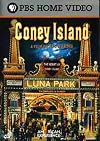
Any documentary that includes Grandpa Al Lewis has to be worth watching. For someone who didn't grow up in New York, Coney Island didn't have too much reality until watching this program. Looking at the wonders of Luna Park, Dreamland, and Steeplechase Park, this is clearly the origin for the super amusement parks of today--Disney (including Epcot) and Universal Studios. The structures were massive and impressive, probably even more so than the great Columbian Exposition in Chicago in 1892, show more but they were flimsy and not built to last, as a series of fires demonstrated. Their developers were visionaries, however.
The crowds at the parks and on the beaches of Coney Island are staggering. Like the busiest day at Disney--only worse. But the parks started closing. Dreamland never recovered from a fire. Luna Park shut down around 1947, and Steeplechase in the 1960s. Wars, the Depression, television, and the increasing lure of Manhattan all took their toll. But it was marvelous while it lasted, and you can at least get a hint of what it was all about by watching this. show less
The crowds at the parks and on the beaches of Coney Island are staggering. Like the busiest day at Disney--only worse. But the parks started closing. Dreamland never recovered from a fire. Luna Park shut down around 1947, and Steeplechase in the 1960s. Wars, the Depression, television, and the increasing lure of Manhattan all took their toll. But it was marvelous while it lasted, and you can at least get a hint of what it was all about by watching this. show less
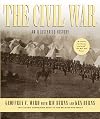
This hefty "coffee table" book is worth way more than 5 stars. As Americans, we all know bits and pieces of the Civil War. Some of us know more, of course. But this was my first time to read the whole story in a continuous timeline. (Yes, I watched Ken Burns' PBS documentary, but that was long ago.) The book is full of amazing photos and quotes from soldiers and others that made the whole story come alive. And the many maps are attractive and clear.
The book was given to me by a friend who show more was purging his shelves. It stared back at me for four years before I finally picked it up to have a go. And that was a lucky thing.
This tome has put me on a Civil War kick. I'm now eager for books that delve deeper into the people and the events along the timeline. show less
The book was given to me by a friend who show more was purging his shelves. It stared back at me for four years before I finally picked it up to have a go. And that was a lucky thing.
This tome has put me on a Civil War kick. I'm now eager for books that delve deeper into the people and the events along the timeline. show less
Lists
Awards


You May Also Like


Associated Authors
Statistics
- Works
- 38
- Members
- 3,315
- Popularity
- #7,718
- Rating
- 4.3
- Reviews
- 21
- ISBNs
- 136
- Languages
- 2
