
R. W. Connell
Author of Masculinities
About the Author
Image credit: From Wikipedia
Works by R. W. Connell
Ruling class, ruling culture : studies of conflict, power, and hegemony in Australian life (1977) 19 copies
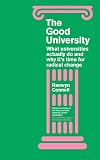
The Good University: What Universities Actually Do and Why It’s Time for Radical Change (2019) 17 copies, 1 review
Drug scene, Kings Cross 1 copy
Associated Works
New Internationalist #560: March-April 2026: AI: The People Behind the Machine (2026) — Reviewer — 1 copy
Tagged
Common Knowledge
- Legal name
- Connell, Raewyn
- Other names
- Connell, Bob (formerly)
Connell, Robert William (former legal name) - Birthdate
- 1944-01-03
- Gender
- female
- Occupations
- Professor, University of Sydney
Professor, Macquarie University - Organizations
- University of Sydney
Macquarie University - Nationality
- Australia
- Associated Place (for map)
- Australia
Members
Reviews
The Good University: What Universities Actually Do and Why It’s Time for Radical Change by Raewyn Connell
Best for:
Anyone who works in higher education, or anyone who has or plans to attend higher education, or anyone who lives in a society with higher education in it.
In a nutshell:
Author Connell explores what universities do, how that has changed, and why that is not great.
Worth quoting:
“It is vital to recognize that universities and schools themselves are highly active in making inequalities.”
“Universities themselves have become increasingly complicit with market ideology.”
Why I chose show more it:
I work in higher education administration in the UK.
Review:
For the last few years I have worked in higher education administration. I am what you would call ‘professional services staff,’ which means I’m not an academic, and I don’t teach anything. Instead, I do some of the background work that keeps the university going. I’m not as critical as security staff or cleaners, but I help keep things running smoothly for the staff who do things like manage admissions, or provide counselling and mental health support to students.
I have also gone on strike twice for a total of four days in the last five weeks. So things aren’t great.
My line manager is fantastic, but I withdrew my labor in solidarity with colleagues who are facing stress, overwork, low wages, and stress (so important I said it twice). One the first day I went out on strike, I started reading this book, because I wanted to be reminded of what a good university could be.
This book is extremely well-organized and well-researched. Connell starts with reminding us of what the research aspect of a university looks like - who does it, why it is done, and how it contributes to knowledge. She also looks at a larger question about what is truth - is it truth once it is a peer-reviewed journal? What if that journal is part of a system that essentially forces researchers to buy access to research, and looks at research through a very western lens? She then looks at learning and teaching, the other big component most of us think about when we think about universities.
She then gets into some areas that maybe don’t get as much coverage, like the workers themselves, and not just the academics, but the people who work in the cafe, or maintain the buildings, or support the students in other ways.
The areas of the book that stuck with me most were the chapters on privilege, and how universities are often complicit in just reproducing the exclusivity of the world (think Harvard, sure, but really any university that is striving to be at the top of the league tables or high up in the US News & World Report rankings); and the chapter on the university business. The latter especially hit close to home, as I have a visceral reaction to students being referred to as ‘customers,’ and I feel like that happens where I work. I know that they usually only mean it as a sort of best phrase to use when they want to talk about ‘customer service,’ but still. It’s icky to me to treat a university as a corporation or business. I also hear loads of discussion about KPIs and metrics and yes, I understand that its good to know how your team is doing in terms of, say, response times to student queries, but at times it all feels much closer to working in a company than in a public service organization.
Throughout the book Connell clearly discusses what she sees as problems with the current system, and really the only place the book doesn’t quite live up to my hopes is in the last chapter. The penultimate chapter is great, where she provides loads of examples of historic universities (and some contemporary ones) doing things genuinely differently and interestingly. But the final chapter, where I’d love to see some concrete steps and suggestions, isn’t as fully formed as I’d like. But that doesn’t leave me disappointed; it just is motivating me to think more deeply about what I’d like to see where I work, and what collectively we should expect from our institutes of higher learning.
Recommend to a Friend / Keep / Donate it / Toss it:
Recommend to all my work colleagues. I’d keep a copy at my desk but we hot desk now. I hate that. show less
Anyone who works in higher education, or anyone who has or plans to attend higher education, or anyone who lives in a society with higher education in it.
In a nutshell:
Author Connell explores what universities do, how that has changed, and why that is not great.
Worth quoting:
“It is vital to recognize that universities and schools themselves are highly active in making inequalities.”
“Universities themselves have become increasingly complicit with market ideology.”
Why I chose show more it:
I work in higher education administration in the UK.
Review:
For the last few years I have worked in higher education administration. I am what you would call ‘professional services staff,’ which means I’m not an academic, and I don’t teach anything. Instead, I do some of the background work that keeps the university going. I’m not as critical as security staff or cleaners, but I help keep things running smoothly for the staff who do things like manage admissions, or provide counselling and mental health support to students.
I have also gone on strike twice for a total of four days in the last five weeks. So things aren’t great.
My line manager is fantastic, but I withdrew my labor in solidarity with colleagues who are facing stress, overwork, low wages, and stress (so important I said it twice). One the first day I went out on strike, I started reading this book, because I wanted to be reminded of what a good university could be.
This book is extremely well-organized and well-researched. Connell starts with reminding us of what the research aspect of a university looks like - who does it, why it is done, and how it contributes to knowledge. She also looks at a larger question about what is truth - is it truth once it is a peer-reviewed journal? What if that journal is part of a system that essentially forces researchers to buy access to research, and looks at research through a very western lens? She then looks at learning and teaching, the other big component most of us think about when we think about universities.
She then gets into some areas that maybe don’t get as much coverage, like the workers themselves, and not just the academics, but the people who work in the cafe, or maintain the buildings, or support the students in other ways.
The areas of the book that stuck with me most were the chapters on privilege, and how universities are often complicit in just reproducing the exclusivity of the world (think Harvard, sure, but really any university that is striving to be at the top of the league tables or high up in the US News & World Report rankings); and the chapter on the university business. The latter especially hit close to home, as I have a visceral reaction to students being referred to as ‘customers,’ and I feel like that happens where I work. I know that they usually only mean it as a sort of best phrase to use when they want to talk about ‘customer service,’ but still. It’s icky to me to treat a university as a corporation or business. I also hear loads of discussion about KPIs and metrics and yes, I understand that its good to know how your team is doing in terms of, say, response times to student queries, but at times it all feels much closer to working in a company than in a public service organization.
Throughout the book Connell clearly discusses what she sees as problems with the current system, and really the only place the book doesn’t quite live up to my hopes is in the last chapter. The penultimate chapter is great, where she provides loads of examples of historic universities (and some contemporary ones) doing things genuinely differently and interestingly. But the final chapter, where I’d love to see some concrete steps and suggestions, isn’t as fully formed as I’d like. But that doesn’t leave me disappointed; it just is motivating me to think more deeply about what I’d like to see where I work, and what collectively we should expect from our institutes of higher learning.
Recommend to a Friend / Keep / Donate it / Toss it:
Recommend to all my work colleagues. I’d keep a copy at my desk but we hot desk now. I hate that. show less
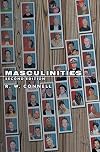
I read a portion of this today for my Queer Theory class, and I've read much more of it back in 2010 in my intro to Gender Studies course. Connell does an excellent job deconstructing the cult of masculinity, the variances within it, and its stranglehold on much of (USian) culture. There are fascinating case studies in here, I recall, but I only read the theory portion this time around. Well worth the read.

Zéér goede inleiding in genderstudies, zeer vlot geschreven, voor elk levend wezen een aanrader - very good introduction into gender studies, fluently written, a must-read for every living being

A lame attempt to pass off a fashionable, politically correct viewpoint as scientific research.
Example; "There is little evidence of even a weak biological determination of group differences in simple individual behaviours. And the evidence of cross-cultural and historical diversity in gender is overwhelming. For instance, there are cultures and historical situations where rape is absent, or extremely rare; where homosexual behaviour is majority practice (at a given point in the life show more cycle); where mothers do not predominate in child care (e.g., this work is done by old people, other children or servants); and where men are not normally aggressive."
What this agit-prop campaigner can't bring himself to say is that women usually look after children in very different cultures, that homosexuals are a minority and that there might be some obvious evolutionary/biological reasons for these facts - even if he doesn't like them. show less
Example; "There is little evidence of even a weak biological determination of group differences in simple individual behaviours. And the evidence of cross-cultural and historical diversity in gender is overwhelming. For instance, there are cultures and historical situations where rape is absent, or extremely rare; where homosexual behaviour is majority practice (at a given point in the life show more cycle); where mothers do not predominate in child care (e.g., this work is done by old people, other children or servants); and where men are not normally aggressive."
What this agit-prop campaigner can't bring himself to say is that women usually look after children in very different cultures, that homosexuals are a minority and that there might be some obvious evolutionary/biological reasons for these facts - even if he doesn't like them. show less
Awards

You May Also Like


Associated Authors
Statistics
- Works
- 32
- Also by
- 4
- Members
- 825
- Popularity
- #30,924
- Rating
- 3.7
- Reviews
- 10
- ISBNs
- 110
- Languages
- 8
- Favorited
- 2