
Simon Frith
Author of Sound effects : youth, leisure, and the politics of rock'n'roll
About the Author
Series
Works by Simon Frith
World Music, Politics and Social Change: Papers from the International Association for the Study of Popular Music (Music and Society Series) (1989) 5 copies
The history of live music in Britain Volume I, 1950-1967 : from dance hall to the 100 club (2013) 4 copies
The history of live music in Britain. From dance hall to the 100 Club / Volume I, 1950-1967 (2016) 2 copies
The History of Live Music in Britain, Volume 2, 1968-1984 - From Hyde Park to The Hacienda (2020) 1 copy
Associated Works
Common Culture: Reading and Writing About American Popular Culture (1995) — Contributor, some editions — 99 copies
Tagged
Common Knowledge
Members
Reviews
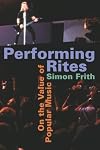
Simon Frith quotes Nicholas Cook saying, "What I find perplexing, and stimulating, about music is the way that people - most people - can gain intense enjoyment from it even though they know little or nothing about it in technical terms"
He goes on to ask whether such an understanding is necessary and concludes that it isn't. Music is seen to trigger emotions in a very direct way, giving the general emotions of suspense, joy, fear, anger etc. while associated images, if there are any, will show more show the specific causes of these emotions.
As he points out, theatre managers at the start of the century had trouble finding suitable musical scores for their piano players who would accompany silent films.The piano players favoured popular tunes that didn't reflect the emotions being projected on the screen.
In due course this was sorted out and he quotes Nöel Carroll saying, "modifying music, given the almost direct expressive impact of music, assures that the untutored spectators of the mass movie audience will have access to the desired expressive quality and, in turn will see the given scene under its aegis."
He gives a film clip example of a woman walking down some stairs. The meaning is not clear until you hear the music. "Suspense" music indicates that something is going to happen, "melodramatic" music indicates that something has already happened and within these frames the music can also show you whether the event was/will be joyful of fearful.
The book is a deep exploration of music and performance that is not particularly easy reading. It is a synthesis of many different sources that perhaps could have been better integrated but this is only a minor criticism of a very good book.
Frith looks at different classes of music contrasting traditional folk music, classical music and pop music and the world views that go with each.
For example he quotes from Niall MacKinnon's book, The British Folk Scene on the way that folk performance (in its modern guise) is, "a very conscious destroying and destruction of glamour", with an elaborate construction of informality, non-acceptance of overtly stylised presentations of self and general concern with purity. Its set rituals are seen as political, with a vision of "the old free America" that is communal, traditional,anti-commercial and anti-technocratic.
Pop music is shown to take almost exactly the opposite line and its difference from classical music is nicely portrayed in the equation of fun with the body and serious with the mind. How intense this 19th century seriousness could become is shown by Mark Twains description of the audience at a performance of Wagner in Bayreuth," Absolute attention and petrified retention.....You detect no movement...., you hear not one utterance."
Frith frequently refers to Theodor W. Adorno who was writing about music in the 1920's and seems to agree that "...the artist merely offers him a substitute for the sounding image of his own person which he would like to safeguard as a possesion." show less
He goes on to ask whether such an understanding is necessary and concludes that it isn't. Music is seen to trigger emotions in a very direct way, giving the general emotions of suspense, joy, fear, anger etc. while associated images, if there are any, will show more show the specific causes of these emotions.
As he points out, theatre managers at the start of the century had trouble finding suitable musical scores for their piano players who would accompany silent films.The piano players favoured popular tunes that didn't reflect the emotions being projected on the screen.
In due course this was sorted out and he quotes Nöel Carroll saying, "modifying music, given the almost direct expressive impact of music, assures that the untutored spectators of the mass movie audience will have access to the desired expressive quality and, in turn will see the given scene under its aegis."
He gives a film clip example of a woman walking down some stairs. The meaning is not clear until you hear the music. "Suspense" music indicates that something is going to happen, "melodramatic" music indicates that something has already happened and within these frames the music can also show you whether the event was/will be joyful of fearful.
The book is a deep exploration of music and performance that is not particularly easy reading. It is a synthesis of many different sources that perhaps could have been better integrated but this is only a minor criticism of a very good book.
Frith looks at different classes of music contrasting traditional folk music, classical music and pop music and the world views that go with each.
For example he quotes from Niall MacKinnon's book, The British Folk Scene on the way that folk performance (in its modern guise) is, "a very conscious destroying and destruction of glamour", with an elaborate construction of informality, non-acceptance of overtly stylised presentations of self and general concern with purity. Its set rituals are seen as political, with a vision of "the old free America" that is communal, traditional,anti-commercial and anti-technocratic.
Pop music is shown to take almost exactly the opposite line and its difference from classical music is nicely portrayed in the equation of fun with the body and serious with the mind. How intense this 19th century seriousness could become is shown by Mark Twains description of the audience at a performance of Wagner in Bayreuth," Absolute attention and petrified retention.....You detect no movement...., you hear not one utterance."
Frith frequently refers to Theodor W. Adorno who was writing about music in the 1920's and seems to agree that "...the artist merely offers him a substitute for the sounding image of his own person which he would like to safeguard as a possesion." show less

In the 80s, when I was doing work on popular music, I found Frith's theses that the words have nothing to do with the sociology of rock 'n' roll nonsensical. Listening to pop music now, I'm starting to think he saw the gestalt better than I did.

Very engaging history and sociology of rock in the 60s and early 70s. Great chapter on rock magazines.
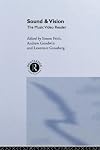
For those interested in an academic look at the relatively new fusion of audio and visual stimulation, the book provides some very interesting perspectives. My view of certain music videos has certainly changed.
Lists
culture (2)
Awards

You May Also Like


Associated Authors
Statistics
- Works
- 30
- Also by
- 2
- Members
- 528
- Popularity
- #47,120
- Rating
- 3.6
- Reviews
- 4
- ISBNs
- 89
- Languages
- 7