

Glenn Gould (1932–1982)
Author of The Goldberg Variations [sound recording]
About the Author
Image credit: Glenn Gould
Series
Works by Glenn Gould
A State of Wonder: The Complete Goldberg Variations, 1955 & 1981 (2002) — Artist — 50 copies, 1 review
Consort of Musicke by William Byrd & Orlando Gibbons; Sweelinck: Fantasia in D (The Glenn Gould Edition) (1971) 11 copies
A consort of musicke bye William Byrde and Orlando Gibbons — Artist — 5 copies
Glenn Gould plays Bach: The 6 Sonatas for Violin & Harpsichord BWV 1014-1019; The 3 Sonatas for Viola da gamba & Harpsichord BWV 1027-1029 (2012) 4 copies
Thirty-Two Short Films About Glenn Gould: Original Motion Picture Soundtrack (1994) — Artist — 4 copies
Mozart: The Piano Sonatas, Vol. 1 4 copies
Beethoven : Symphony no.5 in C minor, op.67 + Symphony no.6 in F major, op.68, 'Pastoral' : 1st. Movement {piano transcription Liszt} [sound recording] {Gould 1968} (1968) — piano — 4 copies
... And Serenity [sound recording] 3 copies
Beethoven op. 35 'Eroica', 7 bagatelles, op. 33, 6 bagatelles, op. 126 (Glenn Gould Edition) 3 copies
The Glenn Gould Silver Jubilee Album 2 copies
English suites : BWV 806 - 811 = Englische Suiten = Suites anglaises = Suites inglesas [2 CD] 2 copies
The French Suites, Vol. 1 2 copies
Glenn Gould Plays Sibelius 2 copies
Glenn Gould plays Bach DVD 2 copies
Glenn Gould Plays Bach 2 copies
Glenn Gould Plays Bach, Vol. 7: Violin Sonatas, BWV 1014-1019 & Viola da gamba Sonatas, BWV 1027-1029 (2012) 2 copies
J. S. Bach: The Brook and The Wellspring (National Public Radio Milestones of the Millennium) 1 copy
Partiten Vol.6 1 copy
Toccaten und Inventionen 1 copy
Klaviersonaten Vol.2 1 copy
Klaviersonaten Vol.1 1 copy
Bach Box 1 copy
Schoenberg;Gesange/Lieder 1 copy
Bach recital 1 copy
Glenn gould at the cinema 1 copy
The Glenn Gould Edition: Ludwig Van Beethoven Piano Sonatas, Volume II (Nos. 15-18, No. 23, Nos. 30-32) (1994) 1 copy
Glenn Gould Plays Bach 1 copy
Great Pianists 39 1 copy
Haydn: Piano Sonata in E-Flat Major, Hob. XVI: 49 - Mozart: Piano Sonata No. 10 in C Major, K. 330 ((Gould Remastered)) (2015) 1 copy
Glenn Gold. The Alchemist 1 copy
Ludwig van Beethoven - Glenn Gould - Sonaten Für Klavier Op. 109 Op. 110 Op. 111 - CBS - 61798 1 copy
Los genios del piano. Bach 1 copy
Toccatas, Vol. 2 1 copy
Three Keyboard Concertos 1 copy
Keyboard Concertos, Vol. II 1 copy
The French Suties, Vol. 2 1 copy
Toccatas, Vol. 1 1 copy
String Quartet, Op. 1 1 copy
Glenn Gould: Concert Dropout 1 copy
Berg/Schoenberg/Krenek 1 copy
The Six Last Sonatas 1 copy
The idea of North 1 copy
Bach: The French Suites 1 copy
Partita No. 5/Partita No. 6 1 copy
[Data Missing] 1 copy
Glenn Gould Edition Vol .3 1 copy
Glenn Gould Plays Bach & Sca 1 copy
Serenity 1 copy
Bagatelles, Op. 33 & Op. 126 1 copy
Sonatas No. 12/No. 13 1 copy
Emperor Concerto 1 copy
Enoch Arden 1 copy
Concerto No. 4 in G Major 1 copy
Bach:Toccatas Vol.01 1 copy
Associated Works
The Well-Tempered Clavier: Books I & II [sound recording] (1801) — Artist, some editions; Artist, some editions — 117 copies, 1 review
Piano Sonatas Nos. 30 - 32, Opp. 109 - 111 [sound recording] (2008) — Piano, some editions — 36 copies
Bach : French suites BWV 812 - 817 + Overture in the french style BWV 831 [sound recording] — Piano, some editions — 9 copies
Bach : Partitas BWV 825 - 830 + Preludes and Fugues [sound recording] — Piano, some editions — 7 copies
Beethoven : Symphony no.6 in F major, op.68, 'Pastoral' {piano transcription Liszt} [sound recording] {Gould 1968} (1968) — Piano, some editions — 3 copies
Bach : The art of the fuge, BWV1080 {excerpts} + Prelude and fugue in B-Flat major on the name BACH, BWV898 [sound recording] — Piano, some editions — 3 copies
Bach : + Beethoven/Liszt : Symphony no.5 in C minor, op.67 + Haydn : [sound recording] (1992) — Piano, some editions — 2 copies
Ten Intermezzi for Piano [sound recording] — Artist, some editions — 1 copy
Tagged
Common Knowledge
- Legal name
- Gould, Glenn Herbert
- Birthdate
- 1932-09-25
- Date of death
- 1982-10-04
- Gender
- male
- Education
- Royal Conservatory of Music
- Occupations
- musician
pianist
conductor
broadcaster
writer - Organizations
- Royal Conservatory of Music
Canadian Broadcasting Corporation - Awards and honors
- Molson Prize (1968)
Grammy Award – Best Album Notes – Classical (1974)
Grammy Award – Best Classical Album (1983)
Grammy Award – Best Instrumental Soloist Performance (1983)
Grammy Award – Best Instrumental Soloist Performance (1984)
Canadian Music Hall of Fame (1983) - Relationships
- Foss, Cornelia (claimed lover)
- Nationality
- Canada
- Birthplace
- Toronto, Ontario, Canada
- Places of residence
- the Beaches, Toronto, Ontario, Canada
- Place of death
- Toronto General Hospital, Toronto, Canada
- Burial location
- Mount Pleasant Cemetery, Toronto, Canada
- Associated Place (for map)
- Canada
Members
Reviews

Ο Γκλεν Γκουλντ, ευρέως γνωστός ως πιανίστας, υπήρξε παράλληλα συνθέτης, μουσικοκριτικός, ραδιοφωνικός και τηλεοπτικός παραγωγός, ενίοτε αρχιμουσικός, ένας άνθρωπος "αναγεννησιακός", όπως του άρεσε να αυτοχαρακτηρίζεται, αλλά και ένας εκστατικά βιωματικός show more δημιουργός-αναδημιουργός. Σε αυτή την παρθενική -μετά θάνατον- εμφάνισή του στα ελληνικά, μέσα από σταχυολογημένα κείμενά του που προέρχονται από συνεντεύξεις, άρθρα, διαλέξεις, κριτικές, ένθετα δίσκων, επιστολές, τηλεοπτικές και ραδιοφωνικές εκπομπές, ο Γκουλντ προβάλλει ως ο στοχαστής που λίγοι γνωρίζουν ότι υπήρξε. Στην εποχή της άκριτης σκέψης που διανύουμε, οι απόψεις του, διατυπωμένες εδώ και κάποιες δεκαετίες, εξακολουθούν ωστόσο -διαχρονικές και παλλόμενες όπως είναι- να προσκαλούν και να προκαλούν να σκεφτούμε αλλά και να νιώσουμε τα πάντα εκ νέου - ακριβώς όπως και οι περίφημες ηχογραφήσεις του. Πότε "πουριτανός" -όπως επίσης αυτοχαρακτηριζόταν- και πότε ριζοσπάστης, ο Γκουλντ προσπαθεί, και εντέλει καταφέρνει, να συγκεράσει το υποκειμενικό με το αντικειμενικό, το προσωπικό του σύστημα αξιών με το πανανθρώπινο. Με χαρακτηριστικό πάθος, χιούμορ, ειρωνεία, διεισδυτικότητα, αυτοσαρκασμό και αληθινό έρωτα για τη μουσική, γράφει και μιλά για την ηθική, την αισθητική, την ιστορία και το μέλλον της τέχνης αυτής -αλλά και της τέχνης της ηχογράφησης- με αφετηρία και τέρμα πάντοτε τον άνθρωπο. (Από την παρουσίαση στο οπισθόφυλλο του βιβλίου) show less
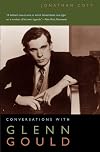
This quick little book contains two transcribed telephone conversations from the 70's between piano virtuoso/genius Glenn Gould and Rolling Stone journalist Jonathan Cott. These interviews paint an intimate portrait of the enigmatic musician, showing him to be as brilliant an improviser in conversation as he was at the piano. Cott is the ideal interlocutor of Gould – admiring and intelligent, he manages to arouse Gould to novel insights and all the while follow the circuitous train of show more thought of his answers. Though parts of their discussion slip into the recherché, digressing into extremely subtle points of musicology and music theory, there a plenty of gems along the way, such as Gould voicing his thoughts on The Beatles, on recording techniques, and best of all, on himself – his humming, his posture, and his tone. The book also begins with a satisfying and touching introduction by Cott, recounting his lifelong adoration of and friendship with Gould. A must for any Gould fan. show less
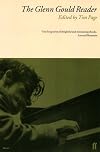
What made Glenn Gould a brilliant musician was his openness to high differentiation in music, which created the ecstatic intensity of his playing.
Glenn Gould died in October 1982. Twenty years on, he remains a spectre to aspirant pianists: revered by most, even the few who dislike his playing concede that Gould's interpretations are always fascinating and instructive. It is fortunate that he bequeathed such a large recording output, a result of his renunciation of the concert hall in 1964 show more and his subsequent devotion to the recording studio. "At live concerts," he said, "I feel demeaned, like a vaudevillian." He loathed the showpiece element of the concert hall: its artificiality, time constraints and the elevation of the individual above his craft -- a Romantic legacy as uninteresting to Gould as music that was not contrapuntal.
His performances displayed both remarkable virtuosity and peculiar adornment--"humming, gesticulating, untoward grimacing and conducting as he played," writes Said, a Columbia University professor and author of Reflections on Exile and Other Essays. Gould eschewed the romantic repertory of Chopin, Liszt, and Rachmaninoff that propelled contemporaries such as Van Cliburn and Vladimir Ashkenazy to superstardom, and then famously deserted the public stage in 1964 to devote himself to a cloistered recording career restricted almost entirely to the works of Johann Sebastian Bach. Since his death (from a stroke), Gould has been the subject of a host of articles and books, as well as a 1993 documentary, Thirty-two Short Films about Glenn Gould.
Gould He preferred the stricter Bach-playing of Rosalyn Tureck to the freer approach of Wanda Landowska and Casals. He disliked the "tyrant" conductors such as Toscanini, Georg Szell and Fritz Reiner but got on well with Herbert von Karajan, with whom he shared an obsession with the technical aspects of recording. He thought Hindemith's Das Marienleben was the greatest song-cycle ever written, an eccentric opinion if ever there was one.
A child prodigy as a pianist, Gould soon became famous as much for his eccentricities as for his artistry. He sat unusually low at the piano in a chair made for him by his father which he continued to use even when it was falling to bits (its squeaks can be heard on some of his recordings). His face was almost on top of the keyboard, his knees were higher than his bottom and he appeared to be hugging the instrument. He often wore a cloth cap and a thick coat because he was terrified of catching cold, and he was notorious for cancelling recitals for a variety of trivial reasons.
There can be no doubt though, as recordings prove, that he was a great pianist in spite of the idiosyncrasy of his interpretations. If he played a work in a conventional way it was, Bazzana suggests, because he happened to agree with the convention after having considered other options. He had immense success in Berlin and in Moscow, where he was the first pianist from North America to appear in the post-Stalin era, but he was too "way out" for London. show less
Glenn Gould died in October 1982. Twenty years on, he remains a spectre to aspirant pianists: revered by most, even the few who dislike his playing concede that Gould's interpretations are always fascinating and instructive. It is fortunate that he bequeathed such a large recording output, a result of his renunciation of the concert hall in 1964 show more and his subsequent devotion to the recording studio. "At live concerts," he said, "I feel demeaned, like a vaudevillian." He loathed the showpiece element of the concert hall: its artificiality, time constraints and the elevation of the individual above his craft -- a Romantic legacy as uninteresting to Gould as music that was not contrapuntal.
His performances displayed both remarkable virtuosity and peculiar adornment--"humming, gesticulating, untoward grimacing and conducting as he played," writes Said, a Columbia University professor and author of Reflections on Exile and Other Essays. Gould eschewed the romantic repertory of Chopin, Liszt, and Rachmaninoff that propelled contemporaries such as Van Cliburn and Vladimir Ashkenazy to superstardom, and then famously deserted the public stage in 1964 to devote himself to a cloistered recording career restricted almost entirely to the works of Johann Sebastian Bach. Since his death (from a stroke), Gould has been the subject of a host of articles and books, as well as a 1993 documentary, Thirty-two Short Films about Glenn Gould.
Gould He preferred the stricter Bach-playing of Rosalyn Tureck to the freer approach of Wanda Landowska and Casals. He disliked the "tyrant" conductors such as Toscanini, Georg Szell and Fritz Reiner but got on well with Herbert von Karajan, with whom he shared an obsession with the technical aspects of recording. He thought Hindemith's Das Marienleben was the greatest song-cycle ever written, an eccentric opinion if ever there was one.
A child prodigy as a pianist, Gould soon became famous as much for his eccentricities as for his artistry. He sat unusually low at the piano in a chair made for him by his father which he continued to use even when it was falling to bits (its squeaks can be heard on some of his recordings). His face was almost on top of the keyboard, his knees were higher than his bottom and he appeared to be hugging the instrument. He often wore a cloth cap and a thick coat because he was terrified of catching cold, and he was notorious for cancelling recitals for a variety of trivial reasons.
There can be no doubt though, as recordings prove, that he was a great pianist in spite of the idiosyncrasy of his interpretations. If he played a work in a conventional way it was, Bazzana suggests, because he happened to agree with the convention after having considered other options. He had immense success in Berlin and in Moscow, where he was the first pianist from North America to appear in the post-Stalin era, but he was too "way out" for London. show less

Lists
Awards


You May Also Like


Associated Authors
Statistics
- Works
- 256
- Also by
- 18
- Members
- 1,729
- Popularity
- #14,866
- Rating
- 4.0
- Reviews
- 11
- ISBNs
- 90
- Languages
- 12
- Favorited
- 3
