
Jonathan Cott
Author of Bob Dylan: The Essential Interviews
About the Author
Jonathan Cott is a contributing editor at Rolling Stone and has written for The New York Times, The Washington Post, and The New Yorker. He is author of twenty books, including Listening: Interviews, 1970-1989 (Minnesota, 2020), and is editor of Beyond the Looking Glass: Extraordinary Works of show more Fairy Tale and Fantasy. He lives in New York City. Maria Popova is founder of the weekly newsletter Brain Pickings and author of Figuring. A writer and literary and culture critic, she lives in Brooklyn, New York. show less
Series
Works by Jonathan Cott
Beyond the Looking Glass: Extraordinary Works of Fairy Tale & Fantasy (1985) — Editor — 183 copies, 7 reviews
Masterworks of Children's Literature, Vol. 7: Victorian Color Picture Books (1983) — Editor — 26 copies
Masterworks of Children's Literature, Vol. 4: The Middle Period, 1740-1836 (Part 2) (1984) — Editor — 12 copies
Masterworks of Children's Literature, Vol. 3: The Middle Period, 1740-1836 (Part 1) (1983) — Editor — 11 copies
Masterworks of Children's Literature, Vol. 5-6: The Victorian Era, 1837-1900 (1984) — Editor — 8 copies
Masterworks of Children's Literature, Vol. 1: The Early Years, 1550-1739 (Part 1) (1983) — Editor — 8 copies
Masterworks of Children's Literature, Vol. 2: The Early Years, 1550-1739 (Part 2) (1983) — Editor — 7 copies
Masterworks of Children's Literature, Vol. 1-2: The Early Years, 1550-1739 — Editor — 2 copies
City Of Earthly Love 1 copy
Associated Works
Masterworks of Children's Literature, Vol. 5: The Victorian Era, 1837-1900 (Part 1) (1984) — Editor — 12 copies
Masterworks of Children's Literature, Vol. 6: The Victorian Era, 1837-1900 (Part 2) (1985) — Editor — 6 copies
Masterworks of Children's Literature, Vol. 3-4: The Middle Period, 1740-1836 (1984) — Editor — 2 copies
Tagged
Common Knowledge
Members
Reviews

Listening: Interviews, 1970-1989 by Jonathan Cott is so much more than simply a collection of interviews. My expectations were far exceeded and I found myself seeking additional information so I could gain a better appreciation of both the interviewees and their respective endeavors.
Let me start by saying that I enjoy interviews. Even the ones that do little more than serve up self-promotional opportunities. I like hearing/reading what a person actually wants to project to an audience as show more much as I enjoy hearing/reading what critics have to say about a person and their work. I am often more interested in interviews with people I know little to nothing about except whatever might be their field and, maybe, their more famous works or accomplishments. So this book was something I expected to like and I fully expected it to be uneven. Collections generally tend to be so, whether of interviews, short stories, or essays. Since each is its own entity, they tend to vary in relation to how a reader relates to them. I found this collection to be by far the least uneven I can recall. And the common element is obviously Cott, so all credit and respect goes out to him.
The interviews with the people I was pretty familiar with were better than I expected. But the real power of the book was in the interviews with people I was only somewhat familiar with. Everyone here will likely be known to most readers and depending on your areas of interest some will be better known to you. These interviews are surprisingly consistent in giving the reader a sense of each person as both the celebrity and the everyday person.
I would recommend for readers who like to learn more than just what is written that they use some resources to make their understanding of the person better. The example that stands out in my mind for me is George Balanchine. I do not follow ballet and, while I have enjoyed the few times I have gone, it is not something I fully grasp or understand beyond appreciating the tremendous athleticism of the dancers and the beautiful dynamic of music and physical movement. Cott did so much homework for these interviews that he speaks to specifics, and thanks to the internet I was able to access video of some of the pieces he mentions. This not only made my understanding of Balanchine better but gave me a wonderful lesson in dance and ballet choreography. I so enjoyed doing that that I did the same with several of the interviews, even ones I knew fairly well.
I highly recommend this to anyone who likes interviews. Those of you who look for the interview in a copy of a magazine. Because Cott asks questions that are a wonderful combination of pointed (to hopefully guide the general direction of the response) and open (to allow the interviewee to take off as she/he sees fit in whatever direction) each interview offers as much insight into the person's field as it does into the person.
Reviewed from a copy made available by the publisher via NetGalley. show less
Let me start by saying that I enjoy interviews. Even the ones that do little more than serve up self-promotional opportunities. I like hearing/reading what a person actually wants to project to an audience as show more much as I enjoy hearing/reading what critics have to say about a person and their work. I am often more interested in interviews with people I know little to nothing about except whatever might be their field and, maybe, their more famous works or accomplishments. So this book was something I expected to like and I fully expected it to be uneven. Collections generally tend to be so, whether of interviews, short stories, or essays. Since each is its own entity, they tend to vary in relation to how a reader relates to them. I found this collection to be by far the least uneven I can recall. And the common element is obviously Cott, so all credit and respect goes out to him.
The interviews with the people I was pretty familiar with were better than I expected. But the real power of the book was in the interviews with people I was only somewhat familiar with. Everyone here will likely be known to most readers and depending on your areas of interest some will be better known to you. These interviews are surprisingly consistent in giving the reader a sense of each person as both the celebrity and the everyday person.
I would recommend for readers who like to learn more than just what is written that they use some resources to make their understanding of the person better. The example that stands out in my mind for me is George Balanchine. I do not follow ballet and, while I have enjoyed the few times I have gone, it is not something I fully grasp or understand beyond appreciating the tremendous athleticism of the dancers and the beautiful dynamic of music and physical movement. Cott did so much homework for these interviews that he speaks to specifics, and thanks to the internet I was able to access video of some of the pieces he mentions. This not only made my understanding of Balanchine better but gave me a wonderful lesson in dance and ballet choreography. I so enjoyed doing that that I did the same with several of the interviews, even ones I knew fairly well.
I highly recommend this to anyone who likes interviews. Those of you who look for the interview in a copy of a magazine. Because Cott asks questions that are a wonderful combination of pointed (to hopefully guide the general direction of the response) and open (to allow the interviewee to take off as she/he sees fit in whatever direction) each interview offers as much insight into the person's field as it does into the person.
Reviewed from a copy made available by the publisher via NetGalley. show less
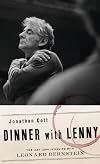
On DINNER WITH LENNY: The Last Long Interview with Leonard Bernstein
by Jonathan Cott
October 18, 2012
When I was a teenager, I received as gifts two record albums. One was the complete “Ma Vlast” (My Fatherland) by Smetana, conducted by Sir Malcolm Sargent and performed by the Royal Philharmonic, put out by Seraphim Records. The other was “Bernstein’s Greatest Hits, Vol. 2”, performed by the New York Philharmonic, published by Columbia Records. This latter album included, among other show more things, “The Moldau”, one of the symphonic poems from the collection “Ma Vlast”. The Seraphim recording of “The Moldau”,is beautiful, majestic and precise, as is the entire collection. It fills one with the visual journey of the great river from its beginnings as a spring to its presence as a mighty river rushing through Prague. When you listen to it you are impressed and moved. Now, when you listen to Bernstein’s recording of “The Moldau”, you are impassioned, transported, thrown up and down, agitated into action as you follow that river from trickle to stream to roaring waves. You “see” things happening on the riverbank: a stag is hunted by hounds and hunters, a wedding takes place. The river reflects sunlight, passes through shadowy forest, rushes over rocks and glistens in the moonlight. This is the recording I wore my needle out on and the reason I read DINNER WITH LENNY: The Last Long Interview with Leonard Bernstein.
Leonard Bernstein was many things in the world of music and culture, not the least of which was controversial. He was a brilliant, brilliant conductor; and as my copy of “The Moldau” attests, could turn a piece into something transcendent. He was a master at communicating the soul of a piece and kind of channeling the composer as he conducted. He was also a wonderful teacher of music and did a televised series of Young People’s Concerts that I can still recall. Jonathan Cott has written down the last major interview that Bernstein gave, just about a year before his death. Much of the craziness of his personal life and his more outlandish public statements are forgotten, and we are left with this older man of creative genius, full of stories and appreciation for his family, his life and his profound love and knowledge of music.
In its weaker moments, DINNER WITH LENNY, has trouble getting off the ground, dragging along while interviewer and adorer Jonathan and his idol wax snarky and glitter a bit too manically over all the famous people pictured on the walls of Bernstein’s sitting room and all the clever adages they can toss around about music and art. However, if you can get beyond all that and beyond his faulty pseudo-psychobabble you will hit pay dirt because, at his best, Bernstein is a genius and passionate enthuser of all things pertaining to music. Yes, he’s intellectually arrogant, so when he wanders off into psychology, religion or politics where he is really without a rudder, it’s best just to groan and move on. What he says about music and the human source of and response to music is to be treasured. Finally, Cott’s account of Bernstein’s death in the Postlude with draw tears because Bernstein was, to the end, full of ideas and life and we still need him. DINNER WITH LENNY draws you into that sitting room and lets you share in Bernstein's mega personality. Cott's leading questions move the interview along apace, and you are left feeling privileged that you were with this great artist if only for a short visit. show less
by Jonathan Cott
October 18, 2012
When I was a teenager, I received as gifts two record albums. One was the complete “Ma Vlast” (My Fatherland) by Smetana, conducted by Sir Malcolm Sargent and performed by the Royal Philharmonic, put out by Seraphim Records. The other was “Bernstein’s Greatest Hits, Vol. 2”, performed by the New York Philharmonic, published by Columbia Records. This latter album included, among other show more things, “The Moldau”, one of the symphonic poems from the collection “Ma Vlast”. The Seraphim recording of “The Moldau”,is beautiful, majestic and precise, as is the entire collection. It fills one with the visual journey of the great river from its beginnings as a spring to its presence as a mighty river rushing through Prague. When you listen to it you are impressed and moved. Now, when you listen to Bernstein’s recording of “The Moldau”, you are impassioned, transported, thrown up and down, agitated into action as you follow that river from trickle to stream to roaring waves. You “see” things happening on the riverbank: a stag is hunted by hounds and hunters, a wedding takes place. The river reflects sunlight, passes through shadowy forest, rushes over rocks and glistens in the moonlight. This is the recording I wore my needle out on and the reason I read DINNER WITH LENNY: The Last Long Interview with Leonard Bernstein.
Leonard Bernstein was many things in the world of music and culture, not the least of which was controversial. He was a brilliant, brilliant conductor; and as my copy of “The Moldau” attests, could turn a piece into something transcendent. He was a master at communicating the soul of a piece and kind of channeling the composer as he conducted. He was also a wonderful teacher of music and did a televised series of Young People’s Concerts that I can still recall. Jonathan Cott has written down the last major interview that Bernstein gave, just about a year before his death. Much of the craziness of his personal life and his more outlandish public statements are forgotten, and we are left with this older man of creative genius, full of stories and appreciation for his family, his life and his profound love and knowledge of music.
In its weaker moments, DINNER WITH LENNY, has trouble getting off the ground, dragging along while interviewer and adorer Jonathan and his idol wax snarky and glitter a bit too manically over all the famous people pictured on the walls of Bernstein’s sitting room and all the clever adages they can toss around about music and art. However, if you can get beyond all that and beyond his faulty pseudo-psychobabble you will hit pay dirt because, at his best, Bernstein is a genius and passionate enthuser of all things pertaining to music. Yes, he’s intellectually arrogant, so when he wanders off into psychology, religion or politics where he is really without a rudder, it’s best just to groan and move on. What he says about music and the human source of and response to music is to be treasured. Finally, Cott’s account of Bernstein’s death in the Postlude with draw tears because Bernstein was, to the end, full of ideas and life and we still need him. DINNER WITH LENNY draws you into that sitting room and lets you share in Bernstein's mega personality. Cott's leading questions move the interview along apace, and you are left feeling privileged that you were with this great artist if only for a short visit. show less
 This review was written for LibraryThing Early Reviewers.
A quick and totally absorbing read. This is the full length version of a 12-hour conversation the author had with Leonard Bernstein in 1989, just a year before the conductor's death. It is filled with jewels of observation and opinion from a man whose musical brilliance was apparently nearly matched by his comprehensive knowledge (of Freud; of Keats, whose sonnets he recited from memory; of languages; of various religions; of painting, politics, philosophy; of, godhelpus, Finnegan's Wake). show more What a treat---what an exhausting, exhilarating treat---it must have been to spend time with such a dynamic individual. It is well known by now that Bernstein indulged himself in love affairs of all sorts; he smoked incessantly and refused to give it up although he was diagnosed with emphysema in his mid-twenties; he drank; he partied; he composed, conducted and performed. He very nearly managed to die on the podium as he had once said he hoped to do. Cott's interview, which originally appeared in a much abridged version in Rolling Stone magazine in 1990, allows the full force of Bernstein's personality to leap off the page, periodically bursting into song. This book is scheduled for publication in January of 2013, and will reportedly include photographs selected from the archives of the New York Philharmonic and other sources, which unfortunately were not embedded in the ARC I read. Even without pictures, this one rates 5 stars. show less
This review was written for LibraryThing Early Reviewers.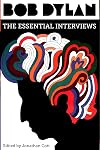
Chronological set of interviews, which get better as time goes on.
Love this bit from 2006:
"I can't stand to play arenas, but I do play 'em. But I know that's not where music's supposed to be. It's not meant to be heard in football stadiums, it's not 'Hey, how are you doin' tonight, Cleveland?' Nobody gives a shit how you're doing tonight in Cleveland... They say, 'Dylan never talks.' What the hell is there to SAY! That's not the reason an artist is front of people."
Hell yeah, when you put show more it that way.
What comes through over and over, interview after interview, is Bob's roots in folk music, and love and respect for (and encyclopedic knowledge of) those old songs and traditions and musicians who came before him. People who think folk was just a youthful phase or a mercenary way for him to break into the business don't get it. "Those old songs are my lexicon and my prayer book," he says in 1997, and I believe him. show less
Love this bit from 2006:
"I can't stand to play arenas, but I do play 'em. But I know that's not where music's supposed to be. It's not meant to be heard in football stadiums, it's not 'Hey, how are you doin' tonight, Cleveland?' Nobody gives a shit how you're doing tonight in Cleveland... They say, 'Dylan never talks.' What the hell is there to SAY! That's not the reason an artist is front of people."
Hell yeah, when you put show more it that way.
What comes through over and over, interview after interview, is Bob's roots in folk music, and love and respect for (and encyclopedic knowledge of) those old songs and traditions and musicians who came before him. People who think folk was just a youthful phase or a mercenary way for him to break into the business don't get it. "Those old songs are my lexicon and my prayer book," he says in 1997, and I believe him. show less
Lists
Awards

You May Also Like


Associated Authors
Statistics
- Works
- 39
- Also by
- 5
- Members
- 1,979
- Popularity
- #12,994
- Rating
- 4.0
- Reviews
- 62
- ISBNs
- 132
- Languages
- 13
- Favorited
- 1
