
John Lennon (1940–1980)
Author of In His Own Write
About the Author
Best known for his work with the world-renowned rock group, The Beatles, John Winston Lennon was born in Liverpool, England on October 9, 1940 to Alfred and Julia Stanley Lennon. Lennon was married twice, first to Cynthia Powell in 1962, with whom he had a child, John Julian, and later, in 1969, to show more Yoko Ono, the mother of his son Sean Taro Ono. Lennon was involved in various late 1950s British musical groups. He helped establish the Beatles in the early 1960s, teaming up with fellow Beatle Paul McCartney to write numerous bestselling popular songs including "Revolution" and "Strawberry Fields Forever." The Beatles' universal fame also resulted in their starring in such films as "Help!" and "A Hard Day's Night." When he met and married Yoko Ono in 1969, Lennon legally changed his name to John Ono Lennon. It was with Ono that he collaborated on several musical projects following the breakup of The Beatles. Lennon and Ono also gained notoriety from such public acts as being filmed and interviewed in bed, as a form of peace protest. John Lennon also had a string of post-Beatle solo music successes and he published satirical poems and stories. He moved to New York City and on December 8, 1980, he was shot to death outside his home in the Dakota building, by a deranged ex-fan, Mark David Chapman. He and Ono had just finished recording a new album "Double Fantasy." After its release, one of the songs, "Starting Over" was released as a single and rejuvenated his musical fame as his fans mourned his passing. Each year, on the anniversary of John Lennon's death, his fans throughout the world hold memorial services. Strawberry Fields, New York City's Central Park, further commemorates him. (Bowker Author Biography) show less
Image credit: Photo credit: Bob Gruen
Series
Works by John Lennon
All We Are Saying: The Last Major Interview with John Lennon and Yoko Ono (2000) 120 copies, 1 review
The Lennon tapes: John Lennon and Yoko Ono in conversation with Andy Peebles, 6 December 1980 (1981) — Interviewee — 73 copies
The Beatles : Complete : Piano Vocal/Easy Organ [sheet music] (1972) — Composer — 65 copies, 1 review
Search for liberation: Featuring a conversation between John Lennon and Swami Bhaktivedanta (1981) 49 copies
Great Songs of Lennon & Mccartney: 73 Songs Arranged for Voice, Piano, Organ & Guitar (1973) 27 copies
The U.S. vs. John Lennon 8 copies
The Beatles: Help! [Blu-ray] 7 copies
Por su propio cuento / In His Own Write: Un Espanolito En Obras / a Spaniard in the Works (Papel De Liar) (2011) 6 copies
Happy Xmas (War is Over) 6 copies
John Lennon 1940-1980 In His Own Write & A Spaniard in the Works Writings and Drawings (1967) 5 copies
Woman [sheet music] 4 copies
The Beatles - The First U.S. Visit 4 copies
Watching the Wheels 3 copies
John & Yoko - Above Us Only Sky 2 copies
Komm gib mir deine Hand + Sie liebt dich [sound recording] (1964) — Composer, vocals, rhythm guitar, handclaps — 2 copies
Yellow Submarine [sheet music : Northern Songs] — Composer — 2 copies
The John Lennon Collection 2 copies
Imagine / It's So Hard 45 single 2 copies
Walls & Bridges 2 copies
Unseen Beatles (DVD) 2 copies
Bag One 1 copy
RECORDING John LP 1980: Double Fantasy, Geffen (gray lined label) 17 November 1980 [5th studio LP] 1 copy
RECORDING John LP 1984: [JL06] Milk And Honey, Polydor (red label) 27 January 1984 [6th studio LP] 1 copy
No title 1 copy
Z RECORDING NON-BEATLES Soundtrack LP: All This And World War II, 20th Century, 25 October 1976 1 copy
Blackbird 1 copy
Rock N' Roll 1 copy
Rolling stone 1 copy
Nobody Told Me / O'Sanity 1 copy
John Lennon 1940-1980 1 copy
John Lennon Box 1 copy
John Lennon 1 copy
RECORDING John 45: #9 Dream/What You Got, Capitol (purple label) 1978 reissue of 1975 Apple single 1 copy
RECORDING John 45: (Just Like) Starting Over/Kiss Kiss Kiss, Geffen (Geffen label) 23 October 1980 1 copy
The Lennon Diary 1 copy
The Beatles in revue 1 copy
Lennon & McCartney for men 1 copy
Just Like Starting Over 1 copy
All you need is love 1 copy
The Times Beatles Songbook [piano vocal + guitar chords score + commentaries] (2009) — Composer — 1 copy
Yes it is [Musiktryck] 1 copy
Nobody I know [Musiktryck] 1 copy
Na własne kopyto 1 copy
Amor Verdadero 1 copy
John Lennon--Rolling Stone magazine, Issues No. 74 and 75 (Two-part interview with John Lennon) (1971) 1 copy
John Lennon Telecasts 1 copy
Snap Shots 1 copy
Bedism [sound recording] 1 copy
Live 1969/1972 1 copy
imagine 1 copy
HISTIRIAS Y CANCIONES 1 copy
Our first 8 years [music] 1 copy
The concise Beatles complete 1 copy
John Lennon The Collection 1 copy
Help [VHS] 1 copy
Happy X-Mas (War is Over) 1 copy
We Can Work It Out 1 copy
Grow Old With Me 1 copy
Something New : vocal album with guitar chords [sheet music] — Composer — 1 copy
Imagine 1 copy
RECORDING John 45: Watching The Wheels/Yes I’m Your Angel, Geffen (Geffen label ) 13 March 1981 1 copy
The Beatles 1940-1958 1 copy
'70's Rock Mix 1 copy
U licnom spravomspisu 1 copy
With A Little Help From My Friends - 6 Beatles Songs in Close Harmony (SATB) (Choral Connection) (1990) 1 copy
Lennon's Last Weekend 1 copy
Collector's Edition 1 copy
The legacy of John Lennon 1 copy
Hey Jude 1 copy
Rock 'n' Roll 1 copy
John Lennon 1 copy
Collection 1 copy
A Toot and a Snore in '74 1 copy
The Beatles Songbook 1 copy
Laddy Madonna 1 copy
Mind Games 1 copy
#9 Dream 1 copy
Rock 'N' Roll 1 copy
John and Yoko: The Art Films 1 copy
Imagine (SAB) 1 copy
Got to get you into my life 1 copy
Nowhere Man 1 copy
The Messenger 1 copy
Imagine, the motion picture 1 copy
Walls and Bridges 1 copy
The Beatles revolver 1 copy
Beatlemania (Playbill) 1 copy
Anthology 1 copy
John Lennon en su tinta 1 copy
Can't Buy Me Love (2-part) 1 copy
En busca de la liberación 1 copy
The Beatles, 1967-1970 1 copy
Nobody Told Me / O Sanity 1 copy
Associated Works
Literature: An Introduction to Fiction, Poetry, and Drama (1995) — Contributor, some editions — 1,017 copies, 7 reviews
The Playboy Interviews with John Lennon & Yoko Ono: The Final Testament (1957) 158 copies, 4 reviews
Help! : Original motion picture soundtrack [sound recording : North American release] (1965) — Composer and Performer — 30 copies
Very seventies : a cultural history of the 1970s, from the pages of Crawdaddy (1995) — Contributor — 27 copies
I am also a you: a book of thoughts with photographs (1971) — Introduction, some editions — 22 copies
Enoch Light and the Brass Menagerie — Songwriter — 1 copy
A Hard Day's Night [album & documentary] — Composer — 1 copy
We Can Work It Out: Covers & Cookies Of Lennon, McCartney & The Beatles — Composer — 1 copy
Tagged
Common Knowledge
- Canonical name
- Lennon, John
- Legal name
- Lennon, John Ono
- Other names
- Lennon, John Winston
- Birthdate
- 1940-10-09
- Date of death
- 1980-12-08
- Gender
- male
- Education
- Dovedale Primary School, Herondale Road, Liverpool, Merseyside, England, UK
Quarry Bank High School, Harthill Road, Liverpool, Merseyside, England, UK
Liverpool College of Art - Occupations
- musician
actor
songwriter
singer
political activist - Organizations
- The Beatles
- Awards and honors
- Order of the British Empire (Member, 1965)
Rock and Roll Hall of Fame (1988, 1994)
Songwriters Hall of Fame (1987)
Grammy Award (1981)
Brit Award for Outstanding Contribution to Music (1981) - Relationships
- Lennon, Cynthia (first spouse)
Ono, Yoko (second spouse)
Lennon, Julian (son)
Lennon, Sean (son)
Epstein, Brian (manager)
McCartney, Paul (friend) (show all 8)
Harrison, George (friend)
Starr, Ringo (friend) - Cause of death
- murder
- Nationality
- UK
- Birthplace
- Liverpool, Merseyside, England, UK
- Places of residence
- 9 Newcastle Road, Liverpool, Merseyside, England, UK
Mendips, 251 Menlove Avenue, Liverpool, Merseyside, England, UK
The St. Regis Hotel, 5th Avenue, East 55th Street, New York, New York, USA
105 Bank Street, Greenwich Village, New York, New York, USA
The Dakota, West 72nd Street, New York, New York, USA - Place of death
- The Dakota, New York, New York, USA
- Burial location
- Strawberry Fields, Central Park, New York, New York, USA (cremated, ashes scattered)
- Map Location
- England, UK
Members
Reviews
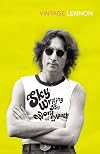
A successor to (and improvement on) In His Own Write and A Spaniard in the Works, John Lennon's two books of nonsense verse written during the height of Beatlemania, Skywriting by Word of Mouth is an unexpected joy. Written during the late 1970s during Lennon's 'retirement' from music, and published six years after his tragic death, the book shows Lennon unbound, his mind completely free creatively. As the titular story says in its opening, it is "a novelty in 4/4, in which our hero finds show more himself, ten years later, older, madder, but definitely CURED" (pg. 47). John is evidently having fun, which, when combined with his previously proven talent for this sort of thing, makes for a surprisingly great reading experience.
Warming up the reader with a breezy and candid bio of his post-Beatles years ("I even wrote and recorded the rather embarrassing 'Power to the People'… We kept the royalties, of course." (pg. 25)), the book becomes an occasionally astonishing and always interesting series of short stories. Deploying great imagery and wordplay, Lennon also shows a maturity and craft that wasn't necessarily evident in his two previous nonsense books, and the reader feels the better for it.
It is also genuinely funny, not only in its wordplay, but in its daftness and occasional bawdiness, forging yet another mysterious spiritual link between the Beatles and the Pythons. (You could imagine "Ladies and gentlemen, I give you something to chew on, followed by a short pause" (pg. 49) being recited by John Cleese.) Lewis Carroll and Edward Lear are obvious analogies, but it notable that Skywriting by Word of Mouth does not feel diminished by the comparison. This is a book that would stand even if its author was not John Lennon. show less
Warming up the reader with a breezy and candid bio of his post-Beatles years ("I even wrote and recorded the rather embarrassing 'Power to the People'… We kept the royalties, of course." (pg. 25)), the book becomes an occasionally astonishing and always interesting series of short stories. Deploying great imagery and wordplay, Lennon also shows a maturity and craft that wasn't necessarily evident in his two previous nonsense books, and the reader feels the better for it.
It is also genuinely funny, not only in its wordplay, but in its daftness and occasional bawdiness, forging yet another mysterious spiritual link between the Beatles and the Pythons. (You could imagine "Ladies and gentlemen, I give you something to chew on, followed by a short pause" (pg. 49) being recited by John Cleese.) Lewis Carroll and Edward Lear are obvious analogies, but it notable that Skywriting by Word of Mouth does not feel diminished by the comparison. This is a book that would stand even if its author was not John Lennon. show less
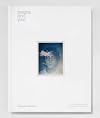
I took my time with this one, because there's a lot to absorb.
The older I get, the more I realize that John and Yoko were a little "woo woo" at times. Out there, I guess is the better way to say it. But I firmly believe their hearts were always in the right place, and for that, I will always admire them.
I love that this book isn't just about John and Yoko, but that a large portion is given over to all those who had a hand in somehow bringing Imagine to life. The musicians, the producers, the show more photographers, the helping hands. It truly shows that no album is made entirely from a single person's vision or talent.
It also covers the making of the Imagine movie, that I was given tickets to see for my birthday (three days before John's). The movie is...interesting. I'm glad I saw it, but I can't say I truly enjoyed it. It was a little too out there for my tastes. Maybe if it was still the early 70s and I was high...
I did have to laugh at the section of the book where John and Yoko talk about just letting the movie happen. Just waking up and deciding what to film that day. As though John had already forgotten how well that worked just a few years earlier for Magical Mystery Tour.
Overall, though, this is a gorgeous and fascinating insight into the making of John Lennon's best album, and well worth the effort. show less
The older I get, the more I realize that John and Yoko were a little "woo woo" at times. Out there, I guess is the better way to say it. But I firmly believe their hearts were always in the right place, and for that, I will always admire them.
I love that this book isn't just about John and Yoko, but that a large portion is given over to all those who had a hand in somehow bringing Imagine to life. The musicians, the producers, the show more photographers, the helping hands. It truly shows that no album is made entirely from a single person's vision or talent.
It also covers the making of the Imagine movie, that I was given tickets to see for my birthday (three days before John's). The movie is...interesting. I'm glad I saw it, but I can't say I truly enjoyed it. It was a little too out there for my tastes. Maybe if it was still the early 70s and I was high...
I did have to laugh at the section of the book where John and Yoko talk about just letting the movie happen. Just waking up and deciding what to film that day. As though John had already forgotten how well that worked just a few years earlier for Magical Mystery Tour.
Overall, though, this is a gorgeous and fascinating insight into the making of John Lennon's best album, and well worth the effort. show less
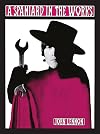
A decent follow-up to In His Own Write. However, it seems less focused than its predecessor (which is strange, as the first was rather confusing itself). Nevertheless, some of the story ideas are more developed than those in the first book. If that seems contradictory, then welcome to the curious mind of John Lennon.
Review of: Imagine John Yoko, by John & Yoko Lennon
by Stan Prager (2-3-19)
It was late and I was on my way home, rock n’ roll blasting on the car radio. It was the one-week anniversary of our very first apartment together as a couple, so there was a kind of glow around the day. Then the music cut off abruptly and the news broke: John Lennon had been shot. John Lennon was dead. When the tunes resumed, it was all Beatles and Lennon solo stuff. One of the songs was, of course, Imagine. Tears show more streamed down my face. It was December 8, 1980.
Imagine had been recorded and released in 1971, but as the year 1980 closed out that already felt like fifty years ago. The Vietnam War and Nixon were long gone. The sense of radicalism, of tumult—as well as innovative creative expression in music and the arts—had slipped away, its wake littered with the detritus of cocaine, schlocky pop music, and a kind of national ennui. Most men, including myself, didn’t wear their hair shoulder-length anymore. Almost exactly a month before Lennon’s murder, Ronald Reagan was elected President, leaving many of us far more shaken than stirred.
John Lennon had recently reemerged after a long hiatus from the studio and public life. He was just forty, but he looked much older than that. Double Fantasy—his first album in five years, featuring songs by John and Yoko—was released just three weeks before his death. I personally found it weak and disappointing. But I bought it just days after it hit the record stores—of course—it was music from John Lennon! Lennon had been my favorite Beatle, as well as a kind of personal hero: a peace activist, an iconoclast, a man who found himself trapped by the money and fame and lifestyle that others salivated for, a man willing to throw it all away (well, perhaps not all the money) for the love of his life, avant-garde artist Yoko Ono, even if many of us were puzzled by his obsession with her. It turned out that the sum of its parts that was the Beatles would ever far outshine the solo work of its members, including Lennon, but perhaps his best work was the album Imagine that featured that eponymous song of hope that remains a soft-rock national anthem. John’s murder sent Double Fantasy skyrocketing on the charts, if not to critical acclaim, but Imagine is the real legacy of John Lennon.
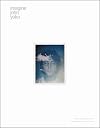
Thirty-eight Christmases after Lennon’s assassination, the stark white cover of the beautiful outsize volume Imagine John Yoko emerged beneath festive wrapping paper, a gift from my wife. Compiled by Yoko, but with author credits to John and Yoko Lennon, this gorgeous coffee table edition boasts extensive interviews, black and white photography, liner notes, illustrations, and ephemera, crafted to tell the “definitive inside story” of the making of the Imagine album and film of the same name at their English country mansion estate, Tittenhurst Park.
The spotlight is not only upon John and Yoko, but also on a generous cast of characters, including co-producer Phil Spector, then-giants of the music scene such as George Harrison, Nicky Hopkins and Mike Pinder, as well as lesser-known figures, plus all sorts of production assistants and the often uncredited folks who each play a significant if not always acknowledged role in the final cut of a masterpiece like Imagine. Interview excerpts are not dated; some are contemporary to production, while others look back from decades ahead. Sadly, like Lennon, many have passed on, including Harrison and Hopkins; King Curtis, who sat in on saxophone, was murdered in late summer of that same year. Ironically, Phil Spector and drummer Jim Gordon—of Derek and the Dominos fame—are both in prison serving life sentences for murder. Almost all the rest who are still alive have faded into obscurity. But thumbing through this magnificent book, for a moment it is the early part of 1971 again: John Lennon is just thirty, madly and obsessively in love with the older Yoko Ono, who just as madly and obsessively reciprocates. John has left the Beatles behind, his long collaboration and once-close friendship with Paul McCartney on the rocks, but there is a palpable sense of great promise in what the future holds for John and Yoko.
The very next day after I began perusing Imagine John Yoko—and before it turned into a cover-to-cover read for me—I dug out my old vinyl copy of Imagine and gave it a spin. I had not listened to it in many years and I had forgotten what a truly great album it is. The title track tends to get all the attention, but to my mind Gimme Some Truth is the best song on the record. Other iconic tunes include Crippled Inside, Jealous Guy and I Don’t Want to be a Soldier. Some might argue that none of it lives up to Strawberry Fields Forever or Happiness is a Warm Gun, but there’s little doubt that the collection of songs on Imagine is outstanding and certainly Lennon’s best post-Beatles work. It was re-listening to the album after all this time that led me to carefully read, rather than skim, the entire book. Along the way, I also screened the Blu-ray DVD that contains the full length “rockumentary” film Imagine, replete with innovative music videos from the Imagine album as well as selections from Yoko’s Fly album, as well as a companion “making-of-Imagine” film entitled Gimme Some Truth. Icing on the cake includes cameos from Andy Warhol, Fred Astaire, Dick Cavett and Jack Palance. I highly recommend these audio-visual companions to the book to help to make it come to life in all its brilliance once more.
The highlight of the book and the film is John in the “White Room” at Tittenhurst recording Imagine, singing and playing on the all-white Steinway grand piano that he gave to Yoko for her birthday that year, while Yoko slowly opens a series of white shutters to let light stream in. At the end, Yoko is seated beside John at the piano, and they exchange looks that reflect such a degree of genuine mutual love and affection and admiration that that one single moment serves to validate the entire project. The combined experience of immersing myself in the book, the album and the films made me not only come to better appreciate the superlative achievement of Imagine, but also the integral role that Yoko represented as artist and inspiration throughout. Like much of the public, back in the day I found it difficult to grasp John’s utter infatuation with Yoko, but the testimony of so many in this book underscores Yoko’s essential piece in the creation of this masterpiece. At the same time, listening to her vocals on portions of the Imagine film have yet to convince me that she has talent as a singer. Still, Yoko was clearly full partner to Imagine, not some assistant. It would never have been if not for her presence in John’s life.
One of my favorite bits in the book and in the Gimme Some Truth film feature Claudio, a Vietnam Vet suffering from PTSD, who was found to be living for some days in the woods at Tittenhurst. Claudio had become convinced that John was communicating with him through his lyrics. Disheveled and confused, he is brought before John, who tells him that “I’m just a guy who writes songs,” and patiently explains to an obviously crestfallen Claudio that the lyrics have nothing to do with him. There is a brief pause, and then John, with much empathy, asks: “Are you hungry?” John then brings him in and feeds him at his table. Claudio was both disturbed and obsessed with John Lennon, and the recounting of this episode made me wonder how things might have turned out differently if John had managed to similarly engage someone else who was disturbed and obsessed with him—Mark David Chapman—before it was too late.
On the final pages of Imagine John Yoko, they each speak to us. There’s an excerpt from an interview with John saying of he and Yoko that “We’d like to be remembered as the Romeo and Juliet of the 1970s.” When asked if he had a picture of “When I’m 64,” John replied:
“I hope we’re a nice old couple living off the coast of Ireland or something like that—looking at our scrapbook of madness. My ultimate goal is for Yoko and I to be happy and try and make other people happy through our happiness. I’d like everyone to remember us with a smile . . . The whole of life is a preparation for death. I’m not worried about dying. When we go, we’d like to leave behind a better place.” [p298]
Those days of turning scrapbook pages were, sadly, not to be. As a fan, as a reviewer, I would urge you to buy this book and to read it, but it is not for me but rather for Yoko to deliver the coda, of course:
“It was such an incredible loss when I think about it . . . See, most people think, ‘Well, he’s a rocker and just kind of rough, maybe,’ but no. At home he was a very gentle person and extremely concerned about me but also concerned about the world too. I still miss him, especially now because the world is not quite right and everybody seems to be suffering. And if he was here it would have been different, I think. I think that in many ways John was a simple Liverpool man right to the end. He was a chameleon, a bit of a chauvinist, but so human. In our fourteen years together he never stopped trying to improve himself from within. We were best friends. To me, he is still alive. Death alone doesn’t extinguish a flame and a spirit like John.” [p298]
Review of: Imagine John Yoko, by John & Yoko Lennon https://regarp.com/2019/02/03/review-of-imagine-john-yoko-by-john-yoko-lennon/ show less
by Stan Prager (2-3-19)
It was late and I was on my way home, rock n’ roll blasting on the car radio. It was the one-week anniversary of our very first apartment together as a couple, so there was a kind of glow around the day. Then the music cut off abruptly and the news broke: John Lennon had been shot. John Lennon was dead. When the tunes resumed, it was all Beatles and Lennon solo stuff. One of the songs was, of course, Imagine. Tears show more streamed down my face. It was December 8, 1980.
Imagine had been recorded and released in 1971, but as the year 1980 closed out that already felt like fifty years ago. The Vietnam War and Nixon were long gone. The sense of radicalism, of tumult—as well as innovative creative expression in music and the arts—had slipped away, its wake littered with the detritus of cocaine, schlocky pop music, and a kind of national ennui. Most men, including myself, didn’t wear their hair shoulder-length anymore. Almost exactly a month before Lennon’s murder, Ronald Reagan was elected President, leaving many of us far more shaken than stirred.
John Lennon had recently reemerged after a long hiatus from the studio and public life. He was just forty, but he looked much older than that. Double Fantasy—his first album in five years, featuring songs by John and Yoko—was released just three weeks before his death. I personally found it weak and disappointing. But I bought it just days after it hit the record stores—of course—it was music from John Lennon! Lennon had been my favorite Beatle, as well as a kind of personal hero: a peace activist, an iconoclast, a man who found himself trapped by the money and fame and lifestyle that others salivated for, a man willing to throw it all away (well, perhaps not all the money) for the love of his life, avant-garde artist Yoko Ono, even if many of us were puzzled by his obsession with her. It turned out that the sum of its parts that was the Beatles would ever far outshine the solo work of its members, including Lennon, but perhaps his best work was the album Imagine that featured that eponymous song of hope that remains a soft-rock national anthem. John’s murder sent Double Fantasy skyrocketing on the charts, if not to critical acclaim, but Imagine is the real legacy of John Lennon.
Thirty-eight Christmases after Lennon’s assassination, the stark white cover of the beautiful outsize volume Imagine John Yoko emerged beneath festive wrapping paper, a gift from my wife. Compiled by Yoko, but with author credits to John and Yoko Lennon, this gorgeous coffee table edition boasts extensive interviews, black and white photography, liner notes, illustrations, and ephemera, crafted to tell the “definitive inside story” of the making of the Imagine album and film of the same name at their English country mansion estate, Tittenhurst Park.
The spotlight is not only upon John and Yoko, but also on a generous cast of characters, including co-producer Phil Spector, then-giants of the music scene such as George Harrison, Nicky Hopkins and Mike Pinder, as well as lesser-known figures, plus all sorts of production assistants and the often uncredited folks who each play a significant if not always acknowledged role in the final cut of a masterpiece like Imagine. Interview excerpts are not dated; some are contemporary to production, while others look back from decades ahead. Sadly, like Lennon, many have passed on, including Harrison and Hopkins; King Curtis, who sat in on saxophone, was murdered in late summer of that same year. Ironically, Phil Spector and drummer Jim Gordon—of Derek and the Dominos fame—are both in prison serving life sentences for murder. Almost all the rest who are still alive have faded into obscurity. But thumbing through this magnificent book, for a moment it is the early part of 1971 again: John Lennon is just thirty, madly and obsessively in love with the older Yoko Ono, who just as madly and obsessively reciprocates. John has left the Beatles behind, his long collaboration and once-close friendship with Paul McCartney on the rocks, but there is a palpable sense of great promise in what the future holds for John and Yoko.
The very next day after I began perusing Imagine John Yoko—and before it turned into a cover-to-cover read for me—I dug out my old vinyl copy of Imagine and gave it a spin. I had not listened to it in many years and I had forgotten what a truly great album it is. The title track tends to get all the attention, but to my mind Gimme Some Truth is the best song on the record. Other iconic tunes include Crippled Inside, Jealous Guy and I Don’t Want to be a Soldier. Some might argue that none of it lives up to Strawberry Fields Forever or Happiness is a Warm Gun, but there’s little doubt that the collection of songs on Imagine is outstanding and certainly Lennon’s best post-Beatles work. It was re-listening to the album after all this time that led me to carefully read, rather than skim, the entire book. Along the way, I also screened the Blu-ray DVD that contains the full length “rockumentary” film Imagine, replete with innovative music videos from the Imagine album as well as selections from Yoko’s Fly album, as well as a companion “making-of-Imagine” film entitled Gimme Some Truth. Icing on the cake includes cameos from Andy Warhol, Fred Astaire, Dick Cavett and Jack Palance. I highly recommend these audio-visual companions to the book to help to make it come to life in all its brilliance once more.
The highlight of the book and the film is John in the “White Room” at Tittenhurst recording Imagine, singing and playing on the all-white Steinway grand piano that he gave to Yoko for her birthday that year, while Yoko slowly opens a series of white shutters to let light stream in. At the end, Yoko is seated beside John at the piano, and they exchange looks that reflect such a degree of genuine mutual love and affection and admiration that that one single moment serves to validate the entire project. The combined experience of immersing myself in the book, the album and the films made me not only come to better appreciate the superlative achievement of Imagine, but also the integral role that Yoko represented as artist and inspiration throughout. Like much of the public, back in the day I found it difficult to grasp John’s utter infatuation with Yoko, but the testimony of so many in this book underscores Yoko’s essential piece in the creation of this masterpiece. At the same time, listening to her vocals on portions of the Imagine film have yet to convince me that she has talent as a singer. Still, Yoko was clearly full partner to Imagine, not some assistant. It would never have been if not for her presence in John’s life.
One of my favorite bits in the book and in the Gimme Some Truth film feature Claudio, a Vietnam Vet suffering from PTSD, who was found to be living for some days in the woods at Tittenhurst. Claudio had become convinced that John was communicating with him through his lyrics. Disheveled and confused, he is brought before John, who tells him that “I’m just a guy who writes songs,” and patiently explains to an obviously crestfallen Claudio that the lyrics have nothing to do with him. There is a brief pause, and then John, with much empathy, asks: “Are you hungry?” John then brings him in and feeds him at his table. Claudio was both disturbed and obsessed with John Lennon, and the recounting of this episode made me wonder how things might have turned out differently if John had managed to similarly engage someone else who was disturbed and obsessed with him—Mark David Chapman—before it was too late.
On the final pages of Imagine John Yoko, they each speak to us. There’s an excerpt from an interview with John saying of he and Yoko that “We’d like to be remembered as the Romeo and Juliet of the 1970s.” When asked if he had a picture of “When I’m 64,” John replied:
“I hope we’re a nice old couple living off the coast of Ireland or something like that—looking at our scrapbook of madness. My ultimate goal is for Yoko and I to be happy and try and make other people happy through our happiness. I’d like everyone to remember us with a smile . . . The whole of life is a preparation for death. I’m not worried about dying. When we go, we’d like to leave behind a better place.” [p298]
Those days of turning scrapbook pages were, sadly, not to be. As a fan, as a reviewer, I would urge you to buy this book and to read it, but it is not for me but rather for Yoko to deliver the coda, of course:
“It was such an incredible loss when I think about it . . . See, most people think, ‘Well, he’s a rocker and just kind of rough, maybe,’ but no. At home he was a very gentle person and extremely concerned about me but also concerned about the world too. I still miss him, especially now because the world is not quite right and everybody seems to be suffering. And if he was here it would have been different, I think. I think that in many ways John was a simple Liverpool man right to the end. He was a chameleon, a bit of a chauvinist, but so human. In our fourteen years together he never stopped trying to improve himself from within. We were best friends. To me, he is still alive. Death alone doesn’t extinguish a flame and a spirit like John.” [p298]
Review of: Imagine John Yoko, by John & Yoko Lennon https://regarp.com/2019/02/03/review-of-imagine-john-yoko-by-john-yoko-lennon/ show less
Lists
Awards


You May Also Like


Associated Authors
Statistics
- Works
- 352
- Also by
- 59
- Members
- 4,875
- Popularity
- #5,157
- Rating
- 4.0
- Reviews
- 60
- ISBNs
- 314
- Languages
- 19
- Favorited
- 10


