
Otto Friedrich (1929–1995)
Author of Before the Deluge: Portrait of Berlin in the 1920s, A
About the Author
Disambiguation Notice:
Please distinguish between this Author, Otto Friedrich, and other Authors having similar names, particularly Friedrich Otto. Thank you.
Works by Otto Friedrich
Blood and Iron: From Bismarck to Hitler the Von Moltke Family's Impact on German History (1995) 96 copies, 1 review
Clover : The Tragic Love Story of Clover and Henry Adams and Their Brilliant Life in America's Gilded Age (1979) 51 copies, 3 reviews
Ring Lardner - American Writers 49: University of Minnesota Pamphlets on American Writers (1965) 2 copies
The Kingdom Of Auschwitz 2 copies
The Poor in Spirit 2 copies
The Kingdom of Auschwitz 2 copies
Noah Shark's Ark 1 copy
Associated Works
MHQ: The Quarterly Journal of Military History — Summer 1992 (1992) — Author "L'Année Terrible" — 20 copies
Tagged
Common Knowledge
- Canonical name
- Friedrich, Otto
- Legal name
- Friedrich, Otto Alva
- Other names
- FRIEDRICH, Otto
- Birthdate
- 1929-02-03
- Date of death
- 1995-04-26
- Gender
- male
- Education
- Harvard University (BA|1948)
- Occupations
- journalist
editor
historian
author
novelist - Organizations
- Stars and Stripes
Newsweek
Saturday Evening Post (managing editor ∙ 1965-1969)
Time Magazine - Awards and honors
- George Polk Award (1970)
- Relationships
- Friedrich, Carl Joachim (father)
Friedrich, Paul (brother) - Short biography
- Otto Friedrich was born in Boston and grew up in New York. He graduated magna cum laude as a history major from Harvard, where his father was a political science professor. He began his writing career in Europe at Stars and Stripes and United Press. Returning to the USA, he got jobs at The Daily News and Newsweek in New York. The seven years he spent with The Saturday Evening Post, including four as its last managing editor, established Otto Friedrich as a leading writer. When the Post folded in 1969, Friedrich wrote a book about it, 'Decline and Fall," which was published the following year. The book won a George Polk Memorial Award and is still considered a classic of journalism and business. Friedrich then began to write novels, and created a series of children's books with his wife, Priscilla Broughton. He also wrote elegant histories, biographies and other acclaimed works of nonfiction, turning out an average of one book every two years, as well as numerous freelance articles and book reviews. All this substantive work was done at night while Friedrich held a full-time day job with Time Magazine, which he joined as a senior editor in 1971. He retired from the magazine in 1990.
- Cause of death
- lung cancer
- Nationality
- USA
- Birthplace
- Boston, Massachusetts, USA
- Places of residence
- Locust Valley, New York, USA
- Place of death
- Manhasset, New York, USA
- Disambiguation notice
- Please distinguish between this Author, Otto Friedrich, and other Authors having similar names, particularly Friedrich Otto. Thank you.
- Associated Place (for map)
- New York, USA
Members
Reviews
Clover: The Tragic Love Story of Clover and Henry Adams and Their Brilliant Life in America's Gilded Age by Otto Friedrich

I don't know much about Henry Adams, never read The Education Of. Most of what I know about the family is from a PBS series that aired about them in the Bicentennial year, and I remember Henry coming in to find his wife Clover dead, having drunk the cyanide she used in photography. Of course as someone with an interest in cemeteries I've seen pictures of the Saint-Gaudens statue that marks her grave.
This is a wonderful biography that tells the story of its subject while taking little side show more excursions to talk about the times, politics, fashions, and with small biographies of other characters in the story. We hear about the lives of John and John Quincy Adams; Louis Agassiz and his educator wife Elizabeth; Clover's merchant forbears; and many more.
Henry had been secretary to his father Charles Francis Adams Sr. when the latter was US Minister to the United Kingdom under Abraham Lincoln, and Henry became interested in studying diplomatic documents from Jefferson's administration. This took them to Europe before they returned to Washington and its politics. Again, I didn't know much about the post Civil War era or its politics but enjoyed learning about it: Grant's lack of leadership and corrupt administration; Hayes and Garfield who came to office through party splits and compromises - sound familiar? - Chester Arthur; more party splits that swung the Republicans from corrupt James Blaine to Grover Cleveland. And then a depression that ruined the Democratic party.
[Telling my mom about this brought forth a family story I hadn’t heard – I said something like “Grant wasn’t a good administrator but everybody loved him” and Ma said “Your great-great grandfather didn’t love him – he saw him stumbling drunk down the steps of the Cleveland city hall and lost respect for him!”]
Henry Adams wrote his autobiography in 1907, almost 25 years after Clover died, but he didn’t mention her at all. This omission was the seed for the biographer's interest in her. When she died, Adams destroyed his journals and all of their correspondence, but Clover wrote to her father every Sunday and there are many more letters to and from friends to fill them out. Friedrich is able to convincingly portray their personalities and states of mind at various times, and to analyze their marriage and motivations. Henry and Clover seem both to have been quirky people, plagued with depression and self doubt, but they suited each other – both intelligent and curious. Yet Henry wrote a privately published novel whose main character appears to have been based on Clover, and the protagonist speaks of how unattractive she is and how much he prefers the company of a younger, more attractive woman. After she died he pursued such a woman, who rebuffed him because he was married to someone else. But he also told a friend that there was only one woman he could have married, and he had married her, so he wasn’t interested in finding another wife. Who can understand anyone else's marriage?
(Ordered three more history books by this author from Powell’s...) show less
This is a wonderful biography that tells the story of its subject while taking little side show more excursions to talk about the times, politics, fashions, and with small biographies of other characters in the story. We hear about the lives of John and John Quincy Adams; Louis Agassiz and his educator wife Elizabeth; Clover's merchant forbears; and many more.
Henry had been secretary to his father Charles Francis Adams Sr. when the latter was US Minister to the United Kingdom under Abraham Lincoln, and Henry became interested in studying diplomatic documents from Jefferson's administration. This took them to Europe before they returned to Washington and its politics. Again, I didn't know much about the post Civil War era or its politics but enjoyed learning about it: Grant's lack of leadership and corrupt administration; Hayes and Garfield who came to office through party splits and compromises - sound familiar? - Chester Arthur; more party splits that swung the Republicans from corrupt James Blaine to Grover Cleveland. And then a depression that ruined the Democratic party.
[Telling my mom about this brought forth a family story I hadn’t heard – I said something like “Grant wasn’t a good administrator but everybody loved him” and Ma said “Your great-great grandfather didn’t love him – he saw him stumbling drunk down the steps of the Cleveland city hall and lost respect for him!”]
Henry Adams wrote his autobiography in 1907, almost 25 years after Clover died, but he didn’t mention her at all. This omission was the seed for the biographer's interest in her. When she died, Adams destroyed his journals and all of their correspondence, but Clover wrote to her father every Sunday and there are many more letters to and from friends to fill them out. Friedrich is able to convincingly portray their personalities and states of mind at various times, and to analyze their marriage and motivations. Henry and Clover seem both to have been quirky people, plagued with depression and self doubt, but they suited each other – both intelligent and curious. Yet Henry wrote a privately published novel whose main character appears to have been based on Clover, and the protagonist speaks of how unattractive she is and how much he prefers the company of a younger, more attractive woman. After she died he pursued such a woman, who rebuffed him because he was married to someone else. But he also told a friend that there was only one woman he could have married, and he had married her, so he wasn’t interested in finding another wife. Who can understand anyone else's marriage?
(Ordered three more history books by this author from Powell’s...) show less

I first read Otto Friedrich's fascinating glimpse into post World War I Berlin in 1975. I have since returned to its pages many, many times. For, as its title promises, it is a portrait of Berlin that peeks into the music, science, film, theater, and literature of the era as well as the political clashes between Nazis and Communists. In many ways, it supplies a certain cultural heft to the more glitzy and glamorous vision of Berlin that appeared at about the same time as this book but on show more Broadway and in film, Cabaret. Fittingly, Friedrich's passage on Christopher Isherwood and Cabaret, then, is one of his best. As these lines from page 347 of my old Avon paperback edition give testimony:
. . . Isherwood succeeded, precisely by focusing his camera on the lost and rejected, in producing a matchless portrait of the city. But in transferring Ishwerwood's work to Broadway, the various creators of Cabaret decided that all the idiosyncratic characters of The Berlin Stories must become a series of types, and thus caricatures. Sally Bowles had to become a sprightly ingenue: Herr Issyvoo himself had to become a pink-cheeked American tenor named Clifford Bradshaw, and the tormented, self-destructive spirit of Berlin had to become a rousing chorus in which everyone sings, "Life is a cabaret".
Friedrich drew his portrait of the city and its people directly from the participants themselves. As such, because his work appeared 40 to 50 years after Berlin's cultural supernova, it today reads as if it were the visible remnants of some luminescent scroll of a bygone era whose own heat and vigor has long since failed. show less
. . . Isherwood succeeded, precisely by focusing his camera on the lost and rejected, in producing a matchless portrait of the city. But in transferring Ishwerwood's work to Broadway, the various creators of Cabaret decided that all the idiosyncratic characters of The Berlin Stories must become a series of types, and thus caricatures. Sally Bowles had to become a sprightly ingenue: Herr Issyvoo himself had to become a pink-cheeked American tenor named Clifford Bradshaw, and the tormented, self-destructive spirit of Berlin had to become a rousing chorus in which everyone sings, "Life is a cabaret".
Friedrich drew his portrait of the city and its people directly from the participants themselves. As such, because his work appeared 40 to 50 years after Berlin's cultural supernova, it today reads as if it were the visible remnants of some luminescent scroll of a bygone era whose own heat and vigor has long since failed. show less

The Easter Bunny That Overslept, illustrated by Adrienne Adams.
Originally published in 1957, and then again in 1988 with updated illustrations by the original artist (Adrienne Adams), this cute holiday story follows the adventures of the Easter Bunny, who sleeps late one rainy Easter morning, completely missing the big day! When he eventually does awaken, he discovers that his efforts to distribute his eggs are in vain: nobody wants colored eggs on Mother's Day, the Fourth of July, or show more Halloween. The bunny, who had grown more and more discouraged, eventually lands on Santa's doorstep, where the kindly Christmas hero takes him in, gives him something to do, in the form of making toys for children, and most importantly, gives him a gift that will come in very handy next Easter.
More of a general holiday book than an exclusively Easter story - in addition to Easter, the holidays of Mother's Day, the Fourth of July, Halloween and Christmas all feature in the story - The Easter Bunny That Overslept is a title I picked up largely because of its illustrator. I am a great admirer of Adrienne Adams' work, from the illustrations she contributed to some of Rumer Godden's books - The Story of Holly and Ivy, Candy Floss - to her own enchanting (and somewhat creepy) witchy tales, A Halloween Happening and A Woggle of Witches. As expected, I greatly enjoyed the artwork here, finding the woodland scenes, both winter and summer, particularly fine. I don't think that this story would have been as appealing to me without Adams' artwork, so although I see that there is a newer version from 2002 with illustrations by Donald Saaf, and although I usually like to compare different illustrators' interpretations of the same story, I think I'll just let this one be. Recommended to young readers looking for lighthearted holiday stories, and to fellow fans of Adrienne Adams. show less
Originally published in 1957, and then again in 1988 with updated illustrations by the original artist (Adrienne Adams), this cute holiday story follows the adventures of the Easter Bunny, who sleeps late one rainy Easter morning, completely missing the big day! When he eventually does awaken, he discovers that his efforts to distribute his eggs are in vain: nobody wants colored eggs on Mother's Day, the Fourth of July, or show more Halloween. The bunny, who had grown more and more discouraged, eventually lands on Santa's doorstep, where the kindly Christmas hero takes him in, gives him something to do, in the form of making toys for children, and most importantly, gives him a gift that will come in very handy next Easter.
More of a general holiday book than an exclusively Easter story - in addition to Easter, the holidays of Mother's Day, the Fourth of July, Halloween and Christmas all feature in the story - The Easter Bunny That Overslept is a title I picked up largely because of its illustrator. I am a great admirer of Adrienne Adams' work, from the illustrations she contributed to some of Rumer Godden's books - The Story of Holly and Ivy, Candy Floss - to her own enchanting (and somewhat creepy) witchy tales, A Halloween Happening and A Woggle of Witches. As expected, I greatly enjoyed the artwork here, finding the woodland scenes, both winter and summer, particularly fine. I don't think that this story would have been as appealing to me without Adams' artwork, so although I see that there is a newer version from 2002 with illustrations by Donald Saaf, and although I usually like to compare different illustrators' interpretations of the same story, I think I'll just let this one be. Recommended to young readers looking for lighthearted holiday stories, and to fellow fans of Adrienne Adams. show less
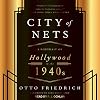
This well-written book is a complete view of all the glitz and even the sleaze of Hollywood's golden age of the studio system. Lots about the producers as well as the actors, but it's mostly about the business. That's not to say there aren't a lot of juicy anecdotes here. The Coen brothers read this book in preparation of writing and directing Barton Fink.
Lists
Awards


You May Also Like


Associated Authors
Statistics
- Works
- 25
- Also by
- 4
- Members
- 2,422
- Popularity
- #10,585
- Rating
- 3.9
- Reviews
- 35
- ISBNs
- 84
- Languages
- 7
- Favorited
- 3