

Eric D. Weitz (1953–2021)
Author of Weimar Germany: Promise and Tragedy
About the Author
Eric D. Weitz is Distinguished Professor of History at City College and the Graduate Center, City University of New York. His books include A Century of Genocide (Princeton).
Image credit: Eric E. Weitz
Works by Eric D. Weitz
Between Reform and Revolution: German Socialism and Communism from 1840 to 1990 (1998) — Editor — 11 copies
Podcast: Weimar Germany 1 copy
Associated Works
Tagged
Common Knowledge
- Birthdate
- 1953-06-15
- Date of death
- 2021-07-01
- Gender
- male
- Education
- Boston University (MA|1976|Ph.D|1983)
State University of New York, Binghamton (BA|1974) - Occupations
- historian
professor - Organizations
- City University of New York
University of Minnesota
St Olaf College - Relationships
- Rheinberg, Brigitta van (wife)
- Cause of death
- cancer
- Nationality
- USA
- Birthplace
- New York, New York, USA
- Places of residence
- Princeton, New Jersey, USA
- Place of death
- Princeton, New Jersey, USA
- Associated Place (for map)
- New Jersey, USA
Members
Reviews
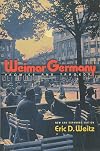
Weimar Germany still fascinates us, and now this complex and remarkably creative period and place has the history it deserves. Eric Weitz's Weimar Germany reveals the Weimar era as a time of strikingly progressive achievements--and even greater promise. With a rich thematic narrative and detailed portraits of some of Weimar's greatest figures, this comprehensive history recaptures the excitement and drama as it unfolded, viewing Weimar in its own right--and not as a mere prelude to the Nazi show more era.
Weimar Germany tells how Germans rose from the defeat of World War I and the turbulence of revolution to forge democratic institutions and make Berlin a world capital of avant-garde art. Setting the stage for this story, Weitz takes the reader on a walking tour of Berlin to see and feel what life was like there in the 1920s, when modernity and the modern city--with its bright lights, cinemas, "new women," cabarets, and sleek department stores--were new. We learn how Germans enjoyed better working conditions and new social benefits and listened to the utopian prophets of everything from radical socialism to communal housing to nudism. Weimar Germany also explores the period's revolutionary cultural creativity, from the new architecture of Erich Mendelsohn, Bruno Taut, and Walter Gropius to Hannah Höch's photomontages and Bertolt Brecht and Kurt Weill's theater. Other chapters assess the period's turbulent politics and economy, and the recipes for fulfilling sex lives propounded by new "sexologists." Yet Weimar Germany also shows that beneath this glossy veneer lay political turmoil that ultimately led to the demise of the republic and the rise of the radical Right.
Thoroughly up-to-date, skillfully written, and strikingly illustrated, Weimar Germany brings to life as never before an era of creativity unmatched in the twentieth century-one whose influence and inspiration we still feel today. In a new chapter, Weitz depicts Weimar's global impact in the decades after the destruction of the republic, when so many of its key cultural and political figures fled Nazi Germany. The Weimar style they carried with them has powerfully influenced art, urban design, and intellectual life from Tokyo to Ankara, Brasilia to New York. They made Weimar an example of all that is liberating, and all that can go wrong, in a democracy. show less
Weimar Germany tells how Germans rose from the defeat of World War I and the turbulence of revolution to forge democratic institutions and make Berlin a world capital of avant-garde art. Setting the stage for this story, Weitz takes the reader on a walking tour of Berlin to see and feel what life was like there in the 1920s, when modernity and the modern city--with its bright lights, cinemas, "new women," cabarets, and sleek department stores--were new. We learn how Germans enjoyed better working conditions and new social benefits and listened to the utopian prophets of everything from radical socialism to communal housing to nudism. Weimar Germany also explores the period's revolutionary cultural creativity, from the new architecture of Erich Mendelsohn, Bruno Taut, and Walter Gropius to Hannah Höch's photomontages and Bertolt Brecht and Kurt Weill's theater. Other chapters assess the period's turbulent politics and economy, and the recipes for fulfilling sex lives propounded by new "sexologists." Yet Weimar Germany also shows that beneath this glossy veneer lay political turmoil that ultimately led to the demise of the republic and the rise of the radical Right.
Thoroughly up-to-date, skillfully written, and strikingly illustrated, Weimar Germany brings to life as never before an era of creativity unmatched in the twentieth century-one whose influence and inspiration we still feel today. In a new chapter, Weitz depicts Weimar's global impact in the decades after the destruction of the republic, when so many of its key cultural and political figures fled Nazi Germany. The Weimar style they carried with them has powerfully influenced art, urban design, and intellectual life from Tokyo to Ankara, Brasilia to New York. They made Weimar an example of all that is liberating, and all that can go wrong, in a democracy. show less

Having read a fair amount about the Weimar Republic over the years this is one of those times where I actually enjoyed a book organized on a thematic basis, as Weitz considers area by area the great cultural explosion of Weimar, and the tragic failure of the effort to build a more open society for all Germans. The key point to Weitz is that, for all the travails of the republic, it didn't fall to disaster so much as it was pushed, with the assailants being the traditional elites who thought show more they could manipulate Hitler and his minions; we all know how that worked out. Weitz's fear is that too many do not understand this lesson, as he is under no illusions that democracy can necessarily trump the efforts of powerful factions with no commitment to democratic values. Or perhaps it's merely the case that Weimar society's biggest tragedy is that it could not produce great democratic political leaders to go with its great culture. show less

A generally very fine study of Weimar Germany. Weitz delights in the positive things about the Weimar Republic - its experimentation, its liberalism, its forward-looking society and its attempts to throw off the old. He also develops his theme, that it was precidsely that 'old' Germany that undermined the Weimar Republic and delivered it into the waiting hands of the Nazis.
There is much here that was new to me; the account of the fall of the German government in 1918, and the analysis of the show more German Right before the Nazis, for example. Weitz shows that the Nazis were merely the most effective of a series of right-wing parties and groupings, and that much of what we think of as Nazi terminology was actually the common political language of the day. The Nazis only succeeded because they set out to seize power at any cost, including the exercise of force. At the same time, they were expertly organised for growth, and they captured hearts and minds by appealing directly to the population and by acting in practical ways, by organising charitable appeals.
But this is more than just a book about Hitler (unlike so many other books about this period of German history). (Indeed, Hitler is just another bit-player in the last chapter; Third Reich fans will have to look elsewhere for their fix.) Weitz covers a range of different topics about life in Weimar Germany - politics, culture, city life, architecture, the media and sex are all covered in turn.
I have one reservation about this book. Chapter two, "Walking the city", is an exploration of Weimar Berlin partly written as a walking travelogue, depicting the sights, sounds and experiences of a typical Berlin citizen. But Weritz has chosen to write a part of this in the first person plural, present tense ("Perhaps we really want to hear some jazz...") and switches back to third person singular, past tense for explanatory sections without warning. This is an irritating enough literary device when it's used properly; but the sudden shifts of perspective did make me grit my teeth rather.
But that shouldn't take away from the importance of this book. It is probably the best exploration of the reasons behind the rise of the Nazis that I have come across, with the added bonus of a detailed and loving description of Weimar Germany at the same time. And we see the rise of the Nazis from their contemporary viewpoint, rather than looking back from our historical one and treating their history and rise as merely the personal history of Adolf Hitler. Some people make much of the supposed fact that Hitler was democratically elected: in fact, he merely led the largest party, rather than holding an outright majority. Our modern politicians would do well to ponder the implications of that fact. show less
There is much here that was new to me; the account of the fall of the German government in 1918, and the analysis of the show more German Right before the Nazis, for example. Weitz shows that the Nazis were merely the most effective of a series of right-wing parties and groupings, and that much of what we think of as Nazi terminology was actually the common political language of the day. The Nazis only succeeded because they set out to seize power at any cost, including the exercise of force. At the same time, they were expertly organised for growth, and they captured hearts and minds by appealing directly to the population and by acting in practical ways, by organising charitable appeals.
But this is more than just a book about Hitler (unlike so many other books about this period of German history). (Indeed, Hitler is just another bit-player in the last chapter; Third Reich fans will have to look elsewhere for their fix.) Weitz covers a range of different topics about life in Weimar Germany - politics, culture, city life, architecture, the media and sex are all covered in turn.
I have one reservation about this book. Chapter two, "Walking the city", is an exploration of Weimar Berlin partly written as a walking travelogue, depicting the sights, sounds and experiences of a typical Berlin citizen. But Weritz has chosen to write a part of this in the first person plural, present tense ("Perhaps we really want to hear some jazz...") and switches back to third person singular, past tense for explanatory sections without warning. This is an irritating enough literary device when it's used properly; but the sudden shifts of perspective did make me grit my teeth rather.
But that shouldn't take away from the importance of this book. It is probably the best exploration of the reasons behind the rise of the Nazis that I have come across, with the added bonus of a detailed and loving description of Weimar Germany at the same time. And we see the rise of the Nazis from their contemporary viewpoint, rather than looking back from our historical one and treating their history and rise as merely the personal history of Adolf Hitler. Some people make much of the supposed fact that Hitler was democratically elected: in fact, he merely led the largest party, rather than holding an outright majority. Our modern politicians would do well to ponder the implications of that fact. show less
Eric Weitz was a history professor at The City University in New York. In the 1970's, he was also a guest lecturer at The Ohio State University (go buckeyes--my alma mater) and we were required to attend 3/5 of his guest lectures, take notes, write a paper, etc. As a 18-19 year old, I didn't really appreciate Dr. Weitz. However, by the time I was taking PhD. courses, I adored him. When I heard that he died in 2020, I hurriedly went to Princeton University Press and purchased this book. This show more book is different than most other books I've read on the Weimar Republic, which told of all the flaws and shortcomings of this attempt at democracy. Weitz praises the advancements made by the Republic, especially in art and architecture. How refreshing! He also, though briefly, (too brief for me), covers the downfall of the republic. Weitz also wrote a second book on the occupation of the Ruhr Valley by the French which I want to purchase. 512 pages show less
You May Also Like


Associated Authors
Statistics
- Works
- 7
- Also by
- 1
- Members
- 697
- Popularity
- #36,316
- Rating
- 3.9
- Reviews
- 14
- ISBNs
- 36
- Languages
- 5
- Favorited
- 1