
Norman M. Naimark
Author of Fires of Hatred: Ethnic Cleansing in Twentieth-Century Europe
About the Author
Norman M. Naimark is Robert and Florence McDonnell Professor of East European Studies and the Sakurako and William Fisher Director of the Global Studies Division at Stanford University. A senior fellow of the Hoover Institution and Freeman-Spogli Institute of International Studies, he has published show more several books, including Fires of Haired: A History of Ethnic Cleansing in Modern Europe and Stalin's Genocides. show less
Works by Norman M. Naimark
The Lost Politburo Transcripts: From Collective Rule to Stalin's Dictatorship (2008) — Editor — 21 copies, 1 review
Yugoslavia and Its Historians: Understanding the Balkan Wars of the 1990s (2003) 8 copies, 2 reviews
Associated Works
Tagged
Common Knowledge
- Canonical name
- Naimark, Norman M.
- Birthdate
- 1944
- Gender
- male
- Nationality
- USA
- Associated Place (for map)
- USA
Members
Reviews
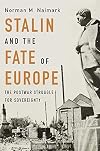
The thesis of this book appears to be that the division of Europe into two separate camps after 1948-1949 was not inevitable, and tries to show that through a number of case studies, in Denmark (occupation of Bornholm), West Berlin, Italy, Finland, Albania, Poland and Austria. I wasn't completely convinced by the author, since in a number of these cases, the Russians were not dealing from positions of overwhelming strength. In Austria and West Berlin, Russia was constrained by the presence show more of the other powers; in Italy, they were shut out; Albania had no major Russian military presence; and Finland was involved with the facts on the ground that would have made occupation difficult. The book seems to show that the Russians were somewhat hesitant and contradictory in their decision-making, but the 1948 Czechosolvak coup (notably, NOT one of the case studies here) had a strong effect on many of the other elements, such as Italy, Austria and West Berlin. An interesting book, but I wasn't totally convinced by the thesis. show less
The Lost Politburo Transcripts: From Collective Rule to Stalin's Dictatorship (The Yale-Hoover Series on Stalin, Stalinism, and the Cold War) by Paul R. Gregory

An uneven collection of essays on recently released Politburo transcripts (stenograms) from the 1920's and 1930's. The essays covering economic topics were particularly interesting. It was almost painful to watch them struggling with monetary policy when they didn't have a clear understanding of the economic principles involved. By 1927, they had completely destroyed the New Economic Policy with its open market reforms because they couldn't understand how to create an effective policy.
The show more essays on the numerous conflicts between the Stalinists and the Trotskyites were similarly enlightening because they illustrated exactly why Trotsky was unable to win the battle for control of the Soviet Union. He was a poor tactician, a narrow technocrat, arrogant and hopelessly outclassed by Stalin in a battle of wits. show less
The show more essays on the numerous conflicts between the Stalinists and the Trotskyites were similarly enlightening because they illustrated exactly why Trotsky was unable to win the battle for control of the Soviet Union. He was a poor tactician, a narrow technocrat, arrogant and hopelessly outclassed by Stalin in a battle of wits. show less
This is a nice enough little collection of essays on the deeper roots of the disintegration of Yugoslavia. The problem is that the conference that generated these papers was in 2000 and the book came out in 2003, meaning that it's already becoming dated.
Lists
Awards


You May Also Like


Associated Authors
Statistics
- Works
- 15
- Also by
- 2
- Members
- 454
- Popularity
- #54,063
- Rating
- 4.1
- Reviews
- 4
- ISBNs
- 51
- Languages
- 5