
Joby Warrick
Author of Black Flags: The Rise of ISIS
About the Author
Joby Warrick was born on August 4, 1960. He received a B. A. from Temple University. He has been a reporter for the Washington Post since 1996. He shared the 1996 Pulitzer Prize for Public Service with Melanie Sill and Pat Stith for a series of articles about North Carolina's hog industry and the show more environmental and health risks of the waste disposal systems the industry uses. He is the author of The Triple Agent and Black Flags: The Rise of ISIS, which won the 2016 Pulitzer Prize for nonfiction. (Bowker Author Biography) show less
Image credit: Goldsboro News Argus
Works by Joby Warrick
Red Line: The Unraveling of Syria and America's Race to Destroy the Most Dangerous Arsenal in the World (2021) 46 copies, 1 review
Tagged
Common Knowledge
- Birthdate
- 1960-08-04
- Gender
- male
- Occupations
- journalist
- Organizations
- Washington Post
- Agent
- Gail Ross (Ross Yoon Agency)
- Nationality
- USA
- Associated Place (for map)
- USA
Members
Reviews
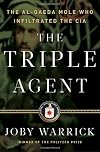
Just a fabulous read...this non-fiction book takes you into the background of how CIA agents work in the world of counter terrorism, while at the same time telling the story behind the suicide bombing of 7 CIA agents and others in Khost, Afghanistan. I usually have several items in process of reading - magazines, newspapers, other books...but had to put aside those other items at times to continue to read this. It reads very well - and its relative brevity as a non-fiction book is a plus. It show more sticks to the primary story line without adding in minute details about the people involved - something that many non-fiction writers find themselves doing. I still enjoy non-fiction - but this book stands out as one of the best I've read over the past 5 years or so. show less
A book well worth reading. Before there was ISIS or ISIL, there was a street thug serving in a Jordanian prison providing muscle for an Islamic theologian. The bulk of this book is about Abu Musab al-Zarqawi and the Jordanian general intelligence service, or Mukhabarat. The author's writing style gives a definite suspense thriller tone to the book. It's been quite some time since I have felt so compelled to keep reading page after page of a book. As those who know the built in news spoilers show more for this book, Zarqawi, after a series of actions and adjustments, meets his end. There is then a shift as Abu Bakr al-Baghdadi assumes command of Zarqawi's followers, finds a new marketing package, so to speak, and the more familiar ISIS labeling takes over. What had been mostly President Bush's problem now was more President Obama's. The tone of the book perhaps loses some of its narrative tension at this point, as more reporting is taken up about the adjustments in the group while keeping the basic thrust of the group's founder. At this point, I should mention that the original book was published in 2015, but a newer version was released with a new Afterword a year later, which is worth reading. Having said that, more spoiler news about the "end" of Baghdadi comes after publication. About half way through my reading of this book, the third leader of what we now know as ISIS, Abu Ibrahim al-Hashimi al-Qurashi, also found his end. It's a bit amazing that history so recently written could already have a very readable book seem out-of-date so quickly. And that is my primary reason for not rating this book higher. It is informative and stimulating all the same. I would happily welcome an update from the author. show less
Joby Warrick's Black Flags: The Rise of ISIS makes a complicated mess easier to understand. Readable and accessible to anyone with an interest in how we ended up with ISIS, his Pulitzer prize winning narrative of the rise of the terrorist cum state of the Islamic State of Syria and Iraq is a must-read.
If there's anything I know about the politics of the Middle East, it's that it's bloody, and it almost always has been (go check out Simon Sebag Montefiore's Jerusalem: A Biography for a show more fascinating, if relatively brief, history of that piece of the Middle East). After centuries--nay, millennia--of war between various international interlopers, small-time despots, and religious zealots, recent years have seen the rise of ISIS, something more than just another political movement in the vein of the Palestinian Liberation Organization or a terrorist organization like Al Qaeda.
No, ISIS is something else, something more dangerous, a boogeyman that is every bit as malignant for the chaos it breeds as for the violence it intentionally perpetuates.
That ISIS holds itself out as a state, controls territory, and was born of the mistakes during the early days of the invasion of Iraq only complicates the world's response. More clearly, it complicates the United States' response. On the heels of an invasion of Iraq and Afghanistan, American response is handicapped. But perhaps that is another story.
This story, though, is not about the impact those invasions have had on America's influence on the world. Rather, this is a narrative about the individuals that turned the quagmire of Iraq into the quagmire of ISIS. Primarily, it's the story of Abu Musab al-Zarqawi, a Jordanian who rose from street thug to a terrorist mastermind who turned the Iraq insurgency against the US into a Shia-Sunni civil war. Although he ostensibly gave his due respects to bin Laden as the senior leader, al-Zarqawi eventually competed with Osama bin Laden for the top place on the US Most Wanted list and became known for his brutality and ability to turn terrorism into propaganda. Even after his kill by US Special Forces in 2006, al-Zarqawi continued to influence others. The chaos in the Syrian civil war gave space to his followers, and as the country digressed into deeper instability gave breathing room to extremists seeking their own Islamic-based state. Al Qaeda in Iraq soon becomes the Islamic State in Iraq, controlling massive assets of oil and the innocent people caught up in the crossfire.
Joby Warrick's narrative is fascinating, carefully told to build a story accessible to the lay reader and more informed alike. Warrick never lets the story lag or falter with the minutia of Middle East politics. He builds his characters with portraits that are descriptive and clear and brings life to a story that is for most Americans no more than fear inducing headlines. It makes for good reading, and it left me feeling like I understood what had happened and where ISIS had come from. I don't know that it makes solutions any more obvious than before, but it does help to explain why solutions for stopping ISIS, or for bringing peace to the Middle East, are not easy. Warrick's writing, however, makes the story seem effortless, and an easy choice for winning a Pulitzer. show less
If there's anything I know about the politics of the Middle East, it's that it's bloody, and it almost always has been (go check out Simon Sebag Montefiore's Jerusalem: A Biography for a show more fascinating, if relatively brief, history of that piece of the Middle East). After centuries--nay, millennia--of war between various international interlopers, small-time despots, and religious zealots, recent years have seen the rise of ISIS, something more than just another political movement in the vein of the Palestinian Liberation Organization or a terrorist organization like Al Qaeda.
No, ISIS is something else, something more dangerous, a boogeyman that is every bit as malignant for the chaos it breeds as for the violence it intentionally perpetuates.
That ISIS holds itself out as a state, controls territory, and was born of the mistakes during the early days of the invasion of Iraq only complicates the world's response. More clearly, it complicates the United States' response. On the heels of an invasion of Iraq and Afghanistan, American response is handicapped. But perhaps that is another story.
This story, though, is not about the impact those invasions have had on America's influence on the world. Rather, this is a narrative about the individuals that turned the quagmire of Iraq into the quagmire of ISIS. Primarily, it's the story of Abu Musab al-Zarqawi, a Jordanian who rose from street thug to a terrorist mastermind who turned the Iraq insurgency against the US into a Shia-Sunni civil war. Although he ostensibly gave his due respects to bin Laden as the senior leader, al-Zarqawi eventually competed with Osama bin Laden for the top place on the US Most Wanted list and became known for his brutality and ability to turn terrorism into propaganda. Even after his kill by US Special Forces in 2006, al-Zarqawi continued to influence others. The chaos in the Syrian civil war gave space to his followers, and as the country digressed into deeper instability gave breathing room to extremists seeking their own Islamic-based state. Al Qaeda in Iraq soon becomes the Islamic State in Iraq, controlling massive assets of oil and the innocent people caught up in the crossfire.
Joby Warrick's narrative is fascinating, carefully told to build a story accessible to the lay reader and more informed alike. Warrick never lets the story lag or falter with the minutia of Middle East politics. He builds his characters with portraits that are descriptive and clear and brings life to a story that is for most Americans no more than fear inducing headlines. It makes for good reading, and it left me feeling like I understood what had happened and where ISIS had come from. I don't know that it makes solutions any more obvious than before, but it does help to explain why solutions for stopping ISIS, or for bringing peace to the Middle East, are not easy. Warrick's writing, however, makes the story seem effortless, and an easy choice for winning a Pulitzer. show less
ISIS appeared to us in the West to have come out of nowhere, but Joby Warrick's careful journalism shows its roots, its alliances, its continuance in light of Western involvement in the Middle East.
Warrick bookends his narrative nonfiction describing the origins of ISIS (Islamic State in Iraq and Syria) with the story of the failed suicide-bomber, Sajida al-Rishawi, who was executed in Jordan just this year, shortly after ISIS put to death-by-burning the downed Jordanian air pilot, First show more Lieutenant Muadh al-Kasasbeh in Syria in January. This bookending is entirely appropriate for it links the Jordanian thug-turned-radical Abu Musad al-Zarqawi, leader of al Qaeda in Iraq (AQI) with the later leader of ISIS, Iraqi Islamic scholar Abu Bakr al-Baghdadi. Just this week (Oct 2015) we learned that al-Baghdadi was targeted in an air strike as he convoyed to a meeting of senior ISIS leaders in western Iraq. It is not known if he has been wounded or killed.
Warrick shows us how the radical insurgent movement could have begun, given impetus through a combination of American bombs and Arab prisons. Western ideology and invasion is an undeniable spur to Islamists of any sort, who resist any foreign influence and incursion into their lands, whether or not the bombing was meant to help. Warrick adds Arab jails because this is where Zarqawi got his instruction and indoctrination. Inmates were segregated by creed, and the Islamists lived by Sharia law. Jails became, in effect, jihadi universities which helped extremists inculcate moderates, and fueled the insurgency inside the wire. Like Arab jails, the American military system of corralling all insurgents together as “bad guys” was “dysfunctional and counterproductive”, in Warrick’s opinion.
Baghdadi survived and thrived in prison. He was picked up in a sweep in early 2004 and sent to the American-administered jail called Camp Bucca. His academic expertise as a conservative, educated religious scholar gave him stature. He both taught and spoke classical Arabic and led religious prayers. When he was released in 2004 after ten months in prison, he finished earning his doctorate in Islamic studies and gravitated to the militants operating outside the major cities. By 2010 he was third in the leadership of radicals in charge of Sharia law and when an American airstrike took out two of the top leaders in late 2010, al Baghdadi stepped up.
Now ISIS has Sunni, Shia, as well as Western governments and Russia, all seeking their demise. One reason is that the predominantly Sunni ISIS organization burned the Jordanian Sunni air pilot flying over Syria rather than behead him. Death by burning is something forbidden in the Koran—a retribution only something Allah can presume. There must be a reason an Islamic scholar would order such a death, but the effect was galvanizing. In the film posted online of the burning death, Warrick tells us the voice of Abu Musad al-Zarqawi intones a voiceover: “Lo and behold, the spark has been ignited in Iraq and its fires shall only get bigger…” drawing a clear connection between the former AQI under Zarqawi and the renamed ISIS under Baghdadi. We can only hope that fire will consume them in the end. show less
Warrick bookends his narrative nonfiction describing the origins of ISIS (Islamic State in Iraq and Syria) with the story of the failed suicide-bomber, Sajida al-Rishawi, who was executed in Jordan just this year, shortly after ISIS put to death-by-burning the downed Jordanian air pilot, First show more Lieutenant Muadh al-Kasasbeh in Syria in January. This bookending is entirely appropriate for it links the Jordanian thug-turned-radical Abu Musad al-Zarqawi, leader of al Qaeda in Iraq (AQI) with the later leader of ISIS, Iraqi Islamic scholar Abu Bakr al-Baghdadi. Just this week (Oct 2015) we learned that al-Baghdadi was targeted in an air strike as he convoyed to a meeting of senior ISIS leaders in western Iraq. It is not known if he has been wounded or killed.
Warrick shows us how the radical insurgent movement could have begun, given impetus through a combination of American bombs and Arab prisons. Western ideology and invasion is an undeniable spur to Islamists of any sort, who resist any foreign influence and incursion into their lands, whether or not the bombing was meant to help. Warrick adds Arab jails because this is where Zarqawi got his instruction and indoctrination. Inmates were segregated by creed, and the Islamists lived by Sharia law. Jails became, in effect, jihadi universities which helped extremists inculcate moderates, and fueled the insurgency inside the wire. Like Arab jails, the American military system of corralling all insurgents together as “bad guys” was “dysfunctional and counterproductive”, in Warrick’s opinion.
Baghdadi survived and thrived in prison. He was picked up in a sweep in early 2004 and sent to the American-administered jail called Camp Bucca. His academic expertise as a conservative, educated religious scholar gave him stature. He both taught and spoke classical Arabic and led religious prayers. When he was released in 2004 after ten months in prison, he finished earning his doctorate in Islamic studies and gravitated to the militants operating outside the major cities. By 2010 he was third in the leadership of radicals in charge of Sharia law and when an American airstrike took out two of the top leaders in late 2010, al Baghdadi stepped up.
Now ISIS has Sunni, Shia, as well as Western governments and Russia, all seeking their demise. One reason is that the predominantly Sunni ISIS organization burned the Jordanian Sunni air pilot flying over Syria rather than behead him. Death by burning is something forbidden in the Koran—a retribution only something Allah can presume. There must be a reason an Islamic scholar would order such a death, but the effect was galvanizing. In the film posted online of the burning death, Warrick tells us the voice of Abu Musad al-Zarqawi intones a voiceover: “Lo and behold, the spark has been ignited in Iraq and its fires shall only get bigger…” drawing a clear connection between the former AQI under Zarqawi and the renamed ISIS under Baghdadi. We can only hope that fire will consume them in the end. show less
Lists
Awards


You May Also Like


Statistics
- Works
- 6
- Members
- 1,177
- Popularity
- #21,847
- Rating
- 4.1
- Reviews
- 37
- ISBNs
- 53
- Languages
- 9
- Favorited
- 2