
Mark Mazzetti
Author of The Way of the Knife: The CIA, a Secret Army, and a War at the Ends of the Earth
Works by Mark Mazzetti
The Way of the Knife: The CIA, a Secret Army, and a War at the Ends of the Earth (2013) 477 copies, 9 reviews
Tagged
Common Knowledge
- Canonical name
- Mazzetti, Mark
- Gender
- male
- Occupations
- journalist
- Organizations
- The New York Times
- Short biography
- Mark Mazzetti is a correspondent for The New York Times, where he has covered national security from the newspaper’s Washington bureau since April 2006.
In 2009, he shared a Pulitzer Prize for reporting on the intensifying violence in Pakistan and Afghanistan and Washington’s response. The previous year, he was a Pulitzer finalist for revelations about the C.I.A.’s detention and interrogation program.
Before joining The Times, Mazzetti was a staff writer for the Los Angeles Times, where he covered the Pentagon and military affairs from June 2004 until April 2006. Since the Sept. 11 attacks, he has made several reporting trips to Afghanistan, Iraq and the Horn of Africa.
From 2001 through 2004 he was the Pentagon correspondent for U.S. News & World Report, covering defense and national security. During the war in Iraq in 2003, he spent two months embedded with the 1st Marine Expeditionary Force and as a reporter in Baghdad. Before joining U.S. News, he worked as a correspondent for The Economist, based in Washington, D.C. and Austin, Tex. from 1998 until 2001. While with The Economist, he covered national politics, including the candidacy of George W Bush, as well as business, general news and culture stories in the Southwest.
Born in Washington, D.C. on May 13, 1974, Mazzetti received his Bachelor of Arts degree in public policy and history from Duke University in 1996, graduating Summa Cum Laude. He went on to earn a Masters degree in modern history from Oxford University in 1997.
Mazzetti received a 2011 Polk Award (with colleague Dexter Filkins) for coverage of Afghanistan and Pakistan, and was the recipient of the 2006 Gerald R Ford Prize for Distinguished Reporting on National Defense. In 2008, Mazzetti won the Livingston Award in the category of national reporting for breaking the story of the C.I.A.’s destruction of videotapes showing harsh interrogation of Qaeda detainees.
He lives in Washington, D.C. with his family.
http://markmazzetti.net/biography/
Members
Reviews
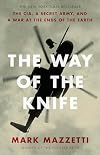
"The Unites States fought three wars after 9/11: Iraq, Afghanistan, and the one in the shadows."
So reads the blurb on the back of this book, and it's true, to a degree. In the wake of 9/11, America proved totally unable to pursue Al Qaeda, with a CIA averse to covert operations, and a special forces culture that trained for high-stakes rescue missions. The new war required human intelligence gathering in some of the most hostile corners of the world, and soon developed a system of secret show more prisons, 'enhanced interrogations', and long-distance drone assassinations. Neither the military nor the CIA was set up to do this, but they soon adapted and evolved.
This book isn't so much about America's shadow wars: the renditions, drone strikes, and secret armies, as it is about who would get to wield the knife. Mazzetti goes into the byzantine conflicts between the Pentagon, the CIA, State, the White House, private military contractors, and the whole weird menagerie of Beltway counter-terrorism experts. The dsyfunctional relationship with Pakistan is a second focus of the book, and the failure of the American relationship with the ISI, culminating in Admiral Mike Mullen's public declaration that the ISI supported terrorist attacks against American troops.
Mazzetti is too much of the professional reporter to make judgement, but he clearly feels that the duplication of effort between the CIA and JSOC has harmed American interests, and that the entire secret war exists on shaky legal and ethical grounds. The pragmatic question: what form should American engagement with this part of the world take? goes unanswered. I've heard it said that journalism is history's first draft, and this topic definitely deserves further study. But in the the here and now, this is the best book about what actually happened after 9/11. show less
So reads the blurb on the back of this book, and it's true, to a degree. In the wake of 9/11, America proved totally unable to pursue Al Qaeda, with a CIA averse to covert operations, and a special forces culture that trained for high-stakes rescue missions. The new war required human intelligence gathering in some of the most hostile corners of the world, and soon developed a system of secret show more prisons, 'enhanced interrogations', and long-distance drone assassinations. Neither the military nor the CIA was set up to do this, but they soon adapted and evolved.
This book isn't so much about America's shadow wars: the renditions, drone strikes, and secret armies, as it is about who would get to wield the knife. Mazzetti goes into the byzantine conflicts between the Pentagon, the CIA, State, the White House, private military contractors, and the whole weird menagerie of Beltway counter-terrorism experts. The dsyfunctional relationship with Pakistan is a second focus of the book, and the failure of the American relationship with the ISI, culminating in Admiral Mike Mullen's public declaration that the ISI supported terrorist attacks against American troops.
Mazzetti is too much of the professional reporter to make judgement, but he clearly feels that the duplication of effort between the CIA and JSOC has harmed American interests, and that the entire secret war exists on shaky legal and ethical grounds. The pragmatic question: what form should American engagement with this part of the world take? goes unanswered. I've heard it said that journalism is history's first draft, and this topic definitely deserves further study. But in the the here and now, this is the best book about what actually happened after 9/11. show less
The story of how the CIA and the US military criss-crossed, with the military taking on increased intelligence gathering functions and the CIA carrying out more kill missions, after 9/11. Rather than consolidating, we just doubled down on having multiple agencies on the ground, sometimes working at cross purposes. We handed out millions of dollars—billions—going to private contractors and often enough to people who used our money and our weapons against us. Mazzetti contends that the show more seductiveness of drone strikes has led first the Bush administration and then the Obama administration to define success as having lots of kills, with no attention to whether we (a) know anything about the people who hate us and the countries they’re in or (b) are creating more enemies than we get rid of with each strike. Traditional intelligence has been subordinated to James Bond kill missions, to our detriment. Obama doesn’t come off well, giving the CIA everything it wants, but Bush is particularly pathetic, continuing to believe that Musharraf had wholly committed Pakistan to the US side when it was obvious to everyone else, including the other Americans, that he and his government were favoring the Taliban and more concerned about fighting India than helping the US hunt the people we deemed terrorists. show less
Read Jeremy Scahill's book instead. Scahill is a real reporter not a stenographer like Mazzetti. Scahill’s book is based on actual research not what the CIA wants the public to read about it and the DOD. Mark Mazzetti’s true masters are revealed by his work habits: He leaked the pre-publication text of his New York Times colleague Maureen Dowd to the CIA so that they might check it for security issues, a ridiculous endeavour given the absence of politics in a typical Dowd column.
Even show more though the book is presenting the CIA's point of view, it doesn’t completely hide that agency's stellar level of incompetence. Some of the CIA's extreme failure in the Middle East can be explained by shifting many from the Latin America desk to the Middle East where they lacked both cultural and language skills to provide accurate information. An Arab version of the tostada/enchilada test could have kept the most culturally inept agents out the region. Played by Pakistan and the different factions in Afghanistan, the CIA created political disorder and fostered Afghan (and American) corruption. While US officials preached about good government, the CIA handed over bags of cash to Karzai and his cronies. A similar lack of control led to blowback with the US drone assassination program or more accurately, the US assassination programs as the DOD and the CIA had set up competing drone killer programs. Mazzetti says that the DOD was responsible for the accidental murder of 16-year-old Abdulrahman al-Awlaki when DOD drones blew up a Yemeni restaurant based on erroneous information.
After the end of the Cold War, it looked like James Bond could be sent into retirement too. The different secret service institutions in Russia and the United States have instead expanded and have, enabled by myopic politicians, created unaccountable deadly institutions that endanger democracy at home and abroad. show less
Even show more though the book is presenting the CIA's point of view, it doesn’t completely hide that agency's stellar level of incompetence. Some of the CIA's extreme failure in the Middle East can be explained by shifting many from the Latin America desk to the Middle East where they lacked both cultural and language skills to provide accurate information. An Arab version of the tostada/enchilada test could have kept the most culturally inept agents out the region. Played by Pakistan and the different factions in Afghanistan, the CIA created political disorder and fostered Afghan (and American) corruption. While US officials preached about good government, the CIA handed over bags of cash to Karzai and his cronies. A similar lack of control led to blowback with the US drone assassination program or more accurately, the US assassination programs as the DOD and the CIA had set up competing drone killer programs. Mazzetti says that the DOD was responsible for the accidental murder of 16-year-old Abdulrahman al-Awlaki when DOD drones blew up a Yemeni restaurant based on erroneous information.
After the end of the Cold War, it looked like James Bond could be sent into retirement too. The different secret service institutions in Russia and the United States have instead expanded and have, enabled by myopic politicians, created unaccountable deadly institutions that endanger democracy at home and abroad. show less
This is the story of the C.I.A. and how it changed from an agency that gathered intelligence, essentially information about threats to the United States from around the world to an organization that killed its enemies. The 9/11 terrorist attacks were the focus of much of the change and new technology. While the book is good and there are many familiar names if you have watched the news over the past 25 years, there were so many people in the book that it was difficult to keep track of show more everything. It seemed to surface level. show less
Lists
United States (1)
You May Also Like


Statistics
- Works
- 2
- Members
- 478
- Popularity
- #51,586
- Rating
- 3.8
- Reviews
- 9
- ISBNs
- 15
- Languages
- 4
