
Eric Nguyen (3)
Author of Things We Lost to the Water
For other authors named Eric Nguyen, see the disambiguation page.
Works by Eric Nguyen
Associated Works
Tagged
Common Knowledge
Members
Reviews
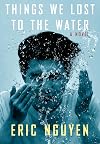
An important refugee story. Set in the late seventies through 2005, this fictional account of a Vietnamese mother and young sons (Huong, Tuan and Binh) resettling in New Orleans after escaping their war-torn country is both eye-opening and a little heart-wrenching. They flee their country by boat, leaving husband/father Cong behind in the confusion of the escape. First they live in a refugee camp in Singapore, where Binh is born, then on to America, where the hope is that Cong will find and show more join them. This comprises the first half of their time there - Huong writes letters, then records and sends cassette tapes back to Vietnam trying to find her husband. Eventually a postcard arrives from him, asking for no further contact. Huong persists with the recordings, but saves them in a box instead. Meanwhile, she tries to adapt to life in a new country with her sons. She is at the mercy of a gruff, but kind priest who tries to help her find work and lodging - and it reveals all the indignities of their status: menial jobs no one else wants, staying with 'host' families who don't respect privacy or have their own issues that threaten to influence them, finally ending in a housing complex for their 'kind' which builds community, but also keeps them as 'other.' Years pass as they become acclimated, become naturalized citizens, even, but really don't become accepted. Tuan, who remembers his father, probably suffers the most, in part because Huong never tells him the truth; instead she tells them he died. "'I am in another country,' he often whispered to himself to feel the heaviness of his words fall out. 'Out there, far far away,' he would go on in his head 'is a large piece of land called Vietnam with different people, different trees, different houses, and that is where cha (Dad) is and he cannot just walk out of it. Vietnam is not like a room, it's like a school and you can't go until thay giao (teacher) says so, so we are waiting for thay giao to say he can go for cha to sneak out and not let thay giao know.'" (41) She continually holds Cong up as an (ironic) standard to both boys of academic achievement and proper behavior and cultural loyalty. "That's the word his mother used, hero, .... Whatever else he knew of the man were echoes of would haves, could haves. He would have thought this....he could have done this...not a real life father, but a ghost of a father, an afterimage of a father." (89) Both boys suffer in school, perceived as stupid when they struggle with language, and of course bullied for being different. Because Huong must support them, she cannot always provide the supervision they need. Plus, she doesn't know how the systems (school, etc) work. They stray further and further from their heritage and their potential. Tuan joins a Vietnamese gang, (The Southern Boyz) searching for belonging, but ultimately rejecting their violence. Binh becomes Ben and struggles with his sexual identity with no help from the time period or the cultural constrictions. As Huong notes on more than one occasion: "Parenting was hard enough; parenting alone and in a different country was something else altogether." (60) Healing and understanding come in a visit to Vietnam for Huong, her 'boyfriend' Vinh and Tuan as a young adult. Binh seeks to re-live his father's days in France, but having never known him, gains some independence instead. Everything culminates when Hurricane Katrina strikes, creating refugees within their own country. This is beautifully written with profound understanding of what it means to be caught between cultures and countries, seeking but never truly finding belonging. show less
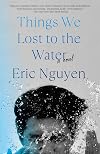
When Huong arrives in New Orleans with her two young sons, she is jobless, homeless, and worried about her husband, Cong, who remains in Vietnam. As she and her boys begin to settle in to life in America, she continues to send letters and tapes back to Cong, hopeful that they will be reunited and her children will grow up with a father.
Huong gradually comes to the realization that she would never see her spouse again. Her kids, Tuan and Binh, grow up in the absence of their absent father, show more plagued by a man and a nation locked in their memories and imaginations, as she struggles to come to terms with this loss. As they proceed, the three adjust to life in America in various ways: Tuan joins a neighborhood Vietnamese gang in an effort to feel more connected to his heritage; Huong falls in love with a Vietnamese car salesman who is also new to the area; and Binh, now going by Ben, embraces his adopted country and his developing gay sexuality. Before a disaster strikes the city they now call home and threatens to split them apart, their search for identification as individuals and as a family until a calamity strikes the city they now call home and forces them to immediately find a new way to join together and cherish the connections that bind, which threatens to rip them apart.
With this magnificent novel I have once again found one of my certain to be top ten reads of the new year. This book swept me away with the fascinating story of an immigrant mother and her two boys. Ben, in particular, impressed me as the center of the story - he changes, learning to swim (at about the center of the narrative), learning to accept his gay persona, and deciding to go to Paris and become a writer.
Demonstrating a marvelous prose style and an ability to link together the characters' lives with details that held my interest, this first novel was wonderful and moving all the way to the last page. I immediately wanted to read it again and that is always the sign of a great read. show less
Huong gradually comes to the realization that she would never see her spouse again. Her kids, Tuan and Binh, grow up in the absence of their absent father, show more plagued by a man and a nation locked in their memories and imaginations, as she struggles to come to terms with this loss. As they proceed, the three adjust to life in America in various ways: Tuan joins a neighborhood Vietnamese gang in an effort to feel more connected to his heritage; Huong falls in love with a Vietnamese car salesman who is also new to the area; and Binh, now going by Ben, embraces his adopted country and his developing gay sexuality. Before a disaster strikes the city they now call home and threatens to split them apart, their search for identification as individuals and as a family until a calamity strikes the city they now call home and forces them to immediately find a new way to join together and cherish the connections that bind, which threatens to rip them apart.
With this magnificent novel I have once again found one of my certain to be top ten reads of the new year. This book swept me away with the fascinating story of an immigrant mother and her two boys. Ben, in particular, impressed me as the center of the story - he changes, learning to swim (at about the center of the narrative), learning to accept his gay persona, and deciding to go to Paris and become a writer.
Demonstrating a marvelous prose style and an ability to link together the characters' lives with details that held my interest, this first novel was wonderful and moving all the way to the last page. I immediately wanted to read it again and that is always the sign of a great read. show less
This novel starts off great--a young couple and their son decide to flee Vietnam in 1978. The husband, a teacher, has already spent one stint in a reeducation camp. He makes the arrangements, and they flee through the jungle to a bay. Somehow, he is left behind.
Huong and young Tuon survive the boat and are relocated to New Orleans, where she has her second son. She is alone, with two young boys, in a city she doesn't know and very limited English. She makes her way, always missing and show more writing to Cong, working many hours, and trying to raise her boys. Both struggle with their own demons--not knowing their father, not knowing Vietnam, not fitting in in public school. They make mistakes, make friends, and learn about themselves.
I enjoyed all of this. But the last few chapters go off the rails, and even the storytelling felt different. Much more rushed, and it did not fit with the rest of the book's style. And while we find out what happened to Cong, we don't really find out what happens to the main characters.
This is a debut novel by a fairly young author, and I look forward to seeing what he does next.
I also wonder what a bayou smells like, because it came up several times. show less
Huong and young Tuon survive the boat and are relocated to New Orleans, where she has her second son. She is alone, with two young boys, in a city she doesn't know and very limited English. She makes her way, always missing and show more writing to Cong, working many hours, and trying to raise her boys. Both struggle with their own demons--not knowing their father, not knowing Vietnam, not fitting in in public school. They make mistakes, make friends, and learn about themselves.
I enjoyed all of this. But the last few chapters go off the rails, and even the storytelling felt different. Much more rushed, and it did not fit with the rest of the book's style. And while we find out what happened to Cong, we don't really find out what happens to the main characters.
This is a debut novel by a fairly young author, and I look forward to seeing what he does next.
I also wonder what a bayou smells like, because it came up several times. show less
The first steps into the water change everything. Mother and child become refugees while Father realizes he cannot leave his home, Vietnam. Thus begins a poignant tale of immigration. Physical privation, alienation, and emotional chaos ensue. It is difficult to rate this novel. At the beginning, I was completely in awe of the prose, the way it so fully conveyed the initial experience of being dropped into a foreign culture with next to no comprehension of the behavior and language of this show more new world. The use of language was absolutely lovely. The story of the family, its survival, its generational conflicts, its lies told to survive, its fears, loves, and loyalties, and its full circle experience unfolds well. The problem of this novel, for me, was that it seemed to try to accomplish too much for one story. Perhaps that is the message, however. Perhaps all that is part of being a refugee is just too much for anyone to experience and comprehend. show less
Lists
Awards


You May Also Like


Associated Authors
Statistics
- Works
- 2
- Also by
- 2
- Members
- 502
- Popularity
- #49,319
- Rating
- 3.7
- Reviews
- 13
- ISBNs
- 23
- Languages
- 2