
Catherine Hernandez (2) (1977–)
Author of Scarborough
For other authors named Catherine Hernandez, see the disambiguation page.
Works by Catherine Hernandez
Tagged
Common Knowledge
- Legal name
- Hernandez, Catherine Estioko
- Birthdate
- 1977-11-02
- Gender
- female
- Agent
- Marilyn Biderman
- Nationality
- Canada
- Associated Place (for map)
- Canada
Members
Reviews
Baby, I Love Your Way*
Review of the HarperAvenue paperback edition, released simultaneously with the Harper eBook & audiobook (February 28, 2023).
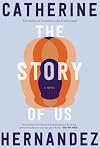
The show more target="_top">Matryoshka (матрёшка) (Russian: Nesting dolls) in the cover design of The Story of Us hint at the family saga of its plot but also at the surprising narrator at its heart. This narrator is so unorthodox that I want to stress that you should persist with the novel even though it will strike you as extremely odd at the very beginning. I won't bury the lede any further, the story starts off as being narrated by an unfertilized egg in the future womb of its main character Mary Grace (known as MG) as she is being born by her mother (i.e. the grandmother of the egg that is).
You have to relax and just go with this new take on the omniscient narrator, who disappears at many stages of the story, but does return again and again, as a fertilized egg, a fetus and finally as a newborn. You'll finally forgive its bizarre nature and even begin to love its viewpoint when it expresses itself:
The narrator sub-plot is of course incidental to the main story which is how caregiver Mary Grace becomes an Overseas Filipino Worker (OFW) in order to support her relatives back home in the Philippines. After a placement in Hong Kong, she eventually immigrates to Canada and after a few more jobs eventually meets the senior Liz, the other main character of the story. Liz is an elderly trans woman with Alzheimer's living in a somewhat rundown home in Scarborough by the Rouge River, owned by an off-putting son who visits rarely.
Both MG and Liz are "the other", people often ignored or "not seen" by people in the community. The bond of caring and love that grows between them is often traumatic and heartbreaking but it is often beautiful and caring in a unique way which describes how chosen family can exceed the bonds of blood family. Though there is drama and tension aplenty there are wonderful moments of humour and insight into both Filipino and Canadian ways and habits.
I read The Story of Us through being introduced to it at the 2023 Lakefield Literary Festival. I would go so far as to say that it is my top favourite Canadian novel read of 2023 to date (late August 2023 as I write this).
See photograph at https://scontent-ord5-2.xx.fbcdn.net/v/t39.30808-6/360094082_24345228881742568_1...
Author Catherine Hernandez (centre) in discussion with moderator John Boyko (left) and author Iain Reid (We Spread (2022)) at the 2023 Lakefield Literary Festival, Canada.
Footnote & Soundtrack
* I often select the lede for a review based on an associated idea or reference and this time the quirky narrator of The Story of Us made me think of Peter Frampton's song Baby, I Love Your Way from the classic Frampton Comes Alive! (1976) album.
Peter Frampton explains the background to writing the song and plays it on the Howard Stern radio show in 2019 which you can watch here.
Other Reviews
Book blurb: "Catherine Hernandez has written a book that will make you feel as though your heart has grown twice the size once you put it down. A Filipina woman's life story is narrated from the perspective of her future unborn fetus in achingly beautiful, lyrical and astonishing prose... An extraordinary portrayal of the powers of chosen families, told with profound pathos, wonderful humour. It is a story of a modern Canadian family and its marvelous incarnations and offers an explosive commentary on the power of acceptance and inclusion as a path towards happiness." by Heather O'Neill.
The Story of Us forces us to witness the structures of Canada's immigration system by Huda Hassan, The Globe and Mail, April 7, 2023.
Trivia and Link
Read an introduction to & an excerpt from the book at CBC Books November 28, 2022.
Read an interview with author Catherine Hernandez at CBC's The Next Chapter Q&A by Nikki Manfredi, CBC, March 10, 2023. show less
Review of the HarperAvenue paperback edition, released simultaneously with the Harper eBook & audiobook (February 28, 2023).
“I don’t truly know what life is like for you, but I imagine in your line of work, people don’t often see you as a human being with needs and feelings, am I right? But you deserve to be treated with respect. It’s the same with Liz. She deserves to be seen as a person. The more you get to know her, the better this arrangement can be.”
The show more target="_top">Matryoshka (матрёшка) (Russian: Nesting dolls) in the cover design of The Story of Us hint at the family saga of its plot but also at the surprising narrator at its heart. This narrator is so unorthodox that I want to stress that you should persist with the novel even though it will strike you as extremely odd at the very beginning. I won't bury the lede any further, the story starts off as being narrated by an unfertilized egg in the future womb of its main character Mary Grace (known as MG) as she is being born by her mother (i.e. the grandmother of the egg that is).
You have to relax and just go with this new take on the omniscient narrator, who disappears at many stages of the story, but does return again and again, as a fertilized egg, a fetus and finally as a newborn. You'll finally forgive its bizarre nature and even begin to love its viewpoint when it expresses itself:
I wanted so badly to take my first breath, to be photographed, fawned over. To have my cheeks pinched. To be punished for doing things I wasn’t supposed to do, touching things I wasn’t supposed to touch. To be measured against a wall, year after year. To grow taller. To be cheered on every time I learned something new. I wanted that. Could you blame me?
...
As my cells multiplied, I made some plans. I dared to plan. I planned on riding a bike. Having a first kiss. Learning how to play an instrument. Being the first person to dance at every party. Taking my time to look at sunsets. Waking up early to look at sunrises. Finding a best friend. Even the bad stuff, I wanted so badly. The death of a pet. First heartbreak. Second heartbreak. Broken bones. Needles. Arguments. Oh! The arguments I was going to have with people! We would shout at each other. Then make up. I could not wait for my life to begin.
...
Ash was in tears. Ma was in tears. But I barely cried. I looked right at her, this woman I knew so well. This woman I have watched for ages through time, through natural disasters, through death, through heartache, through pleasure and pain. I looked right at her.
The narrator sub-plot is of course incidental to the main story which is how caregiver Mary Grace becomes an Overseas Filipino Worker (OFW) in order to support her relatives back home in the Philippines. After a placement in Hong Kong, she eventually immigrates to Canada and after a few more jobs eventually meets the senior Liz, the other main character of the story. Liz is an elderly trans woman with Alzheimer's living in a somewhat rundown home in Scarborough by the Rouge River, owned by an off-putting son who visits rarely.
Both MG and Liz are "the other", people often ignored or "not seen" by people in the community. The bond of caring and love that grows between them is often traumatic and heartbreaking but it is often beautiful and caring in a unique way which describes how chosen family can exceed the bonds of blood family. Though there is drama and tension aplenty there are wonderful moments of humour and insight into both Filipino and Canadian ways and habits.
Ma cheered and slapped their arm. Ash recoiled in shock. Ma had forgotten how Canadians don’t hit each other on the arm when overwhelmed by happiness the way Filipinos do. They usually offer a tepid “yay!” and keep their hands to themselves.
I read The Story of Us through being introduced to it at the 2023 Lakefield Literary Festival. I would go so far as to say that it is my top favourite Canadian novel read of 2023 to date (late August 2023 as I write this).
See photograph at https://scontent-ord5-2.xx.fbcdn.net/v/t39.30808-6/360094082_24345228881742568_1...
Author Catherine Hernandez (centre) in discussion with moderator John Boyko (left) and author Iain Reid (We Spread (2022)) at the 2023 Lakefield Literary Festival, Canada.
Footnote & Soundtrack
* I often select the lede for a review based on an associated idea or reference and this time the quirky narrator of The Story of Us made me think of Peter Frampton's song Baby, I Love Your Way from the classic Frampton Comes Alive! (1976) album.
Peter Frampton explains the background to writing the song and plays it on the Howard Stern radio show in 2019 which you can watch here.
Other Reviews
Book blurb: "Catherine Hernandez has written a book that will make you feel as though your heart has grown twice the size once you put it down. A Filipina woman's life story is narrated from the perspective of her future unborn fetus in achingly beautiful, lyrical and astonishing prose... An extraordinary portrayal of the powers of chosen families, told with profound pathos, wonderful humour. It is a story of a modern Canadian family and its marvelous incarnations and offers an explosive commentary on the power of acceptance and inclusion as a path towards happiness." by Heather O'Neill.
The Story of Us forces us to witness the structures of Canada's immigration system by Huda Hassan, The Globe and Mail, April 7, 2023.
Trivia and Link
Read an introduction to & an excerpt from the book at CBC Books November 28, 2022.
Read an interview with author Catherine Hernandez at CBC's The Next Chapter Q&A by Nikki Manfredi, CBC, March 10, 2023. show less
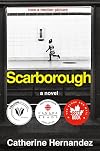
I held off writing my review of this book until the Canada Reads debates were over. I realized this book was the underdog and that Five Little Indians by Michelle Good was the favourite but I did think it was the book all of Canada should read. Yes, the residential school system was horrendous and has impacted generations of First Nations people but poverty probably impacts even more people in Canada. This book is set in one suburb of one city but could probably be replicated in all the show more major cities in Canada. I just hope that the attention the book has received through Canada Reads will cause many people to pick it up and then think about its message.
There are many characters in this book but the main ones are Ms. Hina, an educator who is hired to run a literacy program in a school in Scarborough., Laura, a young girl whose mother abandons her to be raised by her racist, alcoholic father, Cory, Bing, a gay Filipino boy being raised by his mother in a housing project and Sylvie, Bing's friend who lives with her mother, disabled father and autistic brother in a shelter.All of the children spend time in Ms Hina's drop-in centre, often being fed by her because there is never enough food in their own homes. Ms Hina comes into conflict with her supervisor for feeding the children but she keeps on doing so. And she helps in other ways. Even former skinhead Cory is treated with kindness by Ms Hina and Cory really needs help because he has no idea how to parent. We see how the community comes together to support each other. This is especially so when Ms Hina finally has had enough from her supervisor and gets her union rep involved. The community backs Ms Hina to the max and soon the supervisor is history. Yes these individuals still have challenges but they also know where they can turn for help.
The beauty of Canada Reads is to bring attention to books that would have slipped through the cracks otherwise. I try to read lots of Canadian literature but I had not heard of this book before it made the Canada Reads list. So, thank goodness for CBC and Canada Reads. show less
There are many characters in this book but the main ones are Ms. Hina, an educator who is hired to run a literacy program in a school in Scarborough., Laura, a young girl whose mother abandons her to be raised by her racist, alcoholic father, Cory, Bing, a gay Filipino boy being raised by his mother in a housing project and Sylvie, Bing's friend who lives with her mother, disabled father and autistic brother in a shelter.All of the children spend time in Ms Hina's drop-in centre, often being fed by her because there is never enough food in their own homes. Ms Hina comes into conflict with her supervisor for feeding the children but she keeps on doing so. And she helps in other ways. Even former skinhead Cory is treated with kindness by Ms Hina and Cory really needs help because he has no idea how to parent. We see how the community comes together to support each other. This is especially so when Ms Hina finally has had enough from her supervisor and gets her union rep involved. The community backs Ms Hina to the max and soon the supervisor is history. Yes these individuals still have challenges but they also know where they can turn for help.
The beauty of Canada Reads is to bring attention to books that would have slipped through the cracks otherwise. I try to read lots of Canadian literature but I had not heard of this book before it made the Canada Reads list. So, thank goodness for CBC and Canada Reads. show less
Scarborough, the cinematic debut novel by Catherine Hernandez, tells the story of a community through the individual characters who, in ensemble fashion, share narrative duties. Set in the Kingston/Galloway neighbourhood of Scarborough, a suburb east of Toronto, the loosely woven account revolves around the people who gather in the literacy centre in Rouge Hill Public School. Using multiple perspectives allows Hernandez to tell a broadly focused tale of personal struggles and the challenges show more facing parents and children navigating lives straitened by indigence and cultural bias. The literacy centre is run by Hina Hassani, newly appointed to the position of Program Facilitator, whose empathy for her clients—adults and children alike—is her abiding trait, her passion, and, at times (where her supervisor, Jane Fulton, is concerned), her message. Hernandez introduces an assortment of characters in her relatively brief novel, but most of the reader’s time is spent with toddler Laura and her racist father Cory, who are white; Edna, a Filipino woman who works in a salon, and her son Bing, a creative and expressive, but sexually confused, teen; and Marie, who is Mi’kmaq, and her daughter Sylvie, who live in a shelter. It is these characters, along with Hina, whose fates come to matter, whose triumphs and tragedies leave a deep impression on the reader, and whose thoughts, actions and observations coalesce into a loose story arc. The writing throughout the novel is intensely visual and brimming with vivid detail, which brings to life a community that is culturally vibrant and emotionally resilient. These are people who “make do” with the little they have while striving for more against enormous odds. But the hard truth that Catherine Hernandez reveals is that some can’t cope and won’t make it. Scarborough cleaves to this truth. This is honest, unsentimental storytelling that conveys its message eloquently, but never preaches. Scarborough was a finalist for the Toronto Book Awards and the Trillium Award, and in 2022 was a Canada Reads selection. show less
Recently, my husband and I have been enjoying the crime drama Almost Paradise which is filmed in the Philippines and offers a peek at Filipino culture. This novel offers more of an in depth look.
MG (Mary Grace) Concepcion is an Overseas Filipino Worker. She leaves her husband Ale to become a nanny in Hong Kong. When she learns about a Canadian immigration program, which allows someone to apply for permanent residency in the country after two years of employment as a caregiver, she moves to show more Toronto. Her goal is to become a permanent resident and then sponsor her husband so they can build a better life for themselves. She works as a nanny but eventually takes a position as a personal support worker caring for Liz Cahill, an elderly trans woman suffering from Alzheimer’s. This job challenges her conservative values, but slowly a friendship develops.
The narrator is MG’s newborn baby speaking directly to Liz. The baby tells Liz her mother’s story which she knows intimately because “I have lived for years as a seed in the ovaries of my mother while my mother gestated in the body of my [grandmother].” But she also speaks of her own experiences as a Maybe Baby (an unfertilized egg) and as a fetus. I was reminded of William Wordsworth’s “Ode: Intimations of Immortality from Recollections of Early Childhood” which relies on the concept of pre-existence and suggests that children, as they mature, lose their connection with the divine. MG’s child begins by stating that “The former me, the real me, is fading by the second and there are things I remember, at this very moment and never will again” and “the more I come into this new body of mine, the less I will remember.”
MG is a sympathetic character. She sacrifices so much and works so hard in order to help her family in the Philippines. When looking after challenging children, she is very patient. Likewise, she is patient with Liz who can be difficult at times. I love dynamic characters, and MG proves to be one. She takes the job of caring for a bakla because she desperately needs employment and remembers a priest saying that homosexuals should not be judged. She believes she will be fine “As long as this person didn’t force her into living this perverse lifestyle.” Looking after Liz takes some adjustment: “She made mistakes with you, Liz. Lots of mistakes. She treated you like a nuisance. . . . Your confusion frustrated her. Maybe even angered her. . . . [MG was] an efficient engine to meet your most basic needs [as if] you were like a houseplant. Nothing more.” A visit from Ash, one of Liz’s friends, begins MG’s transformation. Ash says, "'I don’t truly know what life is like for you, but I imagine in your line of work, people don’t often see you as a human being with needs and feelings, am I right? But you deserve to be treated with respect. It’s the same with Liz. She deserves to be seen as a person.’” MG does get to know Liz and learns about her life and accomplishments. Her attitude changes and she becomes Liz’s friend and protector who tries to shield her from anyone whom she fears might treat her with less than respect.
The novel gives insights into the challenges faced by temporary foreign workers like MG. They leave families behind, often not seeing them for years, so are lonely and isolated. Ash is correct in describing them as largely invisible. They are often exploited; for instance, one of MG’s employers offers to let MG look after another couple’s children as well as her own but then keeps the money intended to pay MG for this extra work. “’Some families kick their nannies out on the weekend and they have to find a place to stay. So the nannies pool their money to rent a place together.’” Because they need these jobs, the caregivers cannot speak out. Their options are limited to “’Either endure the work or go.’”
This is a thought-provoking book, exposing the struggles of both foreign workers and members of the LGTBQ community. (It reminded me of the news stories I read about how Filipino healthcare workers bore the brunt of the COVID pandemic: in Quebec and Ontario, Filipino healthcare workers in hospitals, long-term care facilities, and private homes are believed to be the first such workers to die due to the pandemic.)
There is much to like about this book: interesting plot, memorable characters, and thematic depth. It addresses serious topics, but the unique narrator also adds touches of humour. I will certainly be recommending it to people.
Note: I received a digital galley from the publisher via NetGalley.
Please check out my reader's blog (https://schatjesshelves.blogspot.com/) and follow me on Twitter (@DCYakabuski). show less
MG (Mary Grace) Concepcion is an Overseas Filipino Worker. She leaves her husband Ale to become a nanny in Hong Kong. When she learns about a Canadian immigration program, which allows someone to apply for permanent residency in the country after two years of employment as a caregiver, she moves to show more Toronto. Her goal is to become a permanent resident and then sponsor her husband so they can build a better life for themselves. She works as a nanny but eventually takes a position as a personal support worker caring for Liz Cahill, an elderly trans woman suffering from Alzheimer’s. This job challenges her conservative values, but slowly a friendship develops.
The narrator is MG’s newborn baby speaking directly to Liz. The baby tells Liz her mother’s story which she knows intimately because “I have lived for years as a seed in the ovaries of my mother while my mother gestated in the body of my [grandmother].” But she also speaks of her own experiences as a Maybe Baby (an unfertilized egg) and as a fetus. I was reminded of William Wordsworth’s “Ode: Intimations of Immortality from Recollections of Early Childhood” which relies on the concept of pre-existence and suggests that children, as they mature, lose their connection with the divine. MG’s child begins by stating that “The former me, the real me, is fading by the second and there are things I remember, at this very moment and never will again” and “the more I come into this new body of mine, the less I will remember.”
MG is a sympathetic character. She sacrifices so much and works so hard in order to help her family in the Philippines. When looking after challenging children, she is very patient. Likewise, she is patient with Liz who can be difficult at times. I love dynamic characters, and MG proves to be one. She takes the job of caring for a bakla because she desperately needs employment and remembers a priest saying that homosexuals should not be judged. She believes she will be fine “As long as this person didn’t force her into living this perverse lifestyle.” Looking after Liz takes some adjustment: “She made mistakes with you, Liz. Lots of mistakes. She treated you like a nuisance. . . . Your confusion frustrated her. Maybe even angered her. . . . [MG was] an efficient engine to meet your most basic needs [as if] you were like a houseplant. Nothing more.” A visit from Ash, one of Liz’s friends, begins MG’s transformation. Ash says, "'I don’t truly know what life is like for you, but I imagine in your line of work, people don’t often see you as a human being with needs and feelings, am I right? But you deserve to be treated with respect. It’s the same with Liz. She deserves to be seen as a person.’” MG does get to know Liz and learns about her life and accomplishments. Her attitude changes and she becomes Liz’s friend and protector who tries to shield her from anyone whom she fears might treat her with less than respect.
The novel gives insights into the challenges faced by temporary foreign workers like MG. They leave families behind, often not seeing them for years, so are lonely and isolated. Ash is correct in describing them as largely invisible. They are often exploited; for instance, one of MG’s employers offers to let MG look after another couple’s children as well as her own but then keeps the money intended to pay MG for this extra work. “’Some families kick their nannies out on the weekend and they have to find a place to stay. So the nannies pool their money to rent a place together.’” Because they need these jobs, the caregivers cannot speak out. Their options are limited to “’Either endure the work or go.’”
This is a thought-provoking book, exposing the struggles of both foreign workers and members of the LGTBQ community. (It reminded me of the news stories I read about how Filipino healthcare workers bore the brunt of the COVID pandemic: in Quebec and Ontario, Filipino healthcare workers in hospitals, long-term care facilities, and private homes are believed to be the first such workers to die due to the pandemic.)
There is much to like about this book: interesting plot, memorable characters, and thematic depth. It addresses serious topics, but the unique narrator also adds touches of humour. I will certainly be recommending it to people.
Note: I received a digital galley from the publisher via NetGalley.
Please check out my reader's blog (https://schatjesshelves.blogspot.com/) and follow me on Twitter (@DCYakabuski). show less
Lists
Awards


You May Also Like


Statistics
- Works
- 8
- Members
- 438
- Popularity
- #55,889
- Rating
- 4.1
- Reviews
- 16
- ISBNs
- 44
- Languages
- 1