

Roger Fouts
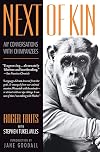
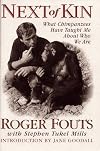
Author of Next of Kin: My Conversations with Chimpanzees
Works by Roger Fouts
Tagged
Common Knowledge
- Birthdate
- 1943-06-08
- Gender
- male
- Occupations
- primate researcher
- Organizations
- Chimpanzee and Human Communication Institute (CHCI)
Institute of Primate Studies - Nationality
- USA
- Associated Place (for map)
- USA
Members
Reviews
4.5 stars
Roger Fouts was a psychology student in the late 1960s when he got a job helping with a chimpanzee, Washoe, to study whether or not chimps could learn human language by way of ASL (American Sign Language). Despite that he really wanted/planned to work with kids, this began decades of research with, then activism for, chimpanzees. He and his family (wife and eventually three kids) moved where Washoe was either sent or where was best for her. Roger was unable to help many other show more chimpanzees he met along with way (though he was able to help a few), but (often with Jane Goodall’s help), he fought to make living conditions for chimpanzees used in research in the U.S. better.
He was still fighting for changes in 1997 when the book was published, but on checking today, things have gotten better – not for all chimps, but for many (most?). There were a few sections in the book where he was talking about research and studies that got just a bit dry, but for the most part, I loved reading about the chimps and the studies and was (to no surprise) horrified at what he saw in the medical research labs. Whether in my psychology or anthropology classes 30ish years ago, I had heard of both Fouts and Washoe, as well as many of the other scientists and studies Fouts mentions in this book. I went through a bunch of emotions reading this book – happiness, sadness, anger... I love that he ended up being an activist, and wanted(s) to see change. I can’t believe it took me so long to finally read this book! show less
Roger Fouts was a psychology student in the late 1960s when he got a job helping with a chimpanzee, Washoe, to study whether or not chimps could learn human language by way of ASL (American Sign Language). Despite that he really wanted/planned to work with kids, this began decades of research with, then activism for, chimpanzees. He and his family (wife and eventually three kids) moved where Washoe was either sent or where was best for her. Roger was unable to help many other show more chimpanzees he met along with way (though he was able to help a few), but (often with Jane Goodall’s help), he fought to make living conditions for chimpanzees used in research in the U.S. better.
He was still fighting for changes in 1997 when the book was published, but on checking today, things have gotten better – not for all chimps, but for many (most?). There were a few sections in the book where he was talking about research and studies that got just a bit dry, but for the most part, I loved reading about the chimps and the studies and was (to no surprise) horrified at what he saw in the medical research labs. Whether in my psychology or anthropology classes 30ish years ago, I had heard of both Fouts and Washoe, as well as many of the other scientists and studies Fouts mentions in this book. I went through a bunch of emotions reading this book – happiness, sadness, anger... I love that he ended up being an activist, and wanted(s) to see change. I can’t believe it took me so long to finally read this book! show less
Holy moly. This book is awesome.
I can't remember how we found this book. I think some website (maybe Goodreads) recommended it because my nine-year-old was reading every single thing Jane Goodall wrote. My daughter read it first, and then as she was getting ready to return it to the library said, "Mom, I really think you should read this book. It's really good."
Once I started the book, it didn't take me long to agree with her.
I was probably already primed to find this book amazing. Whenever show more I go to a zoo or an animal sanctuary, I always have mixed feelings, especially when I see the captive primates, whether they're gorillas, chimpanzees, golden lion tamarins, capuchin monkeys, or marmosets. I was reminded of this when my family visited the National Zoo in Washington, D.C., last month and observed the gorillas. I recognize the realities of habitat loss and other aspects of modern life that make it impossible to return many of these beings to the wild, but they're just a little too close for comfort. I empathize with them a little too much to make watching them in captivity completely comfortable.
Reading Fouts' book emphasized all of these feelings I was already having. It was a very emotional read.
In this book, Fouts (with Stephen Tukel Mills) addresses issues of language acquisition, how learning happens (especially the use of rewards and punishments in learning), the close evolutionary relationship between chimpanzees and humans, the bias of the speaking/hearing population for spoken language, the morality of using non-human animals for biomedical testing, and the arbitrary boundaries we use to define "human" and "non-human." While imparting all of this information, the book reads like a memoir---a very compelling memoir.
Near the end, I started asking "where are they now?" about the chimpanzees in the book, which Fouts wrote in 1997. After an internet search, I learned that Dar, Moja, and Washoe have since died, and that Tatu and Loulis are now living at Fauna Foundation in Quebec, only a few hours' drive from where we live now. My daughter and I are now looking at the adopt-a-chimp and membership options at the foundation, and wondering if we can swing a visit.
I also began reviewing all of my household purchases. I lean towards products not tested on animals anyway, but sometimes---I admit---I am swayed by a good price. There are a surprising number of products in my house that wouldn't make the cut if I were really serious about avoiding products tested on animals.
So basically, this was a compelling and poignant read that has compelled me to make some changes in my everyday life. I'm now thinking of buying this for a half-dozen people for Christmas. Although since they're all primates, maybe they'd appreciate dress-up clothes and a bouquet of bananas more.
Here are some of my favorite quotes from the book:
"Once triggered, learning will not stop---unless it is hijacked by conditioning." (83)
"Creativity and learning are examples of innate behavior that can only be hindered, not helped, by rewards." (84)
Of a baby chimpanzee: "Until she grasps her groups' specific gestures and social cues---its dialect---she won't be able to learn important skills from her mother, form alliances with her peers, attract a mate, and raise her own children." (87)
"If our ape ancestors communicated gesturally, were early man's first languages signed? If so, how and when did these signed languages become spoken?" (90)
"In fact, during the first half of this [the twentieth] century, educators tried mightily to eradicate American Sign Language because they thought its gestures were too monkeylike"; speech was seen as the 'higher and finer part' of language." (96)
"Science that dissociates itself from the pain of others soon becomes monstrous." (372)
"Some scientists love to measure an animal's mind by comparing it to the human I.Q. In these tests chimpanzees come off like mentally disabled children or adults. But when we are dropped in the jungle, we suddenly test like mentally disabled chimpanzees, and the chimpanzees look like certified geniuses." (376) show less
I can't remember how we found this book. I think some website (maybe Goodreads) recommended it because my nine-year-old was reading every single thing Jane Goodall wrote. My daughter read it first, and then as she was getting ready to return it to the library said, "Mom, I really think you should read this book. It's really good."
Once I started the book, it didn't take me long to agree with her.
I was probably already primed to find this book amazing. Whenever show more I go to a zoo or an animal sanctuary, I always have mixed feelings, especially when I see the captive primates, whether they're gorillas, chimpanzees, golden lion tamarins, capuchin monkeys, or marmosets. I was reminded of this when my family visited the National Zoo in Washington, D.C., last month and observed the gorillas. I recognize the realities of habitat loss and other aspects of modern life that make it impossible to return many of these beings to the wild, but they're just a little too close for comfort. I empathize with them a little too much to make watching them in captivity completely comfortable.
Reading Fouts' book emphasized all of these feelings I was already having. It was a very emotional read.
In this book, Fouts (with Stephen Tukel Mills) addresses issues of language acquisition, how learning happens (especially the use of rewards and punishments in learning), the close evolutionary relationship between chimpanzees and humans, the bias of the speaking/hearing population for spoken language, the morality of using non-human animals for biomedical testing, and the arbitrary boundaries we use to define "human" and "non-human." While imparting all of this information, the book reads like a memoir---a very compelling memoir.
Near the end, I started asking "where are they now?" about the chimpanzees in the book, which Fouts wrote in 1997. After an internet search, I learned that Dar, Moja, and Washoe have since died, and that Tatu and Loulis are now living at Fauna Foundation in Quebec, only a few hours' drive from where we live now. My daughter and I are now looking at the adopt-a-chimp and membership options at the foundation, and wondering if we can swing a visit.
I also began reviewing all of my household purchases. I lean towards products not tested on animals anyway, but sometimes---I admit---I am swayed by a good price. There are a surprising number of products in my house that wouldn't make the cut if I were really serious about avoiding products tested on animals.
So basically, this was a compelling and poignant read that has compelled me to make some changes in my everyday life. I'm now thinking of buying this for a half-dozen people for Christmas. Although since they're all primates, maybe they'd appreciate dress-up clothes and a bouquet of bananas more.
Here are some of my favorite quotes from the book:
"Once triggered, learning will not stop---unless it is hijacked by conditioning." (83)
"Creativity and learning are examples of innate behavior that can only be hindered, not helped, by rewards." (84)
Of a baby chimpanzee: "Until she grasps her groups' specific gestures and social cues---its dialect---she won't be able to learn important skills from her mother, form alliances with her peers, attract a mate, and raise her own children." (87)
"If our ape ancestors communicated gesturally, were early man's first languages signed? If so, how and when did these signed languages become spoken?" (90)
"In fact, during the first half of this [the twentieth] century, educators tried mightily to eradicate American Sign Language because they thought its gestures were too monkeylike"; speech was seen as the 'higher and finer part' of language." (96)
"Science that dissociates itself from the pain of others soon becomes monstrous." (372)
"Some scientists love to measure an animal's mind by comparing it to the human I.Q. In these tests chimpanzees come off like mentally disabled children or adults. But when we are dropped in the jungle, we suddenly test like mentally disabled chimpanzees, and the chimpanzees look like certified geniuses." (376) show less
I love this book. To look into the eyes of a chimpanzee is to see ourselves looking back at us. The differences between our species and our culture are bridged as we recognize our shared similarities via culture, language, took making, and emotions. We are them. They are us. We must embrace our family ties to them and stop using them as research objects. They feel no less than we feel. They love, laugh, communicate, and think as we do. They truly are our "next of kin" and it's time we show more started treating them as such. What an amazing book. show less
This book quite literally altered how I see humanity, how I see our responsibility as a race to each other and to all other creatures on the planet, and what hope I have for humanity and our world. Fouts' memoir of the time he spent studying, working with, observing and developing close personal friendships with a group of chimpanzees, beginning with the charming and indomitable Washoe, is thought provoking, laugh provoking, and at time achingly bitter.
After reading this book, I felt as if show more I too knew Washoe. I wanted very, very much to meet this incredible person - and after reading this book, you will not doubt that Washoe or her family of displaced chimps are "personals" with distinct personalities - but before I could get there, Washoe passed away. When I logged onto the website to find out what Washoe and her cohorts were up to, and found out that she'd passed away, I was heartbroken - but I was also awed and inspired by the number of people who had read this book and also felt like they knew Washoe, who also felt as though 'knowing' Washoe through these pages enriched their lives. If you have ever loved a 'person' who was not human - a pet or a wild animal you were lucky enough to observe - you will revel in the hope and love that are the foundation of this story.
Note: if you read the book and enjoy it, do check out Roger Fouts' page for the Chimpanzee and Human Communication Institute in Washington State and/or Friends of Washoe on the net. show less
After reading this book, I felt as if show more I too knew Washoe. I wanted very, very much to meet this incredible person - and after reading this book, you will not doubt that Washoe or her family of displaced chimps are "personals" with distinct personalities - but before I could get there, Washoe passed away. When I logged onto the website to find out what Washoe and her cohorts were up to, and found out that she'd passed away, I was heartbroken - but I was also awed and inspired by the number of people who had read this book and also felt like they knew Washoe, who also felt as though 'knowing' Washoe through these pages enriched their lives. If you have ever loved a 'person' who was not human - a pet or a wild animal you were lucky enough to observe - you will revel in the hope and love that are the foundation of this story.
Note: if you read the book and enjoy it, do check out Roger Fouts' page for the Chimpanzee and Human Communication Institute in Washington State and/or Friends of Washoe on the net. show less
Awards


You May Also Like


Associated Authors
Statistics
- Works
- 1
- Members
- 435
- Popularity
- #56,231
- Rating
- 4.3
- Reviews
- 8
- ISBNs
- 19
- Languages
- 7
- Favorited
- 2