
Charles Mackay (1) (1814–1889)
Author of Extraordinary Popular Delusions and the Madness of Crowds
For other authors named Charles Mackay, see the disambiguation page.
Series
Works by Charles Mackay
Extraordinary Popular Delusions and the Madness of Crowds & Confusión de Confusiones (1995) 99 copies, 1 review
Lost Beauties of the English Language: A Treasure Trove of Archaic Words Culled from Old English (1974) 53 copies, 1 review
Extraordinary Popular Delusions: Selections from Memoirs of Extraordinary Popular Delusions and the Madness of Crowds (1973) 12 copies
Life and Liberty in America: Or, Sketches of a Tour in the United States and Canada in 1857-8 (2005) 12 copies
Selections from 'Extraordinary Popular Delusions' and 'The Madness of Crowds' (Routledge Revivals) (2023) 2 copies
A Glossary of Obscure Words and Phrases in the Writings of Shakespeare and His Contemporaries (2010) 2 copies
The History of The United States of America: Continued to the Southern Secession. Vol I-VIII 2 copies
Os alquimistas 1 copy
Songs for music 1 copy
Associated Works
Tagged
Common Knowledge
- Birthdate
- 1814-03-27
- Date of death
- 1889-12-24
- Gender
- male
- Nationality
- UK
- Birthplace
- Perth, Perthshire, Scotland, UK
- Map Location
- Scotland, UK
Members
Reviews
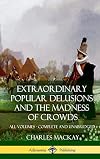
As Edmund Wilson has famously observed, “No two persons ever read the same book" as is evidenced by the number of reviews that range from one grudging star to five exuberant ones. This, of course, is true of every book that's been reviewed in any online forum, but I find Charles Mackay's Extraordinary Popular Delusions and the Madness of Crowds particularly challenging to rate because it's, well, different from usual histories. How so? It was first published in 1841 in, I presume, the UK, show more having been written by a Scot living in London. The writing style, the vocabulary, and even the punctuation are noticeably different from what one normally encounters in 2026, 185 years later. Some reviewers obviously find this difference quite off-putting, but there are those of us who find it rather fascinating. I do recommend having ready access to a comprehensive dictionary while reading because the context does not always clarify some terms that have become obscure over the last one and a half centuries or that perchance failed to immigrate from 19th century England to the 21st century United States.
Delusions, despite its relative antique nature, has been reprinted in various editions. The one I've read is a consolidation of Mackay's original three-volume work and is described as “complete and unabridged” with the ISBN 978-1-387-89039-2 and appears to be a print-on-demand product of Lightning Source LLC for Adansonia Press. It reproduces Mackay's three volumes in a single hard-cover book of 478 pages on good quality paper but with rather small, dense font and noticeably narrow page margins. Near-sighted readers such as I should have no complaint with the physical appearance, but others may have to don their reading glasses before commencing. One other observation on the text is that occasional (though not at all frequent) misspellings hint at the use of an optical character reader (OCR) in the book's preparation; however, I'm quite willing to overlook that in a work of this antiquity.
As for the contents, Mackay selects an encyclopedic variety of examples to illustrate how readily large groups can be led to believe in the most audacious schemes and to embrace ideas that, in light of later learning and reason, appear ridiculous. We see vast numbers of people who madly invest their fortunes in popular ventures only to lose those investments when the ventures inevitably fail (gold and silver mines in Louisiana?) Others see more value in tulips than in cash (at least until the flowers become too numerous). Some find more meaning in dueling than in leading a rational life. Others flock to the burnings of witches. There are those who avoid haunted houses like the plague. Many were the believers in alchemy (or alchymy as Mackay spelled the practice). His chapter on the Crusades I found particularly enlightening from the standpoint of history as well as sociology. We mustn't overlook belief in magnetic fluid and the miraculous healing skills of the magnetisers, either.
Is Mackay an objective analyst of human behavior? Hardly. In his discussion of belief in spirits and hauntings, he notes, “If two or three persons can only be found to take the lead in any absurdity, however great, there is sure to be plenty of imitators. Like sheep in a field, if one clears the stile, the rest will follow.” Similar judgements on the intelligence of humanity in general appear in more or less every chapter. Were Mackay writing today, I think he would likely address such events as the profitless U.S. war in Vietnam, the inexplicable rise of the “MAGA” political faction, the strange existence of believers in UFOs, “chemtrails,” inefficacy of vaccinations, and the “deep state,” and I have no doubt that he would include his opinion of the absurdity (to hark back to his statement quoted above) evidenced by such people.
By the way, for aficionados of J. K. Rowling's Harry Potter sagas, Mackay devotes several pages to the alchemist Nicholas Flamel and to the search for the philosopher's stone. Well, there you have it: I'm assigning the book five stars just for informing me that Nicholas Flamel was a real person and not a creation of Rowling's imagination and that belief in the philosopher's stone was a popular delusion. Besides, I quite agree with Mackay's judgement of the people who fell for the multitudinous delusions, scams, and superstitions that populate his book. show less
Delusions, despite its relative antique nature, has been reprinted in various editions. The one I've read is a consolidation of Mackay's original three-volume work and is described as “complete and unabridged” with the ISBN 978-1-387-89039-2 and appears to be a print-on-demand product of Lightning Source LLC for Adansonia Press. It reproduces Mackay's three volumes in a single hard-cover book of 478 pages on good quality paper but with rather small, dense font and noticeably narrow page margins. Near-sighted readers such as I should have no complaint with the physical appearance, but others may have to don their reading glasses before commencing. One other observation on the text is that occasional (though not at all frequent) misspellings hint at the use of an optical character reader (OCR) in the book's preparation; however, I'm quite willing to overlook that in a work of this antiquity.
As for the contents, Mackay selects an encyclopedic variety of examples to illustrate how readily large groups can be led to believe in the most audacious schemes and to embrace ideas that, in light of later learning and reason, appear ridiculous. We see vast numbers of people who madly invest their fortunes in popular ventures only to lose those investments when the ventures inevitably fail (gold and silver mines in Louisiana?) Others see more value in tulips than in cash (at least until the flowers become too numerous). Some find more meaning in dueling than in leading a rational life. Others flock to the burnings of witches. There are those who avoid haunted houses like the plague. Many were the believers in alchemy (or alchymy as Mackay spelled the practice). His chapter on the Crusades I found particularly enlightening from the standpoint of history as well as sociology. We mustn't overlook belief in magnetic fluid and the miraculous healing skills of the magnetisers, either.
Is Mackay an objective analyst of human behavior? Hardly. In his discussion of belief in spirits and hauntings, he notes, “If two or three persons can only be found to take the lead in any absurdity, however great, there is sure to be plenty of imitators. Like sheep in a field, if one clears the stile, the rest will follow.” Similar judgements on the intelligence of humanity in general appear in more or less every chapter. Were Mackay writing today, I think he would likely address such events as the profitless U.S. war in Vietnam, the inexplicable rise of the “MAGA” political faction, the strange existence of believers in UFOs, “chemtrails,” inefficacy of vaccinations, and the “deep state,” and I have no doubt that he would include his opinion of the absurdity (to hark back to his statement quoted above) evidenced by such people.
By the way, for aficionados of J. K. Rowling's Harry Potter sagas, Mackay devotes several pages to the alchemist Nicholas Flamel and to the search for the philosopher's stone. Well, there you have it: I'm assigning the book five stars just for informing me that Nicholas Flamel was a real person and not a creation of Rowling's imagination and that belief in the philosopher's stone was a popular delusion. Besides, I quite agree with Mackay's judgement of the people who fell for the multitudinous delusions, scams, and superstitions that populate his book. show less
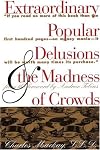
The German philosopher Friedrich Schiller tells us, "Anyone taken as an individual is tolerably sensible and reasonable - as a member of a crowd, he at once becomes a blockhead." Written in 1841 by Charles McKay, Extraordinary Popular Delusions outlines classic episodes of mass behavior in history. These include worship of alchemists, fortune-tellers, haunted houses, and "popular follies of great cities". For modern context, Andrew Tobias comments in the book's forward about "'the hustle', show more where large groups of young people learned to dance in lemminglike unison." How quaint. And, hilariously, the book's original title was Extraordinary Popular Delusions and the Madness of Krauts. In our current day there are still "bubbles" and other evidence of the continuing predilection of the masses to follow dim ideas beyond the bounds of reason. show less
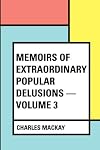
Overall, this is my least favorite of the three volumes of Mackay's epic investigation, although it is worth reading with an end that balances the beginning. This volume covers alchemists, fortune-tellers, and animal magnetism. The alchemists are treated with a series of quick, paragraph biographies like reading something from Tebbo (publisher of a number of "What You Need to Know..." books repackaging Wikipedia content). Fortune-tellers is a bit better, but Mackay does not get into his show more usual stride until he deals with the "mummery" of the quack science of animal magnetism. The dissection of this combination of (self-?)hypnosis, feigning, and hysteria is fascinating with the introduction of blind and even double-blind tests to show the pseudoscience for what it is. Overall, this book made me again see the 19th Century as a fascinating time of science pushing light into the dark corners and how long the history is of baseless beliefs that lead people to even now read horoscopes and pay good money to converse with a "psychic". show less
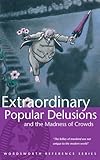
Why do otherwise intelligent individuals form seething masses of idiocy when they engage in collective action? Why do financially sensible people jump lemming-like into hare-brained speculative frenzies--only to jump broker-like out of windows when their fantasies dissolve? We may think that the Great Crash of 1929, junk bonds of the '80s, and over-valued high-tech stocks of the '90s are peculiarly 20th century aberrations, but Mackay's classic--first published in 1841--shows that the show more madness and confusion of crowds knows no limits, and has no temporal bounds. These are extraordinarily illuminating,and, unfortunately, entertaining tales of chicanery, greed and naivete. Essential reading for any student of human nature or the transmission of ideas.
In fact, cases such as Tulipomania in 1624--when Tulip bulbs traded at a higher price than gold--suggest the existence of what I would dub "Mackay's Law of Mass Action:" when it comes to the effect of social behavior on the intelligence of individuals, 1+1 is often less than 2, and sometimes considerably less than 0.
As with any true classic, once it is read it is hard to imagine not having known of it--and there is the compulsion to recommend it to others. First published in 1841, Extraordinary Popular Delusions and the Madness of Crowds is often cited as the best book ever written about market psychology. This Harriman House edition includes Charles Mackay's account of the three infamous financial manias - John Law's Mississipi Scheme, the South Sea Bubble, and Tulipomania.
Between the three of them, these historic episodes confirm that greed and fear have always been the driving forces of financial markets, and, furthermore, that being sensible and clever is no defence against the mesmeric allure of a popular craze with the wind behind it.
In writing the history of the great financial manias, Charles Mackay proved himself a master chronicler of social as well as financial history. Blessed with a cast of characters that covered all the vices, gifted a passage of events which was inevitably heading for disaster, and with the benefit of hindsight, he produced a record that is at once a riveting thriller and absorbing historical document. A century and a half later, it is as vibrant and lurid as the day it was written.
For modern-day investors, still reeling from the dotcom crash, the moral of the popular manias scarcely needs spelling out. When the next stock market bubble comes along, as it surely will, you are advised to recall the plight of some of the unfortunates on these pages, and avoid getting dragged under the wheels of the careering bandwagon yourself. show less
In fact, cases such as Tulipomania in 1624--when Tulip bulbs traded at a higher price than gold--suggest the existence of what I would dub "Mackay's Law of Mass Action:" when it comes to the effect of social behavior on the intelligence of individuals, 1+1 is often less than 2, and sometimes considerably less than 0.
As with any true classic, once it is read it is hard to imagine not having known of it--and there is the compulsion to recommend it to others. First published in 1841, Extraordinary Popular Delusions and the Madness of Crowds is often cited as the best book ever written about market psychology. This Harriman House edition includes Charles Mackay's account of the three infamous financial manias - John Law's Mississipi Scheme, the South Sea Bubble, and Tulipomania.
Between the three of them, these historic episodes confirm that greed and fear have always been the driving forces of financial markets, and, furthermore, that being sensible and clever is no defence against the mesmeric allure of a popular craze with the wind behind it.
In writing the history of the great financial manias, Charles Mackay proved himself a master chronicler of social as well as financial history. Blessed with a cast of characters that covered all the vices, gifted a passage of events which was inevitably heading for disaster, and with the benefit of hindsight, he produced a record that is at once a riveting thriller and absorbing historical document. A century and a half later, it is as vibrant and lurid as the day it was written.
For modern-day investors, still reeling from the dotcom crash, the moral of the popular manias scarcely needs spelling out. When the next stock market bubble comes along, as it surely will, you are advised to recall the plight of some of the unfortunates on these pages, and avoid getting dragged under the wheels of the careering bandwagon yourself. show less
Lists
Awards

You May Also Like


Associated Authors
Statistics
- Works
- 45
- Also by
- 1
- Members
- 3,354
- Popularity
- #7,609
- Rating
- 3.8
- Reviews
- 51
- ISBNs
- 161
- Languages
- 7
- Favorited
- 1