
Richard B. Lee
Author of The Dobe !Kung
About the Author
Image credit: Richard B. Lee [credit: University of Toronto]
Works by Richard B. Lee
Associated Works
Ants, Indians, and Little Dinosaurs: A Celebration of Man & Nature for the 75th Anniversary of Natural History Magazine (1975) — Contributor — 203 copies, 1 review
Tagged
Common Knowledge
- Legal name
- Lee, Richard Borshay
- Birthdate
- 1937-09-20
- Gender
- male
- Education
- University of Toronto
University of California, Berkeley - Occupations
- anthropologist
- Organizations
- University of Toronto
Association of American Anthropologists
Anthropologists for Radical Political Change
Canadian Anthropology Society
Canadian Ethnology Society
National Academy of Sciences - Nationality
- Canada
- Associated Place (for map)
- Canada
Members
Reviews
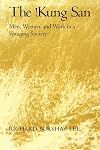
This excellent book is a detailed account of every aspect of life in the "foraging" (hunter-gatherer) society of the !Kung San people of southern Africa.
For me, the central importance of the book lies in that it shows what is POSSIBLE in terms of human social organisation. Defenders of capitalism tell us that it is futile to try to create a more co-operative and equal society because they claim that human society has always been, and always will be, unequal, class-divided, competitive and show more driven by the innate selfishness of human beings.
But for over ninety percent of the time that Homo sapiens has existed, until the development of agriculture twelve thousand years ago, all humans lived in hunter-gatherer societies. These societies were classless, egalitarian and co-operative. (Marx and Engels called this type of society "primitive communism".)
Of course, present-day hunter-gatherer societies are not exactly like their prehistoric equivalents. For one thing, none are untouched by more "advanced" societies. For another, the only remaining hunter-gatherers today live in marginal areas of the world: farmers and more developed societies have taken over the best bits. Nevertheless, studies by social anthropologists like Lee, combined with the work of archaeologists, can give us a good idea of how hunter-gatherers lived in the past.
Incidentally, there is evidence from the archaeology of bones that our hunter-gatherer ancestors had a healthier diet and life-style than later farmers. No wonder that one social anthropologist has called hunter-gatherer societies "the original affluent society".
Lee shows that the hunter-gatherer way of life is one which combines co-operation, equality and respect for individual freedom. Hunter-gatherer "leadership" only exists in terms of respect for someone's expertise. Leaders give advice, not orders; they do not accumulate more wealth than anyone else; and arrogance is not tolerated. These egalitarian attitudes are not the result of some abstract moral "goodness" of the people. They arise from the real, co-operative way of life that the people lead.
Another aspect of these societies that should be mentioned is the equality of the sexes. Men do most of the hunting and women mainly do the gathering, because the latter are often breast-feeding or pregnant. But gathering is at least as important economically as hunting, so this division of labour does not lead to inequality between the sexes.
Lee's book is an academic study, but the political lesson that I would draw from it is that only by getting rid of capitalism and taking collective democratic control of society can humanity combine the benefits of modern technology with the co-operation, equality and freedom that we see in hunter-gatherer societies. show less
For me, the central importance of the book lies in that it shows what is POSSIBLE in terms of human social organisation. Defenders of capitalism tell us that it is futile to try to create a more co-operative and equal society because they claim that human society has always been, and always will be, unequal, class-divided, competitive and show more driven by the innate selfishness of human beings.
But for over ninety percent of the time that Homo sapiens has existed, until the development of agriculture twelve thousand years ago, all humans lived in hunter-gatherer societies. These societies were classless, egalitarian and co-operative. (Marx and Engels called this type of society "primitive communism".)
Of course, present-day hunter-gatherer societies are not exactly like their prehistoric equivalents. For one thing, none are untouched by more "advanced" societies. For another, the only remaining hunter-gatherers today live in marginal areas of the world: farmers and more developed societies have taken over the best bits. Nevertheless, studies by social anthropologists like Lee, combined with the work of archaeologists, can give us a good idea of how hunter-gatherers lived in the past.
Incidentally, there is evidence from the archaeology of bones that our hunter-gatherer ancestors had a healthier diet and life-style than later farmers. No wonder that one social anthropologist has called hunter-gatherer societies "the original affluent society".
Lee shows that the hunter-gatherer way of life is one which combines co-operation, equality and respect for individual freedom. Hunter-gatherer "leadership" only exists in terms of respect for someone's expertise. Leaders give advice, not orders; they do not accumulate more wealth than anyone else; and arrogance is not tolerated. These egalitarian attitudes are not the result of some abstract moral "goodness" of the people. They arise from the real, co-operative way of life that the people lead.
Another aspect of these societies that should be mentioned is the equality of the sexes. Men do most of the hunting and women mainly do the gathering, because the latter are often breast-feeding or pregnant. But gathering is at least as important economically as hunting, so this division of labour does not lead to inequality between the sexes.
Lee's book is an academic study, but the political lesson that I would draw from it is that only by getting rid of capitalism and taking collective democratic control of society can humanity combine the benefits of modern technology with the co-operation, equality and freedom that we see in hunter-gatherer societies. show less

An examination of the Dobe Ju'Hoansi (speakers of a click language in the once prominant Khoisian family -- the subjects of the film "The God's Must Be Crazy") by an anthropologist. He found that these people really did not represent, as he had imagined, a slice of how humanity might have lived eons ago. These modern hunter-gatherers, however, had very interesting cultural attributes that set them apart from so-called modern society. They had little jealousy and a remarkably altruistic gift show more giving model. They had ornate notions of family and naming. They lived longer than the west expected and had happier lives, based on the number of hours they had to toil and their longevity. And they lost all aspects the benefits of their culture when modern african governments gave them "assistance". show less

I read this ages ago, but I didn't want to review it, because I've not read any other anthropological field-report type works. But, what the hell. I learned from it; I'll say that. It sounds like an interesting people, living in an interesting little corner of the globe. But I never bonded with the researcher, or how he wrote. He certainly had some of the needed sympathy for his subjects, but not enough, really. He seemed slightly caught up in how advanced he was as a Canadian, or as a show more graduate of some Toronto university, or whatever. To be honest, it sounds like he basically acted like a sort of visiting dignitary...and this in a society blessedly free of visiting dignitaries.
(7/10) show less
(7/10) show less
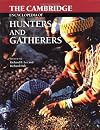
“Hunting and Gathering is humanity’s first and most successful adaptation, occupying fully 90 percent of human history. Until 12,000 years ago all humanity lived this way. Surprisingly, in an increasingly urbanized and technological world dozens of hunting and gathering societies have persisted and thrive on five continents. Case studies of more than fifty of the world’s hunting and gathering peoples, written by leading experts, tell a story of resilience in the face of change, of show more ancient ways now combined with the trappings of modernity. Divided into seven world regions, each section includes a regional introduction and an archaeological overview. Thematic essays discuss prehistory, social life, gender, music and art, health, religion, and indigenous knowledge. The final section surveys the complex histories of hunter-gatherers’ encounters with colonialism and the State and their ongoing struggles for dignity and human rights as part of the worldwide movement of indigenous peoples.” show less
Lists
Awards


You May Also Like


Associated Authors
Statistics
- Works
- 7
- Also by
- 3
- Members
- 522
- Popularity
- #47,609
- Rating
- 3.7
- Reviews
- 4
- ISBNs
- 20
