
Colin Turnbull (1924–1994)
Author of The Forest People: A Study of the Pygmies of the Congo
About the Author
Works by Colin Turnbull
Reasons To Be Glad 2 copies
Associated Works
Ants, Indians, and Little Dinosaurs: A Celebration of Man & Nature for the 75th Anniversary of Natural History Magazine (1975) — Contributor — 203 copies, 1 review
Miłość Safini — Contributor — 2 copies
Tagged
Common Knowledge
- Legal name
- Turnbull, Colin Macmillan
- Birthdate
- 1924-11-23
- Date of death
- 1994-07-28
- Gender
- male
- Education
- University of Oxford (Ph.D|1964)
Banaras Hindu University (MA|1951)
Magdalen College, Oxford (BA)
Westminster School, London - Occupations
- anthropologist
curator - Organizations
- Royal Naval Volunteer Reserve
American Museum of Natural History
Virginia Commonwealth University - Relationships
- Towles, Joseph (partner)
- Cause of death
- AIDS
- Nationality
- UK
USA (naturalized 1965) - Birthplace
- London, England, UK
- Place of death
- Kilmarnock, Virginia, USA
- Associated Place (for map)
- London, England, UK
Members
Reviews
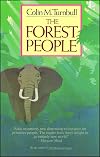
Although written by an anthropologist, Colin Turnbull described the life of the Mbuti pygmies with such color, exuberance, detail and a healthy dash of humor that you cannot help but be entranced by this book. It reads like a novel, not a diary or journal. The author lived for three years with them in the Ituri Forest in northwestern Belgian Congo (later Zaire, now DR of Congo). His affection for them is immediately apparent, and his intimate descriptions of individuals allow the reader to show more enjoy the characters in the book and their lives.
However, there are times when either the author is taking the mickey out of you, or else the Mbuti are taking the mickey out of him. When he takes a few of them on a drive out of the forest into the savanna where buffalo are grazing they wonder what kind of ants are those animals. The animals are far far away, but the people have never ever seen an open vista, so they assume the animals are very close. Good for a few chuckles, but not believable.
In any case, you won't be disappointed reading this book. Instead, you will feel like your are eating a delicious meal with a fine wine, a trip into another world that is almost certainly gone by now, 60 years on. show less
However, there are times when either the author is taking the mickey out of you, or else the Mbuti are taking the mickey out of him. When he takes a few of them on a drive out of the forest into the savanna where buffalo are grazing they wonder what kind of ants are those animals. The animals are far far away, but the people have never ever seen an open vista, so they assume the animals are very close. Good for a few chuckles, but not believable.
In any case, you won't be disappointed reading this book. Instead, you will feel like your are eating a delicious meal with a fine wine, a trip into another world that is almost certainly gone by now, 60 years on. show less
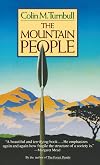
Anthropologist Turnbull studied a number of communities on the African continent. The main lesson of this particular one of the Ik people was that this is what happens in a culture that's in decline and its members had lost touch with their humanity. because of government policy changes, the Ik people had lost their source of sustenance and their ability to continue following their customary patterns. Although research methods in the field of anthropology don't allow for generalizing the show more structures of one particular community to any other, I still couldn't help seeing parallels to US society -- the self-centered preoccupation with one's personal survival, the indifference to the young, the ailing and the elderly, and ab inability or unwillingness to see life as anything more than physical survival. Some have branded this book as racist but I see it as a warning that we all have choices about how to live our lives. show less
Absolutely terrifying, but something that has really reinforced many of the opinions I hold on the socialisation of what we consider "humanity". The Ik are a people who have had their ability to gather the basic resources needed to live removed; the result is the removal of "humanity", as this is something which we have only had the freedom to evolve due to a surpless of food in most situations. I'd recommend it to most sociology and psychology students.

Huh. I don't know what edition berthirsch read, but the 1961 one is neither a "tale" nor "the story of a small Pygmy tribe," and there's no suspense. It's a typical 1950s narrative ethnography, as engagingly written as such things tend to be. It describes the economic, social, and [for lack of a better word] cultural practices of BaMbuti (a.k.a. Pygmies), how those practices change over the course of the year, and how they connect to the lives of village farmers. It's written, as I say, in show more the narrative mode, but does not form a continuous narrative — rather, it's a series of extended anecdotes illuminating one or more aspects of BaMbuti life in that place at that time. It's informative but not data-rich: there is, for example, no kinship diagram (although this is one of the few ethnographies for which that actually would have been useful).
(If you've ever heard the anecdote about the forest-dweller seeing distant animals on the plains for the first time and thinking they were insects, it's from this book [next-to-last chapter]). show less
(If you've ever heard the anecdote about the forest-dweller seeing distant animals on the plains for the first time and thinking they were insects, it's from this book [next-to-last chapter]). show less
Lists
Awards


You May Also Like


Associated Authors
Statistics
- Works
- 17
- Also by
- 3
- Members
- 2,076
- Popularity
- #12,373
- Rating
- 3.9
- Reviews
- 17
- ISBNs
- 61
- Languages
- 4
- Favorited
- 1