
Marjorie Shostak (1945–1996)
Author of Nisa: The Life and Words of a !Kung Woman
About the Author
Marjorie Shostak was an ethnographer and an award-winning photographer
Works by Marjorie Shostak
Tagged
Common Knowledge
- Birthdate
- 1945-05-11
- Date of death
- 1996-10-06
- Gender
- female
- Education
- Brooklyn College (BA)
- Occupations
- anthropologist
Anthropology professor, Emory University - Organizations
- Université Emory (Professeur, Anthropologie, 1983-1996)
Musée Peabody de Harvard (Collaboratrice, 1969) - Relationships
- Konner, Melvin (spouse)
- Cause of death
- breast cancer
- Nationality
- Etats-Unis
- Birthplace
- Brooklyn, New York, USA
- Places of residence
- Brooklyn, New York, USA
- Place of death
- Atlanta, Georgia, USA
- Map Location
- Etats-Unis
- Associated Place (for map)
- New York, USA
Members
Reviews
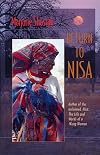
There is no reason why anybody who hasn’t read Nisa by Majorie Shostak should read Return to Nisa, Shostak’s later work. And yet, I think anyone who has read Nisa should indeed read the “sequel.”
Of course, it isn’t really a sequel at all.
Nisa was a groundbreaking work of pioneering anthropology from the 1970’s that centered upon Shostak’s unique study of the fading traditional ways of the !Kung bushmen hunter-gatherers of Botswana that focused upon an unusually close show more relationship she formed with an especially forthcoming !Kung woman who is known by the eponymous pseudonym Nisa. Shostak’s book was a surprising success that turned into a classic text for anthropology class. It is, in my view, an outstanding work on multiple levels and I would highly recommend it to all, even if you are not especially interested in cultural anthropology studies.
Return to Nisa lacks almost everything that distinguishes Nisa. It is, finally, not even an anthropology book at all, but rather a memoir and a brilliant work of literature that is about a dying Marjorie Shostak who returns to Africa both because it represents a time of triumph and health for her as well as an opportunity for a chance she does not want to admit she hopes for: a cure for her cancer brought about by the primitive religion and superstition of the !Kung people she once dwelt among in the studies that spawned Nisa.
Only fourteen years have passed since she left, but what once appeared to be the twilight of the !Kung traditional lifestyle has swiftly been extinguished. Reading her re-entry in the !Kung world, you are to some degree reminded of Sitting Bull’s Sioux banished to a reservation, dependant upon others for their sustenance. Shostak is less surprised by this than by the mercenary approach her former “friends” among the !Kung – including the Nisa she once bonded so deeply with – take with her, demanding not only hand-outs but actual payments for even basic conversation with Shostak in some cases.
In Return to Nisa, Shostak attempts to reconnect as an anthropologist with Nisa and the !Kung she separated from a generation before, when she was a young, pretty, healthy girl in her twenties, at the very edge of academic success, rather than the older mother of three burdened with cancer and mortality. As such, the book is much more a journal about Marjorie Shostak than about Nisa and the others. There are indeed fascinating anecdotes and a well-written narrative of the !Kung and how their new lives impact them, but Marjorie has lost her perspective. She is no longer an anthropologist this time around. The reader, knowing the outcome – Shostak died several years later at a still young age from the cancer she carried – can’t help but be struck by the terrible sadness of her desperation to be cured by traditional !Kung medicine, even as she ferries others among them to a clinic in her truck lest they die from ailments far less serious than cancer that traditional !Kung medicine seems to fail every time.
Although this review sounds as if I am attempting to persuade the reader against reading it, I cannot help but urge the opposite. It is, for sure, not an anthropology book in the sense that Nisa was, yet for those who read Nisa it is no less than required reading. It will make you want to re-read the first book once more, and make you wonder whether what you thought you read the first time is true, or was it simply true for Marjorie. You should also read it for another reason: we should honor the memory of Marjorie Shostak. She was a great woman and the world is surely a poorer place without her. show less
Of course, it isn’t really a sequel at all.
Nisa was a groundbreaking work of pioneering anthropology from the 1970’s that centered upon Shostak’s unique study of the fading traditional ways of the !Kung bushmen hunter-gatherers of Botswana that focused upon an unusually close show more relationship she formed with an especially forthcoming !Kung woman who is known by the eponymous pseudonym Nisa. Shostak’s book was a surprising success that turned into a classic text for anthropology class. It is, in my view, an outstanding work on multiple levels and I would highly recommend it to all, even if you are not especially interested in cultural anthropology studies.
Return to Nisa lacks almost everything that distinguishes Nisa. It is, finally, not even an anthropology book at all, but rather a memoir and a brilliant work of literature that is about a dying Marjorie Shostak who returns to Africa both because it represents a time of triumph and health for her as well as an opportunity for a chance she does not want to admit she hopes for: a cure for her cancer brought about by the primitive religion and superstition of the !Kung people she once dwelt among in the studies that spawned Nisa.
Only fourteen years have passed since she left, but what once appeared to be the twilight of the !Kung traditional lifestyle has swiftly been extinguished. Reading her re-entry in the !Kung world, you are to some degree reminded of Sitting Bull’s Sioux banished to a reservation, dependant upon others for their sustenance. Shostak is less surprised by this than by the mercenary approach her former “friends” among the !Kung – including the Nisa she once bonded so deeply with – take with her, demanding not only hand-outs but actual payments for even basic conversation with Shostak in some cases.
In Return to Nisa, Shostak attempts to reconnect as an anthropologist with Nisa and the !Kung she separated from a generation before, when she was a young, pretty, healthy girl in her twenties, at the very edge of academic success, rather than the older mother of three burdened with cancer and mortality. As such, the book is much more a journal about Marjorie Shostak than about Nisa and the others. There are indeed fascinating anecdotes and a well-written narrative of the !Kung and how their new lives impact them, but Marjorie has lost her perspective. She is no longer an anthropologist this time around. The reader, knowing the outcome – Shostak died several years later at a still young age from the cancer she carried – can’t help but be struck by the terrible sadness of her desperation to be cured by traditional !Kung medicine, even as she ferries others among them to a clinic in her truck lest they die from ailments far less serious than cancer that traditional !Kung medicine seems to fail every time.
Although this review sounds as if I am attempting to persuade the reader against reading it, I cannot help but urge the opposite. It is, for sure, not an anthropology book in the sense that Nisa was, yet for those who read Nisa it is no less than required reading. It will make you want to re-read the first book once more, and make you wonder whether what you thought you read the first time is true, or was it simply true for Marjorie. You should also read it for another reason: we should honor the memory of Marjorie Shostak. She was a great woman and the world is surely a poorer place without her. show less
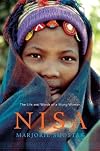
Nisa is an interesting collection of writings. The bulk of the book is made up of stories told to the anthropologist Marjorie from the !Kung lady Nisa. The rest of the book consists of Marjorie's ethnographic observations of the !Kung's people life and beliefs. The book is paced very well, and oftentimes Marjorie's observations prove to be just as interesting as Nisa's life is. The information is presented in a non-biased way and the points in Nisa's life that are exceptional are dutifully show more explained as such.
I came away from this book having enjoyed it (in spite of how long it took me to finish it.) I feel that the !Kung people did prove to be a very interesting case study - their way of life has been the way the bulk of human's lived for most of our earthly existence. I left the book a bit sad to see the way of life disappearing, especially when it boasts a decent amount of advantages over modern civilization.
So, all in all I would recommend this book to people interested in the anthropological field or the sociological field. show less
I came away from this book having enjoyed it (in spite of how long it took me to finish it.) I feel that the !Kung people did prove to be a very interesting case study - their way of life has been the way the bulk of human's lived for most of our earthly existence. I left the book a bit sad to see the way of life disappearing, especially when it boasts a decent amount of advantages over modern civilization.
So, all in all I would recommend this book to people interested in the anthropological field or the sociological field. show less
This is currently my favorite book to assign an introductory-level undergraduate anthropology class, along with a text book. Shostak is an anthropologist who originally studied women in sub-Saharan Africa, though she she did not return to Africa for over a decade. After she discovers she has cancer, however, she finds herself drawn back to the place and the people who meant so much to her during her research, and with whom she feels she has a bond she needs to acknowledge before her death. show more This is a frank and descriptive account of the dynamics of anthropological research, discussing the ethics of studying people and how one researcher attempts to do so. Shostak's story progresses through her own point of view, intimately sharing her inmost thoughts and fears, and therefore serves to do more than study her subjects. The impression that people elsewhere in the world are primitive and stagnant and alien is minimized by the presence of the anthropologist and her interactions. show less
In the 1970’s, anthropologist Marjorie Shostak spent time living with the !Kung or Bushmen people of Botswana. This resulted in her first book, Nisa, published in 1981 telling the life story of a remarkable woman of these people.
Shostak returned to Botswana in 1989. In the preceding year, while still nursing her youngest child, she had been diagnosed with breast cancer. After a year of treatment and hospitals, not knowing if she had been cured or not, she returned to the !Kung for thirty show more days. She hoped to find both spiritual and physical healing among these people.
She found the !Kung had also been through many changes in the years she had been gone. The sudden closing of the border between Botswana and Namibia split the Bushmen people between the two countries and divided families as devastatingly and as permanently as the Berlin Wall had done with the Germans. This border closing also contributed to the Bushmen leaving their traditional hunting/gathering lifestyle and becoming herders, mostly of animals belonging to other tribes who felt themselves superior to the !Kung. In addition, the constant flow of anthropologists studying the !Kung people had changed the people’s attitudes and souls in much the same way that in quantum physics one cannot observe a phenomena without affecting the outcome.
In spite of the cultural changes of the people, Shostak was able to reconnect with old acquaintances and find a measure of spiritual peace. She passed away from her breast cancer before this book was published.
I found this book interesting, well written, and very enlightening about the fate and humanity of this remarkable people. 4 stars. show less
Shostak returned to Botswana in 1989. In the preceding year, while still nursing her youngest child, she had been diagnosed with breast cancer. After a year of treatment and hospitals, not knowing if she had been cured or not, she returned to the !Kung for thirty show more days. She hoped to find both spiritual and physical healing among these people.
She found the !Kung had also been through many changes in the years she had been gone. The sudden closing of the border between Botswana and Namibia split the Bushmen people between the two countries and divided families as devastatingly and as permanently as the Berlin Wall had done with the Germans. This border closing also contributed to the Bushmen leaving their traditional hunting/gathering lifestyle and becoming herders, mostly of animals belonging to other tribes who felt themselves superior to the !Kung. In addition, the constant flow of anthropologists studying the !Kung people had changed the people’s attitudes and souls in much the same way that in quantum physics one cannot observe a phenomena without affecting the outcome.
In spite of the cultural changes of the people, Shostak was able to reconnect with old acquaintances and find a measure of spiritual peace. She passed away from her breast cancer before this book was published.
I found this book interesting, well written, and very enlightening about the fate and humanity of this remarkable people. 4 stars. show less
You May Also Like


Associated Authors
Statistics
- Works
- 3
- Members
- 896
- Popularity
- #28,592
- Rating
- 3.8
- Reviews
- 15
- ISBNs
- 31
- Languages
- 7
- Favorited
- 1
