
Jerry Ordway
Author of The Death of Superman
About the Author
Image credit: Luigi Novi
Series
Works by Jerry Ordway
Tom Strong #32 - The Black Blade of the Barbary Coast, Part 2 — Illustrator — 3 copies
Avengers (Vol.3) #16 2 copies
Superman (1987-2006) #38 2 copies
Superman, Vol. 2 # 54 2 copies
Convergence: Infinity Inc. (2015) #2 2 copies
Superman (1987-2006) #34 2 copies
Convergence: Infinity Inc. (2015) #1 2 copies
Superman, Vol. 2 # 39 2 copies
Adventure Comics [2009] # 5 — Illustrator — 2 copies
Superman, Vol. 2 # 51 2 copies
Adventure Comics [2009] # 4 — Illustrator — 2 copies
Hulk [1999] #9 2 copies
Avengers (Vol.3) #17 2 copies
Superman, Vol. 2 # 47 2 copies
The Power of Shazam: One Million 2 copies
Avengers (Vol.3) #18 2 copies
Hulk [1999] #10 1 copy
Hulk [1999] #11 1 copy
Superman (1987-2006) #41 1 copy
Superman (1987-2006) #44 1 copy
What The--?! Vol 1., No. 2, September 1988: Superbman vs. Fantastical Four (1988) — Illustrator — 1 copy
Superman (1987-2006) #35 1 copy
Superman (1987-2006) #40 1 copy
Superman (1987-2006) #39 1 copy
Superman (1987-2006) #43 1 copy
Superman (1987-2006) #36 1 copy
Superman, Vol. 2 # 43 1 copy
Superman, Vol. 2 # 42 1 copy
Superman, Vol. 2 # 41 1 copy
Superman, Vol. 2 # 40 1 copy
Superman, Vol. 2 # 38 1 copy
Superman, Vol. 2 # 37 1 copy
Superman, Vol. 2 # 36 1 copy
Superman, Vol. 2 # 34 1 copy
Superman, Vol. 2 # 46 1 copy
Superman Classic n. 31 1 copy
Superman Classic n. 30 1 copy
Superman Classic n. 29 1 copy
Superman Classic n. 27 1 copy
Superman Classic n. 25 1 copy
Superman Classic n. 23 1 copy
Superman 005 1 copy
Superman 004 1 copy
Superman, Vol. 2 # 45 1 copy
Superman, Vol. 2 # 49 1 copy
Superman 001 1 copy
Superman, Vol. 2 # 35 1 copy
Superman, nº 106 1 copy
Superman, Vol. 2 # 52 1 copy
Superman, Vol. 2 # 53 1 copy
Associated Works
Superman & Batman Magazine #4 — Contributor — 2 copies
DC Sampler (1983—1984) #2 — Illustrator — 2 copies
Tagged
Common Knowledge
- Birthdate
- 1957-11-28
- Gender
- male
- Occupations
- comic book artist
comic book writer - Nationality
- USA
- Places of residence
- Milwaukee, Wisconsin, USA
- Associated Place (for map)
- Wisconsin, USA
Members
Reviews

This comic is a blatant attempt to replicate the winning formula of Crisis on Infinite Earths, without any understanding of what made that work. I mean, really: the last Crisis gave us a wall of white light destroying alternative dimension after alternative dimensions, slowly approaching our heroes' dimensions. This Crisis gives us a wall of white light destroying future time after future time, slowly approaching our heroes' time. Dan Jurgens isn't even trying here.
But it's a rip-off to no show more effect, which is the worst kind of rip-off. CoIE worked because these were places with real history, real meaning being wiped out. Even if you'd never read a story of the multiverse before (as was true for me when I first read CoIE) you can tell that Earth-Two, Earth-Three, Earth-Prime, and all the rest have deep backgrounds-- which is what makes their destructions effective. Heck, CoIE even tricks you into thinking that places like Earth-Four and Earth-Six have been around for a while. In Zero Hour, though, the times are just numbers. It's utterly meaningless-- what's the 64th century to me, or me to the 64th century? Why should I care? I don't.
Which is more the shame because there's a built-in hook here. This story, famously, sees Hal Jordan embrace the role of Parallax and attempt to remake the universe into a better place. He'd had a bum deal in comics over the past several years, including the destruction of his home, Coast City, and Kyle Rayner had already replaced him as the Green Lantern of Earth. Unfortunately, the story isn't actually about this potentially interesting idea, as not just the identity, but even the existence of Parallax, is kept a secret for most of the book. Instead we have to watch Monarch a lot, Monarch being the ill-conceived villain behind the ill-conceived Armageddon 2001 crossover. Seriously, couldn't we just forget that ever happened? Waverider's here too, which isn't helping on that score.
The time mechanics of the story don't make any sense, either. At one point, Monarch-- now "Extant" for some reason-- tells Waverider he's stolen the other's power. "But that's impossible!" he gasps, since he still has his power. But then a past version of Extant shows up and steals Waverider's power. Oh, that's kinda clever if not terribly so. But then the past-Extant merges with present-Extant. So where did present-Extant come from? Argh.
Also: at the end of the prologue, Waverider intones to Rip Hunter (the most '90s "Time Master" of them all, presumably), "we stand on the verge-- of a true crisis!" Oh, the melodrama! But then later Rip Hunter tells Waverider, "A crisis! Check the chronoscopes-- a crisis-- aieee!" Now Waverider has to go look up what a "crisis" is! Geeze!
So, a lot of people run back and forth, there's some shouting, and like CoIE, Zero Hour struggles to give its heroes something plot-relevant to do, though it's even less successful on that score than CoIE. Why what Hal Jordan is doing is evil is never really clear, either, as it seems like mostly he wants to make our universe the same, but without Barbara Gordon getting shot and Coast City being nuked. Which sounds okay to me. I do like the role of Green Arrow in the climax... but then I would.
Dan Jurgens and Jerry Ordway do a good job on art, at least. I especially liked how they drew the pre-injury Barbara Gordon Batgirl. It's a shame Jurgens also feels the need to overstuff the book with word balloons and captions; everything is told to the reader at least twice, if not three times. Maybe Jurgens was just on autopilot after the prologue, though, where the captions are always telling you things you can't see, things as basic as that the characters are jumping between time periods. One wonders if Frank Fosco and Ken Branch weren't drawing what they were supposed to, or what.
K. C. Carlson's afterword celebrates that now, anything can happen. "This is just the beginning!" Wasn't that true just nine years ago? Do we really need to do this over again, not as good?
DC Comics Crises: « Previous in sequence | Next in sequence » show less
But it's a rip-off to no show more effect, which is the worst kind of rip-off. CoIE worked because these were places with real history, real meaning being wiped out. Even if you'd never read a story of the multiverse before (as was true for me when I first read CoIE) you can tell that Earth-Two, Earth-Three, Earth-Prime, and all the rest have deep backgrounds-- which is what makes their destructions effective. Heck, CoIE even tricks you into thinking that places like Earth-Four and Earth-Six have been around for a while. In Zero Hour, though, the times are just numbers. It's utterly meaningless-- what's the 64th century to me, or me to the 64th century? Why should I care? I don't.
Which is more the shame because there's a built-in hook here. This story, famously, sees Hal Jordan embrace the role of Parallax and attempt to remake the universe into a better place. He'd had a bum deal in comics over the past several years, including the destruction of his home, Coast City, and Kyle Rayner had already replaced him as the Green Lantern of Earth. Unfortunately, the story isn't actually about this potentially interesting idea, as not just the identity, but even the existence of Parallax, is kept a secret for most of the book. Instead we have to watch Monarch a lot, Monarch being the ill-conceived villain behind the ill-conceived Armageddon 2001 crossover. Seriously, couldn't we just forget that ever happened? Waverider's here too, which isn't helping on that score.
The time mechanics of the story don't make any sense, either. At one point, Monarch-- now "Extant" for some reason-- tells Waverider he's stolen the other's power. "But that's impossible!" he gasps, since he still has his power. But then a past version of Extant shows up and steals Waverider's power. Oh, that's kinda clever if not terribly so. But then the past-Extant merges with present-Extant. So where did present-Extant come from? Argh.
Also: at the end of the prologue, Waverider intones to Rip Hunter (the most '90s "Time Master" of them all, presumably), "we stand on the verge-- of a true crisis!" Oh, the melodrama! But then later Rip Hunter tells Waverider, "A crisis! Check the chronoscopes-- a crisis-- aieee!" Now Waverider has to go look up what a "crisis" is! Geeze!
So, a lot of people run back and forth, there's some shouting, and like CoIE, Zero Hour struggles to give its heroes something plot-relevant to do, though it's even less successful on that score than CoIE. Why what Hal Jordan is doing is evil is never really clear, either, as it seems like mostly he wants to make our universe the same, but without Barbara Gordon getting shot and Coast City being nuked. Which sounds okay to me. I do like the role of Green Arrow in the climax... but then I would.
Dan Jurgens and Jerry Ordway do a good job on art, at least. I especially liked how they drew the pre-injury Barbara Gordon Batgirl. It's a shame Jurgens also feels the need to overstuff the book with word balloons and captions; everything is told to the reader at least twice, if not three times. Maybe Jurgens was just on autopilot after the prologue, though, where the captions are always telling you things you can't see, things as basic as that the characters are jumping between time periods. One wonders if Frank Fosco and Ken Branch weren't drawing what they were supposed to, or what.
K. C. Carlson's afterword celebrates that now, anything can happen. "This is just the beginning!" Wasn't that true just nine years ago? Do we really need to do this over again, not as good?
DC Comics Crises: « Previous in sequence | Next in sequence » show less

Access a version of the below that includes illustrations on my blog.
The third Top 10 book picks up five years after the previous one, with a set of new recruits joining the Neopolis Police Department at the same time the mayor puts a new commissioner in charge. New writer Paul Di Filippo tries to do like Alan Moore did, and balance a number of ongoing plots, but with more characters and fewer issues, it seems like nothing gets the time it deserves. Interesting ideas are raised and then show more never come back, or have almost no impact on the story. How was Joe Pi affected by his undercover mission? Did Smax ever find an apartment that would suit the residency requirement? What happened to the new precinct captain and the new mayor's war on terror? Where did Toy Box's boyfriend come from anyway?
The death of a key character's family member warrants a mere page; the resurrection of another key character doesn't even get that. (Why bring someone back to life and give them one line of dialogue in over a hundred pages?) The overarching plotline is tied up when some guy just turns up and tells someone she has a power she didn't know about. That power works, the end. It's nice to see these characters and concepts again, but Di Filippo doesn't do them justice: this book has neither the laughs nor the drama of the first two. I hope that when Zander Cannon takes over as writer, it's better than this.
Who does do Top 10 justice is Jerry Ordway. Ordway is one of those guys who should always be drawing more comics, and his traditional heroic style is different than that of Gene Ha and Zander Cannon, but just as suited to Neopolis and its inhabitants. He has a mastery of facial expressions, and the storytelling is always clean and clear. The book looks great even when nothing great is happening. show less
The third Top 10 book picks up five years after the previous one, with a set of new recruits joining the Neopolis Police Department at the same time the mayor puts a new commissioner in charge. New writer Paul Di Filippo tries to do like Alan Moore did, and balance a number of ongoing plots, but with more characters and fewer issues, it seems like nothing gets the time it deserves. Interesting ideas are raised and then show more never come back, or have almost no impact on the story. How was Joe Pi affected by his undercover mission? Did Smax ever find an apartment that would suit the residency requirement? What happened to the new precinct captain and the new mayor's war on terror? Where did Toy Box's boyfriend come from anyway?
The death of a key character's family member warrants a mere page; the resurrection of another key character doesn't even get that. (Why bring someone back to life and give them one line of dialogue in over a hundred pages?) The overarching plotline is tied up when some guy just turns up and tells someone she has a power she didn't know about. That power works, the end. It's nice to see these characters and concepts again, but Di Filippo doesn't do them justice: this book has neither the laughs nor the drama of the first two. I hope that when Zander Cannon takes over as writer, it's better than this.
Who does do Top 10 justice is Jerry Ordway. Ordway is one of those guys who should always be drawing more comics, and his traditional heroic style is different than that of Gene Ha and Zander Cannon, but just as suited to Neopolis and its inhabitants. He has a mastery of facial expressions, and the storytelling is always clean and clear. The book looks great even when nothing great is happening. show less

In the early 1990s, comic book writers decided to kill off Superman, knowing that it would allow them to sell a bazillion copies, even to schmucks who don't buy comic books. Rather than have someone awesome kill of Superman, like Lex Luthor, they decided to invent someone totally lame to do it instead. Meet the Darth Maul of the DC Universe: Doomsday.
We're introduced to Doomsday as a big green fist smashing its way through a wall. The best part of this is that breaking your way out of a show more subterranean capsule apparently makes the sound effect KRAAKK! KARAAKK! KRAKA-DOOM! I hope someone out there is collecting the stupid textually-represented sound effects comics are filled with; this one deserves to be on the list. As the issue's main plot progresses, we get little snaps of what this gigantic fellow is up to. His first act of violence? He kills a bird. Exactly how this is supposed to establish him as a threat is beyond me. "Oh no, how will Superman defeat the horrendous... BIRD KILLER? He has the power to crunch two-pound lifeforms with his bare hands!" He can also fell trees.
After that excitement-filled, opening, we cut to an orphan kid buying spraypaint in a hardware store. Apparently, his mother's been kidnapped by a gang of thugs looking to "steal electricity". Lois Lane gets some sort of tip, and leaves Clark a message on his computer. "Very high tech of her," comments Clark when he shows up at work. I think this is sort of putting paid to the notion that this story somehow takes place four years ago as DC's current timeline would claim. The underground monsters end up stealing Metropolis's electricity, but Superman defeats them fairly easily. They're lead by a scruffy homeless man named Charlie who's actually working for Superman in any case; we're not exactly talking about a strong opposition. They come from a place called "War World"; no one ever bothers to explain why they're hanging out in the sewers or what they're going to do with their electricity. Superman leaves Charlie in the sewer in the end, because homeless people can't aspire to live better lives.
After this thrilling adventure, we cut back to the monster thing, who has just attacked a tanker... in Ohio! Apparently the monster thing came from Ohio. This makes me mildly better disposed towards him. Actually, I think this is the first time I've ever seen Ohio in a superhero comic. I bet he comes from Cleveland, though. The Justice League has been called in to deal with the tanker fire, as apparently they don't have firefighters in the DC Universe. An officer of the highway patrol thanks the Leaguers for helping out: "I'm well aware that Ohio is out of your normal area of jurisdiction--" What! I'm pretty sure this is set during the era when the Justice League was all "International" and worked for the UN; is Ohio not a UN member?
After the monster kills a deer, the Justice League springs into action (in Blue Beetle's totally awesome flying beetle) and combats him. They catch up to him outside Lex Oil's Ohio facility, where they are trounced pretty easily. Superman ditched a TV talk show where he's been doing an interview and flies to the rescue. "How could one man stand against the whole League?" he thinks. Whoa, slow down Superman. It's not like Wonder Woman, Batman, or even the Flash are part of the League now; we're talking about Blue Beetle, Booster Gold, Bloodwynd, Fire and Ice, Guy Gardner, and Maxima. These aren't exactly heavy hitters. Guy, as much as I love him, is in one of the periods where he's been kicked out of the Green Lantern Corps, so he's dressed even worse than usual, and I'm pretty sure I could take out Blue Beetle. And I've never even heard of Bloodwynd or Maxima. This comic doesn't exactly inspire me to want to know more about them, either. I'm pretty sure Maxima's power is being stupid. And having an invincible midriff.
Superman finally shows up after half the League has been incapacitated. "I'm telling you, right now--" says Booster Gold "--it's like doomsday is here!" Yes, Booster, I can certainly see how wiping out a tanker and an oil facility would make this the biggest threat the League's ever seen. For some reason, Superman decides that "Doomsday" must be the monster's name. Not good with comprehension, our Superman.
It's the early 1990s, so unfortunately about half of Superman's opening battle with Doomsday is intercut with a long-haired teenager with attitude who hates his mother. Superman hates this kid even more than I do, however; when he's trapped in a rampaging inferno, Superman flies away, thinking, "I have to... block out that plea for help!" What a nice guy.
Superman decides that even if the whole Justice League couldn't take Doomsday down, he can. He's got a point. Superman refers to the monster as "Mr. Destructo" at one point; I wish that name had stuck instead of "Doomsday"; it would have given this story the gravitas it deserves. We learn that the battle is occurring in "Kirby County, Ohio"-- there's no such place, though Wikipedia informs me that there is a "Kirby, Ohio" south of Findlay. On the other hand, Route 110 runs through the area, which is actually an 11-mile state highway in Henry County, west of Bowling Green. The governor of Ohio is mentioned; during this time, that would have been George Voinovich. The lieutenant governor actually particaptes in a phone conversation, where he is repeatedly insulted. Poor Mike DeWine.
For some reason, there's a sequence where Jimmy Olsen is dressed as a giant turtle. Then, a news anchor informs us that "It appears 'Doomsday' is on a straight path crossing from Ohio through New York State... Some theorize that the creature is on a straight course to-- or through-- Metropolis." Apparently, the news has magically got wind of Superman's misbegotten nickname for the creature. And Pennsylvania does not exist in the DC Universe. Thank God.
Superman fights Doomsday by a gas station. Can't anyone ever catch up to this guy not in proximity to flammable materials? Now we learn that the gas station is in "the village of Griffith in upstate Kirby County." Doomsday must be fluctuating the fabric of space or something, because Griffith is in eastern Ohio, nowhere near Kirby or Route 110. Alarmed by the fact that the writers don't know a thing about geography, Jack Kirby's Golden Guardian shows up. Now, I like random appearances by Fourth World characters as much as the next guy, but all he does is talk to Superman and telepathically commune with Dubbilex. Thanks a lot, dude.
All of a sudden, Doomsday's attacking a Lex-Mart in Midvale, which is about fifty miles northwest of Griffith. So much for his beeline towards Metropolis. And "Lex-Mart"? Are there any other megacorporations in the DC Universe? At the Lex-Mart, Doomsday watches an ad for a wrestling match at the Metropolis Arena. Why wrestling matches an eight-hour drive away are being advertized on this TV station is beyond me. Doomsday is intrigued by this ad and decides to head for Metropolis... despite a reporter telling us fifteen pages ago that he was heading straight towards it.
Superman and Doomsday continue to punch each other a lot. This has been going on for about fifty pages, now. I'm starting to miss the sewer folks. They might have been stupid, but that made them entertaining. Doomsday is pure tedium.
More proof that it's the early 1990s materializes with Lois Lane's awful aviators and Lex Luthor's long, flowing locks. Since when did Lex Luthor have hair, anyway? Or hang out with Supergirl?
Doomsday looks at a sign and learns that he's only sixty miles from Metropolis. Which would place him and Superman somewhere in New Jersey, I think. What the heck? What happened to Midvale? Or all of Pennsylvania, for that matter? If you're wondering why I'm focusing on the geography so much, it's because it's the only interesting thing happening here. Unless you count Superman and Doomsday throwing each other at things again and again. Including the Wild Area, which is a giant treehouse outside of Metropolis. Why wasn't this retconned out of existence during the Crisis? The Golden Guardian is still tagging along, still doing nothing. He finally decides that Doomsday is too big for Superman to handle alone... and promptly never appears in the story again. Way to go, dude.
It wouldn't help much, though. Supergirl attacks Doomsday and gets turned into a featurelss purple thing with googly eyes. I don't know what kind of punch can do that, but it's one I'd stay away from.
"This insanity ends in Metropolis!" Superman shouts outside of a Lexpark Garage. What, were the geographically confused inhabitants of Kirby County, Ohio not worthy of your best efforts? I guess not-- Ohio's not part of the UN after all.
As sensitive as ever, Jimmy Olsen (thankfully not dressed like a turtle) is excited that Doomsday's killing hundreds of Metropolis residents because it gives him some good photographs. No wonder he can't ever get a girlfriend.
Superman's cape is torn off and wraps itself around a convenient wooden pole.
Superman and Doomday punch each other for a series of one-panel pages. Superman takes one in the jaw. "Bony protrustions... so sharp.. he cut me!" he shouts. Yes, my natural reaction getting punched is also to describe the punch.
PUNCH PUNCH PUNCH PUNCH PUNCH PUNCH. PUNCH. PUNCH.
Finally, Superman decides to punch Doomsday really hard. Hard enough to kill him. Why didn't he think of this earlier? I don't know, but it's too late. Because he dies.
The narrator tells me that everyone will remember this day for years because Superman dies. He doesn't bother to mention that he only stays dead for a few months. Personally, I wasn't crying; I was rejoicing. Because the whole mess was finally over. show less
We're introduced to Doomsday as a big green fist smashing its way through a wall. The best part of this is that breaking your way out of a show more subterranean capsule apparently makes the sound effect KRAAKK! KARAAKK! KRAKA-DOOM! I hope someone out there is collecting the stupid textually-represented sound effects comics are filled with; this one deserves to be on the list. As the issue's main plot progresses, we get little snaps of what this gigantic fellow is up to. His first act of violence? He kills a bird. Exactly how this is supposed to establish him as a threat is beyond me. "Oh no, how will Superman defeat the horrendous... BIRD KILLER? He has the power to crunch two-pound lifeforms with his bare hands!" He can also fell trees.
After that excitement-filled, opening, we cut to an orphan kid buying spraypaint in a hardware store. Apparently, his mother's been kidnapped by a gang of thugs looking to "steal electricity". Lois Lane gets some sort of tip, and leaves Clark a message on his computer. "Very high tech of her," comments Clark when he shows up at work. I think this is sort of putting paid to the notion that this story somehow takes place four years ago as DC's current timeline would claim. The underground monsters end up stealing Metropolis's electricity, but Superman defeats them fairly easily. They're lead by a scruffy homeless man named Charlie who's actually working for Superman in any case; we're not exactly talking about a strong opposition. They come from a place called "War World"; no one ever bothers to explain why they're hanging out in the sewers or what they're going to do with their electricity. Superman leaves Charlie in the sewer in the end, because homeless people can't aspire to live better lives.
After this thrilling adventure, we cut back to the monster thing, who has just attacked a tanker... in Ohio! Apparently the monster thing came from Ohio. This makes me mildly better disposed towards him. Actually, I think this is the first time I've ever seen Ohio in a superhero comic. I bet he comes from Cleveland, though. The Justice League has been called in to deal with the tanker fire, as apparently they don't have firefighters in the DC Universe. An officer of the highway patrol thanks the Leaguers for helping out: "I'm well aware that Ohio is out of your normal area of jurisdiction--" What! I'm pretty sure this is set during the era when the Justice League was all "International" and worked for the UN; is Ohio not a UN member?
After the monster kills a deer, the Justice League springs into action (in Blue Beetle's totally awesome flying beetle) and combats him. They catch up to him outside Lex Oil's Ohio facility, where they are trounced pretty easily. Superman ditched a TV talk show where he's been doing an interview and flies to the rescue. "How could one man stand against the whole League?" he thinks. Whoa, slow down Superman. It's not like Wonder Woman, Batman, or even the Flash are part of the League now; we're talking about Blue Beetle, Booster Gold, Bloodwynd, Fire and Ice, Guy Gardner, and Maxima. These aren't exactly heavy hitters. Guy, as much as I love him, is in one of the periods where he's been kicked out of the Green Lantern Corps, so he's dressed even worse than usual, and I'm pretty sure I could take out Blue Beetle. And I've never even heard of Bloodwynd or Maxima. This comic doesn't exactly inspire me to want to know more about them, either. I'm pretty sure Maxima's power is being stupid. And having an invincible midriff.
Superman finally shows up after half the League has been incapacitated. "I'm telling you, right now--" says Booster Gold "--it's like doomsday is here!" Yes, Booster, I can certainly see how wiping out a tanker and an oil facility would make this the biggest threat the League's ever seen. For some reason, Superman decides that "Doomsday" must be the monster's name. Not good with comprehension, our Superman.
It's the early 1990s, so unfortunately about half of Superman's opening battle with Doomsday is intercut with a long-haired teenager with attitude who hates his mother. Superman hates this kid even more than I do, however; when he's trapped in a rampaging inferno, Superman flies away, thinking, "I have to... block out that plea for help!" What a nice guy.
Superman decides that even if the whole Justice League couldn't take Doomsday down, he can. He's got a point. Superman refers to the monster as "Mr. Destructo" at one point; I wish that name had stuck instead of "Doomsday"; it would have given this story the gravitas it deserves. We learn that the battle is occurring in "Kirby County, Ohio"-- there's no such place, though Wikipedia informs me that there is a "Kirby, Ohio" south of Findlay. On the other hand, Route 110 runs through the area, which is actually an 11-mile state highway in Henry County, west of Bowling Green. The governor of Ohio is mentioned; during this time, that would have been George Voinovich. The lieutenant governor actually particaptes in a phone conversation, where he is repeatedly insulted. Poor Mike DeWine.
For some reason, there's a sequence where Jimmy Olsen is dressed as a giant turtle. Then, a news anchor informs us that "It appears 'Doomsday' is on a straight path crossing from Ohio through New York State... Some theorize that the creature is on a straight course to-- or through-- Metropolis." Apparently, the news has magically got wind of Superman's misbegotten nickname for the creature. And Pennsylvania does not exist in the DC Universe. Thank God.
Superman fights Doomsday by a gas station. Can't anyone ever catch up to this guy not in proximity to flammable materials? Now we learn that the gas station is in "the village of Griffith in upstate Kirby County." Doomsday must be fluctuating the fabric of space or something, because Griffith is in eastern Ohio, nowhere near Kirby or Route 110. Alarmed by the fact that the writers don't know a thing about geography, Jack Kirby's Golden Guardian shows up. Now, I like random appearances by Fourth World characters as much as the next guy, but all he does is talk to Superman and telepathically commune with Dubbilex. Thanks a lot, dude.
All of a sudden, Doomsday's attacking a Lex-Mart in Midvale, which is about fifty miles northwest of Griffith. So much for his beeline towards Metropolis. And "Lex-Mart"? Are there any other megacorporations in the DC Universe? At the Lex-Mart, Doomsday watches an ad for a wrestling match at the Metropolis Arena. Why wrestling matches an eight-hour drive away are being advertized on this TV station is beyond me. Doomsday is intrigued by this ad and decides to head for Metropolis... despite a reporter telling us fifteen pages ago that he was heading straight towards it.
Superman and Doomsday continue to punch each other a lot. This has been going on for about fifty pages, now. I'm starting to miss the sewer folks. They might have been stupid, but that made them entertaining. Doomsday is pure tedium.
More proof that it's the early 1990s materializes with Lois Lane's awful aviators and Lex Luthor's long, flowing locks. Since when did Lex Luthor have hair, anyway? Or hang out with Supergirl?
Doomsday looks at a sign and learns that he's only sixty miles from Metropolis. Which would place him and Superman somewhere in New Jersey, I think. What the heck? What happened to Midvale? Or all of Pennsylvania, for that matter? If you're wondering why I'm focusing on the geography so much, it's because it's the only interesting thing happening here. Unless you count Superman and Doomsday throwing each other at things again and again. Including the Wild Area, which is a giant treehouse outside of Metropolis. Why wasn't this retconned out of existence during the Crisis? The Golden Guardian is still tagging along, still doing nothing. He finally decides that Doomsday is too big for Superman to handle alone... and promptly never appears in the story again. Way to go, dude.
It wouldn't help much, though. Supergirl attacks Doomsday and gets turned into a featurelss purple thing with googly eyes. I don't know what kind of punch can do that, but it's one I'd stay away from.
"This insanity ends in Metropolis!" Superman shouts outside of a Lexpark Garage. What, were the geographically confused inhabitants of Kirby County, Ohio not worthy of your best efforts? I guess not-- Ohio's not part of the UN after all.
As sensitive as ever, Jimmy Olsen (thankfully not dressed like a turtle) is excited that Doomsday's killing hundreds of Metropolis residents because it gives him some good photographs. No wonder he can't ever get a girlfriend.
Superman's cape is torn off and wraps itself around a convenient wooden pole.
Superman and Doomday punch each other for a series of one-panel pages. Superman takes one in the jaw. "Bony protrustions... so sharp.. he cut me!" he shouts. Yes, my natural reaction getting punched is also to describe the punch.
PUNCH PUNCH PUNCH PUNCH PUNCH PUNCH. PUNCH. PUNCH.
Finally, Superman decides to punch Doomsday really hard. Hard enough to kill him. Why didn't he think of this earlier? I don't know, but it's too late. Because he dies.
The narrator tells me that everyone will remember this day for years because Superman dies. He doesn't bother to mention that he only stays dead for a few months. Personally, I wasn't crying; I was rejoicing. Because the whole mess was finally over. show less
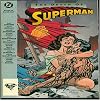
Doomsday. The villain that exists with no past and no future, apparently arriving on the scene for one purpose, to create a believable way for Superman to die. Okay, two purposes: to sell a collector's item, the comic book in which Superman dies. This was the 90s after all. This collection, which includes issues of Superman, Superman: Man of Steel, Superman in Action Comics, The Adventures of Superman, and Justice League America, is not good. It is six issues of various heroes getting their show more butts handed to them by Doomsday, a bad guy who has bones protruding from his body (again, the 90s), who laughs as he chokes a deer and destroys a Lex-Mart. The final issue, Superman #75, is odd in that every page is a splash page, with the final two pages being one double-sized splash page. That makes for a lot less story and, for me, it doesn't work. And the death, well, it wasn't very heroic. This is Superman. He should die saving the planet, or the universe, or Lois Lane or Ma and Pa Kent. Instead he proves ineffectual for seven issues as Doomsday causes billions of dollars in damage and murders countless civilians, and then both he and Doomsday appear to battle each other to the death off-screen (because of the lack of story room thanks to the splash pages). This is anti-climactic to the nth degree. I do not miss the comics from the 90s. Well, okay, I miss Valiant comics from the 90s. And now Dark Horse is re-doing most of them. Go figure. show less
Lists
You May Also Like


Associated Authors
Statistics
- Works
- 126
- Also by
- 40
- Members
- 2,327
- Popularity
- #11,021
- Rating
- 3.9
- Reviews
- 53
- ISBNs
- 65
- Languages
- 4
- Favorited
- 1