
Bob Schieffer
Author of This Just In: What I Couldn't Tell You on TV
About the Author
Bob Schieffer's America brings together 171 of his very best essays, pieces that cover a broad range: from the hard issues of today to the human stories that show us who we are; from politics and presidents and tragedy to the things that touch us, make us laugh, or record the small shifts in our show more culture that just creep up on us. Smart, humorous, commonsensical, pitch-perfect-sometimes bitingly critical and plainspoken; other times suffused with wonder or delight-these essays speak to us all. In addition, Schieffer has written "commentaries on my commentaries" that run throughout the book, offering further anecdotes, reflections, updates, and insights. show less
Image credit: Scott Wagers
Works by Bob Schieffer
Face the Nation: My Favorite Stories from the First 50 Years of the Award-Winning News Broadcast (2004) 106 copies, 1 review
Overload 1 copy
Tagged
Common Knowledge
- Birthdate
- 1937-02-25
- Gender
- male
- Education
- Texas Christian University
- Occupations
- reporter
broadcaster - Organizations
- United States Air Force
Fort Worth Star-Telegram
WBAP
CBS - Awards and honors
- Television Academy Hall of Fame (2013)
- Nationality
- USA
- Places of residence
- Austin, Texas, USA
Fort Worth, Texas, USA - Associated Place (for map)
- Texas, USA
Members
Reviews
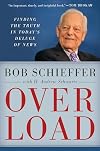
Bob Schieffer has his name in prominent letters on the cover of "Overload," but he gives much-deserved credit to his co-authors, H. Andrew Schwartz, Kristie Bunton, and Lucy Boyd. "Overload" is about "finding the truth in the deluge of news." How can we sift through the mountain of information that we receive from the media daily--whether it is in print, on the radio, television, or the Internet? At a time when "fake news" has become an omnipresent phrase, responsible citizens have their show more work cut out for them. Is it possible to obtain objective information that will clarify events occurring on the local, state, national, and international level? At a time when more and more newspapers are going out of business, people increasingly rely on online sources. They frequently use their cell phones to skim headlines, and do not always take the time to seek a nuanced account of current events and their significance.
Schieffer has seen it all, having been a reporter for sixty years. In writing this book, he and his colleagues traveled all over the United States, conducted a great deal of research, and interviewed journalists, pollsters, and politicians. What is their conclusion? The challenge of delivering fair and balanced stories has never been greater. Adding to the difficulty is the polarization of the American electorate that has led to a toxic level of animosity between the various groups vying for power. The recent presidential election "revealed just how divided the nation was over issues ranging from the economy to law and order and race." Moreover, "journalism has been turned upside down by a technology revolution [and] newspapers are at a crisis point."
In "Overload," we get a brief history of journalism in twentieth century America and learn about the prominent role that social media, blogs, podcasts, and electronic newsletters now play in delivering news and opinion pieces. The authors discuss what has been lost and gained during this period of transition. This is an enlightening, intelligent written, but sometimes overwhelming look at the problems that confront news organizations and the general public during this turbulent era. In our 24/7-news cycle, we are bombarded by news reports that often contradict one another. The bottom line is that "the politician's job is to deliver a message. [The journalist's] job is to determine if it is true and what its implications will be for the electorate." Never has it been more important to weigh the relevance and veracity of what that we view, read, and hear. Schieffer is confident that journalism has a bright future, but one wonders if his optimism is justified or an example of wishful thinking. show less
Schieffer has seen it all, having been a reporter for sixty years. In writing this book, he and his colleagues traveled all over the United States, conducted a great deal of research, and interviewed journalists, pollsters, and politicians. What is their conclusion? The challenge of delivering fair and balanced stories has never been greater. Adding to the difficulty is the polarization of the American electorate that has led to a toxic level of animosity between the various groups vying for power. The recent presidential election "revealed just how divided the nation was over issues ranging from the economy to law and order and race." Moreover, "journalism has been turned upside down by a technology revolution [and] newspapers are at a crisis point."
In "Overload," we get a brief history of journalism in twentieth century America and learn about the prominent role that social media, blogs, podcasts, and electronic newsletters now play in delivering news and opinion pieces. The authors discuss what has been lost and gained during this period of transition. This is an enlightening, intelligent written, but sometimes overwhelming look at the problems that confront news organizations and the general public during this turbulent era. In our 24/7-news cycle, we are bombarded by news reports that often contradict one another. The bottom line is that "the politician's job is to deliver a message. [The journalist's] job is to determine if it is true and what its implications will be for the electorate." Never has it been more important to weigh the relevance and veracity of what that we view, read, and hear. Schieffer is confident that journalism has a bright future, but one wonders if his optimism is justified or an example of wishful thinking. show less
First, let me state that I have the utmost respect for Bob Schieffer, his work and his life. I feel that the country would be greatly benefited if someone like he were to return to giving the news. With that confession out of the way, and admitting that my opinion of his work may be skewed, let me review his latest book.
Overload is about the state of the media today. Of how we, as consumers of the news, are overwhelmed by the amount of information out there, and coming at us, nonstop every show more hour of the day. Of how, being overwhelmed and not able to process all the information, we tend to find news sources that agree with how we see the world. "Some folks get one set of facts from one outlet and other folks get another set of facts from another outlet, no wonder they come to different conclusions". How "Americans choose their favorite channel (or website) not to get just the latest information but to get the ammo to back up their previously formed opinion. And it's getting harder to separate opinion from fact".
Schieffer explains his theory on the reason Trump ultimately won, and why Clinton lost. (It has to do with the ability to utilize the media more effectively).
He covers the phenomenom of "fake news", and the problems of combatting it (A lie gets halfway around the world before the truth has a chance to put it's pants on). And the pattern it follows; eye-catching headline, interesting first paragraph, relevant photos (often taken off the internet), a few quotes (often not real people), and a format that looks like a typical news site.
The fall of the traditional media and the rise of the new media. And he gives examples throughout the book.
He covers conspiracy theories, and why people fall for them.
I loved the book. I only wish Schieffer could be given a bigger platform to share his ideas. We need it! show less
Overload is about the state of the media today. Of how we, as consumers of the news, are overwhelmed by the amount of information out there, and coming at us, nonstop every show more hour of the day. Of how, being overwhelmed and not able to process all the information, we tend to find news sources that agree with how we see the world. "Some folks get one set of facts from one outlet and other folks get another set of facts from another outlet, no wonder they come to different conclusions". How "Americans choose their favorite channel (or website) not to get just the latest information but to get the ammo to back up their previously formed opinion. And it's getting harder to separate opinion from fact".
Schieffer explains his theory on the reason Trump ultimately won, and why Clinton lost. (It has to do with the ability to utilize the media more effectively).
He covers the phenomenom of "fake news", and the problems of combatting it (A lie gets halfway around the world before the truth has a chance to put it's pants on). And the pattern it follows; eye-catching headline, interesting first paragraph, relevant photos (often taken off the internet), a few quotes (often not real people), and a format that looks like a typical news site.
The fall of the traditional media and the rise of the new media. And he gives examples throughout the book.
He covers conspiracy theories, and why people fall for them.
I loved the book. I only wish Schieffer could be given a bigger platform to share his ideas. We need it! show less

This book is yesterday's news. I got it because I like political commentator Bob Schieffer and had enjoyed his memoir, This Just In, written about the same time. But the interviews with American leaders all during the Vietnam War era were chilling -- darn if they weren't saying the same things, month after month, year after year, that we've been hearing about Iraq....just substitute Al Quaida for the Communists. Very depressing.
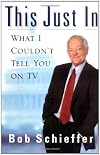
Bob Schieffer who spent his life in journalism and was the anchor of 'Face the Nation'. He offers a behind-the-scenes account of his more than forty years in journalism, including coverage of the White House, the Pentagon, the State Department, and Capitol Hill. Mr. Schieffer also discusses his reporting of Kennedy's assassination, the civil rights movement, Vietnam, Watergate and September 11, 2001.
You can tell that he enjoyed his career as a journalist and seems to be honest in his show more recollection of his career. And his brushes with those he interacted with. Though he does name drop and seem to let us know when ever fate favored him. Other then some of the few self-serving statements on his personal life and social climbing, his anecdotes are still worth reading. Even though he seems to never have met a person he didn't like. Do not expect to learn anything new, but it will jog your memory of many familiar events. show less
You can tell that he enjoyed his career as a journalist and seems to be honest in his show more recollection of his career. And his brushes with those he interacted with. Though he does name drop and seem to let us know when ever fate favored him. Other then some of the few self-serving statements on his personal life and social climbing, his anecdotes are still worth reading. Even though he seems to never have met a person he didn't like. Do not expect to learn anything new, but it will jog your memory of many familiar events. show less
Awards

You May Also Like


Associated Authors
Statistics
- Works
- 7
- Members
- 658
- Popularity
- #38,342
- Rating
- 3.4
- Reviews
- 14
- ISBNs
- 37
- Favorited
- 1
