
Tom Brokaw
Author of The Greatest Generation
About the Author
Tom Brokaw, a native of South Dakota, graduated from the University of South Dakota with a degree in political science. He began his journalism career in Omaha & Atlanta before joining NBC News in 1966. Brokaw was the White House correspondent for NBC News during Watergate, and from 1976 to 1981 he show more anchored Today on NBC. He's been the sole anchor and managing editor of NBC Nightly News with Tom Brokaw since 1983. Brokaw has won every major award in broadcast journalism, including two DuPonts, a Peabody Award, and several Emmys. He is the author of the bestselling books "The Greatest Generation" and "The Greatest Generation Speaks". He lives in New York and Montana. (Publisher Provided) Tom Brokaw, born February 6, 1940, is a television journalist and author best known as the anchor of NBC Nightly News from 1982 to 2004. He received a B.A. in Political Science from the University of South Dakota in Vermillion. Brokaw is the author of The Greatest Generation (1998), The Greatest Generation Speaks(1999), An Album of Memories(2001), A Long Way from Home: Growing Up in the American Heartland (2002), Boom!: Voices of the Sixties Personal Reflections on the '60s and Today (2007), and The Time of Our Lives: A Conversation about America - Who We Are, Where We've Been, and Where We Need to Go Now, to Recapture the American Dream (2011). He is the recipient of numerous awards and honors. Brokaw is the only person to host all three major NBC News programs: The Today Show, NBC Nightly News, and, briefly, Meet the Press. He now serves as a Special Correspondent for NBC News and works on documentaries for other outlets. (Bowker Author Biography) show less
Image credit: Photo by David Shankbone, 2007 (Wikimedia Commons)
Works by Tom Brokaw
Boom! Voices of the Sixties: Personal Reflections on the '60s and Today (2007) 991 copies, 21 reviews
The Time of Our Lives: A conversation about America go now, to recapture the American dream (2011) 361 copies, 5 reviews
When You Come Home 4 copies
The Greatest Nation 2 copies
Vertical Frontier: A History of the Art, Sport and Philosophy of Rock Climbing in Yosemite (2002) 2 copies
To Hell and Back 1 copy
Associated Works
War Letters: Extraordinary Correspondence from American Wars (2001) — Narrator — 889 copies, 6 reviews
Medal of Honor: Portraits of Valor Beyond the Call of Duty (2003) — Contributor — 384 copies, 4 reviews
The Life of Meaning: Reflections on Faith, Doubt, and Repairing the World (2007) — Foreword — 132 copies, 5 reviews
New York Times Complete World War 2: All the Coverage from the Battlefields and the Home Front (2013) — Foreword, some editions — 80 copies
G-Dog and the Homeboys: Father Greg Boyle and the Gangs of East Los Angeles (2004) — Foreword — 62 copies, 1 review
Reset: How This Crisis Can Restore Our Values and Renew America (2009) — Foreword — 44 copies, 3 reviews
Semper Fi: Stories of the United States Marines from Boot Camp to Battle (2003) — Composer — 34 copies, 1 review
One Nation: Patriots and Pirates Portrayed by N. C. Wyeth and Jamie Wyeth (2000) — Contributor — 33 copies
Brought to You in Living Color: 75 Years of Great Moments in Television & Radio from NBC (2002) — Foreword — 27 copies
Ours To Fight For: American Jewish Voices From the Second World War (2003) — Afterword — 19 copies, 1 review
Beyond the Facts: Faith Sees the Deepest Truth--Reflections of a TV News Anchor (2005) — Foreword — 6 copies
Tagged
Common Knowledge
- Legal name
- Brokaw, Thomas John
- Birthdate
- 1940-02-06
- Gender
- male
- Education
- University of South Dakota (BS|Government|1964)
- Occupations
- journalist
news anchor
television presenter - Organizations
- NBC News
Howard University
Norton Simon Museum
American Museum of Natural History
International Rescue Committee
American Academy of Arts and Sciences (show all 7)
Council on Foreign Relations (board member) - Awards and honors
- Peabody Award
Alfred I. duPont-Columbia University Awards for excellence in broadcast journalism (x2)
Emmy (x7)
National Headliner Award (1990)
Dennis Kauff Memorial Award for Lifetime Achievement in Journalism (1995)
Lowell Thomas Award (1995) (show all 21)
University of Missouri–Columbia School of Journalism Honor Medal for Distinguished Service in Journalism (1997)
Television Academy Hall of Fame (2006)
Fred Friendly First Amendment Award (1998)
American Legion award for distinguished public service in the field of communication (1998)
Citizens' Scholarship Foundation of America's President's Award (1998)
Congressional Medal of Honor Society's "Tex" McCrary Excellence in Journalism Award (1999)
Elected to American Academy of Arts and Sciences (2005)
Four Freedoms Medal: Freedom of Speech And Expression (2005)
Washington State University Edward R. Murrow School of Communications Lifetime Achievement in Broadcasting Award (2006)
Sylvanus Thayer Award: United States Military Academy at West Point (2006)
Walter Cronkite Award for Journalism Excellence at Arizona State University (2006)
Horatio Alger Award (2007)
Honorary Doctorate (x20)
Phi Beta Kappa
South Dakota Hall of Fame - Relationships
- Auld, Meredith Lynn (wife)
Brokaw, Sarah (daughter) - Nationality
- USA
- Birthplace
- Webster, South Dakota, USA
- Associated Place (for map)
- South Dakota, USA
Members
Reviews
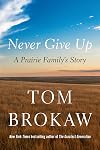
This might be the shortest book on my reading list, but it certainly isn’t the least impactful. Tom Brokaw shares the history of his family, mainly in South Dakota, and by doing that, delves into much about the history of this country in that part of the country. His parents were hard working and passed their work ethic and honesty on to their three boys. Tom’s love for them and the locations he grew up in are evident. He was as typical an American boy as you’ll find anywhere. His show more final chapter, the epilogue, shows his frustration in where we’ve come especially the past few years. Tom says he never in a million years guessed that he would live to see a United States where our president attempted to over throw the government he had led for four years. The final few pages are optimistic, even in the face of that. That’s Tom Brokaw, and we’re lucky to have had him at NBC and still have him. show less
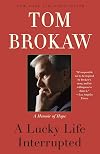
A Lucky Life Interrupted: A Memoir of Hope by Tom Brokaw is a thought provoking, and tender book. I have always admired Tom Brokaw for his honest and unbiased ways and this book goes into his personal life and shows what a truly wonderful and strong character he is. A powerful message, esp to those of us that battle against problems. Maybe not cancer but other problems too that are life changing and dramatic. He gives a hope and encouragement with his calm and soothing manner. I got this show more book from the library and got the audio version. show less
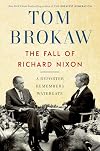
It was insightful and I learned things I didn't know about Watergate- and that's saying a lot after listening to the Slow Burn podcast and the 6 or so episodes they had on this subject. It's about Watergate and the year -long saga but it's a sort of memoir for Tom Brokaw as he puts some of his fond memories into recounting....lots of dining out and high-brow talk but still with liberal cred.
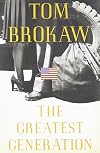
"'I think this is the greatest generation any society has ever produced.' I know that this was a bold statement and a sweeping judgment, but since than I have restated it on many occasions. While I am periodically challenged on this premise, I believe I have the facts on my side."
So writes Tom Brokaw in the introduction to this book about the World War II generation, and he proceeds to make his case by telling individual stories of survival, courage, leadership, and trail-blazing.
I pretty show more much loved this book. I have always liked reading books centered around WWII, but I haven't actually read much non-fiction, and especially not exactly like this. I got what I expected and more.
I expected stories about the heroes, both celebrated and unsung, and their exploits in the war. I may have even expected stories about the women on the home front.
I did not expect Brokaw to tackle some of the issues this generation had to overcome. He did not shy away from segregation, both in civilian life and the military. He confronted the issue of the Japanese internment camps. He took a close look at the women in uniform during the war and the paths they had to forge to get anything that even resembled equality. I was impressed that he included those topics, and I learned a lot from the personal stories he used to make his points about these issues.
I also didn't really expect the personal stories to dwell so much on life after the war. I was a little disappointed at first; after all, the war was what drew me to the book. But I quickly got over it and realized that this generation didn't let one major event define their lives completely. They moved on and shaped the world in the ways they thought best. And that is part of what makes them great.
I'm struggling to find a way to say what I mean with this next thought. Here goes. The people who told these stories all came home to live successful lives, in big ways and small. There had to be people who came home and just couldn't adapt to civilian life. It felt like, in order for the picture to be truly complete, some of that should have been included. Of course, who wants to be interviewed about why they started drinking too much and wound up homeless, right? Or maybe those guys mostly passed away before this book was written. The point could be made that including that kind of thing would weaken the book's central argument, I know. But ignoring the facts doesn't make them go away, and addressing all the facts makes your case stronger. It's a small thing, but I noticed it because of the thoroughness of the rest of the book.
This was also an interesting study in how times have changed. This generation was very much about patriotism, duty, honor, and personal sacrifice. They had widely experienced crushing poverty during the Depression, and they never forgot the lessons they learned in those times. In comparison to our current society, where we just have to have the newest phone/video game/book, or whatever, it made me feel shallow and small. I don't think that's bad at all. Sometimes we need to be reminded about how blessed we truly are.
There are surprising tales of heroism on all fronts, both during the war and in the years following. Tom Brokaw makes a strong argument that the WWII generation was truly the greatest generation. show less
So writes Tom Brokaw in the introduction to this book about the World War II generation, and he proceeds to make his case by telling individual stories of survival, courage, leadership, and trail-blazing.
I pretty show more much loved this book. I have always liked reading books centered around WWII, but I haven't actually read much non-fiction, and especially not exactly like this. I got what I expected and more.
I expected stories about the heroes, both celebrated and unsung, and their exploits in the war. I may have even expected stories about the women on the home front.
I did not expect Brokaw to tackle some of the issues this generation had to overcome. He did not shy away from segregation, both in civilian life and the military. He confronted the issue of the Japanese internment camps. He took a close look at the women in uniform during the war and the paths they had to forge to get anything that even resembled equality. I was impressed that he included those topics, and I learned a lot from the personal stories he used to make his points about these issues.
I also didn't really expect the personal stories to dwell so much on life after the war. I was a little disappointed at first; after all, the war was what drew me to the book. But I quickly got over it and realized that this generation didn't let one major event define their lives completely. They moved on and shaped the world in the ways they thought best. And that is part of what makes them great.
I'm struggling to find a way to say what I mean with this next thought. Here goes. The people who told these stories all came home to live successful lives, in big ways and small. There had to be people who came home and just couldn't adapt to civilian life. It felt like, in order for the picture to be truly complete, some of that should have been included. Of course, who wants to be interviewed about why they started drinking too much and wound up homeless, right? Or maybe those guys mostly passed away before this book was written. The point could be made that including that kind of thing would weaken the book's central argument, I know. But ignoring the facts doesn't make them go away, and addressing all the facts makes your case stronger. It's a small thing, but I noticed it because of the thoroughness of the rest of the book.
This was also an interesting study in how times have changed. This generation was very much about patriotism, duty, honor, and personal sacrifice. They had widely experienced crushing poverty during the Depression, and they never forgot the lessons they learned in those times. In comparison to our current society, where we just have to have the newest phone/video game/book, or whatever, it made me feel shallow and small. I don't think that's bad at all. Sometimes we need to be reminded about how blessed we truly are.
There are surprising tales of heroism on all fronts, both during the war and in the years following. Tom Brokaw makes a strong argument that the WWII generation was truly the greatest generation. show less
Lists
Awards


You May Also Like


Associated Authors
Statistics
- Works
- 27
- Also by
- 41
- Members
- 9,878
- Popularity
- #2,410
- Rating
- 3.8
- Reviews
- 105
- ISBNs
- 131
- Favorited
- 3

