
Karan Mahajan
Author of The Association of Small Bombs: A Novel
About the Author
Karan Mahajan grew up in New Delhi, India writing his first novel, Family Planning, which was a finalist for the Dylan Thomas Prize. He wrote a second novel, The Association of Small Bombs, is a 2016 National Book Award Finalist for Fiction. (Bowker Author Biography)
Works by Karan Mahajan
Associated Works
Tagged
Common Knowledge
- Canonical name
- Mahajan, Karan
- Birthdate
- 1984-04-24
- Gender
- male
- Occupations
- novelist
short story writer
literary critic - Nationality
- India
- Associated Place (for map)
- India
Members
Reviews
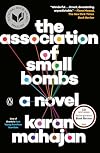
This is going to be one of my favorite reads of the year.
This book tells the story of a bombing in Delhi, which kills two young brothers. A friend of theirs escapes the bombing, but had physical and mental after effects. The book follows the story of their families, and also the sotries of the bombers. Mahajan's story-telling is exquisite, winding around and back to show the differences between the internal and external lives of his characters.
In this book we are tasked with looking at the show more effects of terrorism on non-western people, and also with looking at how small-scale terrorism can have large scale effects. show less
This book tells the story of a bombing in Delhi, which kills two young brothers. A friend of theirs escapes the bombing, but had physical and mental after effects. The book follows the story of their families, and also the sotries of the bombers. Mahajan's story-telling is exquisite, winding around and back to show the differences between the internal and external lives of his characters.
In this book we are tasked with looking at the show more effects of terrorism on non-western people, and also with looking at how small-scale terrorism can have large scale effects. show less
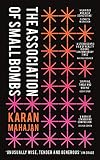
Definitely one of the best books I have read this year and highly recommended. Mahajan takes the detonation of a small bomb - and the smallness, and in the general scheme of things, trivialness of the bomb is important - in a Delhi market to tell the stories of some of those affected by it. Two brothers are killed, and the lives of their parents begin to unravel but in unexpected ways. Their friend Mansoor, a Muslim, escapes with minor injuries, and yet for him and his family the long term show more effects are undoubtedly worse. Shockie, the Kashmiri bomber, has grievances but is himself trapped in a cycle of despair; he knows the organisation he is part of is at best corrupt and at worst pointless. He knows that bombers have a short life expectancy. His friend Malik, to police a dangerous theorist, is little more than a child seeking attention
The book explorers communal tensions, the allure of violence, sexual tension, police and judicial incompetence and corruption with a detailed and sceptical eye. And yet it is full of compassion towards all its subjects. It really is a very accomplished piece of work, minus half a star for some slightly heavy handed treatment of his characters at the end of the book, as though the author has sickened of them and wants to be rid of them. But this is a minor quibble; this really is well worth reading show less
The book explorers communal tensions, the allure of violence, sexual tension, police and judicial incompetence and corruption with a detailed and sceptical eye. And yet it is full of compassion towards all its subjects. It really is a very accomplished piece of work, minus half a star for some slightly heavy handed treatment of his characters at the end of the book, as though the author has sickened of them and wants to be rid of them. But this is a minor quibble; this really is well worth reading show less
Sad and insightful story which begins with the detonation of a small bomb in a busy marketplace in India. Of the many killed or wounded the stories of two families are the main focus, that of the Khurana's and the Ahmed's. The author takes us into their homes and lives and reveals the effects the bombing had on them ten years on and how they deal with it. In vivid detail, Mahajan also takes the reader into the world of the Terrorist who planted the bomb, the one accused of committing the show more crime and the ones to come. Another good selection from the National Book Award Short List. show less
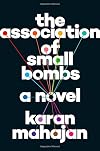
Thirty-five more innocents slaughtered in an Istanbul nightclub and we haven't even climbed out of 2016 to usher in a cleaner, happier 2017. While the weapon of choice of the deranged in the US is a semi-automatic rifle, the eastern half of the world continues to live with small bombs, small in relation to a nuclear arsenal, but big enough to kill and scramble the lives of thousands.
By some weird coincidence, my wife and I complete two Netflix series: "Nobel" about Norwegian special ops show more forces in Afghanistan and "Fauda", an Israeli TV series set in the West Bank. I won't spoil the endings, or the beginnings, let's just say things don't turn out too well here either.
With this in the background I finish reading "The Association of Small Bombs," by Indian writer Karan Mahajan.
I am not spoiling anything to say that there are no heroes in Mahajan's novel. Not the bombers, nor the victims or their families or their government escape some satire in this novel. Nobody "recovers" from a bombing. Nobody "wins."
I have not been to New Delhi, to the scrum of the marketplaces where the bombings in this novel take place. Seen the garbage heaps, the open sewers, the polluted waterways. But this is most certainly the background for this novel. The steaming heat. The dirt. The outlying villages with garbage heaps, where men step outside their huts to piss.
Then there are the homes of the middle class where order and cleanliness push out the dirty reality, but the dirt and the rot are as much in the relationships of family members as physically in the streets.
In this environment, rich and poor, Muslim and Hindu fight for space. One would expect some envy of the rich by the poor, suspicion of the minority by the majority, and disgust in the top-dog for the underdog. So far we're on pretty recognizable ground.
Mahajan undoubtably knows that many of his readers are looking for answers to radicalism. Whose fault are these attacks? Are they to do with the unequal distribution of wealth; the destruction of the habitat; opposing views of religion; or maybe the accretion of centuries of mistrust and violence?
It seems that Mahajan's bomber is not radicalized by any one of these things, or maybe all of them. What is more clear is that his bomber is radicalized long before that radicalization turns him to violence. A radical for peace is just as radical for violence. And painfully, painfully, the bomber turns to violence after being spurned by his girlfriend for having bad breath.
Pornography, guilt over masturbation, delayed sexual gratification all of these have their role to play in the development of young men in the developing world in this novel. The themes of youth, the development of the self, more guilt over getting a living and gaining status in this complex world, the tension between competing world views of East vs. West.
To sort out these imperatives....is really hard. And organizing on a societal level to combat violence of this nature. Not easy. Government is weak. The family structure is weak. Our educational structures are nowhere to be found. show less
By some weird coincidence, my wife and I complete two Netflix series: "Nobel" about Norwegian special ops show more forces in Afghanistan and "Fauda", an Israeli TV series set in the West Bank. I won't spoil the endings, or the beginnings, let's just say things don't turn out too well here either.
With this in the background I finish reading "The Association of Small Bombs," by Indian writer Karan Mahajan.
I am not spoiling anything to say that there are no heroes in Mahajan's novel. Not the bombers, nor the victims or their families or their government escape some satire in this novel. Nobody "recovers" from a bombing. Nobody "wins."
I have not been to New Delhi, to the scrum of the marketplaces where the bombings in this novel take place. Seen the garbage heaps, the open sewers, the polluted waterways. But this is most certainly the background for this novel. The steaming heat. The dirt. The outlying villages with garbage heaps, where men step outside their huts to piss.
Then there are the homes of the middle class where order and cleanliness push out the dirty reality, but the dirt and the rot are as much in the relationships of family members as physically in the streets.
In this environment, rich and poor, Muslim and Hindu fight for space. One would expect some envy of the rich by the poor, suspicion of the minority by the majority, and disgust in the top-dog for the underdog. So far we're on pretty recognizable ground.
Mahajan undoubtably knows that many of his readers are looking for answers to radicalism. Whose fault are these attacks? Are they to do with the unequal distribution of wealth; the destruction of the habitat; opposing views of religion; or maybe the accretion of centuries of mistrust and violence?
It seems that Mahajan's bomber is not radicalized by any one of these things, or maybe all of them. What is more clear is that his bomber is radicalized long before that radicalization turns him to violence. A radical for peace is just as radical for violence. And painfully, painfully, the bomber turns to violence after being spurned by his girlfriend for having bad breath.
Pornography, guilt over masturbation, delayed sexual gratification all of these have their role to play in the development of young men in the developing world in this novel. The themes of youth, the development of the self, more guilt over getting a living and gaining status in this complex world, the tension between competing world views of East vs. West.
To sort out these imperatives....is really hard. And organizing on a societal level to combat violence of this nature. Not easy. Government is weak. The family structure is weak. Our educational structures are nowhere to be found. show less
Lists
Awards


You May Also Like


Associated Authors
Statistics
- Works
- 8
- Also by
- 2
- Members
- 1,085
- Popularity
- #23,679
- Rating
- 3.5
- Reviews
- 44
- ISBNs
- 37
- Languages
- 6
- Favorited
- 1