
Matt Braun
Author of Doc Holliday
About the Author
Matt Braun was born in Oklahoma in 1932. He is a fouth-generation rancher Recipient of the Western Writers of America Golden Spur Award and the Cowboy Spirit Award. appointment by the Governor of Oklahoma as a Territorial Marshal. inducted into the Cowboy Hall of Fame in 1999. His 1973 Black Fox, show more was made into a CBS miniseries. His works include Windward West, Wyatt Earp, You Know My Name, and Matt Braun's Western Cooking. (Bowker Author Biography) show less
Series
Works by Matt Braun
Starbuck. 2 copies
EL PASO / THE WILD ONES 1 copy
Tagged
Common Knowledge
- Birthdate
- 1932
- Gender
- male
- Awards and honors
- Owen Wister Award (2004)
- Nationality
- USA
- Birthplace
- Oklahoma, USA
- Associated Place (for map)
- Oklahoma, USA
Members
Reviews
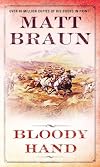
Matt Braun's Bloody Hand is the prose equivalent of an exceptionally well-made blaxploitation movie from the early 1970s, featuring a mulatto fur trapper named Jim Beckwith who is tasked by one of the owners of the Rocky Mountain Fur Company, General William H. Ashley, to infiltrate a tribe of Crow Indians (who call themselves the Sparrowhawks, or Apsahrokee; their Wikipedia entry renders their name as "Apsáalooke") in order to persuade them to allow Rocky Mountain Fur trappers into their show more lands, called Absaroka, which is currently used to designate a sub-range of the Rocky Mountains along the Montana - Wyoming border (its Wikipedia entry states that "[t]he name is derived from the Hidatsa name for the Crow people; it means 'children of the large-beaked bird.' (In contrast, the Crow name, Awaxaawe Báaxxioo, means 'Pointed Mountains [Like Sand Castles].')"); as Rocky Mountain Fur finds itself in ever-increasing competition with John Jacob Astor's American Fur Company and with the already venerable Hudson's Bay Company, Ashley is desperate to wrangle new concessions -- lands, stocks of beaver, and Indians to bilk at the annual drunken trading parties called Rendezvous -- to allow Rocky Mountain Fur to survive.
The problem, from the perspective of Ashley and Rocky Mountain Fur, is that Beckwith "goes native," as the British were wont to say of certain half-outcast members of their officer class, such as Captain Alexander "Bokhara" Burnes or Captain Sir Richard Francis Burton; Beckwith gets dubbed "Bloody Hand" by the Crow, owing to his exceptional ferocity and skill at hand-to-hand combat, his deadly, high-powered, muzzle-loading Hawken rifle, and his superb, instinctive grasp of tactics. He soon commands a leading position within one of the Apsahrokees' warrior societies, the Dog Soldiers, and leads the tribe that he's joined to greater prosperity -- and victories over their traditional Amerindian enemies, the Blackfeet (whom the mountain men call "Bug's Boys," owing to their propensity to "[war] on everyone about them with impunity"; p. 10, the Oglala Sioux, the Shoshone, the Cheyenne (whom the Crow call "Cut-Fingers"), and the Arapahoe -- than they'd ever known. His desire for a teenaged minx named Pine Leaf and his lack of a complete understanding of Crow courting rituals cause him to badly blunder when he asks her father for her hand in marriage; spurred by the unintentional insult that Bloody Hand offered her, Pine Leaf haughtily declares her bride price to be no less than a hundred enemy scalps, all to be attached to his scalp stick, and presented to her father's lodge (pps. 46-7). It is this sexual taunt, fully as much as any sense of obligation to Ashley's Rocky Mountain Fur Company or the sense of belonging that Beckwith feels among the Crow, that drives him to earn his newfound name of "Bloody Hand" in earnest.
Bloody Hand is a fairly rousing, by no means dunderheaded, adventure story -- fans of Robert E. Howard and Edgar Rice Burroughs will find much to like, although Braun never manages the glimmers of prose poetry that REH can attain at his best -- that is also solidly in the subgenre of "white man's mastery" that goes back to at least James Fenimore Cooper, never mind that Beckwith/Bloody Hand is only half-white: he was brought up in a white man's environment, and worked cheek-by-jowl with white mountain men, and so, from the Crow's perspective, at least, he is perforce a white man. It takes a "white" outsider to teach them how to trap beaver more effectively, how to raid and wage war upon their enemies more efficiently (despite the fact that "Across the plains the Crows were uncontested as the most peerless of horse thieves, envied for this skill by even the Sioux and the Blackfeet"; p. 40); yet, for all that Beckwith/Bloody Hand steers the Crow in the general direction that Ashley told him to, he soon learns that he is just as much, if not even moreso, subject to their manipulations and importunings as they are to his.
While Bloody Hand imparts a fair amount of information about Crow society -- which is at heart an anarchist one, although by no means a truly democratic or apolitical one -- and culture (the glimpses of Crow religious myths are particularly intriguing), it doesn't manage to attain the elusive, hard-to-define literary quality that Thomas Berger's Little Big Man (which focused on the Norse-like Cheyenne), Fred Stenson's The Trade (covering roughly a century of the waning years of the Hudson's Bay Company, called by its employees simply "The Company"), or even Mike Blakely's ur-legend of the Comanche's founding, Comanche Dawn, did. Bloody Hand makes a nice contrast to Vardis Fisher's own novel of fur traders and Amerindians in collision, Pemmican (a book I've yet to finish owing to the decrepitude of the copy that I began reading, and, frankly, to my own capriciousness): while Beckwith, like his fellow trappers, at first calls all Indians "gut-eaters" (compare with Al Swearengen's dismissal of Indians as "dirt-worshipers" on the late, lamented HBO series Deadwood), he gradually comes to appreciate their wisdom in adapting to their own circumstances and values (usually saying or thinking, as his adoptive grandfather, Strikes Both Ways, does, "It is the Way"; compare this to the refrain "It is my karma" in James Clavell's Shōgun); and, when he later associates again with his former fur trapper companions, he resents their use of the term "gut-eaters" as much as he resents their calling him "nigger," never mind that he sometimes thinks of himself, with wry amusement, as a "red nigger."
There is much about Crow society -- and Amerindian society in general -- as related in Bloody Hand that will put off a modern reader. In particular, the status of women is relatively low, and if Braun doesn't show the Crow forcing widows into killing themselves as Blakely depicts the Comanche doing in Comanche Dawn, Crow women don't have much scope for achieving their own agency either (which might account at least in part for their gleeful savagery in torturing and murdering captives; a particularly grisly instance of this occurs in the last third of the book, which nearly sickens Beckwith/Bloody Hand, for all that he is shown masterminding a particularly grisly end for a band of Oglala Sioux pursuing him and his fellow Dog Soldiers). Much as with Berger's Little Big Man and Blakely's Comanche Dawn, Braun's Bloody Hand convincingly imparts the fact that Amerindian societies were, first and foremost, warrior societies, no matter that, in the 19th century, Amerindian and European ideas of warfare were rather disparate, even antithetical. (One can't help but idly wonder how different things would've turned out if the Amerindians kept their Mongol ancestors' organizational methods and maintained large roving bands of mounted warriors after they'd crossed over the Bering Strait land bridge; surely the European colonists' westward expansion into the North American continent wouldn't have proceeded as rapidly as it did in our history. Then again, given the Amerindians' lack of antibodies to combat Old World diseases, especially smallpox, perhaps the differences would've been less than one might hope.)
Since the chronological scope of Bloody Hand is relatively narrow, Braun was able to end it on a triumphal high; it is the reader's awareness (the equivalent of silence in a play or a musical composition) of how events played out after the time frame of Bloody Hand (late 1820s to early 1830s) that imparts its elegiac note. show less
The problem, from the perspective of Ashley and Rocky Mountain Fur, is that Beckwith "goes native," as the British were wont to say of certain half-outcast members of their officer class, such as Captain Alexander "Bokhara" Burnes or Captain Sir Richard Francis Burton; Beckwith gets dubbed "Bloody Hand" by the Crow, owing to his exceptional ferocity and skill at hand-to-hand combat, his deadly, high-powered, muzzle-loading Hawken rifle, and his superb, instinctive grasp of tactics. He soon commands a leading position within one of the Apsahrokees' warrior societies, the Dog Soldiers, and leads the tribe that he's joined to greater prosperity -- and victories over their traditional Amerindian enemies, the Blackfeet (whom the mountain men call "Bug's Boys," owing to their propensity to "[war] on everyone about them with impunity"; p. 10, the Oglala Sioux, the Shoshone, the Cheyenne (whom the Crow call "Cut-Fingers"), and the Arapahoe -- than they'd ever known. His desire for a teenaged minx named Pine Leaf and his lack of a complete understanding of Crow courting rituals cause him to badly blunder when he asks her father for her hand in marriage; spurred by the unintentional insult that Bloody Hand offered her, Pine Leaf haughtily declares her bride price to be no less than a hundred enemy scalps, all to be attached to his scalp stick, and presented to her father's lodge (pps. 46-7). It is this sexual taunt, fully as much as any sense of obligation to Ashley's Rocky Mountain Fur Company or the sense of belonging that Beckwith feels among the Crow, that drives him to earn his newfound name of "Bloody Hand" in earnest.
Bloody Hand is a fairly rousing, by no means dunderheaded, adventure story -- fans of Robert E. Howard and Edgar Rice Burroughs will find much to like, although Braun never manages the glimmers of prose poetry that REH can attain at his best -- that is also solidly in the subgenre of "white man's mastery" that goes back to at least James Fenimore Cooper, never mind that Beckwith/Bloody Hand is only half-white: he was brought up in a white man's environment, and worked cheek-by-jowl with white mountain men, and so, from the Crow's perspective, at least, he is perforce a white man. It takes a "white" outsider to teach them how to trap beaver more effectively, how to raid and wage war upon their enemies more efficiently (despite the fact that "Across the plains the Crows were uncontested as the most peerless of horse thieves, envied for this skill by even the Sioux and the Blackfeet"; p. 40); yet, for all that Beckwith/Bloody Hand steers the Crow in the general direction that Ashley told him to, he soon learns that he is just as much, if not even moreso, subject to their manipulations and importunings as they are to his.
While Bloody Hand imparts a fair amount of information about Crow society -- which is at heart an anarchist one, although by no means a truly democratic or apolitical one -- and culture (the glimpses of Crow religious myths are particularly intriguing), it doesn't manage to attain the elusive, hard-to-define literary quality that Thomas Berger's Little Big Man (which focused on the Norse-like Cheyenne), Fred Stenson's The Trade (covering roughly a century of the waning years of the Hudson's Bay Company, called by its employees simply "The Company"), or even Mike Blakely's ur-legend of the Comanche's founding, Comanche Dawn, did. Bloody Hand makes a nice contrast to Vardis Fisher's own novel of fur traders and Amerindians in collision, Pemmican (a book I've yet to finish owing to the decrepitude of the copy that I began reading, and, frankly, to my own capriciousness): while Beckwith, like his fellow trappers, at first calls all Indians "gut-eaters" (compare with Al Swearengen's dismissal of Indians as "dirt-worshipers" on the late, lamented HBO series Deadwood), he gradually comes to appreciate their wisdom in adapting to their own circumstances and values (usually saying or thinking, as his adoptive grandfather, Strikes Both Ways, does, "It is the Way"; compare this to the refrain "It is my karma" in James Clavell's Shōgun); and, when he later associates again with his former fur trapper companions, he resents their use of the term "gut-eaters" as much as he resents their calling him "nigger," never mind that he sometimes thinks of himself, with wry amusement, as a "red nigger."
There is much about Crow society -- and Amerindian society in general -- as related in Bloody Hand that will put off a modern reader. In particular, the status of women is relatively low, and if Braun doesn't show the Crow forcing widows into killing themselves as Blakely depicts the Comanche doing in Comanche Dawn, Crow women don't have much scope for achieving their own agency either (which might account at least in part for their gleeful savagery in torturing and murdering captives; a particularly grisly instance of this occurs in the last third of the book, which nearly sickens Beckwith/Bloody Hand, for all that he is shown masterminding a particularly grisly end for a band of Oglala Sioux pursuing him and his fellow Dog Soldiers). Much as with Berger's Little Big Man and Blakely's Comanche Dawn, Braun's Bloody Hand convincingly imparts the fact that Amerindian societies were, first and foremost, warrior societies, no matter that, in the 19th century, Amerindian and European ideas of warfare were rather disparate, even antithetical. (One can't help but idly wonder how different things would've turned out if the Amerindians kept their Mongol ancestors' organizational methods and maintained large roving bands of mounted warriors after they'd crossed over the Bering Strait land bridge; surely the European colonists' westward expansion into the North American continent wouldn't have proceeded as rapidly as it did in our history. Then again, given the Amerindians' lack of antibodies to combat Old World diseases, especially smallpox, perhaps the differences would've been less than one might hope.)
Since the chronological scope of Bloody Hand is relatively narrow, Braun was able to end it on a triumphal high; it is the reader's awareness (the equivalent of silence in a play or a musical composition) of how events played out after the time frame of Bloody Hand (late 1820s to early 1830s) that imparts its elegiac note. show less

Ash Tallman is a Pinkerton detective. He is sent to California to end the sabotage of the South Pacific by a group of farmers who are upset that the Railroad is going to kick them off their land. Ash soon suspects that the railroad may not be as honest about the situation as it first seemed. His partner in this investigation is Vivian Valentine, a wildcat in bed and one who is willing to use those attributes in seducing men from whom they want information. The erotic scenes are scorchers show more especially for those one usually finds in western novels.
While expected to always work for the client, in this case, the South Pacific, Ash and Vivian are sympathetic to the farmers and do their best to find out who is really going to gain from taking the framers' land.
The narrative is fast moving with almost constant action separated by erotica. show less
While expected to always work for the client, in this case, the South Pacific, Ash and Vivian are sympathetic to the farmers and do their best to find out who is really going to gain from taking the framers' land.
The narrative is fast moving with almost constant action separated by erotica. show less

Newt Bascom and his partner Sam Jourdan are range detectives who hunt down rustlers for the Cattleman's Association. Their latest case finds then trailing rustlers who have stolen a $5000 Durham bull. While Newt is a first rate tracker, he is thrown off the trail by an equally talented rustler.
Eventually after some patient detective work, they locate the missing bull, steal it back and then go on a long trek back to the owner's ranch with five angry outlaws on their tail most of whom are show more killed by Comanches but the two worst eventually meet their demise in a saloon at the hands of Newt and Sam.
This is a first rate western tale with lots of humour, action and twists and turns.
An interesting sidelight of this edition of the novel is that it appears to have been given out free by the Bull Durham Tobacco Company. Bull Durham is smoked by Steve and chewed by Newt so it gets frequent mention in the story. As well, in the narrative the characters learn how Bull Durham Tobacco got its brand name. Nice tie in to the plot of the theft and recovery of a Durham bull. show less
Eventually after some patient detective work, they locate the missing bull, steal it back and then go on a long trek back to the owner's ranch with five angry outlaws on their tail most of whom are show more killed by Comanches but the two worst eventually meet their demise in a saloon at the hands of Newt and Sam.
This is a first rate western tale with lots of humour, action and twists and turns.
An interesting sidelight of this edition of the novel is that it appears to have been given out free by the Bull Durham Tobacco Company. Bull Durham is smoked by Steve and chewed by Newt so it gets frequent mention in the story. As well, in the narrative the characters learn how Bull Durham Tobacco got its brand name. Nice tie in to the plot of the theft and recovery of a Durham bull. show less

Matt Braun excels in this novel. The fictional biography feels real and implements many elements of truth(not without elaboration I imagine). Exciting and fast paced, you grow to really admire and possibly even idolize Doc Holliday as the story progresses. It would make for one hell of a western movie.
Awards

You May Also Like


Statistics
- Works
- 64
- Members
- 1,363
- Popularity
- #18,858
- Rating
- 3.6
- Reviews
- 35
- ISBNs
- 357
- Languages
- 1
- Favorited
- 1