

William Henry Chafe
Author of The Unfinished Journey: America Since World War II
About the Author
William H. Chafe is Alice Mary Baldwin Professor of History at Duke University. He is the author or coeditor of several books, including A History of Our Time: Readings on postwar America, Eighth Edition (OUP, 2011), and The Rise and fall of the American Century: The United States from 1890-2009 show more (OUP, 2009). He is a former president of the Organization of American Historians and his books have been recognized with the Robert F. Kennedy Book Award (1981), the Sidney Hillman Book Award (1994), and the Lillian Smith Book Award (2003). show less
Image credit: By Larry D. Moore, CC BY-SA 3.0, https://commons.wikimedia.org/w/index.php?curid=22659235
Works by William Henry Chafe
Remembering Jim Crow: African Americans Tell About Life in the Segregated South (2001) — Senior editor — 209 copies
Civilities and Civil Rights : Greensboro, North Carolina, and the Black Struggle for Freedom (1980) 124 copies
Never Stop Running: Allard Lowenstein and the Struggle to Save American Liberalism (1993) 36 copies, 1 review
Private Lives/Public Consequences: Personality and Politics in Modern America (2005) 20 copies, 2 reviews
Remembering Jim Crow 1 copy
Associated Works
Race, Class, and Gender in the United States: An Integrated Study (1992) — Contributor, some editions — 561 copies
Booknotes: America's Finest Authors on Reading, Writing, and the Power of Ideas (1997) — Contributor — 457 copies, 5 reviews
Tagged
Common Knowledge
- Birthdate
- 1942-01-28
- Gender
- male
- Education
- Columbia University (PhD|1971)
Harvard College (History|1962) - Occupations
- professor (History)
- Organizations
- Duke University
Organization of American Historians - Nationality
- USA
- Places of residence
- Chapel Hill, North Carolina, USA
- Associated Place (for map)
- North Carolina, USA
Members
Reviews

I will admit this book left me confused.
It is not that William H. Chafe failed to articulate his point. Quite the contrary, the history professor and former faculty dean at Duke University communicates his theme clearly and concisely. His premise – that childhood events mold and influence the direction, personality and life choices of our national leaders – is an intriguing thought.
It is, however, not history. Historians – and Dr. Chafe is a distinguished one –
spend their hours show more probing primary sources for clues of how social movements swept up individuals and used them in their dialectic march towards a preordained future. Once done with their research, historians then hide their conclusions in books and articles distinguished by long couplings of footnote-festooned, incomprehensible complex-compound sentences.
That is not this book. There are no primary sources; there are no footnotes. You can read these provocative essays and understand them. The author admits it is a departure from his academic training and practice.
Based on his reading and observations, Dr. Chafe offers his thoughts on how the personal lives and political fortunes of Eleanor and Franklin Roosevelt, Martin Luther King, Jr., John F. Kennedy, Robert F. Kennedy, Lyndon B. Johnson, Richard Nixon, Ronald Reagan and Hilary and Bill Clinton intersected to shape the United States.
For the moment, I will discount the fact that the author was three years old when Franklin Roosevelt died. This book is a fascinating read. As a professor of modern American history, I have no doubt Dr. Chafee has read many books on his subjects. His observations deserve a thoughtful consideration. It is difficult to document the psychological influences on a life. Nevertheless, Dr. Chafee produces poignant portrayals of vision and paranoia; moral strengths and weakness; sincerity and artificiality.
I admit my Hegelian biases. They grow stronger as I age. Yet, I do not find it a stretch to believe the Muse of history recruits individuals it has equipped with the tools and experiences it required to continue its movement.
History or not, this book will spark a new appreciation of the joys and heartaches of our country’s recent past.
Penned by the Pointed Pundit
October 23, 2006
8:55:02 AM show less
It is not that William H. Chafe failed to articulate his point. Quite the contrary, the history professor and former faculty dean at Duke University communicates his theme clearly and concisely. His premise – that childhood events mold and influence the direction, personality and life choices of our national leaders – is an intriguing thought.
It is, however, not history. Historians – and Dr. Chafe is a distinguished one –
spend their hours show more probing primary sources for clues of how social movements swept up individuals and used them in their dialectic march towards a preordained future. Once done with their research, historians then hide their conclusions in books and articles distinguished by long couplings of footnote-festooned, incomprehensible complex-compound sentences.
That is not this book. There are no primary sources; there are no footnotes. You can read these provocative essays and understand them. The author admits it is a departure from his academic training and practice.
Based on his reading and observations, Dr. Chafe offers his thoughts on how the personal lives and political fortunes of Eleanor and Franklin Roosevelt, Martin Luther King, Jr., John F. Kennedy, Robert F. Kennedy, Lyndon B. Johnson, Richard Nixon, Ronald Reagan and Hilary and Bill Clinton intersected to shape the United States.
For the moment, I will discount the fact that the author was three years old when Franklin Roosevelt died. This book is a fascinating read. As a professor of modern American history, I have no doubt Dr. Chafee has read many books on his subjects. His observations deserve a thoughtful consideration. It is difficult to document the psychological influences on a life. Nevertheless, Dr. Chafee produces poignant portrayals of vision and paranoia; moral strengths and weakness; sincerity and artificiality.
I admit my Hegelian biases. They grow stronger as I age. Yet, I do not find it a stretch to believe the Muse of history recruits individuals it has equipped with the tools and experiences it required to continue its movement.
History or not, this book will spark a new appreciation of the joys and heartaches of our country’s recent past.
Penned by the Pointed Pundit
October 23, 2006
8:55:02 AM show less
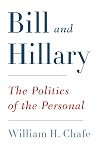
"At Yale, [Bill] Clinton found an answer - another person, equally bright, just as driven to break barriers and change the world. She was almost as complicated as he was - perhaps even more so - with a family history that came close to his in its crazy dynamics. Hillary Rodham would change his life. He would change hers. And from the moment of their meeting, they created a partnership, both political and personal, that helped shape the course of the country." (pg. 64)
I'm fascinated with the show more Clintons. So, it makes sense that this would be of interest to me - and it was.
I should say, however, that I haven't read Bill Clinton's memoir My Life. Nor have I read First in His Class by David Maraniss or The Clinton Tapes by Taylor Branch (a longtime friend of Bill and Hillary's). I did read - and enjoy - Hillary's memoir Living History, as well as All Too Human by George Stephanopolous.
Drawing from all of these (especially My Life) and accounts from Clinton associates (especially Betsey Wright), Chafe gives his reader the biographical details of both Clintons' lives - their childhoods; their time at Oxford and Wellesley, respectively; and their years together at Yale Law School. In some ways, the biographical information seems slightly redundant. Perhaps that's just because it is a narrative that most of us of a certain age know by now, having grown up not really knowing a time when the Clintons weren't headline news for one reason or another.
Chafe does seem to emphasize their early years (especially Bill's). That's important to the premise of the book: the belief that, like many of us, Hillary and Bill's personalities and character were each shaped by their upbringing and the family environment that they grew up in. Chafe takes pivotal moments in the Clintons' political life together and examines them within the context of their personalities, their strengths and flaws, and the dynamics of their personal relationship.
In doing so, Chafe doesn't skirt around the reason why most of us would probably be reading this book: to gain the ultimate inside scoop on Bill and Hillary's relationship, and why and how, after all the womanizing and after all the scandals, they stayed together.
We see this pattern early and often in their relationship, and it is one confirmed by close friends. There are new names revealed in this biography; for example, I'd never heard of Marilyn Jo Jenkins before Bill and Hillary, but apparently Bill was in love with Marilyn Jo so much that he asked Hillary for a divorce in 1990, before deciding to run for President. (Obviously, she told him no.) Personally and politically, things would have been very different indeed, had that occurred. You could probably say that our very country would have have been different.
Make no mistake: Bill and Hillary isn't a fawning love story to the Clintons nor no wistful look back at the way things were. Chafe reminds his reader of the six weeks of bombshells that the 1992 campaign withstood between January 23 and March 7 (Gennifer Flowers, Bill's Vietnam draft dodger issues, and questions about Hillary's work at the Rose Law Firm) followed by the dysfunction and chaos of the early days of the Clinton presidency - which was very, very much a co-presidency. The American people definitely got their "two for the price of one" deal that Bill Clinton infamously promised.
"For better or worse, the chemistry of this relationship suggested a degree of emotional attachment (and dependency) rarely on display in American public life. It was almost impossible to speak of one of the Clintons without having the other in mind as well." (pg. 138)
It still isn't.
All the rest of the scandals we've come to know are recounted too - Vince Foster, Whitewater, Troopergate, Travelgate, and of course, Monica Lewinsky. (There's new information - to me, at least - on the latter, although it could be from her tell-all tome about their relationship; I haven't read that one either.)
While Bill and Hillary could be viewed as a hatchet job, I didn't read it as such. I thought Chafe presented the facts and historical events quite fairly - with a little inside baseball for those of us who remember those days. With each one of these scandals, Chafe successfully makes the case that the cause can be traced back to the dynamics of the Clintons' personal relationship. It's more than just having a crappy childhood and needing to win the approval of others. That's a big part of it, sure, but
"[a]s one person close to Bill observed after the Lewinsky affair broke, 'in deed and expression, you could see he was trying to do everything he could to make it up to Hillary...Whatever Hillary wants, Hillary gets.' She, in turn, had something to give. Her forbearance and love permitted him to survive, even to 'come back.' No one else could rescue him as she could. No one else could make right what was wrong. The exchange even worked romantically. When she was in charge of defending him, they were a team once more, affectionate with each other, sensitive to each other's feelings. 'It was hand-holding,' one of the White House lawyers said, 'arms around each other, lots of eye contact.' In some respects, their partnership achieved a new intimacy and camaraderie when she stood by him in the face of his misbehavior. Thus, in the strangest of ways, Clinton's reckless sexual behavior actually enhanced their personal ties. It made their relationship more functional and productive. Arguably - and in the strangest irony of all - it was at the heart of their partnership, the centerpiece that made it work." (pg. 299)
Depending on what side of the aisle you're on, it could be said that that partnership did or did not work for America. I think it's both, which is the position Chafe seems to take. It seems to be working for them, because they seem to be doing okay. But the fact remains that, whether we like the Clintons personally or not, their relationship and its dynamics not only had the power to influence a generation, but to change an entire country. show less
I'm fascinated with the show more Clintons. So, it makes sense that this would be of interest to me - and it was.
I should say, however, that I haven't read Bill Clinton's memoir My Life. Nor have I read First in His Class by David Maraniss or The Clinton Tapes by Taylor Branch (a longtime friend of Bill and Hillary's). I did read - and enjoy - Hillary's memoir Living History, as well as All Too Human by George Stephanopolous.
Drawing from all of these (especially My Life) and accounts from Clinton associates (especially Betsey Wright), Chafe gives his reader the biographical details of both Clintons' lives - their childhoods; their time at Oxford and Wellesley, respectively; and their years together at Yale Law School. In some ways, the biographical information seems slightly redundant. Perhaps that's just because it is a narrative that most of us of a certain age know by now, having grown up not really knowing a time when the Clintons weren't headline news for one reason or another.
Chafe does seem to emphasize their early years (especially Bill's). That's important to the premise of the book: the belief that, like many of us, Hillary and Bill's personalities and character were each shaped by their upbringing and the family environment that they grew up in. Chafe takes pivotal moments in the Clintons' political life together and examines them within the context of their personalities, their strengths and flaws, and the dynamics of their personal relationship.
In doing so, Chafe doesn't skirt around the reason why most of us would probably be reading this book: to gain the ultimate inside scoop on Bill and Hillary's relationship, and why and how, after all the womanizing and after all the scandals, they stayed together.
We see this pattern early and often in their relationship, and it is one confirmed by close friends. There are new names revealed in this biography; for example, I'd never heard of Marilyn Jo Jenkins before Bill and Hillary, but apparently Bill was in love with Marilyn Jo so much that he asked Hillary for a divorce in 1990, before deciding to run for President. (Obviously, she told him no.) Personally and politically, things would have been very different indeed, had that occurred. You could probably say that our very country would have have been different.
Make no mistake: Bill and Hillary isn't a fawning love story to the Clintons nor no wistful look back at the way things were. Chafe reminds his reader of the six weeks of bombshells that the 1992 campaign withstood between January 23 and March 7 (Gennifer Flowers, Bill's Vietnam draft dodger issues, and questions about Hillary's work at the Rose Law Firm) followed by the dysfunction and chaos of the early days of the Clinton presidency - which was very, very much a co-presidency. The American people definitely got their "two for the price of one" deal that Bill Clinton infamously promised.
"For better or worse, the chemistry of this relationship suggested a degree of emotional attachment (and dependency) rarely on display in American public life. It was almost impossible to speak of one of the Clintons without having the other in mind as well." (pg. 138)
It still isn't.
All the rest of the scandals we've come to know are recounted too - Vince Foster, Whitewater, Troopergate, Travelgate, and of course, Monica Lewinsky. (There's new information - to me, at least - on the latter, although it could be from her tell-all tome about their relationship; I haven't read that one either.)
While Bill and Hillary could be viewed as a hatchet job, I didn't read it as such. I thought Chafe presented the facts and historical events quite fairly - with a little inside baseball for those of us who remember those days. With each one of these scandals, Chafe successfully makes the case that the cause can be traced back to the dynamics of the Clintons' personal relationship. It's more than just having a crappy childhood and needing to win the approval of others. That's a big part of it, sure, but
"[a]s one person close to Bill observed after the Lewinsky affair broke, 'in deed and expression, you could see he was trying to do everything he could to make it up to Hillary...Whatever Hillary wants, Hillary gets.' She, in turn, had something to give. Her forbearance and love permitted him to survive, even to 'come back.' No one else could rescue him as she could. No one else could make right what was wrong. The exchange even worked romantically. When she was in charge of defending him, they were a team once more, affectionate with each other, sensitive to each other's feelings. 'It was hand-holding,' one of the White House lawyers said, 'arms around each other, lots of eye contact.' In some respects, their partnership achieved a new intimacy and camaraderie when she stood by him in the face of his misbehavior. Thus, in the strangest of ways, Clinton's reckless sexual behavior actually enhanced their personal ties. It made their relationship more functional and productive. Arguably - and in the strangest irony of all - it was at the heart of their partnership, the centerpiece that made it work." (pg. 299)
Depending on what side of the aisle you're on, it could be said that that partnership did or did not work for America. I think it's both, which is the position Chafe seems to take. It seems to be working for them, because they seem to be doing okay. But the fact remains that, whether we like the Clintons personally or not, their relationship and its dynamics not only had the power to influence a generation, but to change an entire country. show less
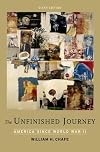
Chafe offers us a history of the post war period that one would best categorize as "progressive," a history in which the activism of everyday people is the driving engine of change that enables progress on issues of social justice in the halls of power. A historian of both the civil rights and women's movements, his account weaves considerations of race, gender and class into a subtle narrative. From the vantage point he affords us, the self-congratulatory pose of official America during the show more latter half of the 20th century once again appears suspect. As Richard Dalfiume notes in his review for the JAH, Chafe's history is an effort to invite student of these last six decades of American history to question the extent to which one's prospects in
America are, after all is said and done, still delimited primarily by the accident of one's birth. show less
America are, after all is said and done, still delimited primarily by the accident of one's birth. show less
Not an easy read but well worth it. The first serious study that I have read of the dynamics between Bill and Hillary that defined their relationship and his presidency. Her assumption of presidential powers in the first two years of his administration was appalling and frightening. She was the senior co-president in the co-presidency. What is so alarming she was given these powers by the people and there was no accountability. "the history of the Clinton administration reflects the degree show more to which their internal dynamics shaped the choices they made at every turn."The Clintons were paranoid and it strangled her in the end. Her term as co-president expired, justifiably so. As a friend of David Gergen once said, "Bill Clinton would have been a great president if he had not been who he was." show less
Awards


You May Also Like


Associated Authors
Statistics
- Works
- 16
- Also by
- 7
- Members
- 1,154
- Popularity
- #22,275
- Rating
- 3.9
- Reviews
- 11
- ISBNs
- 64