
Alison Gernsheim (1911–1969)
Author of Victorian and Edwardian Fashion: A Photographic Survey (Dover Fashion and Costumes)
About the Author
Works by Alison Gernsheim
Victorian and Edwardian Fashion: A Photographic Survey (Dover Fashion and Costumes) (1963) 480 copies, 6 reviews
The history of photography from the camera obscura to the beginning of the modern era (1969) 36 copies, 1 review
The recording eye; a hundred years of great events as seen by the camera, 1839-1939 (1960) 10 copies
Roger Fenton: Photographer of the Crimean War, his photographs and his letters from the Crimea (1976) 8 copies
Victoria R.: a biography with four hundred illustrations based on her personal photograph albums (1959) 6 copies
Hundert Jahre Photographie 1839-1939 aus der Sammlung Gernsheim, London (inscribed by authors) (1959) 3 copies
Those Impossible English 1 copy
Associated Works
Tagged
Common Knowledge
- Canonical name
- Gernsheim, Alison
- Other names
- Eames, Alison
- Birthdate
- 1911
- Date of death
- 1969
- Gender
- female
- Relationships
- Gernsheim, Helmut (husband)
- Nationality
- UK
- Places of residence
- London, England
- Associated Place (for map)
- London, England
Members
Reviews

When I began teaching the history of photography, this was the most useful single book available. The writing is dense, but so is the information. I have about worn the book out. My copy is signed: Inscribed to Jim Colson with deep appreciation of his teaching. Helmut Gernsheim, Austin, May 1979.
Th 1970's saw the beginning of extensive photographic publications and of the undoing of the modernist critic base used by both Newhall and Gernsheim. As much as the field has advanced beyond their show more contributions, we owe them much gratitude for their hard work and the rich base of material they gave us. show less
Th 1970's saw the beginning of extensive photographic publications and of the undoing of the modernist critic base used by both Newhall and Gernsheim. As much as the field has advanced beyond their show more contributions, we owe them much gratitude for their hard work and the rich base of material they gave us. show less
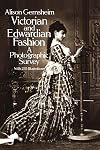
I picked this up in a wonderful used book store on Cape Cod, it's a great visual resource for fashion from the 1830's to the 1910's. The author empahsises that what people wore wasn't directly correlated to fashion plates in magazines (think of Vogue today), and seeing photographs of people at the beach, the races, on picnics, posed in ball gowns, etc was fascinating.
Included are photos of Oscar Wilde, a young William Churchill, Lilly Langtree, and the "personification of the Gibson Girl", show more as well as more royalty than you can shake a scepter at. :) show less
Included are photos of Oscar Wilde, a young William Churchill, Lilly Langtree, and the "personification of the Gibson Girl", show more as well as more royalty than you can shake a scepter at. :) show less
A quick read, but this book is most essential because of the real photographs. The photographs range from 1840 to the 1910s. That was the main thing for me: Photographs. No drawings or illustrations. Tons of photographs of real people.
The only qualm I had while reading is that when a picture was referenced, I had to flip back to find it. Also, it would be nice if the photos were in order of year, but these are small things. The real photographs are both fascinating and stunning.
While I show more probably won't need to read through this book again, I'll be constantly going back to it to gaze and study the photographs. Essential to someone studying the period. show less
The only qualm I had while reading is that when a picture was referenced, I had to flip back to find it. Also, it would be nice if the photos were in order of year, but these are small things. The real photographs are both fascinating and stunning.
While I show more probably won't need to read through this book again, I'll be constantly going back to it to gaze and study the photographs. Essential to someone studying the period. show less
The fashion history of the Victorian and Edwardian eras is supported by many period photographs. Keeping in mind that the photographs are of wealthy people almost exclusively from this time period, many things can be observed: hair styles, the setting for the photo, and groupings of people. This time period covers the wasp waist to the bustle, both designs having little to do with the natural form of the female body. The photographs of children are also interesting as they are often show more portrayed as miniature adults. The amount of detail on the clothing is also an indicator of wealth and social position. One wonders what the common family wore during this time period and how they obtained their clothing. show less
You May Also Like


Associated Authors
Statistics
- Works
- 10
- Also by
- 2
- Members
- 611
- Popularity
- #41,143
- Rating
- 4.0
- Reviews
- 7
- ISBNs
- 6