
Hugh Lofting (1886–1947)
Author of The Story of Doctor Dolittle
About the Author
Hugh Lofting was born in 1866 in Maidenhead, England. He trained as a civil engineer, getting his education from the Massachusetts Institute of Technology and the Polytechnic Institute of London. He worked in Africa, the West Indies and Canada and then settled in New York to become a writer. The show more stories about Doctor Dolittle began as letters to his children while overseas in England during World War I, where Lofting served with the British Army. The first Doctor Dolittle book published was "The Story of Doctor Dolittle" in 1920. He wrote thirteen more, winning the Newberry Medal in 1923 for "The Voyages of Doctor Dolittle." Lofting illustrated all of the Dolittle books himself. In 1967, the Doctor Dolittle books were made into a musical film starring Rex Harrison. Hugh Lofting died in 1947 at the age of 81. show less
Series
Works by Hugh Lofting
Doctor Dolittle The Complete Collection, Vol. 1: The Voyages of Doctor Dolittle; The Story of Doctor Dolittle; Doctor Dolittle's Post Office (2019) 175 copies
Doctor Dolittle The Complete Collection, Vol. 2: Doctor Dolittle's Circus; Doctor Dolittle's Caravan; Doctor Dolittle and the Green Canary (2019) 64 copies
Doctor Dolittle The Complete Collection, Vol. 3: Doctor Dolittle's Zoo; Doctor Dolittle's Puddleby Adventures; Doctor Dolittle's Garden (2019) 58 copies
Doktora Dūlitla peldošā sala 3 copies
The story of Dr. Dolittle 3 copies
1948 STORY OF DOCTOR DOLITTLE HUGH LOFTING ILLUSTRATED FIRST BOOK FANTASY [Hardcover] HUGH LOFTING (1948) 3 copies
Travels of Doctor Dolittle 2 copies
[(The Voyages of Doctor Dolittle: Retold from the Hugh Lofting Original )] [Author: Hugh Lofting] [Mar-2009] (2009) 2 copies
Příběhy doktora Dolittla, aneb, Historie jeho prazvláštního života ve vlasti a úžasná dobrodružství v daleké cizině (2002) 2 copies
Doktor Dolittles grösste Reise 2 copies
Dr Dolittle 1 copy
Историята на Доктор Дулитъл 1 copy
Meet Doctor Dolittle 1 copy
Whitcombe's Story Books, Number 440: The Story of Doctor Dolittle retold for younger children 1 copy
The Jungle Book / White Fang / The Story of Doctor Dolittle / Fables for Children by Aesop (Junior Classics for Young Readers) (1955) 1 copy
Doctor Dolittle - Hugh Lofting: Original Illustrations | Classic Unabridged Novel | New Edition (2020) 1 copy
Doctor Dolittle Series 1 copy
Doktor Dolittles eventyr 1 copy
Dr. Dolittle auf dem Mond 1 copy
The Tale of Dr. Dolittle 1 copy
Doctor Dolittle's Zoo 1 copy
הדאר של דוליטל הרופא 1 copy
Doctor Doolittle Goes Home 1 copy
Доктор Дулитл и его звери 1 copy
Associated Works
The Story of Doctor Dolittle (Junior Classics for Young Readers) (2010) — original story author — 417 copies, 1 review
Tagged
Common Knowledge
- Canonical name
- Lofting, Hugh
- Legal name
- Lofting, Hugh John
- Birthdate
- 1886-01-14
- Date of death
- 1947-09-26
- Gender
- male
- Education
- Massachusetts Institute of Technology
London Polytechnic
Mount St Mary's College - Occupations
- civil engineer
children's book author - Organizations
- British Army (World War I)
- Relationships
- Fricker, Olga (sister-in-law)
Lofting, Hilary (brother) - Cause of death
- cirrhosis of the liver
- Nationality
- UK
- Birthplace
- Maidenhead, Berkshire, England, UK
- Places of residence
- Maidenhead, Berkshire, England, UK
New York, New York, USA
Topanga, California, USA - Place of death
- Topanga, California, USA
- Burial location
- Evergreen Cemetery, Killingsworth, Middlesex County, Connecticut, USA
- Map Location
- England, UK
Members
Reviews

Doctor Dolittle's Return is the ninth book in Hugh Lofting's classic Doctor Dolittle series. Remarkably, it features some of the most memorable and funniest moments of the whole series. That's a rare thing in a long series!
The book directly continues the plot line begun in the preceeding book, Doctor Dolittle in the Moon. It should be noted that Lofting originally intended to end the series with that book, but for some reason changed his mind; five years after the publication of Doctor show more Dolittle in the Moon, Doctor Dolittle's Return was published.
Almost all the old favorites are here: Polynesia, Dab-Dab, Jip, Gub-Gub, Chee-Chee, Too-Too, Cheapside the Cockney sparrow, Whitey the mouse, and the old lame horse. Not to mention our narrator, Tommy Stubbins, and Matthew Mugg, the Cat's Meat Man.
The Pushmi-pullyu is entirely absent; his presence in the entire series is actually rather slight. He's a relatively undeveloped character, and vanished from view as the series progressed (my son often asked where he went). Also missing, unfortunately, is Prince Bumpo. However heis at least mentioned in the text; he's gone back to school, as I recall. On the other hand, even if he'd been included in the book modern publishers would doubtless have censored him out of current editions.
As you might guess, the book tells how the Doctor returns from the Moon. The first half of the book covers the lives of Tommy Stubbins, the Doctor's assistant, and the Dolittle family of animals in England as they wait for his return; then the exciting moment when he does return; and the Doctor's convalescence, as well as the story of how he managed to escape from the Moon. There are many extremely charming and hilarious moments.
The second half of the book deals with the quest of the Doctor for peace and quiet. He wants to write a book about the Moon, and perform Moon-related experiments, but the constant demands of his patients make his other projects nearly impossible to complete. This leads to what are undoubtedly the funniest moments in the entire series...but I'll avoid spoiling them for you.
The solution that works is both logical and very aesthetically pleasing. And the ending itself is extremely moving, for all that it is quiet and almost anticlimactic. Lofting's writing style developed considerably over the course of the series, and in Doctor Dolittle's Return he brought a greater depth of feeling and thought to his work than ever before.
Although it's roughly the same length as the other books in the series, Doctor Dolittle's Return reads very quickly indeed. In large part that's because it's one of the most lively books in the series; there are no dead spots that bog the flow of the story down. It felt as if the book flew by, far more rapidly than many of the other Dolittle books.
I read the book to my seven-year-old son, Sebastian, and he absolutely loved it - I think it is his new favorite. He enjoyed all the Dolittle books very much, but his interest in this was was on an entirely new level. He had me bring the book with us in the car, so I could read it to him every morning and every night as we drove to and from the train station (I wasn't driving, of course). He had me read it to him in the evenings, instead of watching television. He giggled and laughed...it really is the funniest book in the series, so far.
And, in many ways, it feels like the perfect closing point of the series. There are three more Dolittle books, plus a stand-alone book by Gub-Gub the pig, but by all accounts these are more grim and sad, with a darker view of both human and animal nature (well, Gub-Gub's book is probably an exception, since it's an outright work of humor).
I believe I read the entire series when I was young, with the exception of the Gub-Gub book (which is quite rare). But I don't remember anything past the end of Doctor Dolittle's Return. Is that because the later books were depressing? Or is it that I never read them? I'm not sure. I'll admit that I'm a little concerned, because Sebastian very much wants to continue reading the Dolittle series; as described, though, the final books may not be appropriate for him. We'll simply have to try and see. And if for some reason they're not appropriate for a seven-year-old, at least we'll have the pleasure of reading the first nine books all over again - at least one or two more times, before he's too grown-up to listen to stories read by his old Dad. show less
The book directly continues the plot line begun in the preceeding book, Doctor Dolittle in the Moon. It should be noted that Lofting originally intended to end the series with that book, but for some reason changed his mind; five years after the publication of Doctor show more Dolittle in the Moon, Doctor Dolittle's Return was published.
Almost all the old favorites are here: Polynesia, Dab-Dab, Jip, Gub-Gub, Chee-Chee, Too-Too, Cheapside the Cockney sparrow, Whitey the mouse, and the old lame horse. Not to mention our narrator, Tommy Stubbins, and Matthew Mugg, the Cat's Meat Man.
The Pushmi-pullyu is entirely absent; his presence in the entire series is actually rather slight. He's a relatively undeveloped character, and vanished from view as the series progressed (my son often asked where he went). Also missing, unfortunately, is Prince Bumpo. However heis at least mentioned in the text; he's gone back to school, as I recall. On the other hand, even if he'd been included in the book modern publishers would doubtless have censored him out of current editions.
As you might guess, the book tells how the Doctor returns from the Moon. The first half of the book covers the lives of Tommy Stubbins, the Doctor's assistant, and the Dolittle family of animals in England as they wait for his return; then the exciting moment when he does return; and the Doctor's convalescence, as well as the story of how he managed to escape from the Moon. There are many extremely charming and hilarious moments.
The second half of the book deals with the quest of the Doctor for peace and quiet. He wants to write a book about the Moon, and perform Moon-related experiments, but the constant demands of his patients make his other projects nearly impossible to complete. This leads to what are undoubtedly the funniest moments in the entire series...but I'll avoid spoiling them for you.
The solution that works is both logical and very aesthetically pleasing. And the ending itself is extremely moving, for all that it is quiet and almost anticlimactic. Lofting's writing style developed considerably over the course of the series, and in Doctor Dolittle's Return he brought a greater depth of feeling and thought to his work than ever before.
Although it's roughly the same length as the other books in the series, Doctor Dolittle's Return reads very quickly indeed. In large part that's because it's one of the most lively books in the series; there are no dead spots that bog the flow of the story down. It felt as if the book flew by, far more rapidly than many of the other Dolittle books.
I read the book to my seven-year-old son, Sebastian, and he absolutely loved it - I think it is his new favorite. He enjoyed all the Dolittle books very much, but his interest in this was was on an entirely new level. He had me bring the book with us in the car, so I could read it to him every morning and every night as we drove to and from the train station (I wasn't driving, of course). He had me read it to him in the evenings, instead of watching television. He giggled and laughed...it really is the funniest book in the series, so far.
And, in many ways, it feels like the perfect closing point of the series. There are three more Dolittle books, plus a stand-alone book by Gub-Gub the pig, but by all accounts these are more grim and sad, with a darker view of both human and animal nature (well, Gub-Gub's book is probably an exception, since it's an outright work of humor).
I believe I read the entire series when I was young, with the exception of the Gub-Gub book (which is quite rare). But I don't remember anything past the end of Doctor Dolittle's Return. Is that because the later books were depressing? Or is it that I never read them? I'm not sure. I'll admit that I'm a little concerned, because Sebastian very much wants to continue reading the Dolittle series; as described, though, the final books may not be appropriate for him. We'll simply have to try and see. And if for some reason they're not appropriate for a seven-year-old, at least we'll have the pleasure of reading the first nine books all over again - at least one or two more times, before he's too grown-up to listen to stories read by his old Dad. show less
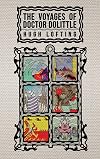
I was motivated to do a deep dive because Dr. Dolittle is a character that has been sanitized and repackaged for the modern market. I feel some kind of way about that because reading the original text of this book made my eyebrows fall off. As a child I read this book and did not blink an eye (it was the 70s), as a school librarian I picked it up again and felt all the impact of the dated language. Dated is a gentle word. Taking a look at this book in it's original text matters because as a show more culture we are constantly engaged with ideas around identity. This book situates nicely in that space as an object lesson of, do words matter? does identity matter? Should this book as it was originally published sit on the shelf of a grade school classroom or is the sanitized version better?
The Voyages of Doctor Dolittle has had so many editions and reboots that to find that original version (that I think is worthy of examination) takes a little digging. So here you go:
The edition’s full title is ***The Voyages of Doctor Dolittle: The Original 1922 Edition with Actual Illustrations by the Author***. Its publisher description specifically states that, unlike editions “updated” for modern sensibilities, it contains **the exact text originally published in 1922**. Therefore, it is being sold as the **unrevised, unsanitized text**, including the original racial language and stereotypes. ([AbeBooks][1])
However, it is **not a physical 1922 edition or a page-for-page facsimile**. The genuine 1922 Frederick A. Stokes edition contained 364 pages plus preliminary pages, while this modern reprint has 184 pages, meaning the text has been reset in a newer page layout. ([HathiTrust][2])
**Verdict:** You can confidently catalog it as **original 1922 text, unabridged and not modernized**—but as a **2019 modern reprint**, not an actual 1922 printing. I found no independent scholarly word-for-word collation, so the claim ultimately rests on the publisher’s explicit statement. Also, this ISBN is specifically for ***The Voyages of Doctor Dolittle***, not the earlier ***The Story of Doctor Dolittle***.
[1]: https://www.abebooks.com/9781645940197/Voyages-Doctor-Dolittle-Original-1922-164... "The Voyages of Doctor Dolittle: The Original 1922 Edition with Actual Illustrations by the Author - Lofting, Hugh: 9781645940197 - AbeBooks"
[2]: https://catalog.hathitrust.org/Record/001021532 "Catalog Record: The voyages of Doctor Dolittle | HathiTrust Digital Library"
In a way, this book is a five star argument for the importance of not censoring or sanitizing stories. Everyone has opinions, I can only speak from heart as a former librarian of a charter school (where I had complete freedom). If I were a classroom teacher of an upper grade and the topic came up, I would use this book as a conversation piece on the topic of re-writing or erasing history. This popular children's story has wonderful elements. I would 100% percent put this book in the hands of any older student or adult that wants to participate in a conversation of racist caricatures. I would not change one word of this book because it is a time capsule for socially accepted ideas, these same dominant ideas diminished and sidelined the contributions of millions of people by lessering them. show less
The Voyages of Doctor Dolittle has had so many editions and reboots that to find that original version (that I think is worthy of examination) takes a little digging. So here you go:
The edition’s full title is ***The Voyages of Doctor Dolittle: The Original 1922 Edition with Actual Illustrations by the Author***. Its publisher description specifically states that, unlike editions “updated” for modern sensibilities, it contains **the exact text originally published in 1922**. Therefore, it is being sold as the **unrevised, unsanitized text**, including the original racial language and stereotypes. ([AbeBooks][1])
However, it is **not a physical 1922 edition or a page-for-page facsimile**. The genuine 1922 Frederick A. Stokes edition contained 364 pages plus preliminary pages, while this modern reprint has 184 pages, meaning the text has been reset in a newer page layout. ([HathiTrust][2])
**Verdict:** You can confidently catalog it as **original 1922 text, unabridged and not modernized**—but as a **2019 modern reprint**, not an actual 1922 printing. I found no independent scholarly word-for-word collation, so the claim ultimately rests on the publisher’s explicit statement. Also, this ISBN is specifically for ***The Voyages of Doctor Dolittle***, not the earlier ***The Story of Doctor Dolittle***.
[1]: https://www.abebooks.com/9781645940197/Voyages-Doctor-Dolittle-Original-1922-164... "The Voyages of Doctor Dolittle: The Original 1922 Edition with Actual Illustrations by the Author - Lofting, Hugh: 9781645940197 - AbeBooks"
[2]: https://catalog.hathitrust.org/Record/001021532 "Catalog Record: The voyages of Doctor Dolittle | HathiTrust Digital Library"
In a way, this book is a five star argument for the importance of not censoring or sanitizing stories. Everyone has opinions, I can only speak from heart as a former librarian of a charter school (where I had complete freedom). If I were a classroom teacher of an upper grade and the topic came up, I would use this book as a conversation piece on the topic of re-writing or erasing history. This popular children's story has wonderful elements. I would 100% percent put this book in the hands of any older student or adult that wants to participate in a conversation of racist caricatures. I would not change one word of this book because it is a time capsule for socially accepted ideas, these same dominant ideas diminished and sidelined the contributions of millions of people by lessering them. show less

For a story that has been beloved over the generations and made into five different movies (that I know of?)… The Story of Doctor Dolittle was… underwhelming.
I’d read this one before, as a kid, but most my vague memories of the story come from the 1967 Doctor Dolittle film, so going into this against for the first time in, I don’t know, maybe twenty years? I felt like I was going in blind. I remembered Pollyana, of course, and I remembered the Pushmi-Pullyu, and the general concept show more of doctor-who-talks-to-animals… but that’s about it.
And the first thing I read, going in, was the foreward. I almost never read forewards on books, ebcause more the time it’s a sappy praising review which is all fine and good, but I’ve already got the book in my hands, you don’t have to sell it to me again. I’m not sure what possessed me to read it this time, but I’m glad I did, because I learned that the original version of The Story of Doctor Dolittle and it’s accompanying illustrations was super racist. … Eek! The foreward in my edition – the 1991 re-release with illustrations by Michael Hague – was a warning and an apology that the original text had been altered to rewrite a racist scene where an African prince wished to be white into something more sensitive. … um, yeah, you better get rid of that crap. I’m not sure how I had never heard about that being a thing with Doctor Dolittle before, but that is a THING so if you want to read the original book… read the 1991 version or later.
And that could lead into a WHOLE conversion about racism in classics and whether we should acknowledge, edit, or burn, but this is a book review and not a discussion post, so I’mma put that on my docket for later.
The Story of Doctor Dolittle reads relatively okay for a children’s book. For some reason I went in expecting closer to middle grade – I think the length of the book attributed here, 160 pages, a little long for a children’s book. The writing was extremely simple and the characters very basic and underwhelming. The language in the book mixed with the length probably lends it to a child who is advanced in reading schools, but maybe not ready for full-fledged middle grade novels. There’s nothing to really clasp on to in The Story of Doctor Dolittle – nothing magical about the book. Even with illustrations included, nothing made me fall in love with any of the characters or draw me into the world. Generally speaking, this book is 100% forgettable.
I think the only thing that really gives longevity to The Story of Doctor Dolittle is the central concept – a man who can speak to animals. We certainly see this in the film adaptations, where it’s the only real element that remains from the books (the 1967 version is a little closer to text than the 1998 or 2020 versions) and it’s a good character concept (although outside of that one thing, John Dolittle is lazy, pompous, and a bore). Generations of children may have loved the books for the menagerie they present, but the story and the man aren’t really worth praising in a book that remains a constant in many childrens’ libraries a century later.
Of course, I’m far out of the demographic for this one, but it was never a childhood favorite, either. I remember very little of The Story of Doctor Dolittle from when I was little – and this was the same edition I had growing up – so the lack of impression now is consistent about the feelings I had when I was a child.
My advice? The Story of Doctor Dolittle can be skipped, and doubly so because of the racist understones that have been edited out (and the industry never does that… so they must have been really bad). For maximum fun, watch the Eddie Murphy films, and that’ll do. show less
I’d read this one before, as a kid, but most my vague memories of the story come from the 1967 Doctor Dolittle film, so going into this against for the first time in, I don’t know, maybe twenty years? I felt like I was going in blind. I remembered Pollyana, of course, and I remembered the Pushmi-Pullyu, and the general concept show more of doctor-who-talks-to-animals… but that’s about it.
And the first thing I read, going in, was the foreward. I almost never read forewards on books, ebcause more the time it’s a sappy praising review which is all fine and good, but I’ve already got the book in my hands, you don’t have to sell it to me again. I’m not sure what possessed me to read it this time, but I’m glad I did, because I learned that the original version of The Story of Doctor Dolittle and it’s accompanying illustrations was super racist. … Eek! The foreward in my edition – the 1991 re-release with illustrations by Michael Hague – was a warning and an apology that the original text had been altered to rewrite a racist scene where an African prince wished to be white into something more sensitive. … um, yeah, you better get rid of that crap. I’m not sure how I had never heard about that being a thing with Doctor Dolittle before, but that is a THING so if you want to read the original book… read the 1991 version or later.
And that could lead into a WHOLE conversion about racism in classics and whether we should acknowledge, edit, or burn, but this is a book review and not a discussion post, so I’mma put that on my docket for later.
The Story of Doctor Dolittle reads relatively okay for a children’s book. For some reason I went in expecting closer to middle grade – I think the length of the book attributed here, 160 pages, a little long for a children’s book. The writing was extremely simple and the characters very basic and underwhelming. The language in the book mixed with the length probably lends it to a child who is advanced in reading schools, but maybe not ready for full-fledged middle grade novels. There’s nothing to really clasp on to in The Story of Doctor Dolittle – nothing magical about the book. Even with illustrations included, nothing made me fall in love with any of the characters or draw me into the world. Generally speaking, this book is 100% forgettable.
I think the only thing that really gives longevity to The Story of Doctor Dolittle is the central concept – a man who can speak to animals. We certainly see this in the film adaptations, where it’s the only real element that remains from the books (the 1967 version is a little closer to text than the 1998 or 2020 versions) and it’s a good character concept (although outside of that one thing, John Dolittle is lazy, pompous, and a bore). Generations of children may have loved the books for the menagerie they present, but the story and the man aren’t really worth praising in a book that remains a constant in many childrens’ libraries a century later.
Of course, I’m far out of the demographic for this one, but it was never a childhood favorite, either. I remember very little of The Story of Doctor Dolittle from when I was little – and this was the same edition I had growing up – so the lack of impression now is consistent about the feelings I had when I was a child.
My advice? The Story of Doctor Dolittle can be skipped, and doubly so because of the racist understones that have been edited out (and the industry never does that… so they must have been really bad). For maximum fun, watch the Eddie Murphy films, and that’ll do. show less
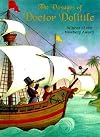
This is a charming book for children about a benevolent and somewhat ridiculous doctor in Victorian England who has a rare ability to speak to many kinds of animals.
It is also a historical-fantastical science fiction novel with many an allusion to Charles Darwin.
The book was first published in 1922, but is set around 1840, before the publication of "The Origin of Species" but after the publication of "The Voyage of the Beagle". Doctor Dolittle mentions Darwin when discussing well-known and show more literate naturalists, along with Cuvier. Lofting's doctor is a confident evolutionist; he mentions, quite casually, a time long ago when the whales walked on land, and so forth.
It seems like Lofting might have read a great deal of Charles Darwin's works. It is my suspicion that the fact that the inhabitants of Spidermonkey Island are without fire in the story is a reference to Darwin's description of the Tierra del Fuegans. I remember a passage where Darwin describes a naked mother nursing her naked child while the snow gradually settles on the two of them. Since their island is floating south into the antarctic circle the islanders are less resistant to the cold than the Tierra del Fuegans.
Much of the book is grounded in fairly good science, not just the evolutionary part, but also in the geological remarks. Even the underwater voyage inside the shell of the giant sea snail has a few nods to realism, although I wouldn't recommend you try crossing an ocean that way.
The Sonja Lamut illustrations are appropriate and rather charming. They remind me a bit of, e.g., Garth Williams's illustrations for "Charlotte's Web".
My edition, an Illustrated Junior Library edition from the 1990s has, alas, been stealth edited by the publishers, Grosset & Dunlap. Apparently, stealth editing has been a very frequent occurrence with "The Voyages of Doctor Dolittle". My complaint with this particular edition is not the choice to edit, which is defensible, but the stealthy nature and the overall quality of the editing, which could have been improved. I wonder if someday there will be issued a parallel edition of this book, with all revisions side-by-side, so the reader can judge which era was the most sensible.
When the general goal of the editors is to make the book more like itself, a kind, gentle, imaginative adventure tale, but for more modern readers, the editing can be quite defensible. In my edition, the editors generally went for unobtrusive changes, for example substituting Bumpo's name for a somewhat jarring epithet describing him. I was surprised when they didn't go further and elide some other equally jarring epithets scattered here and there. I presume that they didn't do this because they did not find those epithets quite so jarring as I did; this makes me wonder a bit about them and their sensibilities. However, the edits were overall much better than those recently made for some Roald Dahl novels, which substitute completely uncharacteristic and ideologically motivated phrases for the original Roald Dahl snark or as pointless as the recent edits on James Bond novels. I concur with https://www.librarything.com/review/219084349; the edits somewhat improve the book, for child and parent, if not for philologist or historian. show less
It is also a historical-fantastical science fiction novel with many an allusion to Charles Darwin.
The book was first published in 1922, but is set around 1840, before the publication of "The Origin of Species" but after the publication of "The Voyage of the Beagle". Doctor Dolittle mentions Darwin when discussing well-known and show more literate naturalists, along with Cuvier. Lofting's doctor is a confident evolutionist; he mentions, quite casually, a time long ago when the whales walked on land, and so forth.
It seems like Lofting might have read a great deal of Charles Darwin's works. It is my suspicion that the fact that the inhabitants of Spidermonkey Island are without fire in the story is a reference to Darwin's description of the Tierra del Fuegans. I remember a passage where Darwin describes a naked mother nursing her naked child while the snow gradually settles on the two of them. Since their island is floating south into the antarctic circle the islanders are less resistant to the cold than the Tierra del Fuegans.
Much of the book is grounded in fairly good science, not just the evolutionary part, but also in the geological remarks. Even the underwater voyage inside the shell of the giant sea snail has a few nods to realism, although I wouldn't recommend you try crossing an ocean that way.
The Sonja Lamut illustrations are appropriate and rather charming. They remind me a bit of, e.g., Garth Williams's illustrations for "Charlotte's Web".
My edition, an Illustrated Junior Library edition from the 1990s has, alas, been stealth edited by the publishers, Grosset & Dunlap. Apparently, stealth editing has been a very frequent occurrence with "The Voyages of Doctor Dolittle". My complaint with this particular edition is not the choice to edit, which is defensible, but the stealthy nature and the overall quality of the editing, which could have been improved. I wonder if someday there will be issued a parallel edition of this book, with all revisions side-by-side, so the reader can judge which era was the most sensible.
When the general goal of the editors is to make the book more like itself, a kind, gentle, imaginative adventure tale, but for more modern readers, the editing can be quite defensible. In my edition, the editors generally went for unobtrusive changes, for example substituting Bumpo's name for a somewhat jarring epithet describing him. I was surprised when they didn't go further and elide some other equally jarring epithets scattered here and there. I presume that they didn't do this because they did not find those epithets quite so jarring as I did; this makes me wonder a bit about them and their sensibilities. However, the edits were overall much better than those recently made for some Roald Dahl novels, which substitute completely uncharacteristic and ideologically motivated phrases for the original Roald Dahl snark or as pointless as the recent edits on James Bond novels. I concur with https://www.librarything.com/review/219084349; the edits somewhat improve the book, for child and parent, if not for philologist or historian. show less
Lists
Sonlight Books (1)
Newbery Adjacent (1)
Ambleside Y2 (1)
Tagged Doctors (1)
Awards


You May Also Like


Associated Authors
Statistics
- Works
- 165
- Also by
- 19
- Members
- 13,801
- Popularity
- #1,677
- Rating
- 3.7
- Reviews
- 163
- ISBNs
- 768
- Languages
- 19
- Favorited
- 17
