
Theo Aronson (1929–2003)
Author of Prince Eddy and the Homosexual Underworld
About the Author
Image credit: Theo Aronson (Credit @ Life In Legacy - Week of May 17, 2003)
Works by Theo Aronson
Crowns in Conflict: The Triumph and the Tragedy of European Monarchy, 1910-1918 (1986) 61 copies, 5 reviews
Tagged
Common Knowledge
- Legal name
- Aronson, Theodore Ian Wilson
- Birthdate
- 1929-11-13
- Date of death
- 2003-05-13
- Gender
- male
- Education
- University of Cape Town
- Occupations
- commercial artist
royal biographer - Nationality
- UK
- Birthplace
- Kirkwood, South Africa
- Places of residence
- South Africa
England, UK - Place of death
- Frome, Somerset, England, UK
- Associated Place (for map)
- England, UK
Members
Reviews

Theo Aronson was a fine writer, with a streak of dry humour pervading his work. This look at the various European monarchies in the lead up to war and its duration brings out the characters of the Kings, Queens, Tsars, Tsarinas and more.
I had heard little of Tsar Ferdinand of Bulgaria but by the end of the book I had a soft spot for this eccentric old chap. And at the time I read "Crowns in Conflict", Montenegro was not an independent country so the Montenegrin royal family were complete show more strangers to me but anyone named Zorka, even if a princess, has my full sympathy.
You'll want to read Aronson's other books after finishing this one. show less
I had heard little of Tsar Ferdinand of Bulgaria but by the end of the book I had a soft spot for this eccentric old chap. And at the time I read "Crowns in Conflict", Montenegro was not an independent country so the Montenegrin royal family were complete show more strangers to me but anyone named Zorka, even if a princess, has my full sympathy.
You'll want to read Aronson's other books after finishing this one. show less
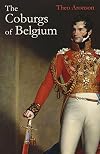
Theo Aronson was one of the best storytelling historians of the modern era and while The Coburgs of Belgium is not his best, and, having been published in 1967, somewhat outdated, it still paints a vivid portrait of the Belgian Royals, from their time as a minor German family to Leopold I as the founding King of the Belgians, through the unfortunate reign of perhaps one of the most evil men who lived, King Leopold II, to the Alberts, a further Leopold and even a Baudouin (I had to look that show more up to spell it).
The star of the book is Queen Elisabeth (King Albert I's consort), who the author seems to have a crush on. Reading about her eccentricities, I would too. show less
The star of the book is Queen Elisabeth (King Albert I's consort), who the author seems to have a crush on. Reading about her eccentricities, I would too. show less
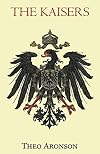
The title is deceptive as this history only covers the last 3 German rulers of Prussia before World War I. The author uses papers of the Hohenzollern rulers & their wives to weave the story of their lives as Prussia reaches its height of power before the last ruler of the dynasty is forced to abdicate in November of 1918. As the story unfolds, the reader is led through the transformation of Prussia into the Germany of the late 1800s as William I who has no wish to be emperor, his son show more Frederick III who unfortunately is dying of cancer when his father dies, succumbing months afterwards. The grandson, William II, proves the undoing of Bismarck & Germany with his silly rants & threatening posturing exposing a personality that had no concept of the impressions he made on others. As he throws his weight, he ends up unraveling much of Bismarck's careful diplomacy & destroying his own dynasty with his ineptitude & incompetence. His reactions to the chaos of World War I exposes the real power in Germany, the German General Staff that ran the war & forced him & his dynasty to leave Germany forever. The author does a good job in using the family papers to bring to light the personalities & the tensions between them & the realities of political power & the changing nature of their world. Bismarck here is noted but not the focus as it focuses on William I, Frederick III, & William II's views & actions toward Bismarck. show less
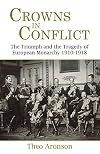
While reading Theo Aronson’s Crowns in Conflict: The Triumph and Tragedy of European Monarchy 1910-1918, an essentially biographic approach to World War I’s effect on Europe’s monarchies, I often thought of another book I read years ago. The Fall of Eagles, C.L.Suzberger’s account of he fall of the Habsburg, Hohenzollern, and Romanov dynasties, was on my bookshelves for decades -- until the Great Purge. I say decades because in checking I learned it was published exactly 40 years show more ago.
Aronson’s approach to this topic differs in two respects from Sulzberger’s. First, he takes a broader view, looking at roughly a dozen major and minor monarchs who sat on Europe’s thrones in the second decade of the 20th century. Second, as noted, Crowns in Conflict is biographic in nature, not surprising given that Aronson, who died in 2003, wrote nearly two dozen royal biographies. Rather than rehash how the Central and Entente Powers careened into war, the book looks at the history of each monarch and what the kings and queens did through the course of the war.
This approach works in large part because most of the royalty were related to each other. For example, Britain’s King George V, Tsar Nicholas II of Russia, Kaiser Wilhelm II of Germany and the crown princesses of Romania and Greece were all first cousins. The kings of Belgium and Bulgaria were also cousins of King George. Aronson uses these connections to not only explore the relationships among the monarchs but how each monarchy was led into the war and its ultimate effect on them.
Originally released in 1986 but with a new imprint two years ago, Crowns in Conflict also recognizes and explores the impact the advent of constitutional monarchy on each monarch’s power. The monarchs were no longer the only voice or decision-maker. “When set against the forces of nationalism and militarism, these dynastic relationships counted for nothing,” Aronson observes. Instead, the monarchs’ loyalty was now “country before caste.”
Britain, Germany (ruled by the Hohenzollerns), Austria-Hungary (the Habsburg empire) and Russia (the Romanovs) were the powerhouses and the last three bore the most responsibility for World War I. Thus, George V, Tsar Nicholas II, Kaiser Wilhelm II and Franz Joseph of Austria-Hungary are the main focus, Yet other monarchies, such as Belgium, Bulgaria, Greece, Italy and Serbia, also were buffeted by the war. Three such monarchs -- King Albert of Belgium, Victor Emmanuel of Italy and Ferdinand of Bulgaria -- also are looked at in detail.
Some may view Aronson’s approach as a bit superficial or perhaps even gossipy. I, though, found it an interesting version of an oft-told tale. Rather than simply being a diplomatic or military history, Crowns in Conflict uniquely personalizes World War I. It also helps place monarchies in a historic context.
In fact, the book may make the 1911 Encyclopædia Britannica somewhat prescient. Its entry for monarchy said that while “it survives as a political force, more or less strongly, in most European countries, ‘monarchists,’ in the strict sense of the word, are everywhere a small and dwindling minority.” What the encyclopedia couldn’t or didn’t predict was what would succeed these hereditary autocracies. “Dictatorships of one sort or another shortly were established in almost any country over which the monarchs had once reigned,” Aronson observes.
(Originally posted at A Progressive on the Prairie.) show less
Aronson’s approach to this topic differs in two respects from Sulzberger’s. First, he takes a broader view, looking at roughly a dozen major and minor monarchs who sat on Europe’s thrones in the second decade of the 20th century. Second, as noted, Crowns in Conflict is biographic in nature, not surprising given that Aronson, who died in 2003, wrote nearly two dozen royal biographies. Rather than rehash how the Central and Entente Powers careened into war, the book looks at the history of each monarch and what the kings and queens did through the course of the war.
This approach works in large part because most of the royalty were related to each other. For example, Britain’s King George V, Tsar Nicholas II of Russia, Kaiser Wilhelm II of Germany and the crown princesses of Romania and Greece were all first cousins. The kings of Belgium and Bulgaria were also cousins of King George. Aronson uses these connections to not only explore the relationships among the monarchs but how each monarchy was led into the war and its ultimate effect on them.
Originally released in 1986 but with a new imprint two years ago, Crowns in Conflict also recognizes and explores the impact the advent of constitutional monarchy on each monarch’s power. The monarchs were no longer the only voice or decision-maker. “When set against the forces of nationalism and militarism, these dynastic relationships counted for nothing,” Aronson observes. Instead, the monarchs’ loyalty was now “country before caste.”
Britain, Germany (ruled by the Hohenzollerns), Austria-Hungary (the Habsburg empire) and Russia (the Romanovs) were the powerhouses and the last three bore the most responsibility for World War I. Thus, George V, Tsar Nicholas II, Kaiser Wilhelm II and Franz Joseph of Austria-Hungary are the main focus, Yet other monarchies, such as Belgium, Bulgaria, Greece, Italy and Serbia, also were buffeted by the war. Three such monarchs -- King Albert of Belgium, Victor Emmanuel of Italy and Ferdinand of Bulgaria -- also are looked at in detail.
Some may view Aronson’s approach as a bit superficial or perhaps even gossipy. I, though, found it an interesting version of an oft-told tale. Rather than simply being a diplomatic or military history, Crowns in Conflict uniquely personalizes World War I. It also helps place monarchies in a historic context.
In fact, the book may make the 1911 Encyclopædia Britannica somewhat prescient. Its entry for monarchy said that while “it survives as a political force, more or less strongly, in most European countries, ‘monarchists,’ in the strict sense of the word, are everywhere a small and dwindling minority.” What the encyclopedia couldn’t or didn’t predict was what would succeed these hereditary autocracies. “Dictatorships of one sort or another shortly were established in almost any country over which the monarchs had once reigned,” Aronson observes.
(Originally posted at A Progressive on the Prairie.) show less
Lists
You May Also Like


Statistics
- Works
- 21
- Members
- 943
- Popularity
- #27,255
- Rating
- 3.7
- Reviews
- 18
- ISBNs
- 88
- Languages
- 2
- Favorited
- 2