

Lawrence Schimel
Author of PoMoSexuals: Challenging Assumptions About Gender and Sexuality
About the Author
Image credit: By Андрей Романенко - Own work, CC BY-SA 3.0, https://commons.wikimedia.org/w/index.php?curid=6203593
Series
Works by Lawrence Schimel
PoMoSexuals: Challenging Assumptions About Gender and Sexuality (1997) — Editor — 417 copies, 5 reviews
Switch Hitters: Lesbians Write Gay Male Erotica and Gay Men Write Lesbian Erotica (1996) — Editor — 90 copies, 2 reviews
Things Invisible to See: Gay and Lesbian Tales of Magic Realism (1998) — Editor; Contributor — 65 copies
Streets of Blood: Vampire Stories from New York City (1998) — Editor; Contributor — 13 copies, 1 review
La aventura de Cecilia y el dragon/ The Adventure of Cecilia And the Dragon (La Osa Menor/ the Little Bear) (Spanish Edition) (2005) 4 copies
La tarta de cumpleanos / The birthday cake (Tiny Tornado) (Spanish Edition) (2010) 4 copies, 1 review
De manhã bem cedo 2 copies
Babe And The Christmas Tree 2 copies
Não são horas de Brincar 2 copies
The Shoemaker and the Elvis 2 copies
TUDO IGUAL 2 copies
Phobiac [Short Story] 1 copy
Elephantoms [short story] 1 copy
The Well-Dressed Wolf 1 copy
Ties Of Love 1 copy
To Skein a Cat 1 copy
The Anvil of Her Pride 1 copy
Calvinism {short story} 1 copy
Heart of Stone {short story} 1 copy
Hemo Homo {short story} 1 copy
Black sounds {short story} 1 copy
Fag Hag {short story} 1 copy
The Penny Dragon 1 copy
The dancing Cowboy 1 copy
Assustando os unicórnios 1 copy
Stolen Affections 1 copy
Crow Feathers {short story} 1 copy
Associated Works
Bruce Coville's Book of Monsters II: More Tales to Give You the Creeps (1996) — Contributor — 125 copies
Prom Night: All Original Tales of That Special, Once-In-A-Lifetime Night as No One Has Ever Experienced It! (1999) — Contributor — 81 copies
The Chronicles of the Holy Grail: The Ultimate Quest from the Age of Arthurian Literature (1996) — Contributor — 79 copies, 1 review
Queer: A Collection of LGBTQ Writing from Ancient Times to Yesterday (2021) — Contributor, some editions — 65 copies
Bruce Coville's Book of Magic II: More Tales to Cast a Spell on You (1997) — Contributor — 50 copies
Different: A Story of the Spanish Civil War (Stories from Latin America) (2020) — Translator, some editions — 37 copies, 4 reviews
Piece by Piece: How I Built My Life (No Instructions Required) (2021) — Translator, some editions — 35 copies, 2 reviews
Monteverde: Memoirs of an Interstellar Linguist (2005) — Translator, some editions — 33 copies, 4 reviews
The Ghost of Carmen Miranda: and Other Spooky Gay and Lesbian Tales (1998) — Contributor — 26 copies
The WisCon Chronicles, Vol. 2: Provocative essays on feminism, race, revolution, and the future (2008) — Contributor — 25 copies, 1 review
Castles in Spain: 25 Years of Spanish Fantasy and Science Fiction (2016) — Translator, some editions — 22 copies
Terra Nova: An Anthology of Contemporary Spanish Science Fiction (2013) — Translator — 13 copies, 1 review
Multiverse: An International Anthology of Science Fiction Poetry (2018) — Contributor — 6 copies, 1 review
Cosas que puedo hacer yo solo — Contributor — 1 copy
Tagged
Common Knowledge
- Other names
- Laurents, David
- Birthdate
- 1971-10-16
- Gender
- male
- Education
- Yale University
Clarion West (1991) - Occupations
- writer
editor
translator - Organizations
- National Book Critics Circle
Academy of American Poets - Nationality
- USA
- Birthplace
- New York, New York, USA
- Places of residence
- Madrid, Spain
New York, New York, USA - Map Location
- Spain
Members
Reviews
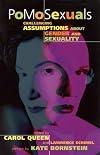
Could just as easily have been subtitled "In your societies disrupting your binaries." This is a fascinating collection of essays interrogating and exploring the experience of being queer in the late 20th century and the way language and political attitudes have created divides (and insiders and outsiders) in the LGBT&F community(ies). Written by a variety of writers falling all along the sexuality and gender continuums and coming at the topic from multiple angles, the book's unifying theme show more is a reaction against assumptions about sex, gender, and sexuality. Recommended. show less
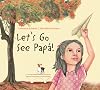
I liked this book because it was told from a child’s point of view. The little girl says, “We’d walk hand in hand, and I’d try to take steps as big as his” when she remembers how her and her papa would take walks on Sundays. The little girl asks her mother, “And Kika’s ticket?” assuming that their dog, Kika, would be traveling to America with them. Once her mother tells her that their dog is staying behind with her grandmother the little girl says, “my heart doesn’t know show more how to be away from Kika” describing her love for and reluctance to leave her dog. This deep love for a pet is common in many children who have pets.
I also liked this book because of the illustrations. The illustrations are bright and detailed and they depict the scenes of the story very well. On the page where the little girl is on the phone with her papa, the illustration shows her shocked and excited reaction to the news, using bright colors and a surprised facial expression from the little girl. The illustrations show the dogs sad, disappointed face on the page where the little girl finds out that the dog will be staying behind. The colors used are not as bright and the dogs head is looking at the floor, showing its disappointment. A few pages also included the little girls drawings as the illustrations. On the page where the little girl is thinking about the walks she used to take with her papa, the page shows illustrations that are obviously drawn by a child. The reader can tell this because they do not match the rest if the illustrations in the book and the lines are not at strait or detailed. This enhances the story because the text is the little girls memories and the illustration are the girls drawings of her and her father hand in hand.
I think that the main idea of this book is to describe the life of a family who is split apart due to poverty. The little girl's father is in America working to provide for his family and the little girl and her mother live with the grandmother while they are waiting for the father to send for them. This is the reality for many families living in poverty around the world. I think that this book is meant to describe and inform about this situation and the things that this family has to deal with, like being away from her father for a long period of time and having to leave family and friends behind. show less
I also liked this book because of the illustrations. The illustrations are bright and detailed and they depict the scenes of the story very well. On the page where the little girl is on the phone with her papa, the illustration shows her shocked and excited reaction to the news, using bright colors and a surprised facial expression from the little girl. The illustrations show the dogs sad, disappointed face on the page where the little girl finds out that the dog will be staying behind. The colors used are not as bright and the dogs head is looking at the floor, showing its disappointment. A few pages also included the little girls drawings as the illustrations. On the page where the little girl is thinking about the walks she used to take with her papa, the page shows illustrations that are obviously drawn by a child. The reader can tell this because they do not match the rest if the illustrations in the book and the lines are not at strait or detailed. This enhances the story because the text is the little girls memories and the illustration are the girls drawings of her and her father hand in hand.
I think that the main idea of this book is to describe the life of a family who is split apart due to poverty. The little girl's father is in America working to provide for his family and the little girl and her mother live with the grandmother while they are waiting for the father to send for them. This is the reality for many families living in poverty around the world. I think that this book is meant to describe and inform about this situation and the things that this family has to deal with, like being away from her father for a long period of time and having to leave family and friends behind. show less
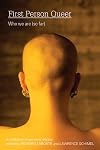
Kind of put off by the fact that two of the first three essays are by a cis woman who only dates queer men and calls herself a "queer heterosexual" (it's not like queer is a reclaimed slur or anything, nooo) and a cis woman who only dates trans and gender variant people and casually throws around a lot of slurs. I'm sticking this out for Ivan E. Coyote, but I'm not as excited about it as I was. :/
ETA: Okay, it turns out that those two essays were the most iffy in the book. Lots of show more interesting stuff about different relationship models from gay and queer guys. Some other good ones I'm not remembering. Ivan's was all the way at the end and worth the wait, but sad. Overall: decent, but not amazing. show less
ETA: Okay, it turns out that those two essays were the most iffy in the book. Lots of show more interesting stuff about different relationship models from gay and queer guys. Some other good ones I'm not remembering. Ivan's was all the way at the end and worth the wait, but sad. Overall: decent, but not amazing. show less
I was first told about this book spring of my sophomore year of college, but I haven't picked it up until now, and I'm sorry I waited so long. Though I can't really predict what my response would have been had I read it then; I believe it would've been very different, as my understanding of my gender identity and sexuality was in a different place at that time.
Pomosexuals is a collection of essays by various queers concerning what the concept of postmodern sexuality means to them. There's show more not a lot of theory, it's mostly personal anecdotes. Notable contributers include Kate Bornstein, Dorothy Allison, and Pat Califia (all three of whom I highly, highly recommend reading). The book is broken up into seven sections: "Beyond Definitions;" "The Politic Identity: Questioning Reputations;" "Don't Fence Me In: Bi-Pan-/Omni-Sexuals;" "Through a Glass Queerly: Our Boys, Ourselves;" "Hermaphrodykes: Girls Will Be Boys, Dykes Will Be Fags;" "Gender Pending: Denying Gender Imperatives;" and "Tectonic Shifts: Crossing Cultures, Mapping Desires." My favorite sections were definitely "The Politic Identity: Questioning Reputations" and "Hermaphrodykes: Girls Will Be Boys." To oversimplify, all the essays, to various extents, are about being queer and not fitting in with the mainstream queer community in America.
I loved this book. I'm a huge gender/sex kick lately. If I had read Pomosexuals before I read Genderqueer, it would have had a greater impact. The two books have some similar ideas, and with both of them I did the whole "gasp!omfgthisISme!" thing. (A review of Genderqueer is forthcoming, by the way.) If you're going to read Pomosexuals though, I think you should be comfortable with the idea of gender as a social/cultural construction first. After a few more of these (Genderqueer, The Judith Butler Reader, Cunt, Public Sex) I think I'll sit down and actually write an entry about my own gender and sexual identity.
I'd also like to note that I'm proud of myself for reaching a point in my reading career in which I can process different ideas, apply them to my own experience, use them to challenge my beliefs, take in contradictory theories and view them on equal levels, use them as I see fit, accept or reject them after thoughtful analysis. show less
Pomosexuals is a collection of essays by various queers concerning what the concept of postmodern sexuality means to them. There's show more not a lot of theory, it's mostly personal anecdotes. Notable contributers include Kate Bornstein, Dorothy Allison, and Pat Califia (all three of whom I highly, highly recommend reading). The book is broken up into seven sections: "Beyond Definitions;" "The Politic Identity: Questioning Reputations;" "Don't Fence Me In: Bi-Pan-/Omni-Sexuals;" "Through a Glass Queerly: Our Boys, Ourselves;" "Hermaphrodykes: Girls Will Be Boys, Dykes Will Be Fags;" "Gender Pending: Denying Gender Imperatives;" and "Tectonic Shifts: Crossing Cultures, Mapping Desires." My favorite sections were definitely "The Politic Identity: Questioning Reputations" and "Hermaphrodykes: Girls Will Be Boys." To oversimplify, all the essays, to various extents, are about being queer and not fitting in with the mainstream queer community in America.
I loved this book. I'm a huge gender/sex kick lately. If I had read Pomosexuals before I read Genderqueer, it would have had a greater impact. The two books have some similar ideas, and with both of them I did the whole "gasp!omfgthisISme!" thing. (A review of Genderqueer is forthcoming, by the way.) If you're going to read Pomosexuals though, I think you should be comfortable with the idea of gender as a social/cultural construction first. After a few more of these (Genderqueer, The Judith Butler Reader, Cunt, Public Sex) I think I'll sit down and actually write an entry about my own gender and sexual identity.
I'd also like to note that I'm proud of myself for reaching a point in my reading career in which I can process different ideas, apply them to my own experience, use them to challenge my beliefs, take in contradictory theories and view them on equal levels, use them as I see fit, accept or reject them after thoughtful analysis. show less
Lists
Awards

PoMoSexuals: Challenging Assumptions About Gender and Sexuality (Nominee – Anthology/Nonfiction – 1997)


You May Also Like


Associated Authors
Statistics
- Works
- 137
- Also by
- 116
- Members
- 2,283
- Popularity
- #11,242
- Rating
- 3.6
- Reviews
- 54
- ISBNs
- 174
- Languages
- 14
- Favorited
- 1
