
Charlotte Pomerantz (1930–2022)
Author of The Outside Dog
About the Author
Works by Charlotte Pomerantz
Associated Works
Humpty Dumpty's Magazine for Little Children #244, January 1977 — Contributor — 1 copy
Tagged
Common Knowledge
- Legal name
- Pomerantz, Charlotte Inez
- Birthdate
- 1930-07-24
- Date of death
- 2022-07-24
- Gender
- female
- Education
- Sarah Lawrence College
- Occupations
- book editor
children's author - Relationships
- Marzani, Carl (spouse)
- Nationality
- USA
- Birthplace
- Brooklyn, New York, USA
- Places of residence
- Brooklyn, New York, USA
New Rochelle, New York, USA - Place of death
- Charlottesville, Virginia, USA
- Associated Place (for map)
- New York, USA
Members
Reviews
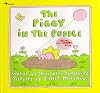
A fun James Marshall-illustrated rhythmic, rhyming, repetitive tale. Might be interesting with Arnold Lobel's Small Pig to explore the full realm of pig behavior; in this one, a family of anthropomorphized pigs has differing opinions on the value of muddiness, though they all come around in the end.
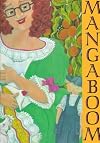
The beautiful giantess who speaks Spanish and English and likes fishing and cartwheels and skinny-dipping makes a friend of a boy (who she staunchly defends as not a little boy, because he's taller than all his friends, even though he only comes up to her ankle). She rejects unsuitable suitors, and finds a suitable one, who likes her even though she's taller than him, and takes her fishing. Lush pictures, a satisfactory plot, works in the importance of politeness, speaking multiple show more languages, and literacy, my daughter and I both love it. And it's fun to say "Mangaboom". show less
The Piggy in the Puddle by Charlotte Pomerantz is a wonderful, entertaining children’s book. I enjoyed reading it for many reasons; the main reason is for the rhyming throughout it. The rhyming makes it a tongue twister to read aloud, for example, “mud is squishy, mud is squashy, mud is oh so squishy-squashy”, and that makes it amusing to read. I also enjoyed this book for the illustrations in it, which are quite entertaining, yet simple. Each illustration only has the colors yellow, show more green, brown, and pink in it, and the setting stays the same the entire time. I also thought it was very humorous that the pigs were dressed in clothing, while still playing in the nasty mud. I am not sure of the true main idea of this book, but one could be that even though it may not seem the best idea to do something, it is all right to allow yourself to have fun and do something that you would not normally do. show less
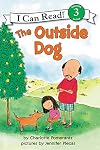
I like this book for a few reasons. In the beginning there is a contents section as well as a "glossary." It says "Spanish words in the story," and lists different Spanish words like Dona (madame), vete (scram), que cosa (my goodness), and lo vi (I saw him). I think this is very cool because they are not just basic words, some are a little more complex. I also like that this is in the beginning because readers will know what the words mean before they begin reading the story. Another reason show more I liked the book was the change in the Grandfather's emotions. In the beginning, Grandfather says, "I told you not to pet the dogs. They have fleas and ticks and who knows what," but then he lets Marisol pet the dog and that is the start to the dog becoming their own. Slowly and slowly Grandfather begins to accept the dog, Pancho, by letting Marisol buy him a flea collar, dog food, and giving him leftover food.
The big message/idea of this book is to never judge a book by its cover. Grandfather was quick to make assumptions in the beginning by generalizing that "all dogs have ticks and fleas and whatever else," and when Marisol bought him the collar he said, "he won't like having a collar on" and after she put it on he says, "that's odd, I didn't think he would like it." He made so many assumptions in the beginning without giving Pancho a true shot, but his love for Marisol and her happiness helped changed his view and he grew to love the dog because at the end Pancho goes missing and Grandfather says, "I'm up because I was looking for Pancho." show less
The big message/idea of this book is to never judge a book by its cover. Grandfather was quick to make assumptions in the beginning by generalizing that "all dogs have ticks and fleas and whatever else," and when Marisol bought him the collar he said, "he won't like having a collar on" and after she put it on he says, "that's odd, I didn't think he would like it." He made so many assumptions in the beginning without giving Pancho a true shot, but his love for Marisol and her happiness helped changed his view and he grew to love the dog because at the end Pancho goes missing and Grandfather says, "I'm up because I was looking for Pancho." show less
Lists
Awards


You May Also Like


Associated Authors
Statistics
- Works
- 39
- Also by
- 3
- Members
- 2,736
- Popularity
- #9,390
- Rating
- 4.1
- Reviews
- 100
- ISBNs
- 123
- Favorited
- 2