

Sybil Brinton
Author of Old Friends and New Fancies: An Imaginary Sequel to the Novels of Jane Austen
About the Author
Works by Sybil Brinton
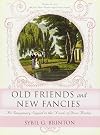
Old Friends and New Fancies: An Imaginary Sequel to the Novels of Jane Austen (1914) 314 copies, 13 reviews
Tagged
Common Knowledge
- Canonical name
- Brinton, Sybil
- Legal name
- Brinton, Sybil G.
- Birthdate
- 1874
- Date of death
- 20th century
- Gender
- female
- Birthplace
- Worcester
- Associated Place (for map)
- Worcester
Members
Reviews
Okay, so let it be said that I am generally against posthumous sequels and never more so than when it comes to Jane Austen. I like an honest homage (like Hale's Austenland, which was hilarious), but those overblown romance novels that have recently been capitalizing on the good name of Darcy annoy the crap out of me, and the past several years of increasing Austen-trendiness have only increased the number and decreased the quality of such bodice-rippers-in-disguise (not that there is show more anything wrong with a good bodice-ripper -- it just bothers me when they pretend to be anything like Austen and then those lofty literary aspirations turn out to be mere marketing). When it comes to Brinton's sequel, however, I made a conscious exception for particular reasons: first, because this is not a recent sequel -- it was published in 1913, the centenary of the publication of Pride and Prejudice and was recently reissued; second, related to earlier statements, is that this novel actually attempts to write in the style and within the parameters of Jane Austen... it actually tries to be a sequel in her spirit, rather than a reader's wet dream; and finally, that this novel doesn't just follow the marriage of Elizabeth and Fitzwilliam Darcy -- the chosen fantasy premise of most nouveau-Austenites -- but instead takes characters from all six of Austen's completed novels and interweaves them into a new story of matchmaking and -breaking.
Of course, this doesn't mean that Brinton achieves the shimmering brilliance of Austen's style -- many moments in the text seem too forced, rather than simply echoing the natural formality of the era, though others are bright and enjoyable, especially once things get rolling -- but the fact that she gives it a genuine try enables the reader to gloss over the moments where she falls short. Also apparent is Brinton's great and sincere love for Austen's work and her intent to do justice to the author who has inspired her; as a reader and a fellow fan, I appreciate her appreciation, as well as her authenticity.
Along with the style, the action of the story offers much to satisfy an Austen fan. Some of the lesser characters of whom we wanted to know more in the original texts are expanded here. Some of the character changes are a little unlikely and may jar with modern audiences used to Austen film adaptations -- Mary Crawford, for example, is a great deal more sympathetic here than I think she ever could have been within Austen's world -- but generally the characters consistently reflect the attitudes and attributes with which their original creator endowed them. Those who are matched, even across previous textual borders, fit well and many will make the familiar reader smile with some satisfaction.
Overall, I truly enjoyed the book, even with its limitations and even as a posthumous sequel. Brinton, from her now distant 20th century milieu, reaches out with a measure of humility and a pleasantly frank sense of joy to offer up this continuation of an experience she enjoyed so well herself. I can appreciate her motivations and their result equally well.
One addendum: I would be curious to know how the novel comes across to those who have not read Austen extensively -- there were times as I read that I got distracted thinking back to Austen's original novels, trying to recall a detail or action, and it was a little bit of a struggle to pull myself back to the story at hand. Would those who were not huge fans of Austen have as difficult a time? Would the novel stand on its own without the context of the originals? The world may never know, since those who have not read Austen are utterly unlikely to pick up this book. :) show less
Of course, this doesn't mean that Brinton achieves the shimmering brilliance of Austen's style -- many moments in the text seem too forced, rather than simply echoing the natural formality of the era, though others are bright and enjoyable, especially once things get rolling -- but the fact that she gives it a genuine try enables the reader to gloss over the moments where she falls short. Also apparent is Brinton's great and sincere love for Austen's work and her intent to do justice to the author who has inspired her; as a reader and a fellow fan, I appreciate her appreciation, as well as her authenticity.
Along with the style, the action of the story offers much to satisfy an Austen fan. Some of the lesser characters of whom we wanted to know more in the original texts are expanded here. Some of the character changes are a little unlikely and may jar with modern audiences used to Austen film adaptations -- Mary Crawford, for example, is a great deal more sympathetic here than I think she ever could have been within Austen's world -- but generally the characters consistently reflect the attitudes and attributes with which their original creator endowed them. Those who are matched, even across previous textual borders, fit well and many will make the familiar reader smile with some satisfaction.
Overall, I truly enjoyed the book, even with its limitations and even as a posthumous sequel. Brinton, from her now distant 20th century milieu, reaches out with a measure of humility and a pleasantly frank sense of joy to offer up this continuation of an experience she enjoyed so well herself. I can appreciate her motivations and their result equally well.
One addendum: I would be curious to know how the novel comes across to those who have not read Austen extensively -- there were times as I read that I got distracted thinking back to Austen's original novels, trying to recall a detail or action, and it was a little bit of a struggle to pull myself back to the story at hand. Would those who were not huge fans of Austen have as difficult a time? Would the novel stand on its own without the context of the originals? The world may never know, since those who have not read Austen are utterly unlikely to pick up this book. :) show less
After ploughing through a handful of Jane Austen spin-offs, good and bad, how could I possibly resist 'the first Jane Austen sequel ever created'? Published in 1913, obscure English author Sybil G. Brinton gathered together a select company of old friends and familiar faces from Jane Austen's novels, from the Darcys and Bingleys of Pride and Prejudice to Mary Crawford and William Price of Mansfield Park and the Wentworths of Persuasion, for what is partly a satisfying if obvious update on show more the original stories, but also a faithful and well-written romance in its own right.
Set three years after the happy conclusion of Pride and Prejudice, Brinton's sequel mainly concerns the Darcy family, including Lady Catherine, Colonel Fitzwilliam and Georgiana, and follows them from Bath to London to Pemberley, where they meet a host of secondary characters from the other novels. Respectful of Jane Austen's creations, Brinton adds little to the lives of the characters, beyond what Austen herself suggested in family letters and the obvious natural developments that occur after marriage - the Darcys have two children, barely mentioned, and the Bingleys have at least two sons, referred to near the end of the book.
Wherein lies my personal quibble with this sequel, which is otherwise a perfect complement to Austen's limited body of works. Parallel novels and pastiches of classic novels serve one basic purpose - to indulge the imagination of devoted readers by supplying fresh insight into beloved characters, whether by answering the tempting question of 'what happens next?', or revisiting old ground from a different perspective. I can appreciate both requirements, if the sequel is well-written, which this is. Yet no author could successfully fit all of the characters from six different novels, set at different times, into one seamless continuation, without losing either clarity or sympathy. Sybil Brinton does not try, and the result is a purely subjective interest in what I surmise to be her own favourite characters - Darcy and Elizabeth, the bashful Colonel and gentle Georgiana, and of course the ever-hopeful Kitty Bennet, next in line to be paired off; a nervous and repentant Mary Crawford from Mansfield Park, with Fanny's honourable younger brother William Price; and a round-up of the dullest supporting cast from Mansfield Park, Northanger Abbey, Persusasion, and Sense and Sensibility. I was waiting with anticipation to read how my favourite families might have fared, but was sadly disappointed. Mr Knightley is referred to as 'grave', 'terrifying' and 'alarming', and only gets to speak in the next to last chapter, while his wife Emma has grown into a selfish Mrs Jennings figure; whereas Marianne Dashwood, seemingly not as well liked by Brinton as Elinor, is only mentioned in passing, and the poor Colonel has 'passed' altogether! Yet dependable and dutiful Anne Elliot-Wentworth of Persuasion has her praises sung from the rooftops, ridiculous Mrs Jennings of Sense and Sensibility is somehow more important to Elinor than her beloved sister, and all the women have become staid and sensible matrons, matchmaking their younger relatives. I haven't even read Mansfield Park and Persuasion yet, which is my own fault, but I wasn't interested in half of what was going on, and didn't care for the featured characters.
If, like Sybil Brinton, slow and steady wins the day for you, and Colonel Fitzwilliam is not just Darcy's less attractive cousin, or Georgiana his sheltered sister, then I heartily recommend Old Friends and New Fancies. Writing only one hundred years after Austen, and just before the social upheaval of the First World War, Brinton effortlessly captures the style and substance of the original novels. Both wordy and witty ('Nowadays it is the fashion to admire loudest what one understands least'), she understands perfectly the flawless elegance and acute observations of the writing that inspired her, and also adopts a few of Austen's dramatic devices - misdirected attentions, second thoughts, and even a sickbed reunion - which will delight Austen's fans. A livelier cross section of characters would have entertained me more, but perhaps I shall return to Brinton after reading Mansfield Park, and alter my opinion! show less
Set three years after the happy conclusion of Pride and Prejudice, Brinton's sequel mainly concerns the Darcy family, including Lady Catherine, Colonel Fitzwilliam and Georgiana, and follows them from Bath to London to Pemberley, where they meet a host of secondary characters from the other novels. Respectful of Jane Austen's creations, Brinton adds little to the lives of the characters, beyond what Austen herself suggested in family letters and the obvious natural developments that occur after marriage - the Darcys have two children, barely mentioned, and the Bingleys have at least two sons, referred to near the end of the book.
Wherein lies my personal quibble with this sequel, which is otherwise a perfect complement to Austen's limited body of works. Parallel novels and pastiches of classic novels serve one basic purpose - to indulge the imagination of devoted readers by supplying fresh insight into beloved characters, whether by answering the tempting question of 'what happens next?', or revisiting old ground from a different perspective. I can appreciate both requirements, if the sequel is well-written, which this is. Yet no author could successfully fit all of the characters from six different novels, set at different times, into one seamless continuation, without losing either clarity or sympathy. Sybil Brinton does not try, and the result is a purely subjective interest in what I surmise to be her own favourite characters - Darcy and Elizabeth, the bashful Colonel and gentle Georgiana, and of course the ever-hopeful Kitty Bennet, next in line to be paired off; a nervous and repentant Mary Crawford from Mansfield Park, with Fanny's honourable younger brother William Price; and a round-up of the dullest supporting cast from Mansfield Park, Northanger Abbey, Persusasion, and Sense and Sensibility. I was waiting with anticipation to read how my favourite families might have fared, but was sadly disappointed. Mr Knightley is referred to as 'grave', 'terrifying' and 'alarming', and only gets to speak in the next to last chapter, while his wife Emma has grown into a selfish Mrs Jennings figure; whereas Marianne Dashwood, seemingly not as well liked by Brinton as Elinor, is only mentioned in passing, and the poor Colonel has 'passed' altogether! Yet dependable and dutiful Anne Elliot-Wentworth of Persuasion has her praises sung from the rooftops, ridiculous Mrs Jennings of Sense and Sensibility is somehow more important to Elinor than her beloved sister, and all the women have become staid and sensible matrons, matchmaking their younger relatives. I haven't even read Mansfield Park and Persuasion yet, which is my own fault, but I wasn't interested in half of what was going on, and didn't care for the featured characters.
If, like Sybil Brinton, slow and steady wins the day for you, and Colonel Fitzwilliam is not just Darcy's less attractive cousin, or Georgiana his sheltered sister, then I heartily recommend Old Friends and New Fancies. Writing only one hundred years after Austen, and just before the social upheaval of the First World War, Brinton effortlessly captures the style and substance of the original novels. Both wordy and witty ('Nowadays it is the fashion to admire loudest what one understands least'), she understands perfectly the flawless elegance and acute observations of the writing that inspired her, and also adopts a few of Austen's dramatic devices - misdirected attentions, second thoughts, and even a sickbed reunion - which will delight Austen's fans. A livelier cross section of characters would have entertained me more, but perhaps I shall return to Brinton after reading Mansfield Park, and alter my opinion! show less
I admit it: I'm a purist. I view continuations, additions, and fanfictions with a skeptical eye; very few ever approach the brilliance of the original. I suppose it is natural to want the stories we love to continue, and because I've felt that desire myself I can forgive those who pick up the pen themselves to see to it. Before I say anything else, I'll freely confess my own inability do it creditably, and so I applaud Sybil Brinton's courage. She did not fail, though I would say the show more achievement is mixed.
Old Friends And New Fancies, published in 1913, is the first attempt at a sequel to Jane Austen's body of work — and probably one of the most ambitious to date. In it Brinton brings together the main characters from all six of Austen's novels, adding a few of her own here and there. The story focuses on several key characters, whose adventures and misadventures in love are explored until we reach the happy ending requisite to this type of work.
Honestly, I'm still trying to decide what to think of it. It was just such a strange experience, to have Austen's various worlds collide in one enormous story. It is interesting which characters are portrayed favorably and which aren't. Emma, for instance, is still fumbling around trying to match up the wrong people and is entirely oblivious to what's really happening — not a sympathetic character at all! While quasi-villains like Mary Crawford are suddenly upgraded to full-fledged heroine status, romantic misunderstandings and all. Still trying to digest that one... it was hard to accept her apparent transformation.
There is a sense of crammedness, of Brinton trying to make room for everybody in her recreation. Austen peopled her novels with such a varied cast of wonderful characters that it would be impossible to include them all and give each sufficient stage time. It's fairly obvious who Brinton's favorites are.
Every now and then the language is reminiscent of Austen, and in a few places it is particularly good. Overall there are no dreadful blunders on that score. But in other places I noticed the elegance of Austen's prose simply isn't there, and there is little that is really memorable in the phrasing, insights, or relational dynamics.
I do appreciate Brinton's note at the beginning, part of which states:
The difficulties, as well as the presumption, of such an undertaking, are alike evident; but the fascination of the subject must be our apology to those who, like ourselves, "owe to Jane Austen of the happiest hours of their lives."
With an apology like that, how can we be angry at Brinton? She didn't include anything inappropriate to Austen's period, characters, and moral tone, which is not such a given as one might think in books that continue the stories of Austen's characters. Indeed, most of the stuff being churned out nowadays with the "Austen-sequel" label on it is nothing more than soft-core porn, Regency style. Bleccchh.
I think I'll need to read this again before I can form a definitive opinion. It is only at great cost that purists unbend; I am sure other purists in the room will comprehend the concession. A brave attempt, Ms. Brinton, and one that is not altogether unsuccessful as an amusing diversion for Austen's many devotees. show less
Old Friends And New Fancies, published in 1913, is the first attempt at a sequel to Jane Austen's body of work — and probably one of the most ambitious to date. In it Brinton brings together the main characters from all six of Austen's novels, adding a few of her own here and there. The story focuses on several key characters, whose adventures and misadventures in love are explored until we reach the happy ending requisite to this type of work.
Honestly, I'm still trying to decide what to think of it. It was just such a strange experience, to have Austen's various worlds collide in one enormous story. It is interesting which characters are portrayed favorably and which aren't. Emma, for instance, is still fumbling around trying to match up the wrong people and is entirely oblivious to what's really happening — not a sympathetic character at all! While quasi-villains like Mary Crawford are suddenly upgraded to full-fledged heroine status, romantic misunderstandings and all. Still trying to digest that one... it was hard to accept her apparent transformation.
There is a sense of crammedness, of Brinton trying to make room for everybody in her recreation. Austen peopled her novels with such a varied cast of wonderful characters that it would be impossible to include them all and give each sufficient stage time. It's fairly obvious who Brinton's favorites are.
Every now and then the language is reminiscent of Austen, and in a few places it is particularly good. Overall there are no dreadful blunders on that score. But in other places I noticed the elegance of Austen's prose simply isn't there, and there is little that is really memorable in the phrasing, insights, or relational dynamics.
I do appreciate Brinton's note at the beginning, part of which states:
The difficulties, as well as the presumption, of such an undertaking, are alike evident; but the fascination of the subject must be our apology to those who, like ourselves, "owe to Jane Austen of the happiest hours of their lives."
With an apology like that, how can we be angry at Brinton? She didn't include anything inappropriate to Austen's period, characters, and moral tone, which is not such a given as one might think in books that continue the stories of Austen's characters. Indeed, most of the stuff being churned out nowadays with the "Austen-sequel" label on it is nothing more than soft-core porn, Regency style. Bleccchh.
I think I'll need to read this again before I can form a definitive opinion. It is only at great cost that purists unbend; I am sure other purists in the room will comprehend the concession. A brave attempt, Ms. Brinton, and one that is not altogether unsuccessful as an amusing diversion for Austen's many devotees. show less
As a complete sucker for all things Jane Austen, need I say that the idea of reading the very first "sequel" to Pride and Prejudice was an appealing one to me? Even better than that was dicovering that this is more than just a Pride and Prejudice sequel. As its newly minted subtitle claims, it is a sequel to all the novels. Pulling many favorite characters from all of Austen's best-loved works, Brinton has created a fun romp through Regency England in the company of Austen's secondary show more characters.
This is not focused on the main characters of Aussten's books. After all, she wrapped their stories up fairly neatly. Instead, the focus is on Georgiana Darcy and Colonel Fitzwilliam, Kitty Bennett and Mary Crawford, Tom Bertram and William Price, and others. While some purists shudder at the thought of introducing these characters to each other, Regency society was fairly small and so people of the same social standing could be expected to have connections to each other, making this intermingling of Austen's creations feasible.
The plot, while not as witty and sharp as Austen's herself, is quite entertaining, opening with Georgiana and Colonel Fitzwilliam breaking their engagement to each other to the stern annoyance of Lady Catherine. Both will look for suitable partners throughout the rest of the book. Each will have to overcome societal obstacles as well as the difficulties of their own hearts and personalities in order to be happy.
As with most Austen sequels, a reader who is not familiar with the backstory and characters from the originals will be disappointed with the novel. But Austen fans who are willing to allow the mingling of their best-loved minor characters will likely enjoy this short and quick read. show less
This is not focused on the main characters of Aussten's books. After all, she wrapped their stories up fairly neatly. Instead, the focus is on Georgiana Darcy and Colonel Fitzwilliam, Kitty Bennett and Mary Crawford, Tom Bertram and William Price, and others. While some purists shudder at the thought of introducing these characters to each other, Regency society was fairly small and so people of the same social standing could be expected to have connections to each other, making this intermingling of Austen's creations feasible.
The plot, while not as witty and sharp as Austen's herself, is quite entertaining, opening with Georgiana and Colonel Fitzwilliam breaking their engagement to each other to the stern annoyance of Lady Catherine. Both will look for suitable partners throughout the rest of the book. Each will have to overcome societal obstacles as well as the difficulties of their own hearts and personalities in order to be happy.
As with most Austen sequels, a reader who is not familiar with the backstory and characters from the originals will be disappointed with the novel. But Austen fans who are willing to allow the mingling of their best-loved minor characters will likely enjoy this short and quick read. show less
Lists
Austenland (1)
You May Also Like


Statistics
- Works
- 2
- Members
- 315
- Popularity
- #74,964
- Rating
- 3.5
- Reviews
- 13
- ISBNs
- 14
- Languages
- 2