

Ödön von Horváth (1901–1938)
Author of Youth Without God
About the Author
Image credit: Photograph © ÖNB/Wien
Works by Ödön von Horváth
Gesammelte Werke : Kommentierte Werkausgabe in 14 Bänden in Kassette : Band 13 : Jugend ohne Gott (2001) 83 copies, 3 reviews
Suhrkamp BasisBibliothek : Horváth : Geschichten aus dem Wiener Wald (2001) — Text — 40 copies, 1 review
Geschichten aus dem Wiener Wald : Volksstück : Textausgabe mit editorischer Notiz, Anmerkungen/Worterklärungen, Literaturhinweisen und Nachwort (2009) 13 copies
Lesen und Üben : Ödön von Horvath : Jugend ohne Gott [book + sound recording] (2008) — Writer — 6 copies
Die Romane. ( Weißes Programm). Der ewige Spießer. Jugend ohne Gott. Ein Kind unserer Zeit (1983) 3 copies
Jeugd zonder God 2 copies
Le Jugement dernier (Ödön von Horváth - mise en scène André Engel - 2004) : Les Fiches Spectacle (2016) 2 copies
Youth Without God (Neversink) 2 copies
Rund um den Kongreß (German Edition) 2 copies
Légendes de la forêt viennoise (Ödön von Horváth - mise en scène Christoph Marthaler-2007) : Les Fiches Spectacle (2016) 2 copies
[unidentified works] 2 copies
Sämtliche Werke von Ödön von Horváth 2 copies
Unvollendet ... 1 copy
EinFach Deutsch : Textausgaben : Ödön von Horváth : Geschichten aus dem Wiener Wald (2009) — Text — 1 copy
Teatro popolare 1 copy
Dijete našeg vremena 1 copy
Historias de los Bosques de Viena; El divorcio de Fígaro (Letras Universales) (Spanish Edition) (2008) 1 copy
Ein Wochenendspiel 1 copy
Wiener Ausgabe sämtlicher Werke : historisch-kritische Edition Bd. 11 Bd. 2 Ein Sklavenball - Pompeji [...] (2015) 1 copy
Hamburger Lesehefte plus Königs Materialien : Ödön von Horváth : Jugend ohne Gott (2023) — Text — 1 copy
Jugend ohne Gott (Vollständige Ausgabe) Ein Krimi und Gesellschaftsroman (Zwischenkriegszeit) (2014) 1 copy
Associated Works
Die Geschichtenerzähler: Neues und Unbekanntes von Allende bis Zafón (suhrkamp taschenbuch) (2008) — Contributor — 5 copies
Spectaculum Band 13: Beckett, Bond, Fleißer, Hacks, Handke, Horváth, Michelsen (1951) — Contributor — 4 copies
Tagged
Common Knowledge
- Canonical name
- Horváth, Ödön von
- Legal name
- Horváth, Edmund Josef von
- Birthdate
- 1901-12-09
- Date of death
- 1938-06-01
- Gender
- male
- Occupations
- novelist
playwright - Awards and honors
- Kleist Prize (1931)
- Nationality
- Austria-Hungary
- Birthplace
- Fiume, Austria-Hungary
- Places of residence
- Belgrade, Serbia
Budapest, Hungary
Bratislava, Slovakia
Vienna, Austria
Munich, Germany
Berlin, Germany (show all 8)
Salzburg, Austria
Murnau, Germany - Place of death
- Paris, France
- Burial location
- Vienna, Austria
Members
Reviews

Punctuated by the ironic use of Strauß waltzes and “idyllic” excursions to rural taverns and the beautiful blue Danube, this dark comedy, the piece that marked Horváth’s breakthrough as a playwright in 1931, skewers the morality of ordinary Viennese life. Naive Marianne from the toyshop falls for the glamour of racecourse wheeler-dealer Alfred and tries to steer him into a respectable life, destroying both of them, whilst Alfred’s former girlfriend, tobacconist Valerie, puts her show more energy into seducing the young Nazi law student Erich, who also turns out to be in it for what he can got show less

This short novel, written in 1937 and published in Amsterdam because Horváth's work was banned in Germany, is a kind of Lord of the flies for the Third Reich: a decent, liberal schoolteacher is disgusted with the amorality and political opportunism of the teenage boys he teaches in 1930s Germany. He is initially too fearful of consequences to do anything about it, but is ultimately pushed into taking a moral stand when a student is killed on a school trip and it looks as though there will show more be a miscarriage of justice.
Horváth's scorn for the Nazis (the "wealthy plebeians") and the capitalists who support them is unmistakable, but what is perhaps more surprising is the way the initially agnostic, liberal narrator starts to see the moral element that is missing from his world in terms of "God," with the help of a subversive priest. A short piece, with quite a powerful punch. show less
Horváth's scorn for the Nazis (the "wealthy plebeians") and the capitalists who support them is unmistakable, but what is perhaps more surprising is the way the initially agnostic, liberal narrator starts to see the moral element that is missing from his world in terms of "God," with the help of a subversive priest. A short piece, with quite a powerful punch. show less
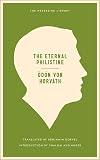
A brewery here in the U.S. advertizes its products as if they were deliberately offensive: "It's not too strong, you're too weak" and that kind of thing. That is how this book should advertize itself. Essentially, you are too soppy and pathetic to deal with Horvath's rage, and too conventional and boring to accept the bizarre structure he uses to convey said rage. Because, my friend, you are a philistine.
"The philistine," he tells us, is "an egoist who suffers from hypochondria, and this is show more why he seeks, like a coward, to fit in wherever he goes and to distort every new formulation of the idea by calling it his own." That's not the definition I would have made, but anyway, the important point is that "the old species of philistine no longer even deserves to be ridiculed, and whoever is still mocking him at present is at best a philistine of the future."
And we see how the philistine comports him or herself very clearly in this book, written around 1929--and somewhat chillingly showing how 'ordinary' people will do whatever the hell they (we) think will help them get ahead, not excluding, for instance, nazism. The old philistine believes in ideals like Art and the League of Nations and Universal Humanity, despite never having understood anything he's read. The new philistine believes only in his own wallet and penis, sees no need to justify his revolting actions, and never bothered to read anything at all.
That takes us through the first part of the novel, a train trip through a Europe turning fascist. In the second part, we get a female philistine; but while the gentlemen of the first part chose their philistinism, our Fraulein has it forced on her.
So, if you've ever wished that Evelyn Waugh had been a middle-european novelist, who was more sympathetic to the proletariat and more skeptical of the rich, you should probably read this book.
As a special bonus, Shalom Auslander's introduction is so perfect that I immediately went out to buy his novel. But my bookstore didn't have a copy. Hence making his introduction, about the speed with which funny books go out of print, even more perfect. No matter--they had plenty of Jonathan Franzen. Deep. show less
"The philistine," he tells us, is "an egoist who suffers from hypochondria, and this is show more why he seeks, like a coward, to fit in wherever he goes and to distort every new formulation of the idea by calling it his own." That's not the definition I would have made, but anyway, the important point is that "the old species of philistine no longer even deserves to be ridiculed, and whoever is still mocking him at present is at best a philistine of the future."
And we see how the philistine comports him or herself very clearly in this book, written around 1929--and somewhat chillingly showing how 'ordinary' people will do whatever the hell they (we) think will help them get ahead, not excluding, for instance, nazism. The old philistine believes in ideals like Art and the League of Nations and Universal Humanity, despite never having understood anything he's read. The new philistine believes only in his own wallet and penis, sees no need to justify his revolting actions, and never bothered to read anything at all.
That takes us through the first part of the novel, a train trip through a Europe turning fascist. In the second part, we get a female philistine; but while the gentlemen of the first part chose their philistinism, our Fraulein has it forced on her.
So, if you've ever wished that Evelyn Waugh had been a middle-european novelist, who was more sympathetic to the proletariat and more skeptical of the rich, you should probably read this book.
As a special bonus, Shalom Auslander's introduction is so perfect that I immediately went out to buy his novel. But my bookstore didn't have a copy. Hence making his introduction, about the speed with which funny books go out of print, even more perfect. No matter--they had plenty of Jonathan Franzen. Deep. show less
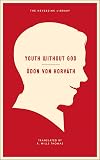
I had never heard of Horvath before this year, and now this is the second book I've read by him? I'm totally blaming Neversink Library.
So yes, this is another selection from Neversink LIbrary at Melville House Books. I tell you, their website is dangerous. Six of the books I've read this year were published by them, five of which I bought (one was from the library), and I have at least one more on my shelves and at least two on back-order. (I'm afraid if I check on the back-orders, I'll end show more up buying five more books, so it's best just to wait.)
Okay, so I loved this one. Much more accessible than The Eternal Philistine, this is a dark, dark story, even without the seedy satire. Youth WIthout God reads more like classic morality tales from Kafka and Camus. It is all the more impressive for its depiction of the heartlessness of the rising Nazi state when one is reminded that it was written before either Germany's annexation of Austria or its invasion of Poland. It's a place where the cruelty of schoolchildren isn't corrected, but encouraged as long as it is in the direction of the scapegoats of the state. Opinions contrary to official propaganda are suppressed and erased. Individual morality and conscience disappear. So where is there room for God?
It would be easy to read this story as simplistic and shallow, because it is so accessible. But there is a lot going on here just under the surface. Mediations on culpability, conviction and man's capacity for evil. A rewarding, but disturbing read. show less
So yes, this is another selection from Neversink LIbrary at Melville House Books. I tell you, their website is dangerous. Six of the books I've read this year were published by them, five of which I bought (one was from the library), and I have at least one more on my shelves and at least two on back-order. (I'm afraid if I check on the back-orders, I'll end show more up buying five more books, so it's best just to wait.)
Okay, so I loved this one. Much more accessible than The Eternal Philistine, this is a dark, dark story, even without the seedy satire. Youth WIthout God reads more like classic morality tales from Kafka and Camus. It is all the more impressive for its depiction of the heartlessness of the rising Nazi state when one is reminded that it was written before either Germany's annexation of Austria or its invasion of Poland. It's a place where the cruelty of schoolchildren isn't corrected, but encouraged as long as it is in the direction of the scapegoats of the state. Opinions contrary to official propaganda are suppressed and erased. Individual morality and conscience disappear. So where is there room for God?
It would be easy to read this story as simplistic and shallow, because it is so accessible. But there is a lot going on here just under the surface. Mediations on culpability, conviction and man's capacity for evil. A rewarding, but disturbing read. show less
Lists
Awards


You May Also Like


Associated Authors
Statistics
- Works
- 124
- Also by
- 7
- Members
- 1,814
- Popularity
- #14,170
- Rating
- 3.8
- Reviews
- 30
- ISBNs
- 289
- Languages
- 15
- Favorited
- 7