
Suzannah Dunn
Author of The Queen of Subleties
About the Author
Image credit: Courtesy of Serpent's Tail Press
Works by Suzannah Dunn
Tagged
Common Knowledge
- Canonical name
- Dunn, Suzannah
- Birthdate
- 1963
- Gender
- female
- Occupations
- novelist
short story writer - Agent
- Antony Topping
- Nationality
- England
UK - Birthplace
- London, England, UK
- Places of residence
- Northaw, Hertfordshire, England, UK
Brighton, Sussex, England, UK
Shropshire, England, UK - Associated Place (for map)
- England, UK
Members
Reviews
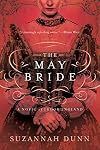
Out of all of King Henry’s wives, Jane Seymour appears to be the least flashy. She didn’t have to fight for her marriage like Catherine of Aragon did. Her rise and fall was not spectacularly public and quick. She was not quickly set aside and made a “sister”. She was not executed. She was not accused of adultery, bigamy, witchcraft, or anything else. She married the king, bore him a son, the only one to survive infancy, and died two weeks later. While she is the only one to be buried show more next to the king and the only wife of his who received a queen’s funeral, for all the success of her marriage to the volatile king, her strict decorum and plainness makes her the least impressionable of all of his wives. However, Suzannah Dunn’s The May Bride attempts to change that by placing Jane in the spotlight.
Unfortunately, even in her own story, someone else steals the story. The May Bride is not so much about Jane as it is about Jane’s sister-in-law, Katherine Filliol, and Jane’s varied reactions to her as she settles into the family nest. Jane herself is very loyal, very quiet, and disdainful of scandal. However, Katherine proves to be just the opposite and constantly shocks Jane with her less controlled behavior and unorthodox approach to life. Jane becomes obsessed with Katherine’s unconventionality, simultaneously admiring her and judging her for it. The impression readers will get is that the family scandal around Katherine and Edward provided the framework by which she judged Anne Boleyn and modeled her own royal marriage.
However, as is often the case with relatively obscure historical figures, no one knows just how much of The May Bride is true, especially when it comes to the scandal that tears apart the family and sets Jane directly on her path to becoming the queen consort. A quick Internet search will show readers just how much of the story is pure speculation on the part of Ms. Dunn, and high percent of fiction in this historical fiction novel may cause some readers to pause. The accusations made in the book are damning without adequate proof, potentially causing readers further concern for the liberties taken in an effort to tell a good story. In that aspect, The May Bride bears comparison against Philippa Gregory’s Tudor canon. Both seem to have a fondness for sacrificing history for a more interesting storyline.
Thankfully, that is where the similarities end. Of the two, Ms. Dunn is a much better storyteller, and her depiction of life in Wolf Hall is vividly mundane and definitely more realistic. She shows the sheer volume of work involved with running a manor, and the list of Jane’s daily chores is daunting. More importantly, Ms. Dunn does not attempt to beautify anything. There is frank talk of fleas in bedding, dogs and their messes left around the property, chamber pots, and other functions not typically discussed in novels. It is a refreshing bit of honesty in a story that is a bit too eager to scandalize readers based on loose interpretations of what little facts exist.
For all its faults, The May Bride is still an entertaining novel. The descriptions of life at Wolf Hall alone are worth the read because they are among the relative few to detail the tedium of life on the land and the amount of work that goes into that life. Jane is naive, young, and self-righteous, but one finds this plays well into her future roles as lady-in-waiting to Catherine of Aragon and queen consort after Anne’s demise. The amount of time Jane spends obsessing about her sister-in-law and the damage to the family may be tedious but still provides the background for getting to know this quiet, plain future queen consort. show less
Unfortunately, even in her own story, someone else steals the story. The May Bride is not so much about Jane as it is about Jane’s sister-in-law, Katherine Filliol, and Jane’s varied reactions to her as she settles into the family nest. Jane herself is very loyal, very quiet, and disdainful of scandal. However, Katherine proves to be just the opposite and constantly shocks Jane with her less controlled behavior and unorthodox approach to life. Jane becomes obsessed with Katherine’s unconventionality, simultaneously admiring her and judging her for it. The impression readers will get is that the family scandal around Katherine and Edward provided the framework by which she judged Anne Boleyn and modeled her own royal marriage.
However, as is often the case with relatively obscure historical figures, no one knows just how much of The May Bride is true, especially when it comes to the scandal that tears apart the family and sets Jane directly on her path to becoming the queen consort. A quick Internet search will show readers just how much of the story is pure speculation on the part of Ms. Dunn, and high percent of fiction in this historical fiction novel may cause some readers to pause. The accusations made in the book are damning without adequate proof, potentially causing readers further concern for the liberties taken in an effort to tell a good story. In that aspect, The May Bride bears comparison against Philippa Gregory’s Tudor canon. Both seem to have a fondness for sacrificing history for a more interesting storyline.
Thankfully, that is where the similarities end. Of the two, Ms. Dunn is a much better storyteller, and her depiction of life in Wolf Hall is vividly mundane and definitely more realistic. She shows the sheer volume of work involved with running a manor, and the list of Jane’s daily chores is daunting. More importantly, Ms. Dunn does not attempt to beautify anything. There is frank talk of fleas in bedding, dogs and their messes left around the property, chamber pots, and other functions not typically discussed in novels. It is a refreshing bit of honesty in a story that is a bit too eager to scandalize readers based on loose interpretations of what little facts exist.
For all its faults, The May Bride is still an entertaining novel. The descriptions of life at Wolf Hall alone are worth the read because they are among the relative few to detail the tedium of life on the land and the amount of work that goes into that life. Jane is naive, young, and self-righteous, but one finds this plays well into her future roles as lady-in-waiting to Catherine of Aragon and queen consort after Anne’s demise. The amount of time Jane spends obsessing about her sister-in-law and the damage to the family may be tedious but still provides the background for getting to know this quiet, plain future queen consort. show less
This novel will likely frustrate those who have come to expect historical fiction about Tudor court figures to feature lots of political and sexual intrigue. This is a deeply interior, psychological novel about Jane Seymour, focusing on her relationship with and observations of her sister-in-law Katherine and the breakdown of Katherine's marriage to Jane's older brother, Edward. The emotional reverberations feel frustratingly subtle in some ways, but I also appreciated them as authentic to show more how a sheltered teenage girl might experience such a relationship. And it is an audacious re-set to consider that the most important event in Jane Seymour's life, from her perspective, might not have been catching the eye of the king but instead witnessing and in some ways participating in the failure of her brother's marriage. show less
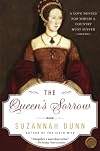
It wasn't quite what I expected, but I enjoyed it and that's what matters to me. The story of life in London was interesting, especially from a Spaniards perspective. Seeing the transformation of devotion to doubt in the character's internal analysis of their relationships was intriguing...and realistic. Absence does not always make the heart grow fonder!

Eighteen-year-old Catherine Howard thought she could have it all: a King and a lover! Lady-in-waiting to Anne of Cleves, Henry VIII's new German wife, it wasn't long before a teenage Catherine caught the King's eye. Pretty, lively and young, he swiftly made her his queen. Catherine found herself showered with riches and at the center of a lavish court life. Dizzy with the power she suddenly possessed, she failed to realize the political realities of her life. Just over a year into her show more marriage, during a special service at which Henry was giving thanks to God for his wonderful wife, Archbishop Cranmer passed the King a letter, listing allegations against Catherine before she became queen. Henry asked the archbishop to investigate; he was never to see his young wife again. Told twenty years on from the perspective of Catherine's close friend, Cat Tilney, the novel tells the life of this damaged, dangerous and short-lived queen. Suzannah Dunn presents us with a feisty, determined Catherine, who refused to allow men to walk over her -- even if they did happen to be the King of England.
I will read about the Tudors in any form and by anybody as it is my favourite period in history. This book is about the early days and the days leading up to the death of Katherine Howard from the point of view of her friend Cat Tilney. The romance between Cat and Francis is fiction made up by the author although the book is full of historical facts. There are no surprises with the book as we all know the outcome, but being told from the observations of somebody else the story is the same but with a different opinion of what happened. So this book may not be juicy and sexy like some books but is an ok read. My own thoughts on Katherine Howard is that when she became queen she saw possessions unlike cousin Anne Boleyn who saw power. show less
I will read about the Tudors in any form and by anybody as it is my favourite period in history. This book is about the early days and the days leading up to the death of Katherine Howard from the point of view of her friend Cat Tilney. The romance between Cat and Francis is fiction made up by the author although the book is full of historical facts. There are no surprises with the book as we all know the outcome, but being told from the observations of somebody else the story is the same but with a different opinion of what happened. So this book may not be juicy and sexy like some books but is an ok read. My own thoughts on Katherine Howard is that when she became queen she saw possessions unlike cousin Anne Boleyn who saw power. show less
Lists
Awards


You May Also Like


Associated Authors
Statistics
- Works
- 16
- Members
- 1,767
- Popularity
- #14,569
- Rating
- 3.1
- Reviews
- 96
- ISBNs
- 106
- Languages
- 4
- Favorited
- 1
