
Eric Bronson
Author of The Lord of the Rings and Philosophy: One Book to Rule Them All
Works by Eric Bronson
The Lord of the Rings and Philosophy: One Book to Rule Them All (2003) — Editor — 670 copies, 2 reviews
The Hobbit and Philosophy: For When You've Lost Your Dwarves, Your Wizard, and Your Way (2012) — Editor; Contributor — 152 copies, 2 reviews
The Girl with the Dragon Tattoo and Philosophy: Everything Is Fire (2011) — Editor — 54 copies, 1 review
Associated Works
Tagged
Common Knowledge
- Gender
- male
Members
Reviews
The Lord of the Rings and Philosophy: One Book to Rule Them All (Popular Culture and Philosophy) by Gregory Bassham
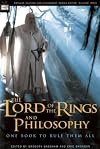
All right, you have The Lord of the Rings down, now when do we start on the philosophy?
That was what I inevitably thought on finishing this collection of sixteen essays plus a short selection of quotes from eminent philosophers. Every essay gives us a thought about the work of J. R. R. Tolkien, some of them quite deep. But only a few really put Tolkien's work into a philosophical framework -- and some of those (e.g. Douglas K. Blount's Ûberhobbits: Tolkien, Nietzsche, and the Will to Power) show more do more to illustrate the failures of philosophy than show how it illuminates the history of Middle-earth.
Does that matter? I suppose it depends on what you want. If you want a painless introduction to philosophy, there really isn't enough here to get you anywhere. If you want a collection of thoughts about Tolkien, it will likely suit you better.
That doesn't mean it's perfect. There are some essays that we'd be better off without. Essay two shows an excessive fear of technology, confusing possible evils it might bring with necessary evils it will bring. Essay three takes Sigmund Freud seriously -- which is an effective guarantee of bad results; c'mon, people, Freud's methods were dubious even at the time, and we now have empirical evidence of how incorrect they were! Essay ten repeatedly treats the Peter Jackson movies as if they actually revealed something about Tolkien (what they really reveal is that, from a philosophical standpoint, Hollywood can mess up anything). This essay also completely bollixes its understanding of the deaths of Aragorn and Arwen; Arwen did not die willingly at the end. Essay fourteen almost drove me nuts; it treats the title "Master Samwise" as if Sam were a Zen master; he was no more that than a master of slaves. Just because the author doesn't known how the British refer to people doesn't mean that he should reveal it in print. And Tolkien wasn't a dualist, and Middle-earth isn't in a yin-yang balance, and Tolkien explicitly disclaimed the Manichaeism the authors want to push him into (they admit it isn't really right, but then why yammer on about it?). As for essay fifteen and the claim that "Odysseus [was]... the noblest and most respected hero," it might be worth recalling that even Homer called him a "man of twists and turns," and portrayed him as a paranoid liar; later Greek accounts of him made him even more vile.
That's a lot of complaints about a book that I mostly liked. The problem is, the bad is clear, obvious, and blatant, and there is nothing equally clear, obvious, and brilliant; I can't point to any great new insight in this volume. If you read it with caution for the pure errors, but with an open mind to the subtle suggestions, you may well find it a helpful and enjoyable book.
[CORRECTIONS: 12/14: corrected to read "than show how." Also, N.B., this review was damaged in the May 2018 backup-and-restore problem at LibraryThing; I hope I put the line breaks back where they belong, but I was guessing; the review may be a little different than it was before.] show less
That was what I inevitably thought on finishing this collection of sixteen essays plus a short selection of quotes from eminent philosophers. Every essay gives us a thought about the work of J. R. R. Tolkien, some of them quite deep. But only a few really put Tolkien's work into a philosophical framework -- and some of those (e.g. Douglas K. Blount's Ûberhobbits: Tolkien, Nietzsche, and the Will to Power) show more do more to illustrate the failures of philosophy than show how it illuminates the history of Middle-earth.
Does that matter? I suppose it depends on what you want. If you want a painless introduction to philosophy, there really isn't enough here to get you anywhere. If you want a collection of thoughts about Tolkien, it will likely suit you better.
That doesn't mean it's perfect. There are some essays that we'd be better off without. Essay two shows an excessive fear of technology, confusing possible evils it might bring with necessary evils it will bring. Essay three takes Sigmund Freud seriously -- which is an effective guarantee of bad results; c'mon, people, Freud's methods were dubious even at the time, and we now have empirical evidence of how incorrect they were! Essay ten repeatedly treats the Peter Jackson movies as if they actually revealed something about Tolkien (what they really reveal is that, from a philosophical standpoint, Hollywood can mess up anything). This essay also completely bollixes its understanding of the deaths of Aragorn and Arwen; Arwen did not die willingly at the end. Essay fourteen almost drove me nuts; it treats the title "Master Samwise" as if Sam were a Zen master; he was no more that than a master of slaves. Just because the author doesn't known how the British refer to people doesn't mean that he should reveal it in print. And Tolkien wasn't a dualist, and Middle-earth isn't in a yin-yang balance, and Tolkien explicitly disclaimed the Manichaeism the authors want to push him into (they admit it isn't really right, but then why yammer on about it?). As for essay fifteen and the claim that "Odysseus [was]... the noblest and most respected hero," it might be worth recalling that even Homer called him a "man of twists and turns," and portrayed him as a paranoid liar; later Greek accounts of him made him even more vile.
That's a lot of complaints about a book that I mostly liked. The problem is, the bad is clear, obvious, and blatant, and there is nothing equally clear, obvious, and brilliant; I can't point to any great new insight in this volume. If you read it with caution for the pure errors, but with an open mind to the subtle suggestions, you may well find it a helpful and enjoyable book.
[CORRECTIONS: 12/14: corrected to read "than show how." Also, N.B., this review was damaged in the May 2018 backup-and-restore problem at LibraryThing; I hope I put the line breaks back where they belong, but I was guessing; the review may be a little different than it was before.] show less

Great Book! A perfect blending of baseball and philosophy. Fun examples of using baseball to highlight/illustrate important concepts in philosophy and using philosophy to elucidate baseball.
Organized into nine "innings," each containing two chapters (top of the inning and bottom of the inning :), Baseball and Philosophy addresses definitions of "home," faith and sacrifice, umpires, cheating and deception, democracy, moral identity, race and cultural issues, statistics, women (hardball vs. show more softball), the ethics of the intentional walk, and why baseball is like Socratic philosophy. Following the "game," there are six "Post-Game Press Conference" debates illustrating opposing responses to questions of ethics, political philosophy, metaphysics, legal philosophy, aesthetics, and education.
Although my guess is that some philosophy professors would take issue with the lack of in-depth analysis of philosophical concepts and theories, I see the book as a useful way of showing how those concepts and theories (examined in-depth in lecture and/or more standard philosophy texts) can be applied in the "real" world. Although many of the articles focused on familiar themes of morality (cheating, deception), legal issues, statistical theory, and capitalism ($$$), I was surprised by some of the other issues and concepts explored/mentioned: Social Darwinism, resistance, Categorical Imperative, Democracy, epistemology, feminist philosophy, metaphysics, philosophical views of the body, philosophy of science, and Japanese Warrior culture.
I am not an expert in philosophy, but I was impressed by the wide range of philosophical perspectives represented in the book—from Aristotle and Thomas Aquinas, through Alexis de Tocqueville and Cornell West, to Wittgenstein and Zen Buddhism. My favorite chapter in this regard was Willie Young's "Taking One for the Team: Baseball and Sacrifice" which managed to squeeze Julia Kristeva, St. Augustine, Seneca, Aristotle, Stoicism, Hegel, Tolkien, Kierkegaard, and Derrida into a 13-page essay!
I also appreciated the editor's inclusion of cross referencing to point the reader to other chapters that address related issues and helped avoid unnecessary repetition of positions and explanations.
One problem with the book, perhaps due to its 2004 publication date, is the lack of recognition of the problem of steroids and performance enhancing drugs in baseball. Many of the articles refer in glowing terms to players like Manny Ramirez, Alex Rodriguez, Sammy Sosa, Barry Bonds, and Mark McGwire without acknowledging the suspicion of steroid use they were all under, even in 2004. Today it would be impossible to use many of these articles without addressing the more recent accusations and admissions which taint some of these illustrations of "excellence." The post-game "debate" pieces on steroids/"PET"s really aren't long enough to address the issue adequately. (In fact, I didn't find the post-game pieces of much use whatsoever. Though I should admit that I've never found the debate format pedagogically useful as it only seems to cement false dichotomies without exploring the nuanced gray areas in between.
Despite these problems, I would recommend this book and this approach to combining popular culture and philosophy (see http://www.librarything.com/series/Popular+Culture+and+Philosophy for other books in the Popular Culture and Philosophy series). I both enjoyed the read and appreciated the way the book made me think about my favorite pastime. show less
Organized into nine "innings," each containing two chapters (top of the inning and bottom of the inning :), Baseball and Philosophy addresses definitions of "home," faith and sacrifice, umpires, cheating and deception, democracy, moral identity, race and cultural issues, statistics, women (hardball vs. show more softball), the ethics of the intentional walk, and why baseball is like Socratic philosophy. Following the "game," there are six "Post-Game Press Conference" debates illustrating opposing responses to questions of ethics, political philosophy, metaphysics, legal philosophy, aesthetics, and education.
Although my guess is that some philosophy professors would take issue with the lack of in-depth analysis of philosophical concepts and theories, I see the book as a useful way of showing how those concepts and theories (examined in-depth in lecture and/or more standard philosophy texts) can be applied in the "real" world. Although many of the articles focused on familiar themes of morality (cheating, deception), legal issues, statistical theory, and capitalism ($$$), I was surprised by some of the other issues and concepts explored/mentioned: Social Darwinism, resistance, Categorical Imperative, Democracy, epistemology, feminist philosophy, metaphysics, philosophical views of the body, philosophy of science, and Japanese Warrior culture.
I am not an expert in philosophy, but I was impressed by the wide range of philosophical perspectives represented in the book—from Aristotle and Thomas Aquinas, through Alexis de Tocqueville and Cornell West, to Wittgenstein and Zen Buddhism. My favorite chapter in this regard was Willie Young's "Taking One for the Team: Baseball and Sacrifice" which managed to squeeze Julia Kristeva, St. Augustine, Seneca, Aristotle, Stoicism, Hegel, Tolkien, Kierkegaard, and Derrida into a 13-page essay!
I also appreciated the editor's inclusion of cross referencing to point the reader to other chapters that address related issues and helped avoid unnecessary repetition of positions and explanations.
One problem with the book, perhaps due to its 2004 publication date, is the lack of recognition of the problem of steroids and performance enhancing drugs in baseball. Many of the articles refer in glowing terms to players like Manny Ramirez, Alex Rodriguez, Sammy Sosa, Barry Bonds, and Mark McGwire without acknowledging the suspicion of steroid use they were all under, even in 2004. Today it would be impossible to use many of these articles without addressing the more recent accusations and admissions which taint some of these illustrations of "excellence." The post-game "debate" pieces on steroids/"PET"s really aren't long enough to address the issue adequately. (In fact, I didn't find the post-game pieces of much use whatsoever. Though I should admit that I've never found the debate format pedagogically useful as it only seems to cement false dichotomies without exploring the nuanced gray areas in between.
Despite these problems, I would recommend this book and this approach to combining popular culture and philosophy (see http://www.librarything.com/series/Popular+Culture+and+Philosophy for other books in the Popular Culture and Philosophy series). I both enjoyed the read and appreciated the way the book made me think about my favorite pastime. show less
The Hobbit and Philosophy: For When You've Lost Your Dwarves, Your Wizard, and Your Way by Gregory Bassham
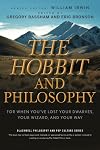
I admit that I didn't quite know what I was picking up when I opened The Hobbit and Philosophy: For When You've Lost Your Dwarves, Your Wizard, and Your Way.
At the time, I was three quarters of the way through The Hobbit for the umpteenth time, but because I was reading it to my daughters, the book felt both new and familiar. The Hobbit is not a novel that would have survived today's publishing world and the attention span of children is even shorter than that of adults. Even with a cast of show more dwarves, goblins, wizards, elves, a dragon and, yes, a hobbit, it's hard not to find something that is interesting to a child. Bring the story to a child’s level isn’t a stretch, though translating it into bite size portions for bedtime reading does help. The story feels written for children (despite the gravity that Peter Jackson seems to imbue on the story with dark and violent scenes of giant spiders, murderous goblins, and deadly orcs).
My girls are young: only 3 and 6. Even though both are children, they are at different stages of development and maturity. The 6-year old understands most of the plot, the character development, and remembers who is who (though sometimes the sheer number of dwarves and the paucity of development of any besides a few of them does confuse her when their names pop up). On the other hand, my 3-year old latches on only a few things, requiring that I “spice” the story up, so to speak, in order to keep her attention. For example, she stays interested when I create voices for the different characters, speaking deep and powerful for Thorin, meek but courageous for Bilbo, and confident but gravelly for Gandalf.
For a while, her favorite voice was Gollum’s. Only after her older sister explained that Gollum was the "bad guy" did she stop asking me when Bilbo was going to see Gollum again.
Pictures help, too, and that’s how we get to The Hobbit and Philosophy: For When You've Lost Your Dwarves, Your Wizard, and Your Way (after that protracted detour). After repeated questions on the distinctions between elves, dwarves, and hobbits (I dodged the “orcs versus goblins” question altogether), I headed over to the library to find a book of art inspired by the novel. Not a set of promotional photographs for Peter Jackson's movies, mind you, but art from the last sixty year or so years since the novel was published.
While looking for the art (perhaps I should review that one, too?) I found sitting on the shelf The Hobbit and Philosophy: For When You've Lost Your Dwarves, Your Wizard, and Your Way. I’ve read The Hobbit dozens of times, but somehow I’ve never spent much time thinking about the philosophy behind it. I’ve read more and thought more about The Lord of the Rings in that regards, mostly, I think because it comes across as a weightier book. The parallels with J.R.R.Tolkien’s experience and view of World War II are obvious, while The Hobbit was published prior to the war and was primarily aimed at a juvenile market. Like juvenile fiction in the modern era, though, The Hobbit is perhaps a far more interesting and deep book than it is often given credit for. In that regard, The Hobbit and Philosophy, which is a collection of essays by various contributors, approaches what is perhaps the most popular fantasy novel of the last century with a serious and, occasionally at least, playful eye.
Here you will essays on Tao, enlightenment, man’s place in society, greed, humility, glory, art and beauty, and more. Some are dry (after all, it is philosophy, right?), and others are light, playful, or inspirational. All are interesting and insightful.
I’ve already burned 600 plus words talking about how I even found the book, and I’ve not said much about the essays other than this: it’s worth reading.
I’m not really the philosophical type and I don’t think it helped me make The Hobbit more interesting to my daughters. But it did make the book more interesting to me, which is saying something about a book I already love and enjoy. show less
At the time, I was three quarters of the way through The Hobbit for the umpteenth time, but because I was reading it to my daughters, the book felt both new and familiar. The Hobbit is not a novel that would have survived today's publishing world and the attention span of children is even shorter than that of adults. Even with a cast of show more dwarves, goblins, wizards, elves, a dragon and, yes, a hobbit, it's hard not to find something that is interesting to a child. Bring the story to a child’s level isn’t a stretch, though translating it into bite size portions for bedtime reading does help. The story feels written for children (despite the gravity that Peter Jackson seems to imbue on the story with dark and violent scenes of giant spiders, murderous goblins, and deadly orcs).
My girls are young: only 3 and 6. Even though both are children, they are at different stages of development and maturity. The 6-year old understands most of the plot, the character development, and remembers who is who (though sometimes the sheer number of dwarves and the paucity of development of any besides a few of them does confuse her when their names pop up). On the other hand, my 3-year old latches on only a few things, requiring that I “spice” the story up, so to speak, in order to keep her attention. For example, she stays interested when I create voices for the different characters, speaking deep and powerful for Thorin, meek but courageous for Bilbo, and confident but gravelly for Gandalf.
For a while, her favorite voice was Gollum’s. Only after her older sister explained that Gollum was the "bad guy" did she stop asking me when Bilbo was going to see Gollum again.
Pictures help, too, and that’s how we get to The Hobbit and Philosophy: For When You've Lost Your Dwarves, Your Wizard, and Your Way (after that protracted detour). After repeated questions on the distinctions between elves, dwarves, and hobbits (I dodged the “orcs versus goblins” question altogether), I headed over to the library to find a book of art inspired by the novel. Not a set of promotional photographs for Peter Jackson's movies, mind you, but art from the last sixty year or so years since the novel was published.
While looking for the art (perhaps I should review that one, too?) I found sitting on the shelf The Hobbit and Philosophy: For When You've Lost Your Dwarves, Your Wizard, and Your Way. I’ve read The Hobbit dozens of times, but somehow I’ve never spent much time thinking about the philosophy behind it. I’ve read more and thought more about The Lord of the Rings in that regards, mostly, I think because it comes across as a weightier book. The parallels with J.R.R.Tolkien’s experience and view of World War II are obvious, while The Hobbit was published prior to the war and was primarily aimed at a juvenile market. Like juvenile fiction in the modern era, though, The Hobbit is perhaps a far more interesting and deep book than it is often given credit for. In that regard, The Hobbit and Philosophy, which is a collection of essays by various contributors, approaches what is perhaps the most popular fantasy novel of the last century with a serious and, occasionally at least, playful eye.
Here you will essays on Tao, enlightenment, man’s place in society, greed, humility, glory, art and beauty, and more. Some are dry (after all, it is philosophy, right?), and others are light, playful, or inspirational. All are interesting and insightful.
I’ve already burned 600 plus words talking about how I even found the book, and I’ve not said much about the essays other than this: it’s worth reading.
I’m not really the philosophical type and I don’t think it helped me make The Hobbit more interesting to my daughters. But it did make the book more interesting to me, which is saying something about a book I already love and enjoy. show less
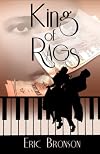
I was originally rather excited to read this book when I read the description. It left me looking forward to a book about Scott Joplin (the caveat is there that the dialogue is largely fictionalized but it is based on Joplin's life), but the book didn't deliver. Much of the book is about other people with only tangential relations to Joplin - and some of those asides don't even seem to connect back at all. I really would have like more depth where Joplin himself was concerned. The choppy show more jumps through time and between perspectives made the book even more difficult to follow. I feel like this had potential, it just didn't come through in the end.
(eGalley provided by the publisher via NetGalley in exchange for an honest review.) show less
(eGalley provided by the publisher via NetGalley in exchange for an honest review.) show less
You May Also Like


Associated Authors
Statistics
- Works
- 9
- Also by
- 1
- Members
- 1,114
- Popularity
- #23,058
- Rating
- 3.5
- Reviews
- 8
- ISBNs
- 33
- Languages
- 8