
Robin Marantz Henig
Author of The Monk in the Garden: The Lost and Found Genius of Gregor Mendel, the Father of Genetics
About the Author
Robin Marantz Henig is the author of six books, including "A Dancing Matrix: How Science Confronts Emerging Viruses". She routinely writes about science & medicine for such publications as the "New York Times Magazine" & "USA Today". She lives in Maryland. (Bowker Author Biography)
Disambiguation Notice:
http://www.robinhenig.com/
Works by Robin Marantz Henig
The Monk in the Garden: The Lost and Found Genius of Gregor Mendel, the Father of Genetics (2000) — Author — 417 copies, 5 reviews
Pandora's Baby: How the First Test Tube Babies Sparked the Reproductive Revolution (2004) 50 copies, 1 review
Your Premature Baby: The Complete Guide to Premie Care During That Crucial First Year (1984) 3 copies
Darwin's God 1 copy
"Dispelling Menstrual Myths" 1 copy
Associated Works
Tagged
Common Knowledge
- Birthdate
- 20th century
- Gender
- female
- Occupations
- freelance writer
- Relationships
- Henig, Samantha (daughter)
- Nationality
- USA
- Disambiguation notice
- http://www.robinhenig.com/
- Associated Place (for map)
- USA
Members
Reviews
The Monk in the Garden: The Lost and Found Genius of Gregor Mendel, the Father of Genetics by Robin Marantz Henig
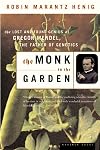
An outsider’s view of scientific history deems that stories of scientific discovery are boring. After all, how could readers be interested in narratives about how people work in laboratories? To that, Henig pens her eloquent reply in an interesting tale of how an obscure monk in Eastern Europe transformed modern biology… after he died. Thus goes the all-too-human tale of humble Gregor Mendel.
After joining a monastic order in the 1800s, Mendel studied science and grew peas systematically show more in a monastery’s courtyard. Certain traits would skip a generation and would consistently recur in 1/4 of the offspring. From this observation, he found what are now known as Mendel’s Laws of genetic inheritance. He published his findings… and received no acclaim. Barely anyone even read his publication. He later became abbot of the monastery and then died in obscurity.
A few decades later, he was “rediscovered” by three scientists looking for a means for Darwinian evolution to proceed. Mendel’s Laws soon became a central point of scientific proof for evolution and are now universally taught wherever scientific education occurs. Mendel’s statue is presently erected overlooking the monastery in Brünn, Moravia.
As shown by the book becoming a National Book Critic’s Circle Award finalist, Henig tells this story well. She captures the personalities involved and the human and scientific sides of an interesting tale. This saga is filled with inherent irony, and she does her best in drawing it out from the few historical sources. Obviously, Mendel’s discoveries have had a huge scientific impact as they have led to modern biology and a fount for medical research.
Mendel’s life was lived with little fanfare. Fortunately, Henig’s book does not live in such a state. It is masterfully told, well-received, and reminds us that the “little guy” sometimes wins in the end. Her imagination and creativity impress as she spins this intellectual drama. The human twists and turns about how trait inheritance occurs in species brings the science to life. Her work would make the ever-curious and ingenious Mendel proud. show less
After joining a monastic order in the 1800s, Mendel studied science and grew peas systematically show more in a monastery’s courtyard. Certain traits would skip a generation and would consistently recur in 1/4 of the offspring. From this observation, he found what are now known as Mendel’s Laws of genetic inheritance. He published his findings… and received no acclaim. Barely anyone even read his publication. He later became abbot of the monastery and then died in obscurity.
A few decades later, he was “rediscovered” by three scientists looking for a means for Darwinian evolution to proceed. Mendel’s Laws soon became a central point of scientific proof for evolution and are now universally taught wherever scientific education occurs. Mendel’s statue is presently erected overlooking the monastery in Brünn, Moravia.
As shown by the book becoming a National Book Critic’s Circle Award finalist, Henig tells this story well. She captures the personalities involved and the human and scientific sides of an interesting tale. This saga is filled with inherent irony, and she does her best in drawing it out from the few historical sources. Obviously, Mendel’s discoveries have had a huge scientific impact as they have led to modern biology and a fount for medical research.
Mendel’s life was lived with little fanfare. Fortunately, Henig’s book does not live in such a state. It is masterfully told, well-received, and reminds us that the “little guy” sometimes wins in the end. Her imagination and creativity impress as she spins this intellectual drama. The human twists and turns about how trait inheritance occurs in species brings the science to life. Her work would make the ever-curious and ingenious Mendel proud. show less
The Monk in the Garden: The Lost and Found Genius of Gregor Mendel, the Father of Genetics by Robin Marantz Henig
Accessible and with a dash of fun, the author puts the monk back into the context of his time so as to better understand all the myths that have since then been built around his work and persona.
Of course, the tumultuous story of the birth of genetics is what drives the book forwards (was Mendel really an isolated researcher? why did we have to wait decades after his death to finally catch up with his discoveries?). But, what particularly caught my attention here is the fascinating human show more touch Henig manages to deliver.
There is indeed something touching thinking about this eccentric, first experimenting with mice, but, facing the objections of his bishop (and more practical problems!) quickly gave up to turn instead to peas, cultivating them by the several hundreds of thousands with a obsession, a dedication that will keep him busy for so many years.
Science is not about geeks locked up in ivory towers; it's also a warm and vivid process inseparable from human contradictions and mania. Thanks to the author for reminding us so, with this generous and lively biography. A very good read. show less
Of course, the tumultuous story of the birth of genetics is what drives the book forwards (was Mendel really an isolated researcher? why did we have to wait decades after his death to finally catch up with his discoveries?). But, what particularly caught my attention here is the fascinating human show more touch Henig manages to deliver.
There is indeed something touching thinking about this eccentric, first experimenting with mice, but, facing the objections of his bishop (and more practical problems!) quickly gave up to turn instead to peas, cultivating them by the several hundreds of thousands with a obsession, a dedication that will keep him busy for so many years.
Science is not about geeks locked up in ivory towers; it's also a warm and vivid process inseparable from human contradictions and mania. Thanks to the author for reminding us so, with this generous and lively biography. A very good read. show less
The Monk in the Garden: The Lost and Found Genius of Gregor Mendel, the Father of Genetics by Robin Marantz Henig
This work is a gentle survey of the Gregor Mendel's life, work, and subsequent history of that work. There are two aspects of this book that I enjoyed. First, I have a vague recollection of the science textbooks of the my youth remarking that a monk named Mendel was instrumental in founding the science of genetics and then moving on to the next topic. "The Monk in the Garden" does a nice job putting flesh and bone on a portrait of this quiet, diligent researcher. Due to a lack of sources, show more the author must often speculate about the day-to-day details of the Moravian monk's life. However, Ms. Henig's speculations are not unreasonable, and clearly distinguishes speculation from fact. The second aspect of this book that I enjoyed was how the author places Mendel and his work in the context of 19th-century science. The story of the loss and rediscovery of Mendel's work by the larger scientific community is excellent. It provides an interesting glimpse at the various people and events instrumental in the advancement of science. show less
Pandora's Baby: How the First Test Tube Babies Sparked the Reproductive Revolution by Robin Marantz Henig

I only made it through the first half of this book - not because it wasn't interesting, but because i just ran out of time before i needed to bring it back to the library.
It's one of the few completely non-fiction books i've spontaneously picked up off the shelf and read. And i actually found it quite fascinating. And a little disturbing at times. It's frightening what what people are willing to do in the name of science and fame.
It's one of the few completely non-fiction books i've spontaneously picked up off the shelf and read. And i actually found it quite fascinating. And a little disturbing at times. It's frightening what what people are willing to do in the name of science and fame.
Lists
Awards


You May Also Like


Associated Authors
Statistics
- Works
- 13
- Also by
- 3
- Members
- 620
- Popularity
- #40,586
- Rating
- 3.7
- Reviews
- 10
- ISBNs
- 36
- Languages
- 4