
Donald James (1931–2008)
Author of Monstrum
About the Author
Disambiguation Notice:
Donald James Wheal wrote his biographies "World's End" and "White City" under his own full name, used the shortened form of Donald James for his thrillers including the Inspector Constantin Vadim series, used the pseudonym of Thomas Dresden for "Missing", "Queen's Ransom" and "Talking to a Stranger" and also wrote books with co-author Tony Barwick using the combined pseudonym of James Barwick.
Series
Works by Donald James
Skorpion 1 copy
SOMBRA DO LOBO 1 copy
Associated Works
Reader's Digest Select Editions: The Woods • Written in Bone • Thunder Bay • White City (2007) — Contributor — 7 copies
Tagged
Common Knowledge
- Legal name
- Wheal, Donald James
- Other names
- Dresden, Thomas
Barwick, James (Donald James, Tony Barwick as co-authors) - Birthdate
- 1931-08-22
- Date of death
- 2008-04-28
- Gender
- male
- Education
- Sloane Grammar School
University of Cambridge (Pembroke College) - Occupations
- non-fiction author
television writer
novelist
teacher - Organizations
- British Army
- Nationality
- UK
- Birthplace
- Chelsea, London, England
- Places of residence
- London, England, UK
France
Ireland - Place of death
- London, England
- Disambiguation notice
- Donald James Wheal wrote his biographies "World's End" and "White City" under his own full name, used the shortened form of Donald James for his thrillers including the Inspector Constantin Vadim series, used the pseudonym of Thomas Dresden for "Missing", "Queen's Ransom" and "Talking to a Stranger" and also wrote books with co-author Tony Barwick using the combined pseudonym of James Barwick.
- Associated Place (for map)
- Chelsea, London, England
Members
Reviews
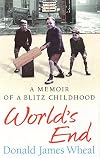
This account of growing up during the Second World War in World's End, Chelsea, needs a far more serious, 'literary' cover to do the subject and the author justice. Truly! I was interested in reading about that part of London anyway, but when my copy arrived at the library, I thought, 'Here we go: another lightweight, 'family saga'-style self-published memoir', but no, Donald James makes this a truly emotional read. Perhaps because he's a 'proper' author, and not just an amateur spinning a show more cathartic tale, James' account is amusing, poignant, rewarding and endlessly interesting. I love how he describes his supportive parents, 'good' and 'bad' grandmothers, and the many other real life 'characters' from the World's End, with such fond memories that the reader almost believes that they knew these people too. Far from a series of personal vignettes, however, James' story is paced like a fictional adventure, with downed German planes and the air raid which wiped out a good section of his community. Even the history of Cremorne Gardens is fascinating to read! (Surely there must be more accounts of this 'infamous' London pleasure garden?)
Having lived through the Blitz, or even living in London, is thankfully not a requirement for enjoying Donald James' captivating memoir - thanks to the author's vivid descriptions and engrossing narrative, anyone can imagine the hardship, heart and heroism of World's End. show less
Having lived through the Blitz, or even living in London, is thankfully not a requirement for enjoying Donald James' captivating memoir - thanks to the author's vivid descriptions and engrossing narrative, anyone can imagine the hardship, heart and heroism of World's End. show less
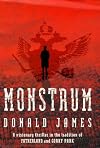
When it was first published back in 1997 this novel painted an intriguing image of what the future might hold for Russia. Set in what then seemed a fairly distant 2015, Russia was emerging from a bleak and bitter civil war between the Nationalist regime and Marxist-Anarchist insurrectionists. The Nationalist regime had emerged triumphant, but the country had been devastated by the war, and the economy had been wrecked.
Police inspector Constantin Vadim had seen out the war in his native show more Murmansk. His position is, however, somewhat equivocal because his estranged wife Julia had been a general in the defeated Anarchists’ army. Now on the run, she has managed to contact Vadim, and seeks his help for her escape.
Vadim’s oldest friend from school and student days is Roy Rolkin, now a major (but soon to be a colonel) in the Cheka, the ever-present secret police, which in 2015 is just as deeply feared as at any other time in Russia’s history. Vadim knows that Rolkin’s friendship is a very thin, and immensely fragile veneer, that could be eroded by even the merest hint that he has been helping his ex-wife.
Vadim does have one unexpected asset – his close resemblance to Leonid Koba, formerly head of the Cheka and now Vice President, but understood by everyone to be the focus of real power in the nationalist government. Vadim fins himself selected for the role of one of Koba’s doubles, and. After minor cosmetic surgery, finds himself being conveyed around the country to participate in minor ceremonies as the Vice President, leaving the real Koba to concentrate on the work of reconstruction that the country so desperately needs.
To facilitate his participation in this deception, Vadim is transferred to Moscow, and installed as head of the homicide division. This does not prove to be the sinecure that Vadim had envisaged as a serial killer is on the loose. Three women have been killed, with their bodies mutilated, and the assailant has been given the nickname of ‘Monstrum’. Vadim finds himself heading the investigation, and soon learns that there have been far more than three victims. The killings started during the civil war, but evidence of the killings had been covered up under the ensuing mayhem.
Vadim is an enigmatic character. Far from flawless, with a long track record of near alcoholism and womanising, he does retain some vestige of culture and decency. He is appalled by the Monstrum killings, but also by the dreadful conditions in which much of the population of the poorer areas of Moscow are condemned to live. But he is also a pragmatist, and quickly learns when and where to turn a blind eye.
Donald James conjures the atmosphere of a war-torn Russia very effectively, and one can almost feel the bitter cold that pervades every scene. However, while the story is well thought through, and the plot is soundly constructed, the book is far too long, being unnecessarily drawn out. Vadim is reminiscent of Arkady Renko, protagonist of Gorky Park and Martin Cruz Smith’s other crime novels set in Moscow. Although, to be honest, I thought that those books were unnecessarily lengthy, too. show less
Police inspector Constantin Vadim had seen out the war in his native show more Murmansk. His position is, however, somewhat equivocal because his estranged wife Julia had been a general in the defeated Anarchists’ army. Now on the run, she has managed to contact Vadim, and seeks his help for her escape.
Vadim’s oldest friend from school and student days is Roy Rolkin, now a major (but soon to be a colonel) in the Cheka, the ever-present secret police, which in 2015 is just as deeply feared as at any other time in Russia’s history. Vadim knows that Rolkin’s friendship is a very thin, and immensely fragile veneer, that could be eroded by even the merest hint that he has been helping his ex-wife.
Vadim does have one unexpected asset – his close resemblance to Leonid Koba, formerly head of the Cheka and now Vice President, but understood by everyone to be the focus of real power in the nationalist government. Vadim fins himself selected for the role of one of Koba’s doubles, and. After minor cosmetic surgery, finds himself being conveyed around the country to participate in minor ceremonies as the Vice President, leaving the real Koba to concentrate on the work of reconstruction that the country so desperately needs.
To facilitate his participation in this deception, Vadim is transferred to Moscow, and installed as head of the homicide division. This does not prove to be the sinecure that Vadim had envisaged as a serial killer is on the loose. Three women have been killed, with their bodies mutilated, and the assailant has been given the nickname of ‘Monstrum’. Vadim finds himself heading the investigation, and soon learns that there have been far more than three victims. The killings started during the civil war, but evidence of the killings had been covered up under the ensuing mayhem.
Vadim is an enigmatic character. Far from flawless, with a long track record of near alcoholism and womanising, he does retain some vestige of culture and decency. He is appalled by the Monstrum killings, but also by the dreadful conditions in which much of the population of the poorer areas of Moscow are condemned to live. But he is also a pragmatist, and quickly learns when and where to turn a blind eye.
Donald James conjures the atmosphere of a war-torn Russia very effectively, and one can almost feel the bitter cold that pervades every scene. However, while the story is well thought through, and the plot is soundly constructed, the book is far too long, being unnecessarily drawn out. Vadim is reminiscent of Arkady Renko, protagonist of Gorky Park and Martin Cruz Smith’s other crime novels set in Moscow. Although, to be honest, I thought that those books were unnecessarily lengthy, too. show less

The setup here had a lot of promise. A post-civil war Russia is imagined in the year 2015. A Russian Nationalist side has won out over a Russian Anarchist/Communist side. A provincial detective from Murmansk is elevated to a Moscow district murder squad due to his friendship with an ambitious officer of the secret police (still nicknamed the Chekists here, as they have been since the Russian Stalinist era) and not so coincidentally due to his physical resemblance to the current Nationalist show more Vice-President named Leonid Koba and as it turns out also due to his former wife having been a general in the losing Anarchist Army. The various political gamesmanship plays out while the detective pursues an investigation to find a serial killer known as the Monstrum.
By the end though, too many coincidences have been piled on top of too many absurd situations which are only briefly clarified and that just made this reader angrier the longer the book went on.
The cover blurb from The Times compared this to Fatherland, Gorky Park and The Silence of the Lambs, but I'd have to say it fell far short of the mark set by those top thrillers. It came closest to Fatherland with having at least a plausible alternative history backdrop painted in. The Russian atmosphere and character building seemed to only consist of everybody drinking large quantities of vodka, Gorky Park seemed like much more of a ground-breaker in giving us an entry to some Russian spirit and soul. There was none of the macabre thrill of villains such as Hannibal Lector and Jamie Gumb from Silence of the Lambs. show less
By the end though, too many coincidences have been piled on top of too many absurd situations which are only briefly clarified and that just made this reader angrier the longer the book went on.
The cover blurb from The Times compared this to Fatherland, Gorky Park and The Silence of the Lambs, but I'd have to say it fell far short of the mark set by those top thrillers. It came closest to Fatherland with having at least a plausible alternative history backdrop painted in. The Russian atmosphere and character building seemed to only consist of everybody drinking large quantities of vodka, Gorky Park seemed like much more of a ground-breaker in giving us an entry to some Russian spirit and soul. There was none of the macabre thrill of villains such as Hannibal Lector and Jamie Gumb from Silence of the Lambs. show less

This was a case of never judge a book by its cover and do not always accept another person's judgement as your own.
This poor book has been sitting on my shelves quite some time now, untill I finally decided to read it. Hubby disliked it, couldn't get through and it wasn't given the most interesting cover one could think of. Now I've read it, I say it's a shame I didn't pick it up earlier.
It is a great book for those amongst you that like to read about the way things go in Russia. Some show more knowlegde of Rusdian and Soviet history is also convenient, because this book mixes old with new, revolution with civil war, a dead son, an ex-wife, childhood friend, foreign experts bosses and employees in a way that makes this book a typical example of the way things go, have gone and probably will go for many years.
For its the Russian way.
The book is very interesting, especially the ending. Readers who know the Russian way will not be surprised :-)
I will look into the background of this writer, interesting to know if he had a Rusdian background, knowlegde of the language. He nails the plot in the book as if he were Russian... show less
This poor book has been sitting on my shelves quite some time now, untill I finally decided to read it. Hubby disliked it, couldn't get through and it wasn't given the most interesting cover one could think of. Now I've read it, I say it's a shame I didn't pick it up earlier.
It is a great book for those amongst you that like to read about the way things go in Russia. Some show more knowlegde of Rusdian and Soviet history is also convenient, because this book mixes old with new, revolution with civil war, a dead son, an ex-wife, childhood friend, foreign experts bosses and employees in a way that makes this book a typical example of the way things go, have gone and probably will go for many years.
For its the Russian way.
The book is very interesting, especially the ending. Readers who know the Russian way will not be surprised :-)
I will look into the background of this writer, interesting to know if he had a Rusdian background, knowlegde of the language. He nails the plot in the book as if he were Russian... show less
You May Also Like


Associated Authors
Statistics
- Works
- 23
- Also by
- 2
- Members
- 656
- Popularity
- #38,460
- Rating
- 3.4
- Reviews
- 16
- ISBNs
- 99
- Languages
- 9