

Michael Shelden
Author of Orwell: The Authorized Biography
About the Author
Michael Shelden is the author off our previous biographies. For twelve years he was a features writer for The Daily Telegraph (London) and a fiction critic for The Baltimore Sun. He is currently a professor at Indiana State University.
Works by Michael Shelden
Melville in Love: The Secret Life of Herman Melville and the Muse of Moby-Dick (2016) 48 copies, 3 reviews
Orwell and the Left 1 copy
Orwell’s Island Escape 1 copy
Orwell’s Long Farewell 1 copy
JFK Reconsidered 1 copy
Orwell, Poet of Poetry 1 copy
Promising the Moon 1 copy
Kennedy’s New America 1 copy
The Fateful Visit to Texas 1 copy
The Mythos of Camelot 1 copy
Orwell’s Lost Generation 1 copy
Young Churchill 1 copy
Churchill in War and Peace 1 copy
The Road to Dunkirk 1 copy
Churchill in Power 1 copy
Surviving the Nazi Blitz 1 copy
Churchill and Roosevelt 1 copy
Churchill and Stalin 1 copy
Churchill’s Return to Power 1 copy
The Real George Orwell 1 copy
Orwell’s Edwardian Idyll 1 copy
Orwell, Eton, and Privilege 1 copy
Orwell the Policeman 1 copy
Reconsidering JFK 1 copy
Tagged
Common Knowledge
- Canonical name
- Shelden, Michael
- Legal name
- Shelden, Michael
- Birthdate
- 1951
- Gender
- male
- Occupations
- professor
feature writer
journalist
author - Relationships
- Indiana State University
The Daily Telegraph - Nationality
- USA
- Associated Place (for map)
- USA
Members
Reviews
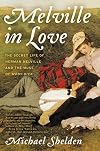
Being unfamiliar with Herman Melville beyond the fact that he wrote Moby Dick, this book definitely had information new to me. It was intriguing to learn the personal side of such a giant in American literature. It's always fascinating to see such figures as human as you or I. However, some of the points the author reaches seem overly stressed. He expounds on the same points again and again, to the point of the proverbial 2x4. For a work this small, this duplicate expounding is even more show more evident.
The author presented his material in such a way to be very readable. He writes in an easy-flowing style, presenting the facts interspersed with quoted primary material. The narrative flows from point to point easily; the reader doesn't have to wade through chunks of dry material to absorb the information on this literary figure.
The information presented made me see Herman Melville in a whole new light. I hadn't given his personal life much thought besides the fact that he wrote Moby Dick and was an associate of Hawthorne. Yet the author is able to make this man a passionate, frenzied, melancholic, and flawed individual. He gives Melville depth by showing us his associations with friends, acquaintances, family, and lover. I finish this book feeling like I knew him on a very personal level; I'm not sure if this was the author’s intent, but it was achieved.
The author also makes some very interesting points on the writing process and inspiration for Moby Dick. Seeing how Melville's relationship with Mrs. Morewood impacted both his creative endeavors and personal life was the main focus of the book. The author does a fantastic job in shedding a new light onto Melville's inspirations and his primary work.
However, this area is also where the book fails a bit. There were times I felt the author was stressing Sarah's personality, love of nature, and hold over Melville too much. I got the point the author was conveying after the first few times the author makes it. Yet, these aspects are stressed so many times that it almost feels like the author felt his audience was dumb. And for a work this short, the overstressing of points and information is all the more a sin.
For an area that is fairly new to me, this book was engaging. It was informative and fairly entertaining to read. While there were times the author overstressed items and points, I still enjoyed this work as an intimate look into the life of an American literary icon and the impact the woman he loved had over him and his creativity. I would recommend this book to those looking for an informative and light read on a new topic.
Note: Book received for free from the publisher via a GoodReads giveaway in exchange for an honest review. show less
The author presented his material in such a way to be very readable. He writes in an easy-flowing style, presenting the facts interspersed with quoted primary material. The narrative flows from point to point easily; the reader doesn't have to wade through chunks of dry material to absorb the information on this literary figure.
The information presented made me see Herman Melville in a whole new light. I hadn't given his personal life much thought besides the fact that he wrote Moby Dick and was an associate of Hawthorne. Yet the author is able to make this man a passionate, frenzied, melancholic, and flawed individual. He gives Melville depth by showing us his associations with friends, acquaintances, family, and lover. I finish this book feeling like I knew him on a very personal level; I'm not sure if this was the author’s intent, but it was achieved.
The author also makes some very interesting points on the writing process and inspiration for Moby Dick. Seeing how Melville's relationship with Mrs. Morewood impacted both his creative endeavors and personal life was the main focus of the book. The author does a fantastic job in shedding a new light onto Melville's inspirations and his primary work.
However, this area is also where the book fails a bit. There were times I felt the author was stressing Sarah's personality, love of nature, and hold over Melville too much. I got the point the author was conveying after the first few times the author makes it. Yet, these aspects are stressed so many times that it almost feels like the author felt his audience was dumb. And for a work this short, the overstressing of points and information is all the more a sin.
For an area that is fairly new to me, this book was engaging. It was informative and fairly entertaining to read. While there were times the author overstressed items and points, I still enjoyed this work as an intimate look into the life of an American literary icon and the impact the woman he loved had over him and his creativity. I would recommend this book to those looking for an informative and light read on a new topic.
Note: Book received for free from the publisher via a GoodReads giveaway in exchange for an honest review. show less
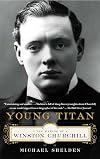
When many think of Winston Churchill, it is undoubtedly as the elder statesman with the jowly, bulldog face and steely determination to stand alone against the Nazis. In Shelden's Young Titan: The Making of Winston Churchill we see instead an overly confident, young, aristocratic talk of the town who romances a number of women, most of which turn down his proposals for marriage, before finding and marrying Clementine Hozier who will remain his lifelong companion.
One of the most interesting show more contributions of the books to Churchill studies is Shelden's look at the complicated relationship between the politically astute and active Prime Minister's daughter Violet Asquith and the young Churchill. It is a sad tale of Violet's unrequited love and leaves the reader to wonder what might have happened had Churchill decided on Violet instead of Clemmie. Given Violet's interest and actual participation in politics in contrast to Clementine, one is left wondering if she could have been the UK's Eleanor Roosevelt.
As Shelden correctly points out, many at the time and since have seen Churchill as a man undeserving of his fame having little to do with actual achievement and instead a reliance on his family's name and wealth. In reality the Churchills were not well off compared to other in the aristocracy and particularly after his defection to the Liberals, the Tory Party elite very firmly looked down upon the younger man. Churchill was always his own man with, as Asquith is quoted as saying, the "streak of lightning in the brain" that showed a true genius underneath. He worked incredibly hard at writing and speaking, practicing for hours and committing great swathes of writing to memory. Shelden points to his trials in politics and in love as the building blocks of the later man he would become.
The end of the book perhaps shows Churchill's greatest political failure in his decision as First Lord of the Admiralty; to attack the Dardanelles resulting in the utter disaster at Gallipoli in 1915 during the First World War. Shelden does give Churchill more leeway than he deserves in this regard, trying to point the finger at the mentally unstable "Jacky" Fisher as the responsible party as well and Prime Minister Asquith and cabinet member Lloyd George. While undoubtedly Churchill was the better war leader, this was his single worst decision as a military leader and even at the time he was well aware he was responsible having said to a visitor while in the midst of painting "There is more blood than paint on these hands".
While it is remarkable that Churchill recovered from this disaster, albeit some 20 years later, it was nonetheless still an epic military blunder. However, Shelden does show that Churchill essentially sent himself into exile in the trenches rather than remain in a do-nothing government post and it is hard not to admire a man for voluntarily going to face death himself after having consigned others to the same fate.
Overall this was an informative and enjoyable read and Shelden is currently working on a second volume which will hopefully be as informative as this one. show less
One of the most interesting show more contributions of the books to Churchill studies is Shelden's look at the complicated relationship between the politically astute and active Prime Minister's daughter Violet Asquith and the young Churchill. It is a sad tale of Violet's unrequited love and leaves the reader to wonder what might have happened had Churchill decided on Violet instead of Clemmie. Given Violet's interest and actual participation in politics in contrast to Clementine, one is left wondering if she could have been the UK's Eleanor Roosevelt.
As Shelden correctly points out, many at the time and since have seen Churchill as a man undeserving of his fame having little to do with actual achievement and instead a reliance on his family's name and wealth. In reality the Churchills were not well off compared to other in the aristocracy and particularly after his defection to the Liberals, the Tory Party elite very firmly looked down upon the younger man. Churchill was always his own man with, as Asquith is quoted as saying, the "streak of lightning in the brain" that showed a true genius underneath. He worked incredibly hard at writing and speaking, practicing for hours and committing great swathes of writing to memory. Shelden points to his trials in politics and in love as the building blocks of the later man he would become.
The end of the book perhaps shows Churchill's greatest political failure in his decision as First Lord of the Admiralty; to attack the Dardanelles resulting in the utter disaster at Gallipoli in 1915 during the First World War. Shelden does give Churchill more leeway than he deserves in this regard, trying to point the finger at the mentally unstable "Jacky" Fisher as the responsible party as well and Prime Minister Asquith and cabinet member Lloyd George. While undoubtedly Churchill was the better war leader, this was his single worst decision as a military leader and even at the time he was well aware he was responsible having said to a visitor while in the midst of painting "There is more blood than paint on these hands".
While it is remarkable that Churchill recovered from this disaster, albeit some 20 years later, it was nonetheless still an epic military blunder. However, Shelden does show that Churchill essentially sent himself into exile in the trenches rather than remain in a do-nothing government post and it is hard not to admire a man for voluntarily going to face death himself after having consigned others to the same fate.
Overall this was an informative and enjoyable read and Shelden is currently working on a second volume which will hopefully be as informative as this one. show less

I love Mark Twain and have since I started reading to myself long ago. I still love Mark Twain and I learned a few things about him that I'm glad to know, but mostly, in this biography which covers the last few years of his life, I learned things I would rather not have known or didn't need to know. Nothing bad about him, he comes through as the marvelous being he was--enlightened through and through, funny, kind, brilliant, observant and full of a special kind of exuberance, a talent for show more living, you could say. In summary, after Twain's wife, Livy, died, he bought a house he didn't really like in New York, lived there with his daughter Clara, acquired a secretary/house manager and got on with things. His boldest move was to begin wearing white. He worked hard on his Autobiography, knowing large parts of it were unprintable until after his death. His closest friend was Henry Rogers of Standard Oil, he enjoyed the company of young girls -- but let me stop your eyebrows from rising right now -- there isn't a whiff of anything sordid in it. He wasn't a lascivious person, was faithful and loved his wife, loved having daughters, wished he had granddaughters, and generally, liked the female spirit (thought they should have the vote, btw.) Twain is a reminder that our own culture has become almost hysterical with fear of close friendships occurring between people of different ages and genders. The big story here is that Twain decided to have a house built in Redding, Ct, but he was too busy to supervise it and he set Isabel Lyons, the woman who ran everything on the project. Somewhere in there he acquired a secretary, Ashcroft, and with one thing and another Lyons and Ashcroft left to their own devices too much and with no supervision and full access to funds began cheating and scheming to get legal control of all of Twain's property. It's a sordid story indeed and a lesson to never trust anyone but yourself, really. Lyons didn't start out with any plans to cheat and steal, but bit by bit, she fell down a rabbit hole of a little here and a little there and then Ashcroft came up with a big plan and she went with it. The house, Stormfields, was beautiful, but only stood for about 14 years, most of the time empty, before burning to the ground. The death of his youngest daughter, Jean, (who had severe epilepsy) was the turning point for Twain and after that, he began to fail. Probably the one thing I am most intrigued and happy to know is that Twain was born on the day Halley's comet passed over and died the same day as it passed by 75 years later. So appropriate! I probably should have Pearled this bio, it took an age to get through! And it felt, yes, a bit gossipy rather than literary. And kind of sad. *** show less

Good, but worse than Sheldon’s biographical work, of which the Orwell one stands out as the best. (George Orwell: A Sage for All Seasons).
Sheldon has an annoying habit of waxing lyrical about the thoughts, feelings and intentions about his subjects, without any references or quotations. You’ll find yourself asking the empty air: “how do you know that” over and over. That said, he’s also a good storyteller and the embellishments serve to drive the narrative forward.
This covers the show more biographical material as much as the literary output and reception. show less
Sheldon has an annoying habit of waxing lyrical about the thoughts, feelings and intentions about his subjects, without any references or quotations. You’ll find yourself asking the empty air: “how do you know that” over and over. That said, he’s also a good storyteller and the embellishments serve to drive the narrative forward.
This covers the show more biographical material as much as the literary output and reception. show less
Lists
Awards


You May Also Like


Statistics
- Works
- 76
- Members
- 937
- Popularity
- #27,411
- Rating
- 4.0
- Reviews
- 16
- ISBNs
- 70
- Languages
- 3