

Peter Stansky
Author of The Unknown Orwell
About the Author
Peter Stansky is Frances and Charles Field Professor of History, Emeritus, Stanford University.
Image credit: Stanford University
Works by Peter Stansky
Associated Works
Tagged
Common Knowledge
- Canonical name
- Stansky, Peter
- Legal name
- Stansky, Peter David Lyman
- Birthdate
- 1932-01-18
- Gender
- male
- Education
- Harvard University (Ph.D|1961)
King's College, Cambridge (BA)
Yale University (BA) - Occupations
- historian
professor - Organizations
- Stanford University
Harvard University - Awards and honors
- American Academy of Arts & Sciences (1988)
Fellow, Royal Historical Society - Relationships
- Abrahams, William (companion)
- Nationality
- USA
- Birthplace
- New York, New York, USA
- Places of residence
- Stanford, California, USA
- Associated Place (for map)
- USA
Members
Reviews
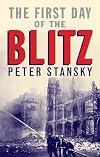
Originally written as an effort to compare September 7-8 of 1940 with other bolt from the blue disasters, particularly 9/11/2001, I don't think that this book has aged very well. This is especially since I gather Prof. Stansky was looking for exemplary lessons, and the exemplary lesson of 9/11 for the United States remains that outrage is no substitute for strategy.
Be that as it may, as simply an examination of that milestone in the Battle of Britain, I did find this a useful read, in terms show more of what the authorities expected, how the great aerial siege on London played out, and what it meant in terms of lived experience.
About the one major gaffe I'd attribute to this work in terms of historical understanding is buried in the footnotes, where Stansky comments about how the Allied aerial bombardment effort had a similar lack of strategic effectiveness compared to the German. Read Phillips Payson O'Brien's "How the War was Won" of 2015 for a cogent defense of Allied strategic bombing as an effective instrument of war. show less
Be that as it may, as simply an examination of that milestone in the Battle of Britain, I did find this a useful read, in terms show more of what the authorities expected, how the great aerial siege on London played out, and what it meant in terms of lived experience.
About the one major gaffe I'd attribute to this work in terms of historical understanding is buried in the footnotes, where Stansky comments about how the Allied aerial bombardment effort had a similar lack of strategic effectiveness compared to the German. Read Phillips Payson O'Brien's "How the War was Won" of 2015 for a cogent defense of Allied strategic bombing as an effective instrument of war. show less
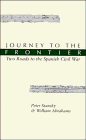
Julian Bell (1908 - 1937) and John Cornford (1915 - 1936): Both were poets, intellectuals, English, and part of the aristocracy. Both had famous relatives (Bell was the nephew of Virginia Woolf and Cornford was the great-grandson of Charles Darwin). How did they both end up fighting for the Republic and ultimately dying in the Spanish Civil War?
Julian started at Cambridge as a soldier for peace in 1929. At twenty-six he was unsure of his future and the critical dilemma of his day was how to show more oppose the war and Hitler at the same time. His life was very full before heading to Spain: poetry, academia, literature, philosophy, politics, and even romance all vied for Julian's attention. He lived all of it to the fullest, including an entanglement with a jealous and clingy yet decidedly married woman in China. What Julian said of the woman was quite amusing, "She's such a devil when she cares to be, and yet completely charming" (p 292). That's love for you.
One of the most poignant comments Julian Bell made, "It's the most dramatic step I've taken, I think, after being born" (p 250).
Rupert John Cornford seemed destined for war, named after a poet who was eager to go on a military expedition. Like Julian Bell, Cornford was absorbed in literature. At fourteen he was critiquing his mother's poetry (and was quite harsh, I might add). He once said of her, "I don't believe chaos begins till things get lost" (p 197) in response to her lack of tidiness. The Young Communist League in London was the center of his life.
John Cornford was only supposed to be in Spain for a few days. He wanted to see the fighting and then get back before anyone missed him. Cornford's companion in Spain, Franz Borkenau, supplements Cornford's movements, filling in details and confirming events.
Julian Bell set out to be an ambulance driver in the Spanish Civil War. What is interesting is that he didn't know how to drive a lorry; he didn't know how to speak Spanish; he didn't know how to administer first aid; he didn't know how to tell if someone was deceased. Nevertheless, he wanted to gain a first-hand military experience. Like John Cornford, Julian Bell had a companion, Richard Rees, to bolster his narrative. show less
Julian started at Cambridge as a soldier for peace in 1929. At twenty-six he was unsure of his future and the critical dilemma of his day was how to show more oppose the war and Hitler at the same time. His life was very full before heading to Spain: poetry, academia, literature, philosophy, politics, and even romance all vied for Julian's attention. He lived all of it to the fullest, including an entanglement with a jealous and clingy yet decidedly married woman in China. What Julian said of the woman was quite amusing, "She's such a devil when she cares to be, and yet completely charming" (p 292). That's love for you.
One of the most poignant comments Julian Bell made, "It's the most dramatic step I've taken, I think, after being born" (p 250).
Rupert John Cornford seemed destined for war, named after a poet who was eager to go on a military expedition. Like Julian Bell, Cornford was absorbed in literature. At fourteen he was critiquing his mother's poetry (and was quite harsh, I might add). He once said of her, "I don't believe chaos begins till things get lost" (p 197) in response to her lack of tidiness. The Young Communist League in London was the center of his life.
John Cornford was only supposed to be in Spain for a few days. He wanted to see the fighting and then get back before anyone missed him. Cornford's companion in Spain, Franz Borkenau, supplements Cornford's movements, filling in details and confirming events.
Julian Bell set out to be an ambulance driver in the Spanish Civil War. What is interesting is that he didn't know how to drive a lorry; he didn't know how to speak Spanish; he didn't know how to administer first aid; he didn't know how to tell if someone was deceased. Nevertheless, he wanted to gain a first-hand military experience. Like John Cornford, Julian Bell had a companion, Richard Rees, to bolster his narrative. show less

Two books on George Orwell have been brought together under one cover. The Unknown Orwell describes the first thirty years of Orwell's life whilst Orwell: The Transformation carries us forward into the crucial years 1933 to 1937 in which Eric Blair, minor novelist, became George Orwell, a powerful writer with a view, a mission, and a message.

Problems in European History: a documentary collection
Collection of essays
Collection of essays
Lists
Awards


You May Also Like


Associated Authors
Statistics
- Works
- 29
- Also by
- 1
- Members
- 568
- Popularity
- #44,050
- Rating
- 3.5
- Reviews
- 5
- ISBNs
- 53
- Languages
- 1