
William Graham Sumner (1840–1910)
Author of Folkways
About the Author
Image credit: courtesy of the The Warren J. Samuels Portrait Collection at Duke University
Works by William Graham Sumner
The science of society 2 copies
The Indians in 1887. 1 copy
Associated Works
Tagged
Common Knowledge
- Canonical name
- Sumner, William Graham
- Birthdate
- 1840-10-30
- Date of death
- 1910-04-12
- Gender
- male
- Education
- Yale College (1863)
- Occupations
- professor (Yale University)
sociologist
economist - Organizations
- Anti-Imperialist Leage (Vice-President)
American Sociological Association (President ∙ 1908-1909)
Yale University - Nationality
- USA
- Birthplace
- Paterson, New Jersey, USA
- Places of residence
- Paterson, New Jersey, USA (birthplace)
- Place of death
- Englewood, New Jersey, USA
- Associated Place (for map)
- New Jersey, USA
Members
Reviews
“Collector’s Edition” What Social Classes Owe to Each Other 1920 [Premium Leather Bound] by William Graham Sumner

William Graham Sumner’s What Social Classes Owe to Each Other is a provocative and unapologetic defense of individual responsibility and limited government from the late 19th century. Sumner argues that society’s progress depends on personal effort and freedom, not on state-imposed equality or social engineering. His central thesis—that social classes owe each other nothing beyond justice and respect for rights—can be as infuriating as it is illuminating.
Readers may find Sumner’s show more tone bracing, even harsh, as he dismisses sentimental charity and warns against what he calls “the Forgotten Man”—the ordinary, responsible citizen who bears the burden of others’ supposed reforms. Yet his arguments force readers to confront enduring questions about fairness, welfare, and the role of government in economic life.
While written in 1883, the book’s themes still resonate in modern debates about social policy, taxation, and personal freedom. It’s not an easy read emotionally—its bluntness borders on ruthless—but it’s an important historical document and a cornerstone of classical liberal thought. show less
Readers may find Sumner’s show more tone bracing, even harsh, as he dismisses sentimental charity and warns against what he calls “the Forgotten Man”—the ordinary, responsible citizen who bears the burden of others’ supposed reforms. Yet his arguments force readers to confront enduring questions about fairness, welfare, and the role of government in economic life.
While written in 1883, the book’s themes still resonate in modern debates about social policy, taxation, and personal freedom. It’s not an easy read emotionally—its bluntness borders on ruthless—but it’s an important historical document and a cornerstone of classical liberal thought. show less
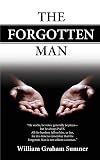
The basic idea behind this book is that any form of involvement of the government in social programs of any kind, any type of government regulation of business, is all designed to lead to enslavement. The 'Forgotten Man' is the one who is the victim of all such legislation.
I just can't agree with that assessment. It was impossible for me to read this book without getting angry. There are hundreds of examples that contradict this book. Really this is nothing more than propaganda.
I just can't agree with that assessment. It was impossible for me to read this book without getting angry. There are hundreds of examples that contradict this book. Really this is nothing more than propaganda.
This review was written for LibraryThing Member Giveaways.
Here is an essay (originally given as a speech) on economics, politics and social structure written by a Yale University professor in 1916 which is amazingly reflective of our country's current situation--over 90 years later!! Some of the language and some of Sumner's ideas do come across as slightly archaic, hardly surprisingly, considering it was written nearly a century ago. It is very well written, as you might expect of a professor from Yale.
The focus of this small tome is the everyday show more working man and woman; i.e., middle-class America by today's nomenclature. It expounds on the problems that stem from the government providing relief to many needy categories of people and institutions and this always takes away from, and is ultimately paid for by, the everyday working man and woman. These poor souls (that would be most of us) are constantly bearing the brunt of the governements' liberal practices. In light of today's headlines and the predicament we find ourselves in currently, this book is certainly an interesting read. If only someone had taken heed 93 years ago.............
Thank you to Library Thing and the publishers for their consideration in sending me this book for review. show less
The focus of this small tome is the everyday show more working man and woman; i.e., middle-class America by today's nomenclature. It expounds on the problems that stem from the government providing relief to many needy categories of people and institutions and this always takes away from, and is ultimately paid for by, the everyday working man and woman. These poor souls (that would be most of us) are constantly bearing the brunt of the governements' liberal practices. In light of today's headlines and the predicament we find ourselves in currently, this book is certainly an interesting read. If only someone had taken heed 93 years ago.............
Thank you to Library Thing and the publishers for their consideration in sending me this book for review. show less
This review was written for LibraryThing Member Giveaways.
I received my copy of "The Forgotten Man" from the Member Giveaway program.
Written in the early twentieth century, and originally orally performed as a speech, I found this essay to be thought provoking and intriguing. While not everything in this essay is applicable to the modern world, and while the examples given are not recent, many of the concepts are at least worth considering.
Sumner writes about the idea that while America espouses ideals of freedom, in reality, our government still show more runs on many older, medieval financial ideas; the old and the new conflict, resulting in more stress on the average, working class man.
Some of his ideas are a bit idealistic, but some are still relevant today.
I definitely think this is an essay worth reading. show less
Written in the early twentieth century, and originally orally performed as a speech, I found this essay to be thought provoking and intriguing. While not everything in this essay is applicable to the modern world, and while the examples given are not recent, many of the concepts are at least worth considering.
Sumner writes about the idea that while America espouses ideals of freedom, in reality, our government still show more runs on many older, medieval financial ideas; the old and the new conflict, resulting in more stress on the average, working class man.
Some of his ideas are a bit idealistic, but some are still relevant today.
I definitely think this is an essay worth reading. show less
This review was written for LibraryThing Member Giveaways.
Lists
You May Also Like


Associated Authors
Statistics
- Works
- 35
- Also by
- 1
- Members
- 508
- Popularity
- #48,805
- Rating
- 3.7
- Reviews
- 8
- ISBNs
- 86
- Languages
- 2