

Joshua Zeitz
Author of Flapper: A Madcap Story of Sex, Style, Celebrity, and the Women Who Made America Modern
About the Author
Joshua Zeitz is a lecturer on American history and fellow of Pembroke College at the University of Cambridge.
Works by Joshua Zeitz
Flapper: A Madcap Story of Sex, Style, Celebrity, and the Women Who Made America Modern (2006) 724 copies, 18 reviews
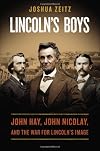
Lincoln's Boys: John Hay, John Nicolay, and the War for Lincoln's Image (2014) 289 copies, 5 reviews
Associated Works
Myth America: Historians Take On the Biggest Legends and Lies About Our Past (2022) — Contributor — 284 copies, 5 reviews
Tagged
Common Knowledge
- Canonical name
- Zeitz, Joshua
- Legal name
- Zeitz, Joshua Michael
- Birthdate
- 1973
- Gender
- male
- Education
- Bordentown Regional High School
Swarthmore College (B.A.)
Brown University (M.A., Ph.D.) - Occupations
- lecturer (Harvard, Rutgers, Cambridge)
- Organizations
- Democratic Party (nominee, House of Representatives, 2008)
- Nationality
- USA
- Places of residence
- Trenton, New Jersey, USA
- Associated Place (for map)
- New Jersey, USA
Members
Reviews
Flapper: A Madcap Story of Sex, Style, Celebrity, and the Women Who Made America Modern by Joshua Zeitz
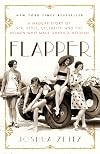
The subtitle of this book is A Madcap Story of Sex, Style, Celebrity, and the Women Who Made America Modern. This book, a social and cultural history of the iconic flapper, is indeed just that. It explores the authors, actresses, illustrators, magazine columnists, advertising executives, and newspaper columnists that defined the flapper of the 1920s, a girl who “was always a caricature—one part fiction one part reality, with a splash of melodrama for good measure…she was a broad and show more sometimes overdrawn social category” (p. 123).
This is a highly readable and compelling work of nonfiction, and a broad introduction to the period. The author covers everything—literally, everything—to give his readers a broad picture of the period and what made the flapper who she was—more of an image that women aspired to than anything else. Zeitz discusses several of the people who helped define the flapper image, among them F. Scott and Zelda Fitzgerald, whose antics were famous throughout America and Europe; the actresses Colleen Moore, Clara Bow, and Louise Brooks; and Coco Chanel, famous for setting trends and inventing the little black dress.
There are lots of really interesting bits about the rise of advertising as a major business and women’s fashion not just in the early 20th century but the 19th as well. I also was interested in what early feminists and suffragettes thought of the flapper—not what I would have thought! This book is well researched, and seems a little bit gossipy at times (especially with regards to Louise Brooks, who makes Zelda Fitzgerald look like Mary Sue in comparison), but that’s the whole fun of the book. There are black and white reproductions of photographs from the era of the major players mentioned in this book. This book is definitely recommended for anyone who wants a general introduction to the 1920s and its culture. show less
This is a highly readable and compelling work of nonfiction, and a broad introduction to the period. The author covers everything—literally, everything—to give his readers a broad picture of the period and what made the flapper who she was—more of an image that women aspired to than anything else. Zeitz discusses several of the people who helped define the flapper image, among them F. Scott and Zelda Fitzgerald, whose antics were famous throughout America and Europe; the actresses Colleen Moore, Clara Bow, and Louise Brooks; and Coco Chanel, famous for setting trends and inventing the little black dress.
There are lots of really interesting bits about the rise of advertising as a major business and women’s fashion not just in the early 20th century but the 19th as well. I also was interested in what early feminists and suffragettes thought of the flapper—not what I would have thought! This book is well researched, and seems a little bit gossipy at times (especially with regards to Louise Brooks, who makes Zelda Fitzgerald look like Mary Sue in comparison), but that’s the whole fun of the book. There are black and white reproductions of photographs from the era of the major players mentioned in this book. This book is definitely recommended for anyone who wants a general introduction to the 1920s and its culture. show less
How History Gets Shaped
Events happen, such as Lincoln's election as president, the prewar battles, and the Civil War. However, as Zeitz demonstrates, history itself gets shaped. His book is worthwhile as a history of the period, much of it concise and trenchant. His biographies of John Hay and John Nicolay are focused and comprehensive. But it's the characterization of Lincoln, the Lincoln we know, or, as Zeitz puts it, the Lincoln Memorial Lincoln and the revisionist histories of the Civil show more War most readers will find enlightening.
In the first part of the book, Zeitz covers the early lives of Hay and Nicolay, the foundation of their individual character. Also here, he succinctly and clearly takes readers through the issues leading up to the election of 1860, in particular the various compromises that kept the lid on a boiling cauldron, as well as the machinations of the election process. The rabid partisanship before and after the war will disabuse readers of the notion there is anything singular about current American politics. Along the way, Zeitz offers a few keen observations that still ring true, among them this on postwar prosperity:
"Rarely did it occur to business and political elites that they had not prospered strictly by the rules of the free labor economy. Railroad companies profited heavily from government land grants and financial subsidies. The Timber Culture Act (1873) and the Desert Land Act (1877) gave away millions of acres of public land to those with the means to plant trees and irrigate arid allotments in the Southwest....At every turn, an activist state born of necessity to prosecute the Civil War found new and increasingly inventive ways to subsidize business concerns that had grown out of the same armed struggle. Many of the primary recipients of this public largesse remained oblivious to the role that the government played in making them wealthy."
In the last third, Zeitz shows how Hay and Nicolay, with the support of Robert Lincoln, shaped the President Lincoln we know today, primarily in their serialized and widely read 10-volume biography, Abraham Lincoln: A History, and Nicolay's condensed one-volume version, A Short Life of Abraham Lincoln: Condensed From Nicolay & Hay's Abraham Lincoln: A History. Without them, we might have inherited a different Lincoln, one more shaped by William Herndon, Lincoln's old Springfield law partner, and others, without the pair's first-hand knowledge of Lincoln's true character and witness-to-history status.
While successful in giving us the Lincoln we know today, Hay and Nicolay were less fruitful in preserving the historical perspective that the South rebelled, that a Civil War was fought, and that the central issue leading to conflict was slavery. Revisionism took over for a reason Zeitz explores, leaving us with concepts like The War Between the States, competing economic systems, states rights, brother against brother, and the like.
Finally, Zeitz does an excellent job of illustrating how Hay and Nicolay's attitude on race evolved from when they were young men in pre-Civil War America to when they were older and wiser men. Anti-slavery didn't mean racial equality to them, or Lincoln, or most any anti-slavery advocate. But over time, attitudes changed.
All in all, you'll find it a superb and enlightening excursion into the most crucial period in the Republic's history. Includes footnotes, bibliography, index, and a small collection of photos. show less
Events happen, such as Lincoln's election as president, the prewar battles, and the Civil War. However, as Zeitz demonstrates, history itself gets shaped. His book is worthwhile as a history of the period, much of it concise and trenchant. His biographies of John Hay and John Nicolay are focused and comprehensive. But it's the characterization of Lincoln, the Lincoln we know, or, as Zeitz puts it, the Lincoln Memorial Lincoln and the revisionist histories of the Civil show more War most readers will find enlightening.
In the first part of the book, Zeitz covers the early lives of Hay and Nicolay, the foundation of their individual character. Also here, he succinctly and clearly takes readers through the issues leading up to the election of 1860, in particular the various compromises that kept the lid on a boiling cauldron, as well as the machinations of the election process. The rabid partisanship before and after the war will disabuse readers of the notion there is anything singular about current American politics. Along the way, Zeitz offers a few keen observations that still ring true, among them this on postwar prosperity:
"Rarely did it occur to business and political elites that they had not prospered strictly by the rules of the free labor economy. Railroad companies profited heavily from government land grants and financial subsidies. The Timber Culture Act (1873) and the Desert Land Act (1877) gave away millions of acres of public land to those with the means to plant trees and irrigate arid allotments in the Southwest....At every turn, an activist state born of necessity to prosecute the Civil War found new and increasingly inventive ways to subsidize business concerns that had grown out of the same armed struggle. Many of the primary recipients of this public largesse remained oblivious to the role that the government played in making them wealthy."
In the last third, Zeitz shows how Hay and Nicolay, with the support of Robert Lincoln, shaped the President Lincoln we know today, primarily in their serialized and widely read 10-volume biography, Abraham Lincoln: A History, and Nicolay's condensed one-volume version, A Short Life of Abraham Lincoln: Condensed From Nicolay & Hay's Abraham Lincoln: A History. Without them, we might have inherited a different Lincoln, one more shaped by William Herndon, Lincoln's old Springfield law partner, and others, without the pair's first-hand knowledge of Lincoln's true character and witness-to-history status.
While successful in giving us the Lincoln we know today, Hay and Nicolay were less fruitful in preserving the historical perspective that the South rebelled, that a Civil War was fought, and that the central issue leading to conflict was slavery. Revisionism took over for a reason Zeitz explores, leaving us with concepts like The War Between the States, competing economic systems, states rights, brother against brother, and the like.
Finally, Zeitz does an excellent job of illustrating how Hay and Nicolay's attitude on race evolved from when they were young men in pre-Civil War America to when they were older and wiser men. Anti-slavery didn't mean racial equality to them, or Lincoln, or most any anti-slavery advocate. But over time, attitudes changed.
All in all, you'll find it a superb and enlightening excursion into the most crucial period in the Republic's history. Includes footnotes, bibliography, index, and a small collection of photos. show less
How History Gets Shaped
Events happen, such as Lincoln's election as president, the prewar battles, and the Civil War. However, as Zeitz demonstrates, history itself gets shaped. His book is worthwhile as a history of the period, much of it concise and trenchant. His biographies of John Hay and John Nicolay are focused and comprehensive. But it's the characterization of Lincoln, the Lincoln we know, or, as Zeitz puts it, the Lincoln Memorial Lincoln and the revisionist histories of the Civil show more War most readers will find enlightening.
In the first part of the book, Zeitz covers the early lives of Hay and Nicolay, the foundation of their individual character. Also here, he succinctly and clearly takes readers through the issues leading up to the election of 1860, in particular the various compromises that kept the lid on a boiling cauldron, as well as the machinations of the election process. The rabid partisanship before and after the war will disabuse readers of the notion there is anything singular about current American politics. Along the way, Zeitz offers a few keen observations that still ring true, among them this on postwar prosperity:
"Rarely did it occur to business and political elites that they had not prospered strictly by the rules of the free labor economy. Railroad companies profited heavily from government land grants and financial subsidies. The Timber Culture Act (1873) and the Desert Land Act (1877) gave away millions of acres of public land to those with the means to plant trees and irrigate arid allotments in the Southwest....At every turn, an activist state born of necessity to prosecute the Civil War found new and increasingly inventive ways to subsidize business concerns that had grown out of the same armed struggle. Many of the primary recipients of this public largesse remained oblivious to the role that the government played in making them wealthy."
In the last third, Zeitz shows how Hay and Nicolay, with the support of Robert Lincoln, shaped the President Lincoln we know today, primarily in their serialized and widely read 10-volume biography, Abraham Lincoln: A History, and Nicolay's condensed one-volume version, A Short Life of Abraham Lincoln: Condensed From Nicolay & Hay's Abraham Lincoln: A History. Without them, we might have inherited a different Lincoln, one more shaped by William Herndon, Lincoln's old Springfield law partner, and others, without the pair's first-hand knowledge of Lincoln's true character and witness-to-history status.
While successful in giving us the Lincoln we know today, Hay and Nicolay were less fruitful in preserving the historical perspective that the South rebelled, that a Civil War was fought, and that the central issue leading to conflict was slavery. Revisionism took over for a reason Zeitz explores, leaving us with concepts like The War Between the States, competing economic systems, states rights, brother against brother, and the like.
Finally, Zeitz does an excellent job of illustrating how Hay and Nicolay's attitude on race evolved from when they were young men in pre-Civil War America to when they were older and wiser men. Anti-slavery didn't mean racial equality to them, or Lincoln, or most any anti-slavery advocate. But over time, attitudes changed.
All in all, you'll find it a superb and enlightening excursion into the most crucial period in the Republic's history. Includes footnotes, bibliography, index, and a small collection of photos. show less
Events happen, such as Lincoln's election as president, the prewar battles, and the Civil War. However, as Zeitz demonstrates, history itself gets shaped. His book is worthwhile as a history of the period, much of it concise and trenchant. His biographies of John Hay and John Nicolay are focused and comprehensive. But it's the characterization of Lincoln, the Lincoln we know, or, as Zeitz puts it, the Lincoln Memorial Lincoln and the revisionist histories of the Civil show more War most readers will find enlightening.
In the first part of the book, Zeitz covers the early lives of Hay and Nicolay, the foundation of their individual character. Also here, he succinctly and clearly takes readers through the issues leading up to the election of 1860, in particular the various compromises that kept the lid on a boiling cauldron, as well as the machinations of the election process. The rabid partisanship before and after the war will disabuse readers of the notion there is anything singular about current American politics. Along the way, Zeitz offers a few keen observations that still ring true, among them this on postwar prosperity:
"Rarely did it occur to business and political elites that they had not prospered strictly by the rules of the free labor economy. Railroad companies profited heavily from government land grants and financial subsidies. The Timber Culture Act (1873) and the Desert Land Act (1877) gave away millions of acres of public land to those with the means to plant trees and irrigate arid allotments in the Southwest....At every turn, an activist state born of necessity to prosecute the Civil War found new and increasingly inventive ways to subsidize business concerns that had grown out of the same armed struggle. Many of the primary recipients of this public largesse remained oblivious to the role that the government played in making them wealthy."
In the last third, Zeitz shows how Hay and Nicolay, with the support of Robert Lincoln, shaped the President Lincoln we know today, primarily in their serialized and widely read 10-volume biography, Abraham Lincoln: A History, and Nicolay's condensed one-volume version, A Short Life of Abraham Lincoln: Condensed From Nicolay & Hay's Abraham Lincoln: A History. Without them, we might have inherited a different Lincoln, one more shaped by William Herndon, Lincoln's old Springfield law partner, and others, without the pair's first-hand knowledge of Lincoln's true character and witness-to-history status.
While successful in giving us the Lincoln we know today, Hay and Nicolay were less fruitful in preserving the historical perspective that the South rebelled, that a Civil War was fought, and that the central issue leading to conflict was slavery. Revisionism took over for a reason Zeitz explores, leaving us with concepts like The War Between the States, competing economic systems, states rights, brother against brother, and the like.
Finally, Zeitz does an excellent job of illustrating how Hay and Nicolay's attitude on race evolved from when they were young men in pre-Civil War America to when they were older and wiser men. Anti-slavery didn't mean racial equality to them, or Lincoln, or most any anti-slavery advocate. But over time, attitudes changed.
All in all, you'll find it a superb and enlightening excursion into the most crucial period in the Republic's history. Includes footnotes, bibliography, index, and a small collection of photos. show less
Yesterday is not ours to recover, but tomorrow is ours to win or lose.
LBJ
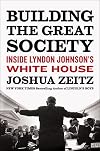
Building the Great Society: Inside Lyndon Johnson's White House by Joshua Zeitz is the story of LBJ’s grand plan for the United States. Zeitz is the author of several books on American political and social history and has written for the New York Times, Washington Post, Los Angeles Times, The New Republic, The Atlantic, Dissent, and American Heritage. Zeitz appeared as a commentator on two PBS documentaries – Boomer show more Century, and Ken Burns' Prohibition — and has commented on public policy matters on CNBC and CNN International. He has held faculty positions at Harvard, Cambridge, and Princeton and is the author of four books.
Today, Johnson is probably more associated with the Vietnam War than with his Great Society. Zeitz looks at the president and his staff along with the Great Society and Civil Rights programs without making Vietnam the central point of the presidency. The war does come into the book near the end, but the primary discussion is not the war. LBJ was a Texan and it showed in some very stereotypical ways. He was gruff and used his power and favors owed to gain what he wanted. He was not above intimidating his staff and opponents. In one example while swimming with one of his senior staff, Johnson stopped at the right spot where his feet firmly touched the bottom of the pool but the shorter staff member needed to tread water while Johnson poked at the staffer’s chest and berated him. Johnson always took a position of power. He also enjoyed panicking guests by driving his (amphibious) car into the lake on his ranch while yelling that the brakes went out.
Johnson could be a bully but he did have a soft spot. He was a teacher in poor, primarily Mexican communities. The racism and poverty had a deep effect on Johnson. America was at its highest point of wealth and industry. The vast richness of the United States should not be squandered. All Americans should benefit. Johnson spoke In a 1965 Speech at the signing of the Higher Education Act in San Marcos, TX:
I shall never forget the faces of the boys and the girls in that little Welhausen Mexican School, and I remember even yet the pain of realizing and knowing then that college was closed to practically every one of those children because they were too poor. And I think it was then that I made up my mind that this nation could never rest while the door to knowledge remained closed to any American.
Johnson worked on many programs that would seem out of place for his public image. The Civil Rights Act of 1964 was a project that evaded Kennedy. Johnson used all his power and influence to push through the Act. It became the starting point for his Great Society Program which became the 1964 campaign slogan. Johnson believed that the Civil Rights Act had cost him and the Democrats the South. Johnson did, in fact, lose the Deep South (and Arizona) to Goldwater but carried the rest of the country. He had a mandate for his Great Society. The Voting Rights Act was pushed through despite resistance from southern leaders. He appointed Thurgood Marshall to the Supreme Court and Robert C. Weaver became the first African-American to hold a cabinet position. Head Start, Food Stamps, National Endowment for the Arts and the Federal Work Study Program all saw their start under Johnson. Medicare, Medicaid, and public broadcasting all saw growth under LBJ. Johnson’s Great Society did not come easily. Congress became conscious of costs, especially with the growing spending on Vietnam, and racial issues in southern states. In the north civil rights was support in word but not always deed. People would pay lip service to civil rights but resist desegregation of schools. Much like the words of Shakespeare’s Mark Antony, Johnson too seemed to have experienced "The evil that men do lives after them; the good is oft interred with their bones.” Vietnam overshadowed the good Johnson accomplished. He felt the unfairness and once remarked:
If one morning I walked on top of the water across the Potomac River, the headline that afternoon would read: "President Can't Swim.".
Zeitz gives the reader an inside look at the Johnson presidency. His staff members and inner workings of the presidential policies are examined in detail. Original source material and first-hand accounts as reference material make this book an excellent account of LBJ’s years as president. Also, moving Vietnam to the backburner allows the read to see the “good” Johnson intended to accomplish with his presidency. Personally, Johnson was far from perfect; professionally, too, he believed the ends sometimes justified the means. An important work on the man who shaped modern liberal policy and improved the lives of many Americans.
Available January 30, 2018 show less
LBJ
Building the Great Society: Inside Lyndon Johnson's White House by Joshua Zeitz is the story of LBJ’s grand plan for the United States. Zeitz is the author of several books on American political and social history and has written for the New York Times, Washington Post, Los Angeles Times, The New Republic, The Atlantic, Dissent, and American Heritage. Zeitz appeared as a commentator on two PBS documentaries – Boomer show more Century, and Ken Burns' Prohibition — and has commented on public policy matters on CNBC and CNN International. He has held faculty positions at Harvard, Cambridge, and Princeton and is the author of four books.
Today, Johnson is probably more associated with the Vietnam War than with his Great Society. Zeitz looks at the president and his staff along with the Great Society and Civil Rights programs without making Vietnam the central point of the presidency. The war does come into the book near the end, but the primary discussion is not the war. LBJ was a Texan and it showed in some very stereotypical ways. He was gruff and used his power and favors owed to gain what he wanted. He was not above intimidating his staff and opponents. In one example while swimming with one of his senior staff, Johnson stopped at the right spot where his feet firmly touched the bottom of the pool but the shorter staff member needed to tread water while Johnson poked at the staffer’s chest and berated him. Johnson always took a position of power. He also enjoyed panicking guests by driving his (amphibious) car into the lake on his ranch while yelling that the brakes went out.
Johnson could be a bully but he did have a soft spot. He was a teacher in poor, primarily Mexican communities. The racism and poverty had a deep effect on Johnson. America was at its highest point of wealth and industry. The vast richness of the United States should not be squandered. All Americans should benefit. Johnson spoke In a 1965 Speech at the signing of the Higher Education Act in San Marcos, TX:
I shall never forget the faces of the boys and the girls in that little Welhausen Mexican School, and I remember even yet the pain of realizing and knowing then that college was closed to practically every one of those children because they were too poor. And I think it was then that I made up my mind that this nation could never rest while the door to knowledge remained closed to any American.
Johnson worked on many programs that would seem out of place for his public image. The Civil Rights Act of 1964 was a project that evaded Kennedy. Johnson used all his power and influence to push through the Act. It became the starting point for his Great Society Program which became the 1964 campaign slogan. Johnson believed that the Civil Rights Act had cost him and the Democrats the South. Johnson did, in fact, lose the Deep South (and Arizona) to Goldwater but carried the rest of the country. He had a mandate for his Great Society. The Voting Rights Act was pushed through despite resistance from southern leaders. He appointed Thurgood Marshall to the Supreme Court and Robert C. Weaver became the first African-American to hold a cabinet position. Head Start, Food Stamps, National Endowment for the Arts and the Federal Work Study Program all saw their start under Johnson. Medicare, Medicaid, and public broadcasting all saw growth under LBJ. Johnson’s Great Society did not come easily. Congress became conscious of costs, especially with the growing spending on Vietnam, and racial issues in southern states. In the north civil rights was support in word but not always deed. People would pay lip service to civil rights but resist desegregation of schools. Much like the words of Shakespeare’s Mark Antony, Johnson too seemed to have experienced "The evil that men do lives after them; the good is oft interred with their bones.” Vietnam overshadowed the good Johnson accomplished. He felt the unfairness and once remarked:
If one morning I walked on top of the water across the Potomac River, the headline that afternoon would read: "President Can't Swim.".
Zeitz gives the reader an inside look at the Johnson presidency. His staff members and inner workings of the presidential policies are examined in detail. Original source material and first-hand accounts as reference material make this book an excellent account of LBJ’s years as president. Also, moving Vietnam to the backburner allows the read to see the “good” Johnson intended to accomplish with his presidency. Personally, Johnson was far from perfect; professionally, too, he believed the ends sometimes justified the means. An important work on the man who shaped modern liberal policy and improved the lives of many Americans.
Available January 30, 2018 show less
Lists
Awards

You May Also Like


Associated Authors
Statistics
- Works
- 6
- Also by
- 1
- Members
- 1,160
- Popularity
- #22,146
- Rating
- 3.9
- Reviews
- 26
- ISBNs
- 24
- Languages
- 1