
Lucy Moore (1) (1970–)
Author of Anything Goes: A Biography of the Roaring Twenties
For other authors named Lucy Moore, see the disambiguation page.
About the Author
Lucy Moore was educated in the United States and Britain before studying history at Edinburgh University. Voted one of the top twenty young writers by the Independent on Sunday in 2001, her books include the bestselling Maharanis: The Lives and Times of Three Generations of Indian Princesses and show more the acclaimed Liberty: The Lives and Times of Six Women in Revolutionary France. She lives in London with her husband and two sons. show less
Image credit: Lucy Moore
Works by Lucy Moore
Maharanis: The Extraordinary Tale of Four Indian Queens and Their Journey from Purdah to Parliament (2004) 178 copies, 4 reviews
Tagged
Common Knowledge
- Canonical name
- Moore, Lucy
- Birthdate
- 1970
- Gender
- female
- Education
- University of Edinburgh
- Occupations
- writer
historian
biographer - Nationality
- UK
- Birthplace
- London, England, UK
- Places of residence
- UK
USA - Map Location
- England, UK
Members
Reviews
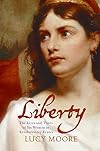
It may have taken until the late 1960s for the expression ‘the personal is political’ to condense an important truth, but — as Lucy Moore’s fascinating new book shows — that truth is not a new one. Liberty tells the story of the French Revolution through the lives of the great salonnière Germaine de Staël, the passionate middle-class ideologue Manon Roland, the kind-hearted flibbertigibbet Thérésia de Fontenay, the feisty former courtesan Théroigne de Méricourt and the much show more younger Juliette Récamier — whose beauty and chasity (a very rare thing, to judge by this book) caused her to become an icon of the Republic, not to mention the intimate life of Josephine Bonaparte. This book takes them, jointly and severally, through exile, intrigue, imprisonment in rat-infested jails, multiple lovers, bloodbaths and reversals, not to mention some fabulous parties. show less
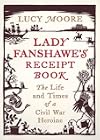
In the mid-1600s, Lady Ann Fanshawe kept both a receipt book, filled with her personal recipes for medicines, food, and drinks, and wrote a memoir of her life to pass down to her children. Lucy Moore uses these documents to recreate the life of this woman, who lived through the English Civil war that pitted Charles I against Oliver Cromwell. Ann and her husband, Richard, were staunch Royalists, so their life during this time was full of quick departures, new countries, and uncertainty. show more Through it all they seem to have maintained a loving and respectful partnership. They had thirteen children together, only five of whom survived to adulthood. Moore reprints a receipt at the beginning of each chapter, mainly medicinal recipes, and then uses the recipe as a jumping off point to talk about what was going on in Ann's life or in the larger English world.
I love this kind of nonfiction, that takes primary source material from long ago to illuminate the life of a woman. Certainly Ann, who was literate and wealthy, did not live an "average" woman's life of the 1600s, but her experience still sheds light on what life was like for the less known and studied people of the era. I really enjoyed this and would recommend to anyone who likes this sort of nonfiction - I think you know who you are!
Original publication date: 2017
Author’s nationality: British
Original language: English
Length: 416 pages
Rating: 4 stars
Format/where I acquired the book: gift
Why I read this: off the shelf, interested in the topic show less
I love this kind of nonfiction, that takes primary source material from long ago to illuminate the life of a woman. Certainly Ann, who was literate and wealthy, did not live an "average" woman's life of the 1600s, but her experience still sheds light on what life was like for the less known and studied people of the era. I really enjoyed this and would recommend to anyone who likes this sort of nonfiction - I think you know who you are!
Original publication date: 2017
Author’s nationality: British
Original language: English
Length: 416 pages
Rating: 4 stars
Format/where I acquired the book: gift
Why I read this: off the shelf, interested in the topic show less
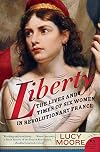
Women's roles in revolution has interested me ever since I studied Modern European history at uni so I was very excited when I found this book. I was even more excited when I discovered it covered some territory I wasn't all that familiar with.
This accessible bio covers the lives of six women (from all classes) who lived and were politically active (or as active as women were allowed to be) during the French Revolution and Napoleonic era. It refreshingly tells the 'other' side of the story, show more essentially how the various political ideologies and stages of this tumultuous time in France changed women's influence and positions in society. And while that may sound somewhat dry it wasn't at all. I found it very readable and at times almost gossipy (my favourite type of bio) although that's not to say it wasn't well researched with lots of notes, references, glossaries and gorgeous colour plates. Be warned though, it probably pays to know your French Rev. basics before reading as what the men did is mainly covered in reference to the women.
Most enjoyable, as was reading it with my good friend Kim :-). show less
This accessible bio covers the lives of six women (from all classes) who lived and were politically active (or as active as women were allowed to be) during the French Revolution and Napoleonic era. It refreshingly tells the 'other' side of the story, show more essentially how the various political ideologies and stages of this tumultuous time in France changed women's influence and positions in society. And while that may sound somewhat dry it wasn't at all. I found it very readable and at times almost gossipy (my favourite type of bio) although that's not to say it wasn't well researched with lots of notes, references, glossaries and gorgeous colour plates. Be warned though, it probably pays to know your French Rev. basics before reading as what the men did is mainly covered in reference to the women.
Most enjoyable, as was reading it with my good friend Kim :-). show less
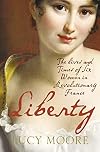
I read this close after Marge Piercy's fictional account of women during the French Revolution, 'City of Darkness', and I now have a new-found appreciation of Piercy's ability to portray women such as Pauline Leon and Clare Lacombe in a sympathetic light!
Leon, Lacombe and Theroigne de Mericourt were three working-class women who enthusiastically suported the Revolution in a bid to escape the poverty and confines of their lives; in contrast, Germaine de Stael, Theresia Cabarrus (later show more Tallien) and Juliette Recamier were beautiful and clever mascots of the new republican era, leading society and fashion from their salons and through their lovers.
What I found most interesting is that, even in the midst of chaos, women were still kept firmly 'in their place' - the home; intelligent women could have their say, and even exert a degree of influence, but only as represented by a husband or impressionable lover. Germaine de Stael, though maintaining in her journal that she did not interfere with her husband's business, was the brains of the marriage; and Theresia Tallien persuaded her lover to aid in the escape of many of her royalist friends, despite the fact that when she met him, he had been sent to Bordeaux from Paris to 'purge' the area of counter-revolutionaries! The revolutionary zeal of powerless women like Pauline and Theroigne was tolerated until their behaviour became a threat to the men in power, and then their fellow citizens turned against them. 'Fraternity' was to be taken literally during the French Revolution, and women instructed to support the Republic by caring for their families, not by toting pistols and speaking out in public!
I warmed to the eloquence and perseverance of Germaine, the noble spirit and wiles of Theresia, and the youth and beauty of Juliette (really more a celebrity of the Directory than the Revolution), but I will admit that Pauline and the other more outspoken women did come across as rather overbearing - though it is hard to comprehend their situations from a modern perspective.
Detailed, engaging and generous biographies from Moore - recommended. show less
Leon, Lacombe and Theroigne de Mericourt were three working-class women who enthusiastically suported the Revolution in a bid to escape the poverty and confines of their lives; in contrast, Germaine de Stael, Theresia Cabarrus (later show more Tallien) and Juliette Recamier were beautiful and clever mascots of the new republican era, leading society and fashion from their salons and through their lovers.
What I found most interesting is that, even in the midst of chaos, women were still kept firmly 'in their place' - the home; intelligent women could have their say, and even exert a degree of influence, but only as represented by a husband or impressionable lover. Germaine de Stael, though maintaining in her journal that she did not interfere with her husband's business, was the brains of the marriage; and Theresia Tallien persuaded her lover to aid in the escape of many of her royalist friends, despite the fact that when she met him, he had been sent to Bordeaux from Paris to 'purge' the area of counter-revolutionaries! The revolutionary zeal of powerless women like Pauline and Theroigne was tolerated until their behaviour became a threat to the men in power, and then their fellow citizens turned against them. 'Fraternity' was to be taken literally during the French Revolution, and women instructed to support the Republic by caring for their families, not by toting pistols and speaking out in public!
I warmed to the eloquence and perseverance of Germaine, the noble spirit and wiles of Theresia, and the youth and beauty of Juliette (really more a celebrity of the Directory than the Revolution), but I will admit that Pauline and the other more outspoken women did come across as rather overbearing - though it is hard to comprehend their situations from a modern perspective.
Detailed, engaging and generous biographies from Moore - recommended. show less
Awards


You May Also Like


Statistics
- Works
- 9
- Members
- 1,288
- Popularity
- #19,903
- Rating
- 3.6
- Reviews
- 18
- ISBNs
- 114
- Languages
- 5
- Favorited
- 2
