
Irina Ratushinskai︠a︡ (1954–2017)
Author of Grey is the Colour of Hope
About the Author
Irina Borisovna Ratushinskaya was born in Odessa, Ukraine on March 4, 1954. She received a bachelor's degree and master's degree in physics at Odessa I.I. Mechnikov National University. She taught for several years at a primary school, where she tussled with the administration over its show more discrimination against Jewish students and was forced out. In April 1983, she was sentenced to seven years of forced labor because the government viewed her poetry as anti-Soviet propaganda. At the work camp, she made gloves for Soviet workmen and secretly wrote poetry that was smuggled out of the camp to her husband. She was released in October 1986 on the eve of the Ronald Reagan- Mikhail Gorbachev summit in Reykjavik, Iceland. Her camp experience resulted in a memoir entitled Grey Is the Colour of Hope and more than 250 poems that were published in collection like Beyond the Limit. She died from cancer on July 5, 2017 at the age of 63. (Bowker Author Biography) show less
Image credit: Photo credit: Mikhail Evstafiev
Works by Irina Ratushinskai︠a︡
Associated Works
Against Forgetting: Twentieth-Century Poetry of Witness (1993) — Contributor — 376 copies, 2 reviews
Tagged
Common Knowledge
- Canonical name
- Ratushinskai︠a︡, Irina
- Other names
- Ratushinskaya, Irina Georgiyevna
- Birthdate
- 1954-03-04
- Date of death
- 2017-07-05
- Gender
- female
- Education
- Odessa University (MA|Physics)
- Occupations
- poet
essayist
memoirist
teacher (primary school) - Organizations
- Northwestern University (poet in residence|1987-1989)
- Nationality
- Russia
- Birthplace
- Odessa, Ukraine, Soviet Union
- Places of residence
- USA
London, England, UK
Moscow, Russia - Place of death
- Moscow, Russia
Members
Reviews
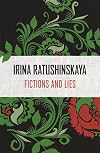
Written in 1999 by dissident author Irina Ratushinskaya, Fictions and Lies takes place in 1970 in the months just prior to the celebration for the 100th anniversary of Lenin’s death in the Soviet Union. An author has just died while being tailed by KGB agents, who want to ensure that any anti-Soviet manuscripts he’s left behind are confiscated. What unfolds from there revolves around two sets of people: the artists (along with those who support them) and those working for the State to show more suppress them. That may sound like a dated, possibly clunky story, but it was far from it. Ratushinskaya is deft at showing the insidious ways the writers’ circles are infiltrated, and the human connections between the groups, through family members or friends, creating a nuanced, chilling story. Having been imprisoned herself for several years after being tried in Kiev, she seems to have written from direct knowledge.
Quotes:
On aging:
“You know what your problem is, old fellow? I read about it once in an American journal – it’s called a ‘mid-life crisis.’ God knows what that translates to in Russian, but the idea’s a sound one. Something happens to you at that age. The more talented you are, the worse it will be. Ailments of all sorts, depression, a feeling that everything’s in the past, and there’s nothing to look forward to.”
“The old man would lie on his bunk above the stove, while the wind howled outside and a cold new moon drew in its belly. There were times when Nikolin thought of this kind of life as a sound way of existence, and envisaged it for himself. Not now, of course, but at some time in the future. To retreat from everyone and everything, and never hurry again. Think, and tend the bees, nothing else. But what if you were to find something inside yourself that you didn’t like? It would be too late to change anything.”
On manipulation:
“The art of managing people consists of two simple things: knowing what a person most wants and what he most fears. Then acting accordingly.”
On Russian History, the emperor Paul I:
“Who had reduced the serfs’ obligatory period of work for their owners to three days a week? Why, that came to less than current taxes in some countries! And who tightened the reins on the galloping growth of aristocratic privilege? No wonder the aristocracy lined up against him, had him murdered, and slandered him posthumously: the dead can’t reply.” show less
Quotes:
On aging:
“You know what your problem is, old fellow? I read about it once in an American journal – it’s called a ‘mid-life crisis.’ God knows what that translates to in Russian, but the idea’s a sound one. Something happens to you at that age. The more talented you are, the worse it will be. Ailments of all sorts, depression, a feeling that everything’s in the past, and there’s nothing to look forward to.”
“The old man would lie on his bunk above the stove, while the wind howled outside and a cold new moon drew in its belly. There were times when Nikolin thought of this kind of life as a sound way of existence, and envisaged it for himself. Not now, of course, but at some time in the future. To retreat from everyone and everything, and never hurry again. Think, and tend the bees, nothing else. But what if you were to find something inside yourself that you didn’t like? It would be too late to change anything.”
On manipulation:
“The art of managing people consists of two simple things: knowing what a person most wants and what he most fears. Then acting accordingly.”
On Russian History, the emperor Paul I:
“Who had reduced the serfs’ obligatory period of work for their owners to three days a week? Why, that came to less than current taxes in some countries! And who tightened the reins on the galloping growth of aristocratic privilege? No wonder the aristocracy lined up against him, had him murdered, and slandered him posthumously: the dead can’t reply.” show less

I read this book many years ago but it has stayed with me quite vividly. She was so courageous - how simple that sounds, how incredibly hard and complex in her reality. Her spirit was not bowed by one of the most brutal, ugliest regimes ever imagined. On December 10, to mark Human Rights Day, the prisoners ran naked into the snow - knowing they'd be punished for it, but knowing they needed to do it to feel like human beings, independent, in control of their rights, not beaten nor defeated. show more Their defiant spirit saved them. And set a model for all of us to act and be courageous. show less

It’s not a comfortable book, but it is worth reading. This is the memoir of a “zek”, an inmate in a Soviet prison camp. Irina Ratushinskaya is a poet and human rights activist who ends up in the Small Zone, with a small group of other political prisoners. She is defiant, astute, funny, and infinitely courageous, as she details the survival techniques of the group, and the constant attempts of the KGB to break their spirits.
The most striking thing about this book it its focus on the inner life of Ratushinskaya rather than her conditions. Not that there isn't plenty in the book about the living conditions in the Soviet camp, but it isn't the focus. Most of the struggles of the women are, in fact, of their own making as they defy the system that imprisons them. Ratushinskaya is an activist, and it shows.
Lists
Awards

You May Also Like


Associated Authors
Statistics
- Works
- 19
- Also by
- 2
- Members
- 551
- Popularity
- #45,289
- Rating
- 4.1
- Reviews
- 5
- ISBNs
- 40
- Languages
- 6
- Favorited
- 3