
John Besh
Author of My New Orleans: The Cookbook
Works by John Besh
Besh Big Easy: 101 Home Cooked New Orleans Recipes (Volume 4) (John Besh) (2015) 41 copies, 1 review
Associated Works
Chefs' Easy Weeknight Dinners: 100 fast & delicious recipes from star chefs (2014) — Contributor — 44 copies
Tagged
Common Knowledge
- Canonical name
- Besh, John
- Gender
- male
- Education
- Culinary Institute of America
- Organizations
- US Marine Corps
- Awards and honors
- James Beard Award for Best Chef in the Southeast (2006)
James Beard Foundation Award (Cookbook Hall of Fame, 2010) - Places of residence
- Slidell, Louisiana, USA
New Orleans, Louisiana, USA
Meridian, Mississippi, USA (birth) - Associated Place (for map)
- Louisiana, USA
Members
Reviews

The key to this book is in the subtitle—“200 of My Favorite Recipes & Stories from My Hometown.” Note the possessive “my” that shows up twice in that sentence? “My” New Orleans is really that—a very personal account of one man’s love—no, adoration—of food and country. In between all the five-star recipes (which, to his credit, don’t usually require five-star kitchens to recreate) are Besh’s own stories and memories, ruminations and advice. Sometimes, the stories are show more funny. “. . .he kept a boat,” Besh remembers about his very first shrimping trip “which, at least in my memory, resembled the African Queen.” Sometimes, they are startling and not funny; “The worst thing about combat in the first gulf war was that the smell of toasted almonds meant a chemical attack.”
Really, after reading something like that I felt honor bound to try every recipe in the chapter (it’s the one on fishing) just to show my respect. Starting with the Trout Amandine.
Parts of this book are agonizing for other reasons. Devoted to the culinary culture of New Orleans, there is naturally an entire section on oysters. Besh writes movingly about the fears that Katrina might have destroyed the oyster beds, and the conflict they felt at his restaurant when, beds not yet recovered, they had to send to Florida to get any. “Our oysters are big and meaty and splendid eaten on the half shell with cold beer and spicy cocktail sauce. They allow preparations that you just can’t do with other oysters, like frying, roasting, and grilling. Those little briny ones from the other coastal states? They’re fine, but they just don’t work for us.” I’m sitting here in North Carolina trying not to take offense, and also wondering if, once again, Besh’s restaurant is being forced to send away for oysters. Hurricanes come and are gone in a few days. Their effects last a few seasons, but nature is remarkably resilient and oysters have been recovering from hurricanes since they have had shells.
Oil spills that go on for months and months? Not so easy to brush off.
The passion and the stories make Besh’s book feel . . . important. From a cultural perspective. What impressed me most, though, once I got past the awe and intimidation and the teary-eyed reactions to all the stories, was just how useful a book My New Orleans actually is. As a restaurateur Besh is nothing if not pragmatic. “Accept substitutes,” he advises, although he is usually advocating for locally produced products. Apparently, you can make a great gumbo without using Jacob’s andouille sausage. He explains the secrets of making roux (a paste of flour browned in hot oil) in two sentences, where my Times-Picayune reprint cookbook takes nearly two pages and contains alarming phrases like “whisk for 50-70 minutes.” He offers shortcuts and tricks to make life easier in the kitchen, and he has an entire chapter devoted to figs. Since I can never seem to get my figs to make it uneaten from the tree in my back yard to my kitchen counter, I find this rather amazing.
So far, I haven’t had a miss trying out recipes—although I admit I’ve been a little timid in my explorations. But some of the corn my neighbor brought over was devoted to his Grilled Corn on the Cob with Crab Fat butter and I have to say I may never be without crab fat butter again in my life. It was a little tedious to make because I don’t like boiling crabs, but oh, mama. read full review show less
Really, after reading something like that I felt honor bound to try every recipe in the chapter (it’s the one on fishing) just to show my respect. Starting with the Trout Amandine.
Parts of this book are agonizing for other reasons. Devoted to the culinary culture of New Orleans, there is naturally an entire section on oysters. Besh writes movingly about the fears that Katrina might have destroyed the oyster beds, and the conflict they felt at his restaurant when, beds not yet recovered, they had to send to Florida to get any. “Our oysters are big and meaty and splendid eaten on the half shell with cold beer and spicy cocktail sauce. They allow preparations that you just can’t do with other oysters, like frying, roasting, and grilling. Those little briny ones from the other coastal states? They’re fine, but they just don’t work for us.” I’m sitting here in North Carolina trying not to take offense, and also wondering if, once again, Besh’s restaurant is being forced to send away for oysters. Hurricanes come and are gone in a few days. Their effects last a few seasons, but nature is remarkably resilient and oysters have been recovering from hurricanes since they have had shells.
Oil spills that go on for months and months? Not so easy to brush off.
The passion and the stories make Besh’s book feel . . . important. From a cultural perspective. What impressed me most, though, once I got past the awe and intimidation and the teary-eyed reactions to all the stories, was just how useful a book My New Orleans actually is. As a restaurateur Besh is nothing if not pragmatic. “Accept substitutes,” he advises, although he is usually advocating for locally produced products. Apparently, you can make a great gumbo without using Jacob’s andouille sausage. He explains the secrets of making roux (a paste of flour browned in hot oil) in two sentences, where my Times-Picayune reprint cookbook takes nearly two pages and contains alarming phrases like “whisk for 50-70 minutes.” He offers shortcuts and tricks to make life easier in the kitchen, and he has an entire chapter devoted to figs. Since I can never seem to get my figs to make it uneaten from the tree in my back yard to my kitchen counter, I find this rather amazing.
So far, I haven’t had a miss trying out recipes—although I admit I’ve been a little timid in my explorations. But some of the corn my neighbor brought over was devoted to his Grilled Corn on the Cob with Crab Fat butter and I have to say I may never be without crab fat butter again in my life. It was a little tedious to make because I don’t like boiling crabs, but oh, mama. read full review show less
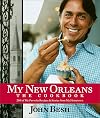
This is a beautifully photographed book written in loving homage to New Orleans culture, landscape, and cuisine. Taking time to read its chapters, which include his recipes, will reveal John Besh's love for all three of the components that contribute to the food he has devoted his life to perfecting and sharing with the world.
This book has become one of my favorite table-top books; one that has enough content for casual reading, and enough information for serious study. Besh's description show more of how to make a roux is one of the best I have ever seen in print, and should be the guideline for anyone seeking to master authentic gumbo.
If you've visited a home in New Orleans, you know his recipes have not been 'dummed down' or commercialized for tourist palates or diets, but are as close to the authentic cuisine I tasted when a native New Orleanean took me on a tour of her city. Recipes include duck, pork and seafood, and cover boils, etouffees, and gumbos, using all the techniques identified with this cuisine and tapping into all of its local resources.
Besh has also included sources for the unique ingredients called for in many of his recipes. Things like andouille or green onion sausage, Konriko rice, crawfish, or the red kidney beans that are so essential to duplicating the unique tastes of Louisiana.
You can bet I'm gathering my coins and readying my dialing fingers for the grand occasion where I will need them. What an occasion that will be! My tastebuds are jumping in anticipation....Laissez Les Bon Temps Roulez! show less
This book has become one of my favorite table-top books; one that has enough content for casual reading, and enough information for serious study. Besh's description show more of how to make a roux is one of the best I have ever seen in print, and should be the guideline for anyone seeking to master authentic gumbo.
If you've visited a home in New Orleans, you know his recipes have not been 'dummed down' or commercialized for tourist palates or diets, but are as close to the authentic cuisine I tasted when a native New Orleanean took me on a tour of her city. Recipes include duck, pork and seafood, and cover boils, etouffees, and gumbos, using all the techniques identified with this cuisine and tapping into all of its local resources.
Besh has also included sources for the unique ingredients called for in many of his recipes. Things like andouille or green onion sausage, Konriko rice, crawfish, or the red kidney beans that are so essential to duplicating the unique tastes of Louisiana.
You can bet I'm gathering my coins and readying my dialing fingers for the grand occasion where I will need them. What an occasion that will be! My tastebuds are jumping in anticipation....Laissez Les Bon Temps Roulez! show less
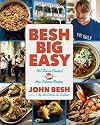
This cookbook truly represents the heart of New Orleans cuisine. It is filled with uncomplicated recipes for Cajun and Creole fair such as jambalayas, gumbos, stews, grits, and lots of seafood dishes. Also included are recipes for the "fixins" like cornbread, red beans and rice, and salads, as well as many rustic desserts. There is a convenient list of recommended ingredients in the front of the book and interesting reading to go along with each recipe. There is also a small section in the show more back where the author credits many New Orleans eateries and establishments. But my favorite part of the book is the awesome photography. Wow, I am starving and my mouth is watering after finishing this book! I recommend this book highly to anyone interested in Big Easy food. I now want to go on vacation to New Orleans or at the very least, dive in to these dishes in my own kitchen. I was provided a free digital copy of this book courtesy of NetGalley show less
This is an autobiography accompanied by recipes. I found some that I'll definitely be trying!
Lists
Awards


You May Also Like


Associated Authors
Statistics
- Works
- 7
- Also by
- 1
- Members
- 333
- Popularity
- #71,380
- Rating
- 4.3
- Reviews
- 5
- ISBNs
- 12