
Susan George (1) (1934–2026)
Author of How the Other Half Dies
For other authors named Susan George, see the disambiguation page.
About the Author
Image credit: Susan George, 2010
Works by Susan George
Hijacking America: How the Secular and Religious Right Changed What Americans Think (2007) 41 copies, 1 review
Associated Works
People-First Economics: Making a Clean Start for Jobs, Justice, and Climate (2010) — Contributor — 47 copies
Beyond Bretton Woods: Alternatives to the Global Economic Order (1994) — Foreword, some editions — 8 copies
Tagged
Common Knowledge
- Legal name
- Akers, Susan Vance
- Other names
- Akers, Susan Vance (birth name)
- Birthdate
- 1934-06-29
- Date of death
- 2026-02-14
- Gender
- female
- Education
- The Sorbonne
Smith College
University of Paris - Occupations
- political scientist
activist
writer - Organizations
- Transnational Institute
- Relationships
- Abdel-Malek, Anouar (Directeur de thèse)
- Nationality
- USA
France - Birthplace
- Akron, Ohio, USA
- Places of residence
- Paris, France
- Place of death
- 13e arrondissement, Paris, Île-de-France, France
Members
Reviews
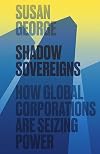
“Business is regulating government”
Shadow Sovereigns is a call to arms. There is no pretense of being neutral. The evidence is frighteningly overwhelming. Susan George wants you to know you’re being traded away to the high bidders. She describes it as the “rise of illegitimate authority”. Transnational corporations (TNCs) are usurping justice and privatizing legislation.
Her main preoccupation is the TTIP, the new transatlantic trade treaty. She says it contains one chapter on show more trade and 24 on regulating trade for the benefit of the TNCs. They get all kinds of new rights, bypassing local governments, plus the ability to sue them if they do anything to curb imports, even of dangerous materials. George paints a grim scenario where American gun rights get transferred to Europe by an arbitrator picked by the TNC. No appeal is allowed. Never again would national parliaments be in charge of setting the regulatory rules on new products and processes, she says. It has the potential to bring financial disasters that would dwarf the crisis of 2008-9, and for precisely the same reasons: the TNCs running trade as they run finance – with total disregard for anything but immediate profit.
Even the UN has been contaminated, if not neutered, by the TNCs. George says the UN has voluntarily become part of the problem. She cites CFC actions: DuPont called ozone depletion “a science fiction tale...a load of rubbish…utter nonsense”, but The Montreal Protocol banning CFCs defeated its “Alliance for Responsible CFC Policy”, and is considered the greatest collective global environmental achievement, ever. Now that the DuPonts of the world have infiltrated the UN and have a seat at numerous tables, this achievement is unlikely to ever be surpassed. The UN committee on coal was eclipsed by corporate sponsors, who wrote the final communiqué as an appreciation for coal. George says allowing them to drape themselves in the UN flag is “bluewashing”, discrediting the entire institution.
She aims the first and last salvos at the Davos World Economic Forum, where the TNCs openly pursue world political domination. Their manifestos, working papers and forums are completely clear: corporates perform far better than governments.
What is puzzling in all this is the lack of outrage by those in power. Throughout history, men would do anything to maintain and enlarge their power. You were either conqueror or roadkill, and no one willingly chose roadkill. Yet national governments, state governments, and even the UN seem not at all disturbed by this massive elbowing-in of TNCs. For unexplored reasons, stepping aside for corporations does not bother elected officials. There is another book here.
David Wineberg show less
Shadow Sovereigns is a call to arms. There is no pretense of being neutral. The evidence is frighteningly overwhelming. Susan George wants you to know you’re being traded away to the high bidders. She describes it as the “rise of illegitimate authority”. Transnational corporations (TNCs) are usurping justice and privatizing legislation.
Her main preoccupation is the TTIP, the new transatlantic trade treaty. She says it contains one chapter on show more trade and 24 on regulating trade for the benefit of the TNCs. They get all kinds of new rights, bypassing local governments, plus the ability to sue them if they do anything to curb imports, even of dangerous materials. George paints a grim scenario where American gun rights get transferred to Europe by an arbitrator picked by the TNC. No appeal is allowed. Never again would national parliaments be in charge of setting the regulatory rules on new products and processes, she says. It has the potential to bring financial disasters that would dwarf the crisis of 2008-9, and for precisely the same reasons: the TNCs running trade as they run finance – with total disregard for anything but immediate profit.
Even the UN has been contaminated, if not neutered, by the TNCs. George says the UN has voluntarily become part of the problem. She cites CFC actions: DuPont called ozone depletion “a science fiction tale...a load of rubbish…utter nonsense”, but The Montreal Protocol banning CFCs defeated its “Alliance for Responsible CFC Policy”, and is considered the greatest collective global environmental achievement, ever. Now that the DuPonts of the world have infiltrated the UN and have a seat at numerous tables, this achievement is unlikely to ever be surpassed. The UN committee on coal was eclipsed by corporate sponsors, who wrote the final communiqué as an appreciation for coal. George says allowing them to drape themselves in the UN flag is “bluewashing”, discrediting the entire institution.
She aims the first and last salvos at the Davos World Economic Forum, where the TNCs openly pursue world political domination. Their manifestos, working papers and forums are completely clear: corporates perform far better than governments.
What is puzzling in all this is the lack of outrage by those in power. Throughout history, men would do anything to maintain and enlarge their power. You were either conqueror or roadkill, and no one willingly chose roadkill. Yet national governments, state governments, and even the UN seem not at all disturbed by this massive elbowing-in of TNCs. For unexplored reasons, stepping aside for corporations does not bother elected officials. There is another book here.
David Wineberg show less
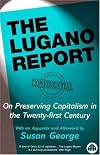
Susan George uses her impressive knowledge of global capitalism and its effects on the many to look at the picture from the side of the few. The report presents a frightening look at what would be required to preserve the current capitalist order in the face of the increasing impoverishment of an increasingly populous and ecologically strained world.
The report was originally written as a hoax (she was not going to claim authorship), however, for reasons she declines to elaborate on she chose show more not go through with it. I actually wish she had released it as real, to see the reaction of the elite pundits and media who will now feel secure in ignoring the book.
Even so, it is a worthwhile read, primarily as it helps us see what kind of reforms of the global economy would simply tame the excesses of capitalism and thereby only strengthen the system, and what reforms would truly challenge the powers that be. show less
The report was originally written as a hoax (she was not going to claim authorship), however, for reasons she declines to elaborate on she chose show more not go through with it. I actually wish she had released it as real, to see the reaction of the elite pundits and media who will now feel secure in ignoring the book.
Even so, it is a worthwhile read, primarily as it helps us see what kind of reforms of the global economy would simply tame the excesses of capitalism and thereby only strengthen the system, and what reforms would truly challenge the powers that be. show less

A searing account of how international lending destroys poor countries' economies, and causes untold suffering to the poor in developing countries, especially due to the austerity measures and openness to imports that the lending countries and international financial institutions like the IMF imposed. This was a classic of the late 80s, so we will have to trace out what happened to these countries and their debts in later decades to confirm or question the author's analysis.
Shadow Sovereigns: How Global Corporations Are Seizing Power by Susan George is a book that I looked forward to reading. George is an American and French political and social scientist, activist and writer on global social justice, Third World poverty, underdevelopment and debt. She is a fellow and president of the board of the Transnational Institute in Amsterdam. She is a fierce critic of the present policies of the International Monetary Fund (IMF), World Bank (IBRD) and what she calls show more their 'maldevelopment model'. She similarly criticizes the structural reform policies of the Washington Consensus on Third World development. She is of U.S. birth but now resides in France, and has dual citizenship since 1994. George attended the Sorbonne, obtaining the French equivalent of a bachelor's degree in philosophy in 1967.
This is a book I really wanted to like and hold up like a beacon so that others could see. However, almost from the start I felt I was caught up in a Dennis Miller type rant, without the humor. I can say I agree almost entirely with George on her positions, but it is the presentation that troubles me. The book is written more as an angry rant than scholarly work or even a work that is looking to change people's minds. She is preaching to the choir and alienating everyone else.
When discussing the legitimacy of government, I was looking for some Locke or Rousseau, instead there is an argument that corporations are taking over to the point of being able to sue governments. She does not even establish criteria for the legitimacy of a government.
The book is a rollercoaster ride through the wrongs in the world and the dismal state of democracy. It does cover many of the current failures of the system from Monsanto to the corporate takeover of national sovereignty. George also covers the growth of the pharmaceutical Leviathan, the disappearance of small farms, and climate change. Shadow Sovereigns could be a great book with a message to reach the masses, but it seems like George simply went on a rant while her editor was asleep. There is so much good information in this book. It is a shame it is not delivered in a more orderly or formal approach. show less
This is a book I really wanted to like and hold up like a beacon so that others could see. However, almost from the start I felt I was caught up in a Dennis Miller type rant, without the humor. I can say I agree almost entirely with George on her positions, but it is the presentation that troubles me. The book is written more as an angry rant than scholarly work or even a work that is looking to change people's minds. She is preaching to the choir and alienating everyone else.
When discussing the legitimacy of government, I was looking for some Locke or Rousseau, instead there is an argument that corporations are taking over to the point of being able to sue governments. She does not even establish criteria for the legitimacy of a government.
The book is a rollercoaster ride through the wrongs in the world and the dismal state of democracy. It does cover many of the current failures of the system from Monsanto to the corporate takeover of national sovereignty. George also covers the growth of the pharmaceutical Leviathan, the disappearance of small farms, and climate change. Shadow Sovereigns could be a great book with a message to reach the masses, but it seems like George simply went on a rant while her editor was asleep. There is so much good information in this book. It is a shame it is not delivered in a more orderly or formal approach. show less
Lists
You May Also Like


Associated Authors
Statistics
- Works
- 28
- Also by
- 5
- Members
- 942
- Popularity
- #27,278
- Rating
- 3.7
- Reviews
- 19
- ISBNs
- 125
- Languages
- 15

