
Raj Patel
Author of Stuffed and Starved: The Hidden Battle for the World Food System
About the Author
Raj Patel is a leading international acoustics, audio-visual, and theatre consultant and designer. He has over 27 years of experience working on a wide range of projects with architects, designers and artists around the world. He is an Arup Fellow, leader of their global Acoustics, Audio-Visual and show more Theatre Consulting Practice, and Arts and Culture Business in the Americas region. show less
Image credit: credit: Andrea Ismert
Works by Raj Patel
The Value of Nothing: How to Reshape Market Society and Redefine Democracy (2009) 625 copies, 15 reviews
A History of the World in Seven Cheap Things: A Guide to Capitalism, Nature, and the Future of the Planet (2017) 248 copies, 2 reviews
New Internationalist #533: September-October 2021: Who Gets to Eat? (2021) — Contributing editor — 2 copies
Associated Works
Tagged
Common Knowledge
- Birthdate
- 1972
- Gender
- male
- Education
- London School of Economics
Cornell University
University of Oxford (Balliol College) - Short biography
- Raj Patel has worked for the World Bank and WTO and been tear-gassed on four continents protesting against them. Writer, activist, and academic, he is currently a visiting scholar at UC Berkeley's Centre for African Studies, a researcher at the School of Development Studies at the University of KwaZulu-Natal, and a fellow at The Institute for Food and Development Policy, also known as Food First.
- Nationality
- UK
- Birthplace
- London, England, UK
- Places of residence
- San Francisco, California, USA
- Associated Place (for map)
- UK
Members
Reviews
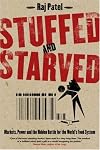
Raj Patel brings a colloquial, humorous writing style to a complex and generally rather depressing subject: the domination of the world's food supply by corporations who are blind to their human and environmental effects in the rush for profits. He does hold out some nuggets of hope in the form of co-operative movements and community supported agriculture schemes, but the overall picture is still a grim one. While some of the ground he covers is familiar from other writers on the subject, show more there were a number of areas that were new to me: the problems with soybeans in particular. And I'd never really thought of the British predilection for milky sweet tea as a driver for the slave trade before. I liked Patel's very international perspective. show less
A History of the World in Seven Cheap Things: A Guide to Capitalism, Nature, and the Future of the Planet by Raj Patel
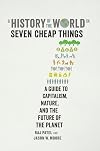
Its unusual that a 200 page book spends 40 pages on the Introduction, and after that introduction, usefully focused on the island of Madeira as a case study though it is, you feel as though you have the general idea, And the conclusions are hard to argue with; yes capitalism has succeeded through cheapening most elements of life - although I might dispute the conclusions around the cheapening of care. Yes, care and work in the home is undervalued but its hard to quantify that value when show more noone outside a particular home cares whether that work is done or not
But in general its very easy to agree with the authors' well argued case. But its less clear what, if anything can be done about it. For me the leap between the Marxist analysis of the problem and the World-Ecology basis of the solution was too great; for me the problem, or the history, was absorbing but the solution was unclear and unconvinving show less
But in general its very easy to agree with the authors' well argued case. But its less clear what, if anything can be done about it. For me the leap between the Marxist analysis of the problem and the World-Ecology basis of the solution was too great; for me the problem, or the history, was absorbing but the solution was unclear and unconvinving show less
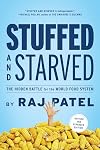
Revised and Expanded Edition "For anyone attempting to make sense of the world food crisis, or understand the links between U.S. farm policy and the ability of the world's poor to feed themselves, Stuffed and Starved is indispensable." —Michael Pollan, author of The Omnivore's DilemmaIt’s a perverse fact of modern life: There are more starving people in the world than ever before, while there are also more people who are overweight. To find out how we got to this point and what we can do show more about it, Raj Patel launched a comprehensive investigation into the global food network. It took him from the colossal supermarkets of California to India’s wrecked paddy-fields and Africa’s bankrupt coffee farms, while along the way he ate genetically engineered soy beans and dodged flying objects in the protestor-packed streets of South Korea. What he found was shocking, from the false choices given us by supermarkets to a global epidemic of farmer suicides, and real reasons for famine in Asia and Africa. Yet he also found great cause for hope—in international resistance movements working to create a more democratic, sustainable and joyful food system. Going beyond ethical consumerism, Patel explains, from seed to store to plate, the steps to regain control of the global food economy, stop the exploitation of both farmers and consumers, and rebalance global sustenance. show less
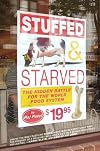
Wide-ranging, engaging, systems-perspective analysis of the global markets in food, their control by a relatively small number of corporate giants, and the effect of that control on both farmers and eaters. For someone who's been trying to wrap my brain around how globalization works, this was very helpful; little connection-explosions kept going off in my brain while I read.
Patel's main objective is for farmers and eaters to reclaim their local 'food sovereignty': for farmers to have show more access to their local markets, with farmers and eaters together being able to determine their local food and farming policies. Patel contrasts food soveriegnty to the current system of externally-imposed constraints and illusory choice: farmers and consumers are being required to choose from a diminished range of possibilities, even while their selections are triumphantly declared by propagandists to be 'free choice.' I especially appreciated Patel's highlighting of activist farming organizations, such as Via Campesina and Brazil's Landless Workers' Movement. Additionally, it is refreshing to see an acknowledgment of the limited usefulness of activism via consumerism. Patel also explicitly discusses issues of class, sex, race, and colonialism as they intersect with food justice, which made me very happy to see.
Patel keeps Stuffed and Starved from being dry and heavy. He works in Monty Python references and many gossippy factoids about the genesis of TV Brand dinners or why the British National Grid pays so much attention to major television events. There's plenty of interesting dinner-party conversation hooks here, if you are so inclined.
I strongly recommend this book to anyone who's interested in Michael Pollan's work, or who is interested in issues of obesity, starvation, free trade, and other issues of food justice. Patel also maintains a related website -- stuffedandstarved.org -- with updated news, educational articles, resources, and action items. show less
Patel's main objective is for farmers and eaters to reclaim their local 'food sovereignty': for farmers to have show more access to their local markets, with farmers and eaters together being able to determine their local food and farming policies. Patel contrasts food soveriegnty to the current system of externally-imposed constraints and illusory choice: farmers and consumers are being required to choose from a diminished range of possibilities, even while their selections are triumphantly declared by propagandists to be 'free choice.' I especially appreciated Patel's highlighting of activist farming organizations, such as Via Campesina and Brazil's Landless Workers' Movement. Additionally, it is refreshing to see an acknowledgment of the limited usefulness of activism via consumerism. Patel also explicitly discusses issues of class, sex, race, and colonialism as they intersect with food justice, which made me very happy to see.
Patel keeps Stuffed and Starved from being dry and heavy. He works in Monty Python references and many gossippy factoids about the genesis of TV Brand dinners or why the British National Grid pays so much attention to major television events. There's plenty of interesting dinner-party conversation hooks here, if you are so inclined.
I strongly recommend this book to anyone who's interested in Michael Pollan's work, or who is interested in issues of obesity, starvation, free trade, and other issues of food justice. Patel also maintains a related website -- stuffedandstarved.org -- with updated news, educational articles, resources, and action items. show less
Lists
Awards

You May Also Like


Associated Authors
Statistics
- Works
- 8
- Also by
- 2
- Members
- 1,703
- Popularity
- #15,063
- Rating
- 3.9
- Reviews
- 32
- ISBNs
- 76
- Languages
- 11
- Favorited
- 4
