

Dacher Keltner
Author of Awe: The New Science of Everyday Wonder and How It Can Transform Your Life
About the Author
Celebrated UC Berkeley Psychologist Dr. Dacher Keltner explores the dynamics of power in a new light, revealing how enduring power comes not only from boldness and strength, but from empathy and generosity, and, above all, is given to us by others.
Works by Dacher Keltner
Awe: The New Science of Everyday Wonder and How It Can Transform Your Life (2023) 287 copies, 7 reviews
Associated Works
What the Face Reveals: Basic and Applied Studies of Spontaneous Expression Using the Facial Action Coding System (FACS) (1998) — Contributor, some editions — 96 copies
Shame: Interpersonal Behavior, Psychopathology, and Culture (1998) — Contributor, some editions — 21 copies, 1 review
Tagged
Common Knowledge
- Gender
- male
- Education
- University of California, Santa Barbara
Stanford University
University of California, San Francisco - Occupations
- professor of psychology
- Organizations
- University of California, Berkeley
- Nationality
- USA
- Birthplace
- Jalisco, Mexico
- Places of residence
- Berkeley, California, USA
Laurel Canyon, California, USA - Associated Place (for map)
- California, USA
Members
Reviews

Dacher Keltner takes a physiological approach to the study of emotions, as he showed in his previous work, Born to be Good, which I also recommend. This research starts where that one left off, choosing a particular emotion to examine that leads to the heart of the human endeavor, the feeling of awe, which he defines as “the feeling of being in the presence of something vast that transcends your current understanding of the world.”
I read this book because I have pursued the experience of show more awe throughout my educational career, and Keltner is giving us a clear pathway for the study of awe and its benefits in a manner that bridges science and culture. He addresses spirituality from a sociological point of view (and a personal one), without making any metaphysical claims. He is, after all, a biologist at heart.
I admire the breadth of experience reflected in this writing, including interviews with artists, scientists, activists, and one famous film director. Throughout he makes clear that awe holds a fundamental value for people, whether they realize it or not. Keltner has a gift for weaving the scientific, the sacred, the profane, and the humorous together. show less
I read this book because I have pursued the experience of show more awe throughout my educational career, and Keltner is giving us a clear pathway for the study of awe and its benefits in a manner that bridges science and culture. He addresses spirituality from a sociological point of view (and a personal one), without making any metaphysical claims. He is, after all, a biologist at heart.
I admire the breadth of experience reflected in this writing, including interviews with artists, scientists, activists, and one famous film director. Throughout he makes clear that awe holds a fundamental value for people, whether they realize it or not. Keltner has a gift for weaving the scientific, the sacred, the profane, and the humorous together. show less
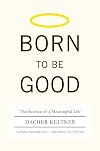
For me the purpose of literature is to remind us of what is good. Dacher Keltner puts the social sciences to work in doing just that. It is refreshing to hear in detail why the phrase “survival of the fittest” completely fails to describe the goals of human existence, considering evidence from human biology, neuroscience, behavioral studies, and a fascinating analysis of human facial expressions. The book is also unapologetically entertaining in the style of a Berkeley professor with his show more own personal stories. show less
Wonder as a subject fascinates me and is, I think, something we could all use a little more of as both a connecting experience and as a gateway to meaning and transcendence above the mind-numbing distractions of everyday life. So I was excited to read about the research that has gone into understanding what wonder is and how it impacts our thinking. Dacher Keltner's book explores the history and science behind wonder while illustrating his points with anecdotes and observations.
Some have show more mentioned the differences between wonder, awe, and the sublime, and they complained that Keltner's focus seems to be on wonder alone, bypassing the fear inducing sensation of the sublime. This is true to some extent, although he touches upon the aspect of fear briefly in the beginning of his book. In my opinion, though, Keltner's book was an enjoyable read, and his research added to my understanding of the physical and psychological benefits of wonder and how to experience more of it in everyday life. show less
Some have show more mentioned the differences between wonder, awe, and the sublime, and they complained that Keltner's focus seems to be on wonder alone, bypassing the fear inducing sensation of the sublime. This is true to some extent, although he touches upon the aspect of fear briefly in the beginning of his book. In my opinion, though, Keltner's book was an enjoyable read, and his research added to my understanding of the physical and psychological benefits of wonder and how to experience more of it in everyday life. show less
[3.50, rounded down for a reason that will follow] The first third of Kepner’s book is an impressive 5 stars. It is an eye-opening exploration of a sensation that many of us give little thought to — awe-inspiring moments that put the “Whoa!” into our lives. The early parts of this book were so enlightening that I was motivated to take few pages of notes to remind myself of important points, including the notion that we can find awe anywhere, and the fact that there is concrete show more evidence that feelings of awe can “transform our minds, our sense of self, and our way of being in the world.” Experts insist it can even improve our physical health. So why the mediocre 3.5 star rating? The remaining two-thirds of the book is overstuffed with anecdotes and examples of people experiencing awe. True, people love short stories – and I love them as much as anyone. But readers don’t need a half-dozen vignettes of each aspect of awe to fully understand and appreciate the phenomenon. This book would have been more effective and engaging if it was half its size, showcasing the most vivid anecdotes. In some scenarios, less is more. Having said that, some of the tenets in this book will stay with me. Kepner’s categorization of awe into “eight wonders of life” is a reminder that awe-inspiring experiences are everywhere. In many instances, it’s merely a matter of training our brains to “find the extraordinary in the ordinary.” show less
Lists
Awards


You May Also Like


Associated Authors
Statistics
- Works
- 6
- Also by
- 3
- Members
- 885
- Popularity
- #28,943
- Rating
- 3.7
- Reviews
- 12
- ISBNs
- 54
- Languages
- 4