

Leif Enger
Author of Peace Like a River
About the Author
Disambiguation Notice:
Leif Enger wrote the “Gun Pedersen” series of books with his brother, Lin Enger, under the name L.L. Enger. Please don't combine the two authors, as L.L. Enger is actually two people.
Series
Works by Leif Enger
A folyó dala 1 copy
Associated Works
The Year's Best Fantasy and Horror: Third Annual Collection (1988) — Contributor — 193 copies, 2 reviews
Tagged
Common Knowledge
- Legal name
- Enger, Leif
- Other names
- Enger, L.L.
- Birthdate
- 1961
- Gender
- male
- Occupations
- reporter (Minnesota Public Radio)
producer (Minnesota Public Radio)
author - Organizations
- Minnesota Public Radio
- Relationships
- Enger, Lin (brother)
- Nationality
- USA
- Birthplace
- Osakis, Minnesota, USA
- Places of residence
- Osakis, Minnesota, USA (birth)
- Disambiguation notice
- Leif Enger wrote the “Gun Pedersen” series of books with his brother, Lin Enger, under the name L.L. Enger. Please don't combine the two authors, as L.L. Enger is actually two people.
- Associated Place (for map)
- Osakis, Minnesota, USA
Members
Reviews

What makes this book really good is all the layers - the West and cowboys and outlaws and writing and the pursuit and love and redemption. It's all mixed in there and told with a deft hand. The story is told in a curious mix of formality and preciseness and unique turn of phrase ("been shot to moist rags" was one that caught my imagination). I particularly liked the journey Monte makes - caught up in events, he continues on - risking everything to figure out who exactly he is when measured show more in a different kind of life. show less

Virgil Wander captured me from the first three paragraphs with its wry and gentle prose. It’s narrated by the title character, Virgil Wander, who has a very contrary name for a man who stays very close to home. His home is Greenstone, a town that seems to be on the receiving end of some karmic bad joke, so much so they decide to embrace their bad fortune with a Hard Luck Days festival. There is a loving acceptance of the curmudgeons and oddballs that strikes this former Minnesotan as show more absolutely authentic but may seem false to someone who didn’t grow up in the kind of communities that inspired Lake Wobegon.
Virgil is suffering some dislocation from an accident that should have killed him, driving off the North Shore Highway, he and his car shooting through the air and falling deep into Lake Superior. However, he was saved and now has some trouble with adjectives and balance. The serendipitous arrival of Rune, the unknown father of Alec Sandstrom, local baseball hero whose mysterious disappearance haunts Greenstone and its inhabitants. Alec was Virgil’s friend and since he really needs someone to stay with him in his forgetfulness, he invites Rune to stay with him.
This is a magical realist book. The realism is the slowly dying Greenstone, the impoverishment of failed industry, and how that breakdown manifests in people’s lives, their despair and desperation. The magic is manifested in Rune and his kites, the giant sturgeon who seems an active and knowing antagonist, the strangely malevolent Adam Leer who doesn’t overtly do or say anything untoward while leaving disaster in his wake.
I enjoyed Virgil Wander so much, though when I think on it after finishing, I realize that I loved it because I fell for the characters, especially for Virgil, Rune, and Bjorn, Rune’s grandson, and the wryly evocative language. In hindsight, the story is very much on the surface, sliding past being consequential with a smile. Usually, with so much talent and imagination, there’s a deeper story to tell. This is not deep, but it sure is fun.
I received a copy of Virgil Wander from the publisher through NetGalley.
https://tonstantweaderreviews.wordpress.com/2018/11/09/9780802128782/ show less
Virgil is suffering some dislocation from an accident that should have killed him, driving off the North Shore Highway, he and his car shooting through the air and falling deep into Lake Superior. However, he was saved and now has some trouble with adjectives and balance. The serendipitous arrival of Rune, the unknown father of Alec Sandstrom, local baseball hero whose mysterious disappearance haunts Greenstone and its inhabitants. Alec was Virgil’s friend and since he really needs someone to stay with him in his forgetfulness, he invites Rune to stay with him.
This is a magical realist book. The realism is the slowly dying Greenstone, the impoverishment of failed industry, and how that breakdown manifests in people’s lives, their despair and desperation. The magic is manifested in Rune and his kites, the giant sturgeon who seems an active and knowing antagonist, the strangely malevolent Adam Leer who doesn’t overtly do or say anything untoward while leaving disaster in his wake.
I enjoyed Virgil Wander so much, though when I think on it after finishing, I realize that I loved it because I fell for the characters, especially for Virgil, Rune, and Bjorn, Rune’s grandson, and the wryly evocative language. In hindsight, the story is very much on the surface, sliding past being consequential with a smile. Usually, with so much talent and imagination, there’s a deeper story to tell. This is not deep, but it sure is fun.
I received a copy of Virgil Wander from the publisher through NetGalley.
https://tonstantweaderreviews.wordpress.com/2018/11/09/9780802128782/ show less
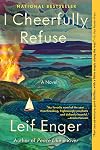
Summary: In a dystopian America, Rainy and Lark carve out a joyful life until tragedy sends Rainy on a Lake Superior odyssey.
I don’t typically select books this way. Looking at a table of new works at my local store, the cover art of this book caught my eye. The description sounded like a modern day odyssey. And the author was from Minnesota. Having had a good experience with another Minnesota author, William Kent Krueger, I thought I’d give Leif Enger a try. I’m so glad I did, though show more amid the goodness, truth and beauty of the story was heartbreak and terrible darkness.
The setting is Lake Superior in a not-too-distant future America. Societal order, the economy, and the climate have collapsed. The country is controlled by sixteen multi-billionaire “astronauts.” Some semblance of societal order is maintained by pharmaceuticals developed aboard “ships of horror.” Children are rated on a “feral scale” and medicated. And if it all becomes intolerable, a little slip of paper with a drug called “Willow” will help you end it all. And some are having “Willow” parties. Libraries have closed and books are becoming an increasingly scarce commodity.
Rainy and Lark have somehow carved out a joyful life together. He’s a big bear of a man who paints houses, plays bass guitar, often with a local band, but sometimes just to comfort his friends. Lark is a former librarian with a big heart and a passion for books. She runs a second-hand bookstore in a bakery, scouring estate sales for book collections. Lark taught Rainy to sail, going to a place called “The Slates,” where they had a somewhat mystical encounter they believed was with Molly Thorn, thought to be dead. Consequently, they buy and re-hab an old sailboat.
Lark, in her open-heartedness brings home a fugitive, Kellen. He has run away from one of the pharmaceutical ships. Perhaps the fact that he had in his possession an unpublished work of Molly Thorn’s, I Cheerfully Refuse, sufficiently seals the deal and he stays with the couple. But tragedy strikes the night of Lark’s birthday. Kellen has disappeared. After a futile hunt, he returns home to find his home destroyed, and Lark brutally murdered. A stranger, an older gentleman, who he later learns is Werryck, ran the ship Kellen had fled, and has been around the town, and through the book, has traced Kellen to their house. That’s why Kellen has gone.
Not only that, Werryck is after Rainy. Whatever they tore up the house looking for is still missing. So, Rainy takes to his boat. The only destination he can think of is “The Slates,” hoping perhaps he will find Lark there. Along the way, he is joined by Sol, a young girl he rescues from an abuser, buying her with his bass. Together they endure Superior’s terrible storms, scrape together an existence, outsmart a corrupt bridge operator, and search for an old relative who once cared for her.
The novel asks the question what kind of people will we become and what kind of communities will we form when the societal order fails? Along the way, amid the corruption, Rainy and Sol will find outposts of goodness. But what kind of person will Rainy, who has lived by goodness, supporting his friends, become? He faces his greatest test when he becomes Werryck’s captive.
Rainy’s sailing journey on Lake Superior strikes me as a modern-day Odyssey. Will he, in the end, find home? And how will the journey have changed him? Also, not unlike Octavia Butler’s Parable of the Sower, Enger confronts us with a very possible dystopia, asking us what kind of people we would be in such times. He does all this in a compellingly beautiful story. show less
I don’t typically select books this way. Looking at a table of new works at my local store, the cover art of this book caught my eye. The description sounded like a modern day odyssey. And the author was from Minnesota. Having had a good experience with another Minnesota author, William Kent Krueger, I thought I’d give Leif Enger a try. I’m so glad I did, though show more amid the goodness, truth and beauty of the story was heartbreak and terrible darkness.
The setting is Lake Superior in a not-too-distant future America. Societal order, the economy, and the climate have collapsed. The country is controlled by sixteen multi-billionaire “astronauts.” Some semblance of societal order is maintained by pharmaceuticals developed aboard “ships of horror.” Children are rated on a “feral scale” and medicated. And if it all becomes intolerable, a little slip of paper with a drug called “Willow” will help you end it all. And some are having “Willow” parties. Libraries have closed and books are becoming an increasingly scarce commodity.
Rainy and Lark have somehow carved out a joyful life together. He’s a big bear of a man who paints houses, plays bass guitar, often with a local band, but sometimes just to comfort his friends. Lark is a former librarian with a big heart and a passion for books. She runs a second-hand bookstore in a bakery, scouring estate sales for book collections. Lark taught Rainy to sail, going to a place called “The Slates,” where they had a somewhat mystical encounter they believed was with Molly Thorn, thought to be dead. Consequently, they buy and re-hab an old sailboat.
Lark, in her open-heartedness brings home a fugitive, Kellen. He has run away from one of the pharmaceutical ships. Perhaps the fact that he had in his possession an unpublished work of Molly Thorn’s, I Cheerfully Refuse, sufficiently seals the deal and he stays with the couple. But tragedy strikes the night of Lark’s birthday. Kellen has disappeared. After a futile hunt, he returns home to find his home destroyed, and Lark brutally murdered. A stranger, an older gentleman, who he later learns is Werryck, ran the ship Kellen had fled, and has been around the town, and through the book, has traced Kellen to their house. That’s why Kellen has gone.
Not only that, Werryck is after Rainy. Whatever they tore up the house looking for is still missing. So, Rainy takes to his boat. The only destination he can think of is “The Slates,” hoping perhaps he will find Lark there. Along the way, he is joined by Sol, a young girl he rescues from an abuser, buying her with his bass. Together they endure Superior’s terrible storms, scrape together an existence, outsmart a corrupt bridge operator, and search for an old relative who once cared for her.
The novel asks the question what kind of people will we become and what kind of communities will we form when the societal order fails? Along the way, amid the corruption, Rainy and Sol will find outposts of goodness. But what kind of person will Rainy, who has lived by goodness, supporting his friends, become? He faces his greatest test when he becomes Werryck’s captive.
Rainy’s sailing journey on Lake Superior strikes me as a modern-day Odyssey. Will he, in the end, find home? And how will the journey have changed him? Also, not unlike Octavia Butler’s Parable of the Sower, Enger confronts us with a very possible dystopia, asking us what kind of people we would be in such times. He does all this in a compellingly beautiful story. show less

When I met Lark there were two things I had to do, two ideas to embrace or lose my chance. Reading was the first. I could read but rarely did. My parents, ahead of their time, had little use for books, so I grew up a knockabout. It's fair to say in my case size preceded sense. I wasn't a bully--well, probably sometimes. I'm not without regrets.
Rainy's a big guy with a kind heart and he and Lark have made a meaningful life for themselves in this dystopian version of the United States show more (dystopian, yet far too close to our present situation for comfortable reading). Lark, who was a librarian back when libraries existed, runs an illegal bookstore out of a bakery and Rainy plays bass guitar in a bar band on the weekends and picks up jobs here and there and fixes up a run down sailboat in between. They also rent out their attic room and it's a lodger who eventually brings ruin down on them, sending Rainy fleeing onto Lake Superior in that sailboat. What follows is Rainy as a Richard Kimble-Odysseus like character, landing in different places along the coast as he works his way toward the Slate Islands, where he and Lark once traveled.
Look out the window, will you? At the clouds, ripped at the edges and moving fast. The sea like a shroud. The eaves bare of ravens, every bird flown.
Leif Enger's writing style is engaging and he imbues every character and situation with humanity and heart. Rainy is an impossible guy not to love, he's so pure of heart and works so hard to do the right thing. He is eventually joined with by Pippi Longstocking-like sidekick, who gives him someone to protect, and she's a lovely addition to the story, which often feels episodic in nature. While Enger's writing is solid, he sometimes goes a little far with Rainy's ability to read deep emotions into quick glances at people he's never met.
I waved a greeting she did not return. Her eyes were clear and farcical and I fell short in her assessment. The tip of her cigarette brightened.
But that's a quibble in a story so engaging and well-paced as this one. show less
Rainy's a big guy with a kind heart and he and Lark have made a meaningful life for themselves in this dystopian version of the United States show more (dystopian, yet far too close to our present situation for comfortable reading). Lark, who was a librarian back when libraries existed, runs an illegal bookstore out of a bakery and Rainy plays bass guitar in a bar band on the weekends and picks up jobs here and there and fixes up a run down sailboat in between. They also rent out their attic room and it's a lodger who eventually brings ruin down on them, sending Rainy fleeing onto Lake Superior in that sailboat. What follows is Rainy as a Richard Kimble-Odysseus like character, landing in different places along the coast as he works his way toward the Slate Islands, where he and Lark once traveled.
Look out the window, will you? At the clouds, ripped at the edges and moving fast. The sea like a shroud. The eaves bare of ravens, every bird flown.
Leif Enger's writing style is engaging and he imbues every character and situation with humanity and heart. Rainy is an impossible guy not to love, he's so pure of heart and works so hard to do the right thing. He is eventually joined with by Pippi Longstocking-like sidekick, who gives him someone to protect, and she's a lovely addition to the story, which often feels episodic in nature. While Enger's writing is solid, he sometimes goes a little far with Rainy's ability to read deep emotions into quick glances at people he's never met.
I waved a greeting she did not return. Her eyes were clear and farcical and I fell short in her assessment. The tip of her cigarette brightened.
But that's a quibble in a story so engaging and well-paced as this one. show less
Lists
Books I've Read (2)
Ambleside Books (1)
USA Road Trip (1)
Books Read 2025 (2)
Favourite Books (1)
Best Beach Reads (1)
Facebook list (1)
All Iowa Reads (1)
Coming of Age (1)
A Novel Cure (1)
Indie Next Picks (1)
Sense of place (1)
Books Read 2026 (1)
Awards


You May Also Like


Associated Authors
Statistics
- Works
- 13
- Also by
- 3
- Members
- 9,063
- Popularity
- #2,650
- Rating
- 4.0
- Reviews
- 331
- ISBNs
- 88
- Languages
- 8
- Favorited
- 16
