

Katharine Burdekin (1896–1963)
Author of Swastika Night
About the Author
Works by Katharine Burdekin
The Rebel Passion 6 copies
Associated Works
Tagged
Common Knowledge
- Legal name
- Burdekin, Katharine Penelope Cade
- Other names
- Constantine, Murray (pseudonym)
Burdekin, Kay - Birthdate
- 1896-07-23
- Date of death
- 1963-08-10
- Gender
- female
- Education
- Cheltenham Ladies’ College
- Occupations
- novelist
fantasy writer
speculative fiction writer
science fiction writer
children's book author - Relationships
- Cade, Rowena (sister)
Allan-Burns, Isobel (partner) - Short biography
- Katharine Burdekin, née Cade, was born in Derbyshire, England, and educated by a governess and at Cheltenham Ladies' College. She wanted to study at Oxford University, as her brothers did, but her parents would not agree. In 1915, she married Beaufort Burdekin, a barrister, with whom she had two daughters. During World War I, she served as a nurse in an army hospital. The family moved to Australia, where she completed her first novel, Anna Colquhoun (1922). After the end of her marriage, she moved back to the UK. She wrote about 20 novels in her career, about one-third of which were published before her death. She usually used the pen name Murray Constantine, it is said to protect herself and her children from repercussions from the highly political and speculative nature of her books. Her best-known work is the dystopian novel Swastika Night (1937), which has been described as a "scathing feminist anatomy of war, sexism and power" and is now considered a classic. It showed an understanding of the dangers presented by fascist governments in an era when most Europeans and Americans still supported appeasement of Nazi Germany and militaristic Japan. She also wrote short stories, plays, and several children's books as Kay Burdekin. Her work has recently become the subject of considerable interest from scholars, including Prof. Daphne Patai, who discovered the true identity of Murray Constantine in the 1980s.
- Nationality
- UK
- Birthplace
- Spondon, Derbyshire, England, UK
- Places of residence
- Sydney, New South Wales, Australia
UK - Place of death
- Suffolk, England, UK
- Associated Place (for map)
- England, UK
Members
Reviews
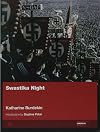
Burdekin tells of a chilling world hundred of years after the triumph of Nazism -where Europe is plunged into a new dark age, ruled by a brutal elite and, above all, where men are celebrated for their tough violence and women reduced to breeders. Indeed, here lies in fact its main interest: no matter how striking and clever such an alternate history is (the tabula rasa, the violence, Hitlerism having turned into a cult and, the whole society having collapsed to the level of that new show more feudal-like and chaotic system Hitler would have relished) it is mostly a powerful and haunting look at the relationships between genders. It's even unsettling because, it goes beyond masculinity and feminity as defined by fascistic ideologies to question our more often than not own views about such identities. If the warning against the triumph Fascism turned useless (the Third Reich was defeated after all), 'Swastika Night' remains indeed a terrifying illustration of where certain views regarding manhood and womanhood, taken to their extreme, can lead to. That it was written by a woman (an unknown fact until decades after its publication) makes some of its insight even more striking:
'what is a man? A being of pride, courage, violence, brutality, ruthlessness, you say. But all those are characteristics of a male animal in heat. A man must be something more, surely?'
Or, more bluntly:
'women are nothing, except an incarnate desire to please men.'
You get it, although the story is very simple, and the cruel world being built is by itself a very good piece of alternate history, it's the haunting questions about genders being thrown at our faces that makes 'Swastika Night' such a powerful dystopia. It would be terribly unfair to reduce it, as is often the case, to 'feminist science-fiction' (whatever that is, by the way) as, how to define manhood and womanhood finally address us all -beyond both ultra-conservatives ideologies and feminism. I therefore recommend it highly. show less
'what is a man? A being of pride, courage, violence, brutality, ruthlessness, you say. But all those are characteristics of a male animal in heat. A man must be something more, surely?'
Or, more bluntly:
'women are nothing, except an incarnate desire to please men.'
You get it, although the story is very simple, and the cruel world being built is by itself a very good piece of alternate history, it's the haunting questions about genders being thrown at our faces that makes 'Swastika Night' such a powerful dystopia. It would be terribly unfair to reduce it, as is often the case, to 'feminist science-fiction' (whatever that is, by the way) as, how to define manhood and womanhood finally address us all -beyond both ultra-conservatives ideologies and feminism. I therefore recommend it highly. show less
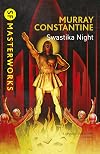
The title page says “by Katharine Burdekin writing as Murray Constantine” though the revelation of the author as Burdekin was not made till many years after the book’s first publication in 1937. The pseudonymous publication may have been because of the threat of repercussions due to her anti-fascist views or for the usual reasons a female might adopt a male name when writing.
Swastika Night is an extrapolation from the time of writing of what Nazism might have led to. Considering the show more little that was known of fascism’s excesses at the time it was written it is remarkably insightful and prophetic of what unchecked fascism could very well have developed into.
As a result of their victory in the Twenty Year War, seven hundred years in the future, Germany and Japan still rule the world between them. In Germany and its European, Middle Eastern and African dominions Hitler is a God. A seven foot tall blond God, who never had anything to do with women. Women in this future Germany have no purpose except for breeding - and no inclination for anything else as it has been bred out of them.
The book is told mainly through the eyes of an ordinary German, Hermann, and the English friend, Alfred, he made when posted to England five years before. Alfred is on a pilgrimage to the Holy Land (Germany) and attracts the interest of the local ruler the Knight Friedrich von Hess who is the keeper of a secret about the real historical Hitler. Through von Hess, the author lays out how a relatively nondescript man was transformed into godhood and historical truth obliterated to ensure the domination of the party line. In its depiction of the manipulation of history this prefigures some of the works of Philip K Dick.
Burdekin’s appreciation of the most important struggle Nazism was to face is shown by the line, “But Russia after the most tremendous struggle in history, was finally beaten.” We also have, “von Hess says the Germans have always been inclined to hysteria” and “unshakable, impregnable empire has always been the dream of virile nations.” This of course can be read as an indictment of virility.
There is not much by way of action and a large part of the book is given over to philosophising but it never fails to maintain the reader’s interest.
As an illustration of the dangers of totalitarianism, of the vigilance needed to maintain standards of truth, Swastika Night is as potent as 1984 and, in 2017, sadly as relevant a critique in the here and now as it was when first published. show less
Swastika Night is an extrapolation from the time of writing of what Nazism might have led to. Considering the show more little that was known of fascism’s excesses at the time it was written it is remarkably insightful and prophetic of what unchecked fascism could very well have developed into.
As a result of their victory in the Twenty Year War, seven hundred years in the future, Germany and Japan still rule the world between them. In Germany and its European, Middle Eastern and African dominions Hitler is a God. A seven foot tall blond God, who never had anything to do with women. Women in this future Germany have no purpose except for breeding - and no inclination for anything else as it has been bred out of them.
The book is told mainly through the eyes of an ordinary German, Hermann, and the English friend, Alfred, he made when posted to England five years before. Alfred is on a pilgrimage to the Holy Land (Germany) and attracts the interest of the local ruler the Knight Friedrich von Hess who is the keeper of a secret about the real historical Hitler. Through von Hess, the author lays out how a relatively nondescript man was transformed into godhood and historical truth obliterated to ensure the domination of the party line. In its depiction of the manipulation of history this prefigures some of the works of Philip K Dick.
Burdekin’s appreciation of the most important struggle Nazism was to face is shown by the line, “But Russia after the most tremendous struggle in history, was finally beaten.” We also have, “von Hess says the Germans have always been inclined to hysteria” and “unshakable, impregnable empire has always been the dream of virile nations.” This of course can be read as an indictment of virility.
There is not much by way of action and a large part of the book is given over to philosophising but it never fails to maintain the reader’s interest.
As an illustration of the dangers of totalitarianism, of the vigilance needed to maintain standards of truth, Swastika Night is as potent as 1984 and, in 2017, sadly as relevant a critique in the here and now as it was when first published. show less
It says Murray Constantine on the cover but it’s sort of an open secret that Constantine was a pseudonym of Katherine Burdekin, so I have to wonder why Gollancz chose to use the pseudonym on the SF Masterwork edition. I mean, no one remembers either name these days, so it makes no fucking difference. Use her real name, make it obvious the writer was female. Anyway, the story is set 700 years after the Axis won WWII, and and Europe is all Greater Germany. People – well, men… as women show more are considered subhuman and treated like animals – are divided into Nazis, Germans and everyone else. A clever Englishman visits Germany on pilgrimage and hooks up with a German friend who had worked in the UK. Through him, he meets the local Nazi lord, who reveals a secret history. Hitler was not tall and blond and godlike, and women were once considered equal to men… There are perhaps a few people in the US, or members of UKIP, who may be surprised by these revelations, but to the human race it’s the sort of reveal which has almost no dramatic impact. It’s not helped by the fact the narrative consists mostly of characters lecturing each other. The misogyny is baked into the world but, despite suggesting homosexual relationships are both common and unremarkable, there’s a still a whiff of homophobia. Swastika Night is not a great book. Had its profile remained prominent in the decades since it was first published, it might have been considered an important book. Sadly, it was all but forgotten. It’s good that the SF Masterworks series has chosen to publish it – although it would have been better thad they used the author’s real name – and it is scarily more relevant now than it has been since the 1940s… It’s an historical document, it reads like an historical document… but it’s a sad reflection on our times that its premise is no longer historical… show less
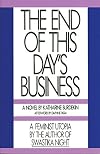
The End of This Day's Business was absolutely fascinating. It got off to a slow start, though, being written mostly in dialogue (a form with which I often struggle reading) and not containing much action. Once the themes of the novel became clear, however, the book was extremely intriguing. Burdekin takes a unique feminist stance on past history, psychologically examining the construction of gender roles and then reversing such roles in her futuristic utopia. But is it really a utopia? Maybe show more for radical feminists, but the main characters, both male and female, call out its dystopian elements. This isn't a page-turning, exciting work, but the ideas presented in it make it a fascinating and worthwhile read. I'm certainly looking forward to Burdekin's other novels now. show less
Lists
Awards

You May Also Like


Associated Authors
Statistics
- Works
- 8
- Also by
- 1
- Members
- 535
- Popularity
- #46,548
- Rating
- 3.5
- Reviews
- 11
- ISBNs
- 20
- Languages
- 5
- Favorited
- 3